Home Charging Device
CN → US| HS编码 | 关税税率 | 原产国 | 目的国 | 文档 |
|---|---|---|---|---|
| 8504409550 | 35.0% | CN | US | 官方文档 |
| 8504409580 | 35.0% | CN | US | 官方文档 |
| 8507808200 | 38.4% | CN | US | 官方文档 |
| 8543709860 | 37.6% | CN | US | 官方文档 |
| 8507908000 | 38.4% | CN | US | 官方文档 |
商品图片
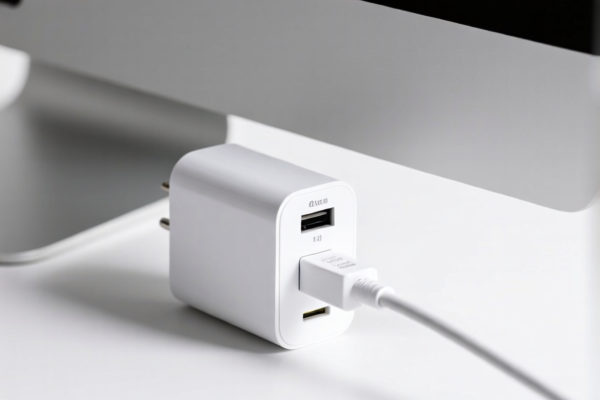
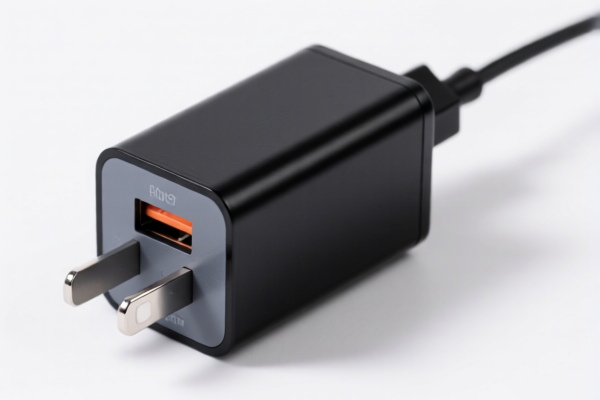
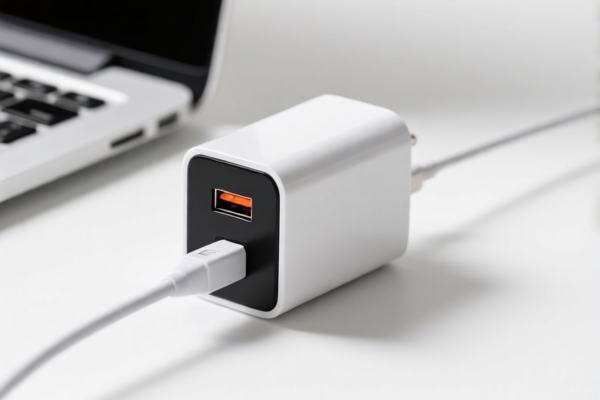
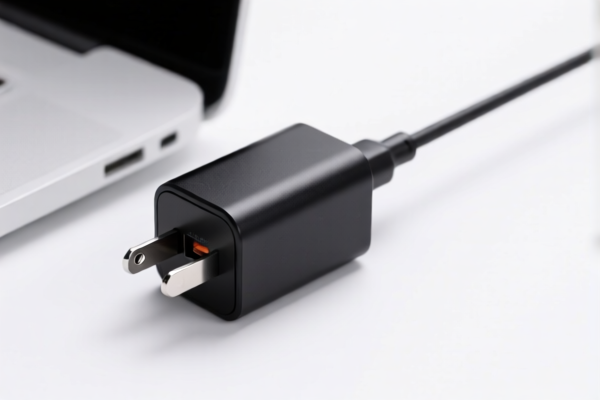
AI分析
🔋 Home Charging Device (Electric Vehicle Supply Equipment - EVSE)
🌐 HS Code Reference & Clearance Guide | 2026 Latest Tariff Analysis | Professional Clearance Strategy
📌 I. Product Definition & Classification: What is a "Home Charging Device"?
A "Home Charging Device" (commonly known as an EV Wall Box or On-Board Charger connector) is a dedicated apparatus for supplying electrical energy to electric vehicles (EVs) at residential or private commercial locations. In international trade, it is NOT classified as a simple "battery" or a generic "transformer," but rather as a specific electrical machine/apparatus.
It is critical to distinguish between the charging unit itself and the internal components (like batteries or static converters used inside):
- The Complete Charging Unit: Includes the housing, control board, communication module, and safety switches. This is typically classified under 8543 (Electrical machines having individual functions, not specified elsewhere).
- Parts of the Charging Unit: Internal components like separators for batteries or specific static converters. These may fall under 8507 (Battery parts) or 8504 (Transformer/Inductor parts) depending on their specific nature, but the final product is usually 8543.
⚠️ Key Distinction:
- If the product is a complete charging station (with casing, plug, control unit) → It is a machine with an individual function → HS 8543.
- If the product is just a battery separator or internal converter component sold separately → It is a part → HS 8507 or HS 8504.
- Do not classify a complete home charger as a "battery part" or "transformer part" unless you are shipping only the internal component, not the finished device.
📦 II. HS Code Classification Details (2026 Latest Tariff Authority Comparison)
Based on the provided , here are the relevant HS Codes for components and related electrical apparatus. Note that a complete home charger usually falls under 8543.70, but the data provided highlights parts and static converters.
| HS Code | Product Description | Application Scenario | Classification Logic |
|---|---|---|---|
8543.70.60.00 |
Electrical machines/apparatus having individual functions: Articles designed for connection to telegraphic/telephonic apparatus or networks | Smart EV Chargers (With 4G/WiFi/Bluetooth connectivity) | If the charger has network connectivity for remote control/data, it falls under "articles for connection to networks" within 8543.70. |
8543.70.98.60 |
Other machines/apparatus: Other: Other: Other: Other | Standard Smart/Non-Smart Chargers (General category) | Most home chargers without specific network telegraphic functions fall here as "Other" electrical machines having individual functions. |
8507.90.80.00 |
Electric storage batteries... parts thereof: Parts: Other | Battery Separators/Parts | Only applicable if you are shipping separators or specific battery parts for the vehicle's battery, NOT the charger itself. |
8507.80.82.00 |
Other storage batteries: Other | Other Storage Batteries | Applicable if shipping the actual EV battery packs or auxiliary batteries, not the charging device. |
8504.40.95.80 |
Electrical transformers... Static converters: Other Other | Internal Static Converters/Rectifiers | If shipping internal static converters or rectifiers separately (not as part of a complete charger), they fall here. |
8504.40.95.50 |
Electrical transformers... Static converters: Other Rectifiers and rectifying apparatus: Other | Rectifiers | Applicable if shipping rectifiers or rectifying apparatus separately. |
🔍 Crucial Warning:
- Complete Home Charger: Typically classified under 8543.70 (see codes above).
- Internal Components: If you ship only the converter board inside the charger, use 8504.40. If you ship only battery separators, use 8507.90.
- Do not mix: A complete charger is not a "part of a battery" (8507) nor just a "transformer" (8504); it is a distinct electrical machine (8543).
💰 III. 2026 Latest Tariff Rate Breakdown (Detailed Tax Clauses)
✅ Applicable Country: United States (US)
✅ Origin: China (CN)
✅ Effective Date: Current 2026 Tariff Structure
⚠️ Note: The following tax details are derived strictly from the provided .
🎯 1. 8543.70.60.00 – Network-Connected Charging Devices
| Item | Details |
|---|---|
| Basic Duty | 0.0% |
| Additional Duty (Section 301/IEEPA) | +25.0% |
| Total Tax Rate | 25.0% |
| Tax Calculation | CIF Value × 25% |
| De Minimis Exemption | ❌ Not Applicable (High risk of audit) |
| Legal Basis | 8543.70.60.00 + Additional 25% surcharge on Chinese electrical apparatus |
📌 Explanation:
- The base tariff for "Electrical machines... for connection to networks" is 0%.
- However, due to US-China trade tensions, an additional 25% tariff is applied to Chinese-origin electrical apparatus in this category.
- Total Cost: You must budget for 25% of the customs value.
🎯 2. 8543.70.98.60 – Other Electrical Machines/Apparatus (Most Home Chargers)
| Item | Details |
|---|---|
| Basic Duty | 2.6% |
| Additional Duty (Section 301/IEEPA) | +25.0% |
| Total Tax Rate | 27.6% |
| Tax Calculation | CIF Value × 27.6% |
| De Minimis Exemption | ❌ Not Applicable |
| Legal Basis | 8543.70.98.60 + Additional 25% surcharge |
📌 Explanation:
- This is the most common HS Code for standard home charging stations (EV Wall Boxes) that do not have specific "telegraphic network" functions.
- The base duty is 2.6%.
- An additional 25% tariff is applied.
- Total Cost: 27.6% of the customs value. This is a high-cost item for importers.
🎯 3. 8507.90.80.00 – Battery Parts (Separators)
| Item | Details |
|---|---|
| Basic Duty | 0.0% |
| Additional Duty | 0.0% |
| Total Tax Rate | 0.0% |
| Tax Calculation | CIF Value × 0% |
📌 Explanation:
- If you are shipping separators for electric storage batteries, the tariff is 0%.
- Warning: Do not use this code for complete chargers. Misclassification can lead to severe penalties.
🎯 4. 8507.80.82.00 – Other Storage Batteries
| Item | Details |
|---|---|
| Basic Duty | 3.4% |
| Additional Duty | +25.0% |
| Total Tax Rate | 28.4% |
| Tax Calculation | CIF Value × 28.4% |
📌 Explanation:
- Applies to other storage batteries (e.g., EV battery packs).
- Total tax is 28.4%. Not applicable for the charger itself.
🎯 5. 8504.40.95.80 & 8504.40.95.50 – Static Converters & Rectifiers
| Item | Details |
|---|---|
| Basic Duty | 0.0% |
| Additional Duty | +25.0% |
| Total Tax Rate | 25.0% |
| Tax Calculation | CIF Value × 25% |
📌 Explanation:
- Applies if shipping static converters or rectifiers as separate goods.
- Total tax is 25.0%.
🛠️ IV. Clearance Practical Advice (Battle-Tested Pitfall Guide)
✅ 1. Document Checklist (Non-Negotiable)
| Document | Required | Notes |
|---|---|---|
| ✅ Product Specification Sheet | ✔️ | Must detail voltage, current, power, connectivity (WiFi/4G), and safety standards (UL/ETL). |
| ✅ Circuit Diagram / Block Diagram | ✔️ | Critical for Customs to determine if it's a "Static Converter" (8504) or "Other Machine" (8543). |
| ✅ Product Photos (Label & Interior) | ✔️ | Show the model number, brand, input/output specs, and internal components if possible. |
| ✅ Certifications (FCC/CE/UL) | ✔️ | FCC is mandatory for US entry. UL or ETL certification is often required for safety. |
| ✅ Commercial Invoice | ✔️ | Clearly state: "EV Home Charging Station, Model XYZ, for Residential Use" |
| ✅ Packing List | ✔️ | List all accessories (cables, wall mounts). Do not split into separate invoices unless necessary. |
✅ 2. Declaration Tips (Key Mantra)
🔥 "Don't Call it a Battery Part, Don't Call it Just a Transformer. It's a Smart Machine!"
| Scenario | Correct HS Code | Wrong Code | Risk |
|---|---|---|---|
| Complete Home Charger (With casing, plug, controller) | 8543.70.60.00 or 8543.70.98.60 |
8507.90 (Battery Part) |
25-28% Tax vs 0% Tax: Huge underpayment risk. |
| Smart Charger with WiFi/4G | 8543.70.60.00 |
8543.70.98.60 |
Minor rate difference (0% vs 2.6% base), but 60 is more accurate for networked devices. |
| Internal Converter Board Only | 8504.40.95.80 |
8543.70.98.60 |
Misclassification as a finished machine. |
| EV Battery Pack | 8507.80.82.00 |
8504.40.95.80 |
High tax error (28.4% vs 25%). |
✅ 3. Special Handling Cases
| Situation | Recommendation |
|---|---|
| OEM Chargers | Provide OEM contract and design drawings. Declare as "EV Charging Equipment" not "Generic Electrical Part." |
| Smart Features | If the charger has Bluetooth, WiFi, or 4G, explicitly mention "Network-Connected" in the description to justify 8543.70.60.00. |
| No Network Features | Use 8543.70.98.60. This is the "catch-all" for basic EV chargers. |
| Shipping Internal Parts Only | If shipping only the rectifier or converter, declare as "Static Converter" (8504.40.95.80). Do not ship internal parts with the charger's outer casing as one item unless declared as a complete unit. |
🌍 V. Global Market Comparison (2026 Latest)
| Country/Region | Recommended HS Code | Tariff Rate | Certification | Notes |
|---|---|---|---|---|
| 🇺🇸 USA | 8543.70.98.60 |
27.6% (3.4% + 25%) | FCC + UL/ETL | High tariff due to 301 list. |
| 🇨🇳 China | 8543.70.98.60 |
5.0% | CCC | No additional surcharge. |
| 🇪🇺 EU | 8543.70.98.60 |
0% (if CE) | CE + RoHS | Generally duty-free for EV chargers. |
| 🇬🇧 UK | 8543.70.98.60 |
0% | UKCA | Post-Brexit, generally 0% for EV equipment. |
| 🇦🇺 Australia | 8543.70.98.60 |
5.0% | RCM | Low tariff, standard compliance. |
📌 Conclusion:
- USA is the most expensive market for Chinese-made home chargers due to the 25% additional tariff.
- EU/UK are more favorable, but require strict CE/UKCA certification.
- China has low tariffs but high domestic competition.
📌 VI. Common Errors & Pitfalls (Blood-Tested Lessons)
❌ Error 1: Classifying a complete Home Charger as "Battery Part" (8507.90.80.00)
👉 Consequence: You pay 0% instead of 27.6%. Customs will audit, demand back taxes, and impose fines.
👉 Fix: If it's a complete unit, use 8543.
❌ Error 2: Shipping internal converters without declaring them as "Parts"
👉 Consequence: If shipped inside the charger, it must be declared as part of the complete charger (8543). If shipped separately, declare as 8504.
👉 Fix: Be consistent. Do not mix declared items.
❌ Error 3: Missing FCC Certification for US Entry
👉 Consequence: Seizure or Return to Origin. The US CBP strictly enforces FCC compliance for networked electrical devices.
👉 Fix: Ensure FCC ID is on the device and certificate is provided.
❌ Error 4: Using "LED Light" or "Power Supply" as Description
👉 Consequence: Misclassification leads to wrong HS Code and potential penalties.
👉 Fix: Use "EV Home Charging Station" or "Electric Vehicle Supply Equipment (EVSE)".
✅ Correct Description Example:
"Home EV Charging Station, Model X, 7.2kW, AC Single Phase, with WiFi Connectivity, FCC Certified, UL Listed, for Residential Use."
🎯 VII. Conclusion: Professional Declaration, Cost Savings, Efficient Clearance
🎯 Remember the Mantra:
🔹 "Complete Charger is 8543, Not 8507. Smart Chargers pay 25%, Basic ones pay 27.6%. FCC is King in the US."
🔹 "Don't hide inside a Battery Part code, or you'll pay the price."
📌 Pro Tip:
- If you are shipping internal converters separately, you can use 8504.40.95.80 (25% tax) or 8507.90.80.00 (0% tax if it's a separator).
- However, Complete Chargers are almost always 8543.70 (25% or 27.6% tax).
- Advance Ruling: For large shipments, consider applying for an Advance Ruling from US CBP to confirm the HS Code and avoid post-clearance audits.
📣 Immediate Action:
📞 Contact a licensed Customs Broker
📸 Provide Product Photos and Circuit Diagrams
🚀 Declare Accurately: "EV Home Charger, Model XYZ, Networked"
✨ Professional Clearance Starts with Precise Classification!
💼 Your Bottom Line Depends on the HS Code!
用户评价
关于 HS 编码归类
协调制度(HS)是由世界海关组织(WCO)制定的国际贸易商品分类标准。全球 200 多个国家采用 HS 系统作为海关关税、贸易统计和进出口监管的基础。
每个 HS 编码遵循以下层级结构:
- 章(2 位)——商品大类(例如:第 84 章:机器和机械设备)
- 品目(4 位)——章内的更具体分类
- 子目(6 位)——国际通用细分,所有 WCO 成员国统一使用
- 本国细分(8-10 位)——各国自行扩展的细分编码,如美国 HTSUS 10 位编码
正确的 HS 编码归类对于顺利通关、准确缴纳关税和遵守贸易法规至关重要。错误归类可能导致海关延误、多缴关税或罚款。
从CN进口到US时,适用的关税税率可能包括:
- 最惠国(MFN)税率——适用于 WTO 成员国的标准关税税率
- 普通税率——适用于无贸易协定国家
- 贸易救济关税——附加关税,如 301 条款(反倾销)、232 条款(国家安全)或反补贴税
本页内容仅供参考。如需正式归类,请咨询当地海关或持牌报关代理。