Home Charging Device
CN → US| HS Code | Tariff Rate | Origin | Destination | Doc |
|---|---|---|---|---|
| 8504409550 | 35.0% | CN | US | Official Doc |
| 8504409580 | 35.0% | CN | US | Official Doc |
| 8507808200 | 38.4% | CN | US | Official Doc |
| 8543709860 | 37.6% | CN | US | Official Doc |
| 8507908000 | 38.4% | CN | US | Official Doc |
Product Images
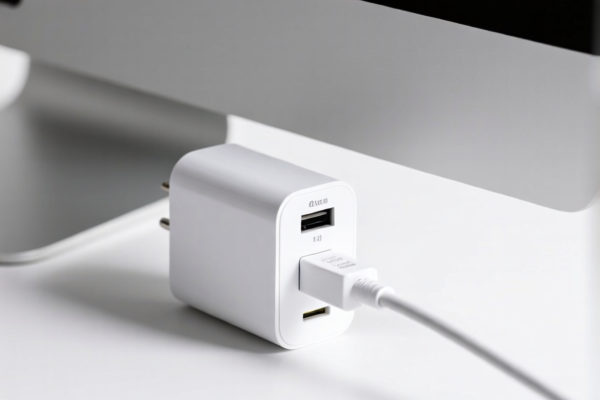
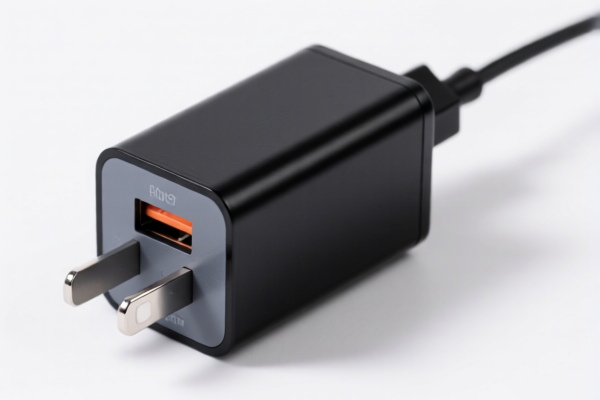
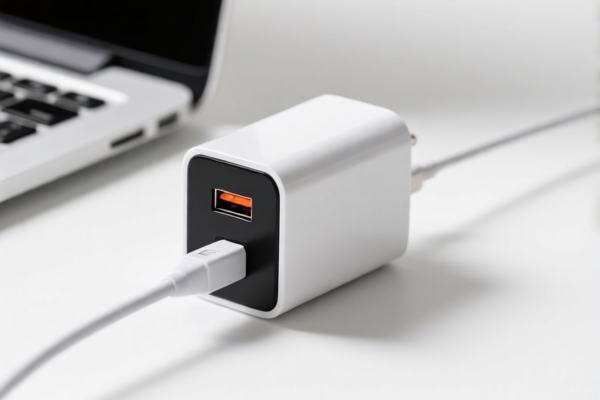
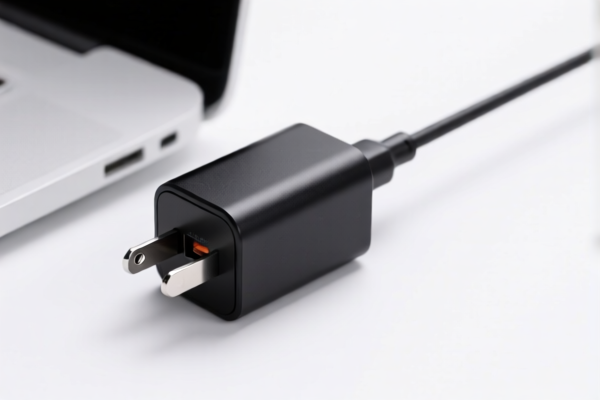
AI Analysis
🔋 Home Charging Device (Electric Vehicle Supply Equipment - EVSE)
🌐 HS Code Reference & Clearance Guide | 2026 Latest Tariff Analysis | Professional Clearance Strategy
📌 I. Product Definition & Classification: What is a "Home Charging Device"?
A "Home Charging Device" (commonly known as an EV Wall Box or On-Board Charger connector) is a dedicated apparatus for supplying electrical energy to electric vehicles (EVs) at residential or private commercial locations. In international trade, it is NOT classified as a simple "battery" or a generic "transformer," but rather as a specific electrical machine/apparatus.
It is critical to distinguish between the charging unit itself and the internal components (like batteries or static converters used inside):
- The Complete Charging Unit: Includes the housing, control board, communication module, and safety switches. This is typically classified under 8543 (Electrical machines having individual functions, not specified elsewhere).
- Parts of the Charging Unit: Internal components like separators for batteries or specific static converters. These may fall under 8507 (Battery parts) or 8504 (Transformer/Inductor parts) depending on their specific nature, but the final product is usually 8543.
⚠️ Key Distinction:
- If the product is a complete charging station (with casing, plug, control unit) → It is a machine with an individual function → HS 8543.
- If the product is just a battery separator or internal converter component sold separately → It is a part → HS 8507 or HS 8504.
- Do not classify a complete home charger as a "battery part" or "transformer part" unless you are shipping only the internal component, not the finished device.
📦 II. HS Code Classification Details (2026 Latest Tariff Authority Comparison)
Based on the provided , here are the relevant HS Codes for components and related electrical apparatus. Note that a complete home charger usually falls under 8543.70, but the data provided highlights parts and static converters.
| HS Code | Product Description | Application Scenario | Classification Logic |
|---|---|---|---|
8543.70.60.00 |
Electrical machines/apparatus having individual functions: Articles designed for connection to telegraphic/telephonic apparatus or networks | Smart EV Chargers (With 4G/WiFi/Bluetooth connectivity) | If the charger has network connectivity for remote control/data, it falls under "articles for connection to networks" within 8543.70. |
8543.70.98.60 |
Other machines/apparatus: Other: Other: Other: Other | Standard Smart/Non-Smart Chargers (General category) | Most home chargers without specific network telegraphic functions fall here as "Other" electrical machines having individual functions. |
8507.90.80.00 |
Electric storage batteries... parts thereof: Parts: Other | Battery Separators/Parts | Only applicable if you are shipping separators or specific battery parts for the vehicle's battery, NOT the charger itself. |
8507.80.82.00 |
Other storage batteries: Other | Other Storage Batteries | Applicable if shipping the actual EV battery packs or auxiliary batteries, not the charging device. |
8504.40.95.80 |
Electrical transformers... Static converters: Other Other | Internal Static Converters/Rectifiers | If shipping internal static converters or rectifiers separately (not as part of a complete charger), they fall here. |
8504.40.95.50 |
Electrical transformers... Static converters: Other Rectifiers and rectifying apparatus: Other | Rectifiers | Applicable if shipping rectifiers or rectifying apparatus separately. |
🔍 Crucial Warning:
- Complete Home Charger: Typically classified under 8543.70 (see codes above).
- Internal Components: If you ship only the converter board inside the charger, use 8504.40. If you ship only battery separators, use 8507.90.
- Do not mix: A complete charger is not a "part of a battery" (8507) nor just a "transformer" (8504); it is a distinct electrical machine (8543).
💰 III. 2026 Latest Tariff Rate Breakdown (Detailed Tax Clauses)
✅ Applicable Country: United States (US)
✅ Origin: China (CN)
✅ Effective Date: Current 2026 Tariff Structure
⚠️ Note: The following tax details are derived strictly from the provided .
🎯 1. 8543.70.60.00 – Network-Connected Charging Devices
| Item | Details |
|---|---|
| Basic Duty | 0.0% |
| Additional Duty (Section 301/IEEPA) | +25.0% |
| Total Tax Rate | 25.0% |
| Tax Calculation | CIF Value × 25% |
| De Minimis Exemption | ❌ Not Applicable (High risk of audit) |
| Legal Basis | 8543.70.60.00 + Additional 25% surcharge on Chinese electrical apparatus |
📌 Explanation:
- The base tariff for "Electrical machines... for connection to networks" is 0%.
- However, due to US-China trade tensions, an additional 25% tariff is applied to Chinese-origin electrical apparatus in this category.
- Total Cost: You must budget for 25% of the customs value.
🎯 2. 8543.70.98.60 – Other Electrical Machines/Apparatus (Most Home Chargers)
| Item | Details |
|---|---|
| Basic Duty | 2.6% |
| Additional Duty (Section 301/IEEPA) | +25.0% |
| Total Tax Rate | 27.6% |
| Tax Calculation | CIF Value × 27.6% |
| De Minimis Exemption | ❌ Not Applicable |
| Legal Basis | 8543.70.98.60 + Additional 25% surcharge |
📌 Explanation:
- This is the most common HS Code for standard home charging stations (EV Wall Boxes) that do not have specific "telegraphic network" functions.
- The base duty is 2.6%.
- An additional 25% tariff is applied.
- Total Cost: 27.6% of the customs value. This is a high-cost item for importers.
🎯 3. 8507.90.80.00 – Battery Parts (Separators)
| Item | Details |
|---|---|
| Basic Duty | 0.0% |
| Additional Duty | 0.0% |
| Total Tax Rate | 0.0% |
| Tax Calculation | CIF Value × 0% |
📌 Explanation:
- If you are shipping separators for electric storage batteries, the tariff is 0%.
- Warning: Do not use this code for complete chargers. Misclassification can lead to severe penalties.
🎯 4. 8507.80.82.00 – Other Storage Batteries
| Item | Details |
|---|---|
| Basic Duty | 3.4% |
| Additional Duty | +25.0% |
| Total Tax Rate | 28.4% |
| Tax Calculation | CIF Value × 28.4% |
📌 Explanation:
- Applies to other storage batteries (e.g., EV battery packs).
- Total tax is 28.4%. Not applicable for the charger itself.
🎯 5. 8504.40.95.80 & 8504.40.95.50 – Static Converters & Rectifiers
| Item | Details |
|---|---|
| Basic Duty | 0.0% |
| Additional Duty | +25.0% |
| Total Tax Rate | 25.0% |
| Tax Calculation | CIF Value × 25% |
📌 Explanation:
- Applies if shipping static converters or rectifiers as separate goods.
- Total tax is 25.0%.
🛠️ IV. Clearance Practical Advice (Battle-Tested Pitfall Guide)
✅ 1. Document Checklist (Non-Negotiable)
| Document | Required | Notes |
|---|---|---|
| ✅ Product Specification Sheet | ✔️ | Must detail voltage, current, power, connectivity (WiFi/4G), and safety standards (UL/ETL). |
| ✅ Circuit Diagram / Block Diagram | ✔️ | Critical for Customs to determine if it's a "Static Converter" (8504) or "Other Machine" (8543). |
| ✅ Product Photos (Label & Interior) | ✔️ | Show the model number, brand, input/output specs, and internal components if possible. |
| ✅ Certifications (FCC/CE/UL) | ✔️ | FCC is mandatory for US entry. UL or ETL certification is often required for safety. |
| ✅ Commercial Invoice | ✔️ | Clearly state: "EV Home Charging Station, Model XYZ, for Residential Use" |
| ✅ Packing List | ✔️ | List all accessories (cables, wall mounts). Do not split into separate invoices unless necessary. |
✅ 2. Declaration Tips (Key Mantra)
🔥 "Don't Call it a Battery Part, Don't Call it Just a Transformer. It's a Smart Machine!"
| Scenario | Correct HS Code | Wrong Code | Risk |
|---|---|---|---|
| Complete Home Charger (With casing, plug, controller) | 8543.70.60.00 or 8543.70.98.60 |
8507.90 (Battery Part) |
25-28% Tax vs 0% Tax: Huge underpayment risk. |
| Smart Charger with WiFi/4G | 8543.70.60.00 |
8543.70.98.60 |
Minor rate difference (0% vs 2.6% base), but 60 is more accurate for networked devices. |
| Internal Converter Board Only | 8504.40.95.80 |
8543.70.98.60 |
Misclassification as a finished machine. |
| EV Battery Pack | 8507.80.82.00 |
8504.40.95.80 |
High tax error (28.4% vs 25%). |
✅ 3. Special Handling Cases
| Situation | Recommendation |
|---|---|
| OEM Chargers | Provide OEM contract and design drawings. Declare as "EV Charging Equipment" not "Generic Electrical Part." |
| Smart Features | If the charger has Bluetooth, WiFi, or 4G, explicitly mention "Network-Connected" in the description to justify 8543.70.60.00. |
| No Network Features | Use 8543.70.98.60. This is the "catch-all" for basic EV chargers. |
| Shipping Internal Parts Only | If shipping only the rectifier or converter, declare as "Static Converter" (8504.40.95.80). Do not ship internal parts with the charger's outer casing as one item unless declared as a complete unit. |
🌍 V. Global Market Comparison (2026 Latest)
| Country/Region | Recommended HS Code | Tariff Rate | Certification | Notes |
|---|---|---|---|---|
| 🇺🇸 USA | 8543.70.98.60 |
27.6% (3.4% + 25%) | FCC + UL/ETL | High tariff due to 301 list. |
| 🇨🇳 China | 8543.70.98.60 |
5.0% | CCC | No additional surcharge. |
| 🇪🇺 EU | 8543.70.98.60 |
0% (if CE) | CE + RoHS | Generally duty-free for EV chargers. |
| 🇬🇧 UK | 8543.70.98.60 |
0% | UKCA | Post-Brexit, generally 0% for EV equipment. |
| 🇦🇺 Australia | 8543.70.98.60 |
5.0% | RCM | Low tariff, standard compliance. |
📌 Conclusion:
- USA is the most expensive market for Chinese-made home chargers due to the 25% additional tariff.
- EU/UK are more favorable, but require strict CE/UKCA certification.
- China has low tariffs but high domestic competition.
📌 VI. Common Errors & Pitfalls (Blood-Tested Lessons)
❌ Error 1: Classifying a complete Home Charger as "Battery Part" (8507.90.80.00)
👉 Consequence: You pay 0% instead of 27.6%. Customs will audit, demand back taxes, and impose fines.
👉 Fix: If it's a complete unit, use 8543.
❌ Error 2: Shipping internal converters without declaring them as "Parts"
👉 Consequence: If shipped inside the charger, it must be declared as part of the complete charger (8543). If shipped separately, declare as 8504.
👉 Fix: Be consistent. Do not mix declared items.
❌ Error 3: Missing FCC Certification for US Entry
👉 Consequence: Seizure or Return to Origin. The US CBP strictly enforces FCC compliance for networked electrical devices.
👉 Fix: Ensure FCC ID is on the device and certificate is provided.
❌ Error 4: Using "LED Light" or "Power Supply" as Description
👉 Consequence: Misclassification leads to wrong HS Code and potential penalties.
👉 Fix: Use "EV Home Charging Station" or "Electric Vehicle Supply Equipment (EVSE)".
✅ Correct Description Example:
"Home EV Charging Station, Model X, 7.2kW, AC Single Phase, with WiFi Connectivity, FCC Certified, UL Listed, for Residential Use."
🎯 VII. Conclusion: Professional Declaration, Cost Savings, Efficient Clearance
🎯 Remember the Mantra:
🔹 "Complete Charger is 8543, Not 8507. Smart Chargers pay 25%, Basic ones pay 27.6%. FCC is King in the US."
🔹 "Don't hide inside a Battery Part code, or you'll pay the price."
📌 Pro Tip:
- If you are shipping internal converters separately, you can use 8504.40.95.80 (25% tax) or 8507.90.80.00 (0% tax if it's a separator).
- However, Complete Chargers are almost always 8543.70 (25% or 27.6% tax).
- Advance Ruling: For large shipments, consider applying for an Advance Ruling from US CBP to confirm the HS Code and avoid post-clearance audits.
📣 Immediate Action:
📞 Contact a licensed Customs Broker
📸 Provide Product Photos and Circuit Diagrams
🚀 Declare Accurately: "EV Home Charger, Model XYZ, Networked"
✨ Professional Clearance Starts with Precise Classification!
💼 Your Bottom Line Depends on the HS Code!
Customer Reviews
About HS Code Classification
The Harmonized System (HS) is an internationally standardized nomenclature developed by the World Customs Organization (WCO) to classify traded products. Over 200 countries use the HS system as the basis for customs tariffs, trade statistics, and import/export regulations.
Each HS code follows a hierarchical structure:
- Chapter (2 digits) — Broad category of goods (e.g., Chapter 84: Machinery and Mechanical Appliances)
- Heading (4 digits) — More specific grouping within the chapter
- Subheading (6 digits) — Internationally standardized breakdown, used by all WCO member countries
- National subdivisions (8-10 digits) — Country-specific extensions for further classification, such as US HTSUS 10-digit codes
Correct HS code classification is essential for smooth customs clearance, accurate duty payment, and compliance with trade regulations. Misclassification can lead to customs delays, overpayment of duties, or penalties.
When importing from CN to US, the applicable tariff rates may include:
- Most-Favored-Nation (MFN) rate — The standard duty rate applied to WTO members
- General rate — Applied to countries without trade agreements
- Trade remedy duties — Additional tariffs such as Section 301 (anti-dumping), Section 232 (national security), or countervailing duties
The information provided on this page is for reference purposes only. For official classification, please consult with your local customs authority or a licensed customs broker.