Household Textile Plastic Film
CN → US| HS编码 | 关税税率 | 原产国 | 目的国 | 文档 |
|---|---|---|---|---|
| 3920992000 | 39.2% | CN | US | 官方文档 |
| 3920991000 | 41.0% | CN | US | 官方文档 |
| 5903102010 | 35.0% | CN | US | 官方文档 |
| 5903102090 | 35.0% | CN | US | 官方文档 |
| 3921901100 | 39.2% | CN | US | 官方文档 |
商品图片

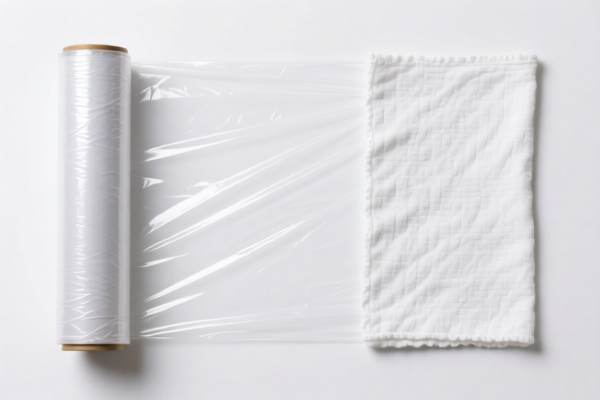
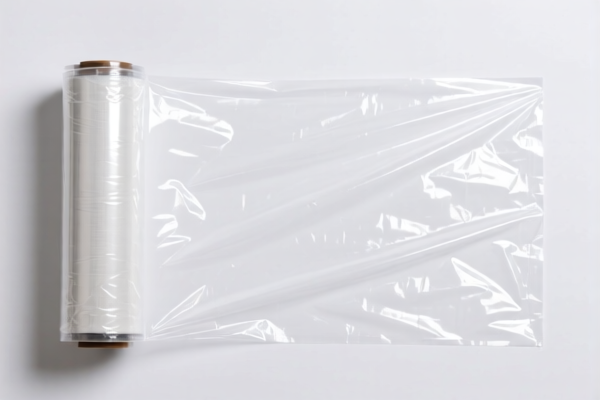
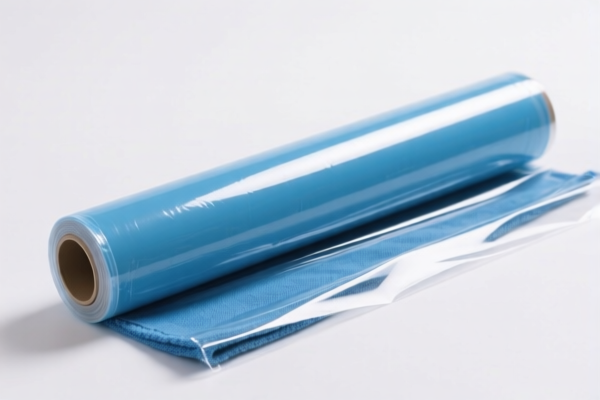
AI分析
🏠 Household Textile Plastic Film (Home Textile Plastic Coating/Laminated Fabric)
🌐 HS Code Reference & Customs Clearance Guide | 2026 Latest Tariff Analysis | Professional Strategy for China-US Trade
📌 I. Product Definition & Classification: What Exactly Is "Household Textile Plastic Film"?
This product typically refers to fabric-based materials that have been impregnated, coated, covered, or laminated with plastic. In household contexts, this often includes: * Vinyl-coated fabrics for upholstery, curtains, or tablecloths. * PVC-laminated textiles for waterproof bedding, shower curtains, or protective covers. * Composite materials where the primary characteristic is the plastic coating rather than the textile base.
⚠️ Key Distinction Point:
- If the plastic is merely a thin coating on a textile base, and the plastic forms the outer surface or gives the essential character → Chapter 59 (Impregnated/Coated Textiles) is often preferred.
- If the product is essentially a plastic sheet/film with minimal textile reinforcement or no distinct textile identity → Chapter 39 (Plastics) applies.
- Critical Factor: Is the plastic covering the textile (Ch. 59) or is the textile embedded in a plastic mass (Ch. 39)?
📦 II. HS Code Classification Details (2026 Latest Tariff Authority Comparison)
| HS Code | Product Description | Application Scenario | Material Composition |
|---|---|---|---|
3920.99.20.00 |
Other plates, sheets, film, foil, and strip, of plastics (non-cellular) | Rigid or semi-rigid plastic sheets used in household applications; plastic films with minimal textile backing | 🟢 Plastic Dominant |
3920.99.10.00 |
Other plates, sheets, film, foil, and strip, of plastics (non-cellular) | Thin plastic films for packaging or light household use; categorized under "Other" plastic articles | 🟢 Plastic Dominant |
5903.10.20.10 |
Textiles impregnated, coated, covered, or laminated with PVC | PVC-coated fabrics: Heavy-duty household covers, vinyl curtains, upholstery fabric | 🟡 Textile + PVC Coating |
5903.10.20.90 |
Other textiles impregnated, coated, covered, or laminated with plastics (except PVC) | Polyurethane (PU) coated fabrics, PE-laminated textiles for bedding/covers | 🟡 Textile + Other Plastic |
3921.90.11.00 |
Other plates, sheets, film, foil, and strip, of plastics (non-cellular) | Plastic films combined with textile materials where the plastic layer is continuous and covers the textile entirely | 🔵 Composite: Plastic + Textile |
🔍 Key Classification Logic:
- Chapter 39 (3920/3921): Used when the product is primarily recognized as a plastic article. Even if it has a textile backing, if the plastic forms a continuous surface and provides the essential character, it may fall here.
- Chapter 59 (5903): Used when the product is primarily recognized as a textile article that has been treated with plastic. This is common for PVC-coated fabrics where the textile base remains distinct and functional.
- Note on PVC:5903.10specifically targets PVC. Other plastics (like PE, PP, PU) fall under5903.10.20.90or other subheadings in Chapter 39 depending on the structure.
💰 III. 2026 Latest Tariff Rate Details (Including Additional Duties & Policy Surcharges)
✅ Applicable Country: United States (US)
✅ Country of Origin: China (CN)
✅ Effective Time: Post-November 2025 (Current Enforcement)
🎯 1. 3920.99.20.00 & 3920.99.10.00 —— Other Plastic Plates, Sheets, Film (Chapter 39)
| Item | Detail |
|---|---|
| Base Tariff | 4.2% (3920.99.20) / 6.0% (3920.99.10) |
| Section 301 Surcharge | +25.0% (USITC Footnote) |
| IEEPA Surcharge (122 Clause) | +10.0% (Targeting specific Chinese goods) |
| Total Tariff Rate | 39.2% (3920.99.20) / 41.0% (3920.99.10) |
| Calculation Basis | CIF Value × Total Rate |
| De Minimis Exemption | ❌ Not Eligible |
| Legal Basis Path | Section 301: 9903.88.01 → IEEPA: 9903.01.24 → HTSUS: 3920.99.xxxx |
📌 Explanation:
- These codes classify the item as a plastic product.
- The 25% Section 301 tariff is standard for most Chinese plastics.
- The 10% IEEPA surcharge applies to specific categories of Chinese plastic articles under recent executive orders.
- Total burden is high (~40%), making cost optimization critical.
🎯 2. 5903.10.20.10 & 5903.10.20.90 —— Impregnated/Coated/Laminated Textiles with Plastic (Chapter 59)
| Item | Detail |
|---|---|
| Base Tariff | 0.0% |
| Section 301 Surcharge | +25.0% (USITC Footnote) |
| IEEPA Surcharge (122 Clause) | +10.0% |
| Total Tariff Rate | 35.0% |
| Calculation Basis | CIF Value × 35.0% |
| De Minimis Exemption | ❌ Not Eligible |
| Legal Basis Path | Section 301: 9903.88.01 → IEEPA: 9903.01.24 → HTSUS: 5903.10.20.xx |
📌 Explanation:
- Base tariff is 0%, which is significantly better than Chapter 39.
- However, the 25% + 10% surcharges still apply, bringing the total to 35%.
- Classification Risk: If U.S. Customs determines the product is not primarily a textile (e.g., the plastic layer is too thick or dominant), they may reclassify it to Chapter 39, increasing the rate to ~40%.
- Recommendation: Ensure the textile base is clearly visible and functional to support Chapter 59 classification.
🎯 3. 3921.90.11.00 —— Plastic Plates, Sheets, Film, Composite with Textile
| Item | Detail |
|---|---|
| Base Tariff | 4.2% |
| Section 301 Surcharge | +25.0% |
| IEEPA Surcharge (122 Clause) | +10.0% |
| Total Tariff Rate | 39.2% |
| Calculation Basis | CIF Value × 39.2% |
| De Minimis Exemption | ❌ Not Eligible |
| Legal Basis Path | Section 301: 9903.88.01 → IEEPA: 9903.01.24 → HTSUS: 3921.90.11.00 |
📌 Explanation:
- This code applies when the plastic and textile are combined in a way that the product is still primarily a plastic sheet/film but with a textile layer.
- The rate is identical to3920.99.20.00but the logic differs slightly (composite vs. pure plastic).
- Use this if the product cannot be classified as a pure plastic sheet (3920) or a coated textile (5903).
🛠️ IV. Customs Clearance Practical Advice (Battle-Tested Tips)
✅ 1. Required Documentation Checklist
| Document | Mandatory? | Purpose |
|---|---|---|
| ✅ Product Specification Sheet | ✔️ | Must detail: Base fabric type (e.g., polyester, cotton), Plastic type (e.g., PVC, PE), Lamination method, Thickness of each layer. |
| ✅ Material Composition Breakdown | ✔️ | Percentage by weight of textile vs. plastic. Critical for Chapter 39 vs. Chapter 59 determination. |
| ✅ Product Photos (Cross-section) | ✔️ | Show the lamination/coating interface to prove textile is not just a backing but integral. |
| ✅ Commercial Invoice | ✔️ | Clear description: "PVC-Coated Polyester Fabric for Home Textile Use" (Avoid vague "Plastic Film"). |
| ✅ Certificate of Origin (CO) | ✔️ | Essential for verifying Country of Origin to apply correct surcharges. |
| ✅ Third-Party Test Report | ✔️ | Confirm plastic type (PVC vs. Non-PVC) and absence of restricted substances (e.g., phthalates in PVC). |
✅ 2. Declaration Strategy (Key Rules)
🔥 “Base Fabric Defines, Plastic Layer Confirms, Name Must Match!”
| Scenario | Recommended HS Code | Incorrect Practice | Consequence |
|---|---|---|---|
| PVC-coated fabric (Textile base visible) | 5903.10.20.10 (35%) |
Declare as "Plastic Sheet" (3920.99.20) |
Higher rate (39.2%) + Risk of misclassification penalty |
| Non-PVC plastic coated fabric (e.g., PU) | 5903.10.20.90 (35%) |
Declare as "Plastic Film" (3920.99.10) |
Higher rate (41%) + Delay |
| Plastic film with textile backing (Plastic dominant) | 3920.99.20.00 (39.2%) |
Declare as "Textile" (5903) |
Risk of reclassification & back-tariffs |
| Composite plastic-textile sheet | 3921.90.11.00 (39.2%) |
Ambiguous name like "Home Material" | Customs will guess, likely higher rate |
✅ 3. Special Situation Handling
| Situation | Handling Advice |
|---|---|
| PVC vs. Non-PVC | Clearly specify the plastic type. PVC (5903.10.20.10) has a 0% base rate; Non-PVC (5903.10.20.90) also has 0% base but different HS code. Do not mix them up. |
| OEM Private Label | Provide the original design sheet showing the textile base. If the plastic is merely a surface treatment, Chapter 59 is stronger. |
| Heavy Plastic Layer | If the plastic layer is >50% of the weight or provides the primary protective function, Customs may lean toward Chapter 39. Prepare argument for textile utility. |
| Small Package (De Minimis) | ❌ Warning: These items are NOT eligible for de minimis ($800) exemption under current IEEPA/Section 301 enforcement. All duties must be paid. |
🌍 V. Global Market Comparison (2026 Latest)
| Country/Region | Recommended HS Code | Total Tariff (China Origin) | Certification | Note |
|---|---|---|---|---|
| 🇺🇸 USA | 5903.10.20.10/90 or 3920.99 |
35% – 41% | None specific | Highest duty burden due to 25% + 10% surcharges |
| 🇨🇳 China | 5903.10 or 3920 |
5% - 9% | RoHS (if electrical) | No additional surcharges |
| 🇪🇺 EU | 5903.10 |
0% - 4% | REACH (Chemical compliance) | PVC may require specific REACH registrations |
| 🇬🇧 UK | 5903.10 |
0% - 4% | UKCA | Similar to EU post-Brexit |
📌 Conclusion:
- USA is the most expensive market due to multiple layered tariffs.
- EU/UK only care about REACH compliance for PVC/plastics. No political surcharges.
- Strategic Advice: If targeting the US, ensure your product is classified under Chapter 59 (35%) rather than Chapter 39 (39.2%+) to save ~4-6% in duties.
📌 VI. Common Mistakes & Pitfalls (Lessons Learned)
❌ Mistake 1: Calling it "Plastic Sheet" when it is clearly PVC-coated fabric.
👉 Result: Misclassification to 3920 → Higher tariff (39.2% vs 35%) + potential audit.
❌ Mistake 2: Ignoring the Plastic Type (PVC vs. Non-PVC).
👉 Result: Using 5903.10.20.10 for PU-coated fabric → Customs reclassifies → Delay + Penalty.
❌ Mistake 3: Assuming De Minimis applies to small samples.
👉 Result: Seizure or back-dating of duties. Section 301 and IEEPA surcharges override de minimis exemptions for Chinese goods.
❌ Mistake 4: Vague Description: "Textile Film".
👉 Result: Customs has no basis to classify → Highest default duty or hold for inspection.
✅ Correct Declaration Example:
"PVC-Coated Polyester Fabric, 100% Polyester Base with 0.5mm PVC Layer, for Household Upholstery Use, Made in China, No Phthalates"
🎯 VII. Conclusion: Smart Classification Saves Money
🎯 Key Takeaway:
🔹 Chapter 59 (35%) is generally cheaper than Chapter 39 (39.2%-41%) for coated textiles.
🔹 Prove the textile base! Provide cross-section photos and material breakdowns to justify Chapter 59.
🔹 PVC matters! Specify PVC to use5903.10.20.10. Non-PVC uses5903.10.20.90.
🔹 No De Minimis! Budget for full duties even for small shipments.
📌 Pro Tip:
If your product is PVC-coated, ensure it meets REACH standards (even for US exports, some US retailers require it). For US imports, focus on accurate material declaration to avoid reclassification.
📣 Immediate Action:
📞 Contact your freight forwarder with the exact material composition.
📄 Request an Advance Ruling (if possible) for high-volume shipments.
🚀 Optimize your Bill of Lading description to match the HS Code logic.
✨ Precise Classification = Predictable Costs!
💼 Don't let vague descriptions cost you 4% in extra tariffs!
用户评价
关于 HS 编码归类
协调制度(HS)是由世界海关组织(WCO)制定的国际贸易商品分类标准。全球 200 多个国家采用 HS 系统作为海关关税、贸易统计和进出口监管的基础。
每个 HS 编码遵循以下层级结构:
- 章(2 位)——商品大类(例如:第 84 章:机器和机械设备)
- 品目(4 位)——章内的更具体分类
- 子目(6 位)——国际通用细分,所有 WCO 成员国统一使用
- 本国细分(8-10 位)——各国自行扩展的细分编码,如美国 HTSUS 10 位编码
正确的 HS 编码归类对于顺利通关、准确缴纳关税和遵守贸易法规至关重要。错误归类可能导致海关延误、多缴关税或罚款。
从CN进口到US时,适用的关税税率可能包括:
- 最惠国(MFN)税率——适用于 WTO 成员国的标准关税税率
- 普通税率——适用于无贸易协定国家
- 贸易救济关税——附加关税,如 301 条款(反倾销)、232 条款(国家安全)或反补贴税
本页内容仅供参考。如需正式归类,请咨询当地海关或持牌报关代理。