Household Textile Plastic Film
CN → US| HS Code | Tariff Rate | Origin | Destination | Doc |
|---|---|---|---|---|
| 3920992000 | 39.2% | CN | US | Official Doc |
| 3920991000 | 41.0% | CN | US | Official Doc |
| 5903102010 | 35.0% | CN | US | Official Doc |
| 5903102090 | 35.0% | CN | US | Official Doc |
| 3921901100 | 39.2% | CN | US | Official Doc |
Product Images

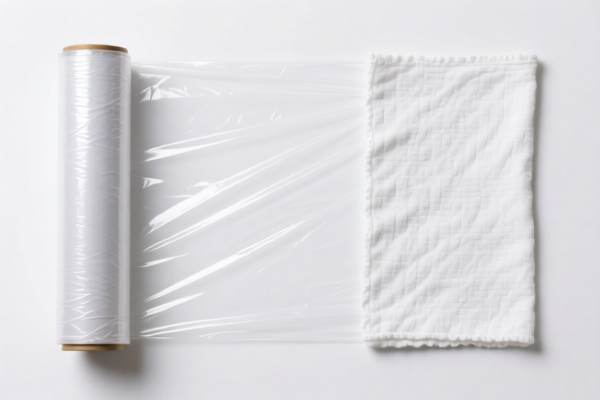
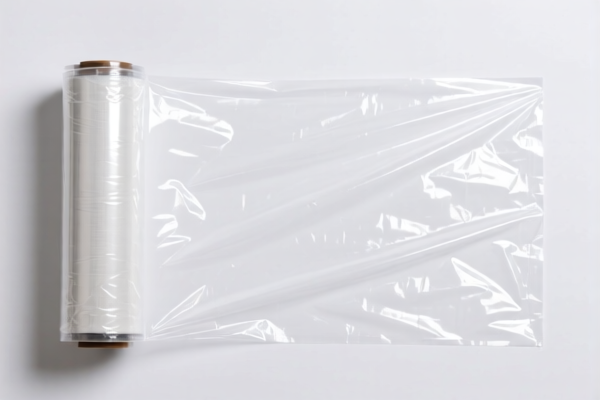
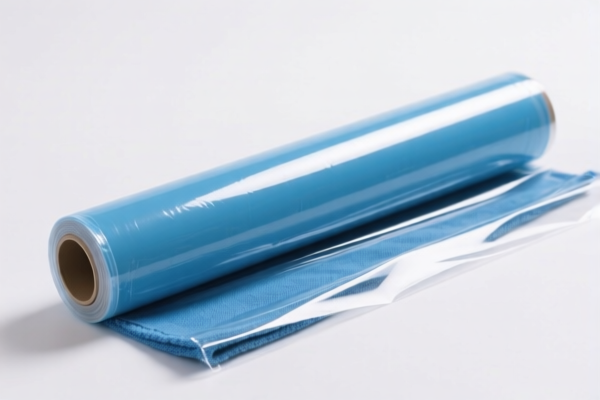
AI Analysis
🏠 Household Textile Plastic Film (Home Textile Plastic Coating/Laminated Fabric)
🌐 HS Code Reference & Customs Clearance Guide | 2026 Latest Tariff Analysis | Professional Strategy for China-US Trade
📌 I. Product Definition & Classification: What Exactly Is "Household Textile Plastic Film"?
This product typically refers to fabric-based materials that have been impregnated, coated, covered, or laminated with plastic. In household contexts, this often includes: * Vinyl-coated fabrics for upholstery, curtains, or tablecloths. * PVC-laminated textiles for waterproof bedding, shower curtains, or protective covers. * Composite materials where the primary characteristic is the plastic coating rather than the textile base.
⚠️ Key Distinction Point:
- If the plastic is merely a thin coating on a textile base, and the plastic forms the outer surface or gives the essential character → Chapter 59 (Impregnated/Coated Textiles) is often preferred.
- If the product is essentially a plastic sheet/film with minimal textile reinforcement or no distinct textile identity → Chapter 39 (Plastics) applies.
- Critical Factor: Is the plastic covering the textile (Ch. 59) or is the textile embedded in a plastic mass (Ch. 39)?
📦 II. HS Code Classification Details (2026 Latest Tariff Authority Comparison)
| HS Code | Product Description | Application Scenario | Material Composition |
|---|---|---|---|
3920.99.20.00 |
Other plates, sheets, film, foil, and strip, of plastics (non-cellular) | Rigid or semi-rigid plastic sheets used in household applications; plastic films with minimal textile backing | 🟢 Plastic Dominant |
3920.99.10.00 |
Other plates, sheets, film, foil, and strip, of plastics (non-cellular) | Thin plastic films for packaging or light household use; categorized under "Other" plastic articles | 🟢 Plastic Dominant |
5903.10.20.10 |
Textiles impregnated, coated, covered, or laminated with PVC | PVC-coated fabrics: Heavy-duty household covers, vinyl curtains, upholstery fabric | 🟡 Textile + PVC Coating |
5903.10.20.90 |
Other textiles impregnated, coated, covered, or laminated with plastics (except PVC) | Polyurethane (PU) coated fabrics, PE-laminated textiles for bedding/covers | 🟡 Textile + Other Plastic |
3921.90.11.00 |
Other plates, sheets, film, foil, and strip, of plastics (non-cellular) | Plastic films combined with textile materials where the plastic layer is continuous and covers the textile entirely | 🔵 Composite: Plastic + Textile |
🔍 Key Classification Logic:
- Chapter 39 (3920/3921): Used when the product is primarily recognized as a plastic article. Even if it has a textile backing, if the plastic forms a continuous surface and provides the essential character, it may fall here.
- Chapter 59 (5903): Used when the product is primarily recognized as a textile article that has been treated with plastic. This is common for PVC-coated fabrics where the textile base remains distinct and functional.
- Note on PVC:5903.10specifically targets PVC. Other plastics (like PE, PP, PU) fall under5903.10.20.90or other subheadings in Chapter 39 depending on the structure.
💰 III. 2026 Latest Tariff Rate Details (Including Additional Duties & Policy Surcharges)
✅ Applicable Country: United States (US)
✅ Country of Origin: China (CN)
✅ Effective Time: Post-November 2025 (Current Enforcement)
🎯 1. 3920.99.20.00 & 3920.99.10.00 —— Other Plastic Plates, Sheets, Film (Chapter 39)
| Item | Detail |
|---|---|
| Base Tariff | 4.2% (3920.99.20) / 6.0% (3920.99.10) |
| Section 301 Surcharge | +25.0% (USITC Footnote) |
| IEEPA Surcharge (122 Clause) | +10.0% (Targeting specific Chinese goods) |
| Total Tariff Rate | 39.2% (3920.99.20) / 41.0% (3920.99.10) |
| Calculation Basis | CIF Value × Total Rate |
| De Minimis Exemption | ❌ Not Eligible |
| Legal Basis Path | Section 301: 9903.88.01 → IEEPA: 9903.01.24 → HTSUS: 3920.99.xxxx |
📌 Explanation:
- These codes classify the item as a plastic product.
- The 25% Section 301 tariff is standard for most Chinese plastics.
- The 10% IEEPA surcharge applies to specific categories of Chinese plastic articles under recent executive orders.
- Total burden is high (~40%), making cost optimization critical.
🎯 2. 5903.10.20.10 & 5903.10.20.90 —— Impregnated/Coated/Laminated Textiles with Plastic (Chapter 59)
| Item | Detail |
|---|---|
| Base Tariff | 0.0% |
| Section 301 Surcharge | +25.0% (USITC Footnote) |
| IEEPA Surcharge (122 Clause) | +10.0% |
| Total Tariff Rate | 35.0% |
| Calculation Basis | CIF Value × 35.0% |
| De Minimis Exemption | ❌ Not Eligible |
| Legal Basis Path | Section 301: 9903.88.01 → IEEPA: 9903.01.24 → HTSUS: 5903.10.20.xx |
📌 Explanation:
- Base tariff is 0%, which is significantly better than Chapter 39.
- However, the 25% + 10% surcharges still apply, bringing the total to 35%.
- Classification Risk: If U.S. Customs determines the product is not primarily a textile (e.g., the plastic layer is too thick or dominant), they may reclassify it to Chapter 39, increasing the rate to ~40%.
- Recommendation: Ensure the textile base is clearly visible and functional to support Chapter 59 classification.
🎯 3. 3921.90.11.00 —— Plastic Plates, Sheets, Film, Composite with Textile
| Item | Detail |
|---|---|
| Base Tariff | 4.2% |
| Section 301 Surcharge | +25.0% |
| IEEPA Surcharge (122 Clause) | +10.0% |
| Total Tariff Rate | 39.2% |
| Calculation Basis | CIF Value × 39.2% |
| De Minimis Exemption | ❌ Not Eligible |
| Legal Basis Path | Section 301: 9903.88.01 → IEEPA: 9903.01.24 → HTSUS: 3921.90.11.00 |
📌 Explanation:
- This code applies when the plastic and textile are combined in a way that the product is still primarily a plastic sheet/film but with a textile layer.
- The rate is identical to3920.99.20.00but the logic differs slightly (composite vs. pure plastic).
- Use this if the product cannot be classified as a pure plastic sheet (3920) or a coated textile (5903).
🛠️ IV. Customs Clearance Practical Advice (Battle-Tested Tips)
✅ 1. Required Documentation Checklist
| Document | Mandatory? | Purpose |
|---|---|---|
| ✅ Product Specification Sheet | ✔️ | Must detail: Base fabric type (e.g., polyester, cotton), Plastic type (e.g., PVC, PE), Lamination method, Thickness of each layer. |
| ✅ Material Composition Breakdown | ✔️ | Percentage by weight of textile vs. plastic. Critical for Chapter 39 vs. Chapter 59 determination. |
| ✅ Product Photos (Cross-section) | ✔️ | Show the lamination/coating interface to prove textile is not just a backing but integral. |
| ✅ Commercial Invoice | ✔️ | Clear description: "PVC-Coated Polyester Fabric for Home Textile Use" (Avoid vague "Plastic Film"). |
| ✅ Certificate of Origin (CO) | ✔️ | Essential for verifying Country of Origin to apply correct surcharges. |
| ✅ Third-Party Test Report | ✔️ | Confirm plastic type (PVC vs. Non-PVC) and absence of restricted substances (e.g., phthalates in PVC). |
✅ 2. Declaration Strategy (Key Rules)
🔥 “Base Fabric Defines, Plastic Layer Confirms, Name Must Match!”
| Scenario | Recommended HS Code | Incorrect Practice | Consequence |
|---|---|---|---|
| PVC-coated fabric (Textile base visible) | 5903.10.20.10 (35%) |
Declare as "Plastic Sheet" (3920.99.20) |
Higher rate (39.2%) + Risk of misclassification penalty |
| Non-PVC plastic coated fabric (e.g., PU) | 5903.10.20.90 (35%) |
Declare as "Plastic Film" (3920.99.10) |
Higher rate (41%) + Delay |
| Plastic film with textile backing (Plastic dominant) | 3920.99.20.00 (39.2%) |
Declare as "Textile" (5903) |
Risk of reclassification & back-tariffs |
| Composite plastic-textile sheet | 3921.90.11.00 (39.2%) |
Ambiguous name like "Home Material" | Customs will guess, likely higher rate |
✅ 3. Special Situation Handling
| Situation | Handling Advice |
|---|---|
| PVC vs. Non-PVC | Clearly specify the plastic type. PVC (5903.10.20.10) has a 0% base rate; Non-PVC (5903.10.20.90) also has 0% base but different HS code. Do not mix them up. |
| OEM Private Label | Provide the original design sheet showing the textile base. If the plastic is merely a surface treatment, Chapter 59 is stronger. |
| Heavy Plastic Layer | If the plastic layer is >50% of the weight or provides the primary protective function, Customs may lean toward Chapter 39. Prepare argument for textile utility. |
| Small Package (De Minimis) | ❌ Warning: These items are NOT eligible for de minimis ($800) exemption under current IEEPA/Section 301 enforcement. All duties must be paid. |
🌍 V. Global Market Comparison (2026 Latest)
| Country/Region | Recommended HS Code | Total Tariff (China Origin) | Certification | Note |
|---|---|---|---|---|
| 🇺🇸 USA | 5903.10.20.10/90 or 3920.99 |
35% – 41% | None specific | Highest duty burden due to 25% + 10% surcharges |
| 🇨🇳 China | 5903.10 or 3920 |
5% - 9% | RoHS (if electrical) | No additional surcharges |
| 🇪🇺 EU | 5903.10 |
0% - 4% | REACH (Chemical compliance) | PVC may require specific REACH registrations |
| 🇬🇧 UK | 5903.10 |
0% - 4% | UKCA | Similar to EU post-Brexit |
📌 Conclusion:
- USA is the most expensive market due to multiple layered tariffs.
- EU/UK only care about REACH compliance for PVC/plastics. No political surcharges.
- Strategic Advice: If targeting the US, ensure your product is classified under Chapter 59 (35%) rather than Chapter 39 (39.2%+) to save ~4-6% in duties.
📌 VI. Common Mistakes & Pitfalls (Lessons Learned)
❌ Mistake 1: Calling it "Plastic Sheet" when it is clearly PVC-coated fabric.
👉 Result: Misclassification to 3920 → Higher tariff (39.2% vs 35%) + potential audit.
❌ Mistake 2: Ignoring the Plastic Type (PVC vs. Non-PVC).
👉 Result: Using 5903.10.20.10 for PU-coated fabric → Customs reclassifies → Delay + Penalty.
❌ Mistake 3: Assuming De Minimis applies to small samples.
👉 Result: Seizure or back-dating of duties. Section 301 and IEEPA surcharges override de minimis exemptions for Chinese goods.
❌ Mistake 4: Vague Description: "Textile Film".
👉 Result: Customs has no basis to classify → Highest default duty or hold for inspection.
✅ Correct Declaration Example:
"PVC-Coated Polyester Fabric, 100% Polyester Base with 0.5mm PVC Layer, for Household Upholstery Use, Made in China, No Phthalates"
🎯 VII. Conclusion: Smart Classification Saves Money
🎯 Key Takeaway:
🔹 Chapter 59 (35%) is generally cheaper than Chapter 39 (39.2%-41%) for coated textiles.
🔹 Prove the textile base! Provide cross-section photos and material breakdowns to justify Chapter 59.
🔹 PVC matters! Specify PVC to use5903.10.20.10. Non-PVC uses5903.10.20.90.
🔹 No De Minimis! Budget for full duties even for small shipments.
📌 Pro Tip:
If your product is PVC-coated, ensure it meets REACH standards (even for US exports, some US retailers require it). For US imports, focus on accurate material declaration to avoid reclassification.
📣 Immediate Action:
📞 Contact your freight forwarder with the exact material composition.
📄 Request an Advance Ruling (if possible) for high-volume shipments.
🚀 Optimize your Bill of Lading description to match the HS Code logic.
✨ Precise Classification = Predictable Costs!
💼 Don't let vague descriptions cost you 4% in extra tariffs!
Customer Reviews
About HS Code Classification
The Harmonized System (HS) is an internationally standardized nomenclature developed by the World Customs Organization (WCO) to classify traded products. Over 200 countries use the HS system as the basis for customs tariffs, trade statistics, and import/export regulations.
Each HS code follows a hierarchical structure:
- Chapter (2 digits) — Broad category of goods (e.g., Chapter 84: Machinery and Mechanical Appliances)
- Heading (4 digits) — More specific grouping within the chapter
- Subheading (6 digits) — Internationally standardized breakdown, used by all WCO member countries
- National subdivisions (8-10 digits) — Country-specific extensions for further classification, such as US HTSUS 10-digit codes
Correct HS code classification is essential for smooth customs clearance, accurate duty payment, and compliance with trade regulations. Misclassification can lead to customs delays, overpayment of duties, or penalties.
When importing from CN to US, the applicable tariff rates may include:
- Most-Favored-Nation (MFN) rate — The standard duty rate applied to WTO members
- General rate — Applied to countries without trade agreements
- Trade remedy duties — Additional tariffs such as Section 301 (anti-dumping), Section 232 (national security), or countervailing duties
The information provided on this page is for reference purposes only. For official classification, please consult with your local customs authority or a licensed customs broker.