Ice Silk Short Sleeve Suit
CN → US| HS编码 | 关税税率 | 原产国 | 目的国 | 文档 |
|---|---|---|---|---|
| 6307909891 | 24.5% | CN | US | 官方文档 |
| 6307908995 | 17.0% | CN | US | 官方文档 |
| 6117809570 | 32.1% | CN | US | 官方文档 |
| 6217109530 | 32.1% | CN | US | 官方文档 |
| 6217108500 | 24.6% | CN | US | 官方文档 |
商品图片
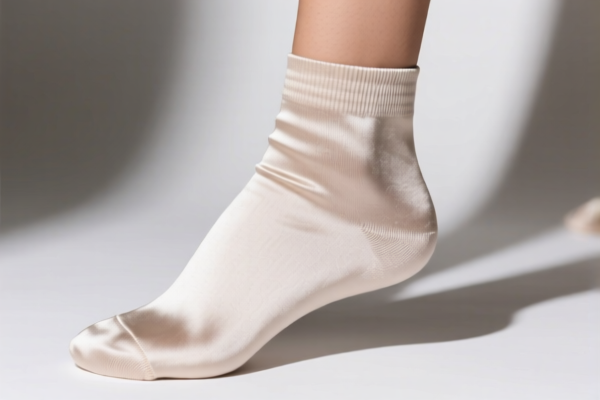
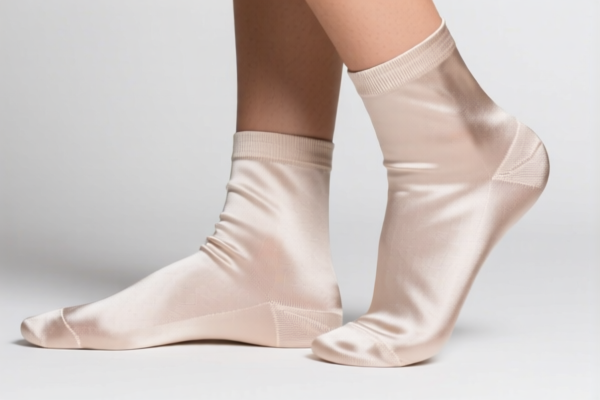
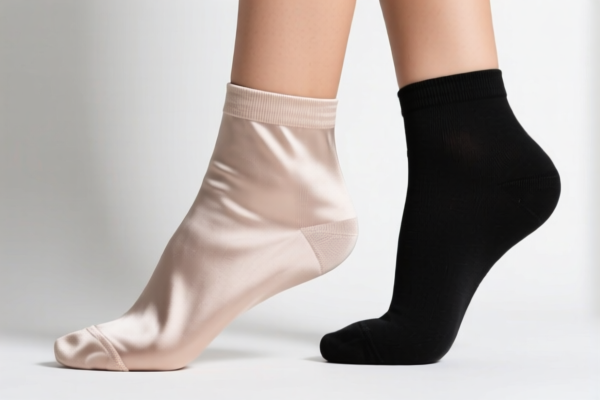
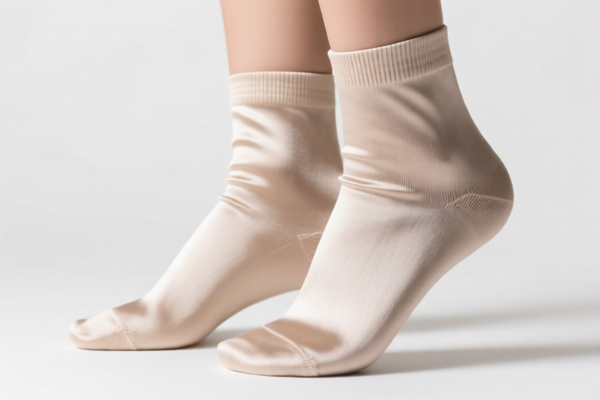
AI分析
🧦 Ice Silk Short Sleeve Suit (UV Protection Sleeves / Arm Sleeves)
🌐 HS Code Reference & Customs Clearance Guide | 2026 Latest Tariff Analysis | Professional Clearance Strategy
📌 I. Product Definition & Classification: Do You Really Understand "Ice Silk Sleeves"?
"Ice Silk" (冰丝) is not a botanical or biological fiber but a commercial term primarily referring to synthetic regenerated fibers (such as polyamide, polyester, or viscose blends) known for their smooth texture, cooling sensation, and moisture-wicking properties. In international trade, these products are generally classified as apparel accessories or textile articles, depending on their structure and whether they are knitted or woven.
Key Distinctions: * Knitted vs. Woven: "Ice silk" sleeves are often knitted (elastic, stretchy) or woven (structured). This distinction heavily influences the HS Code chapter (61 for Knitted vs. 62 for Woven). * Accessories vs. Manufactures: Are they "part of a garment" (accessories) or "finished textile articles" on their own? Customs often debate this. If they are simply sleeves without cuffs or complex tailoring, they may fall under "other made-up textile articles."
⚠️ Critical Classification Point:
- If the product is knitted (stretchy, looped structure) → Look to Chapter 61 (Knitted or Crocheted).
- If the product is woven (flat, non-stretchy or woven elastic) → Look to Chapter 62 (Non-Knitted).
- If the material is considered a "textile article" rather than a clothing accessory → Look to Chapter 63.
📦 II. HS Code Classification Details (2026 Latest Tariff Authority Comparison)
| HS Code | Product Description | Applicable Scenario | Tax Rate (Total) |
|---|---|---|---|
6307.90.98.91 |
Other made-up textile articles, made of man-made fiber fabrics | Woven "ice silk" sleeves, considered general textile accessories | 24.5% |
6307.90.89.95 |
Other made-up textile articles, made of artificial fibers | Woven sleeves where material is classified as "artificial" (e.g., viscose) | 17.0% |
6117.80.95.70 |
Other made-up clothing accessories, knitted or crocheted, of man-made fibers | Knitted ice silk sleeves (most common for stretchy UV sleeves) | 32.1% |
6217.10.95.30 |
Other made-up clothing accessories, not knitted or crocheted, of man-made or artificial fibers | Woven sleeves, strictly classified as "clothing accessories" | 32.1% |
6217.10.85.00 |
Other made-up clothing accessories, not knitted or crocheted, of silk or man-made fibers | Woven sleeves, potentially lower base rate if material classification differs | 24.6% |
🔍 Key Insight:
- Knitted vs. Woven is the biggest risk factor. Misclassifying a knitted sleeve (Chapter 61) as a woven one (Chapter 62) can lead to discrepancies in duty rates and legal interpretations. - "Ice Silk" is ambiguous. Customs may classify it as "Man-made fiber" (synthetic like nylon/polyester) or "Artificial fiber" (regenerated like viscose/rayon). This affects the base rate significantly (e.g., 7% vs 14.6%).
💰 III. 2026 Latest Tariff Rate Breakdown (Including Surcharges & Policy Add-ons)
✅ Applicable Country: United States (US)
✅ Origin: China (CN)
✅ Effective Time: 2025-11-10 onwards (including subsequent imports)
🎯 1. 6307.90.98.91 —— Other Made-up Textile Articles (Man-made Fiber)
| Item | Content |
|---|---|
| Base Duty | 7.0% |
| Section 301 Surcharge | 7.5% |
| Section 122 Surcharge | 10.0% |
| Total Rate | 24.5% |
| Tax Calculation | CIF Value × 24.5% |
| De Minimis Exemption | ❌ Not Eligible (High tariff rate exceeds threshold for 80/90 exemptions) |
| Legal Basis | Section 301: 7.5% → Section 122: 10% → USITC: 6307.90.98.91 |
📌 Explanation:
- This code assumes a woven structure classified as a general textile article. - The 7% base is relatively low, but the 7.5% Section 301 and 10% Section 122 add up significantly.
🎯 2. 6307.90.89.95 —— Other Made-up Textile Articles (Artificial Fiber)
| Item | Content |
|---|---|
| Base Duty | 7.0% |
| Section 301 Surcharge | 0.0% |
| Section 122 Surcharge | 10.0% |
| Total Rate | 17.0% |
| Tax Calculation | CIF Value × 17.0% |
| De Minimis Exemption | ❌ Not Eligible |
| Legal Basis | Section 122: 10% → USITC: 6307.90.89.95 |
📌 Note:
- This is the most cost-effective option if the material can be legally defined as "artificial fiber" (e.g., viscose/rayon-based ice silk) AND it is woven. - Section 301 exemption (0%) makes this significantly cheaper than other options.
🎯 3. 6117.80.95.70 —— Knitted Clothing Accessories (Man-made Fiber)
| Item | Content |
|---|---|
| Base Duty | 14.6% |
| Section 301 Surcharge | 7.5% |
| Section 122 Surcharge | 10.0% |
| Total Rate | 32.1% |
| Tax Calculation | CIF Value × 32.1% |
| De Minimis Exemption | ❌ Not Eligible |
| Legal Basis | Section 301: 7.5% → Section 122: 10% → USITC: 6117.80.95.70 |
📌 Warning:
- If your sleeves are knitted (stretchy, loop-knit), they likely fall here. - The base rate is much higher (14.6%) compared to Chapter 63. - Total tax is the highest among all options.
🎯 4. 6217.10.95.30 —— Woven Clothing Accessories (Man-made/Artificial Fiber)
| Item | Content |
|---|---|
| Base Duty | 14.6% |
| Section 301 Surcharge | 7.5% |
| Section 122 Surcharge | 10.0% |
| Total Rate | 32.1% |
| Tax Calculation | CIF Value × 32.1% |
| De Minimis Exemption | ❌ Not Eligible |
| Legal Basis | Section 301: 7.5% → Section 122: 10% → USITC: 6217.10.95.30 |
📌 Note:
- Applies to woven sleeves that are strictly defined as "clothing accessories." - High base rate (14.6%) plus surcharges leads to the highest total tax.
🎯 5. 6217.10.85.00 —— Woven Clothing Accessories (Silk/Man-made Fiber)
| Item | Content |
|---|---|
| Base Duty | 14.6% |
| Section 301 Surcharge | 0.0% |
| Section 122 Surcharge | 10.0% |
| Total Rate | 24.6% |
| Tax Calculation | CIF Value × 24.6% |
| De Minimis Exemption | ❌ Not Eligible |
| Legal Basis | Section 122: 10% → USITC: 6217.10.85.00 |
📌 Opportunity:
- Similar to6307.90.89.95, if Section 301 applies at 0%, the total rate drops to 24.6%. - Requires careful material substantiation to qualify for the lower Section 301 rate.
🛠️ IV. Customs Clearance Practical Advice (Avoid Pitfalls)
✅ 1. Preparation Checklist (Must-Haves)
| Document | Required | Description |
|---|---|---|
| ✅ Product Specifications | ✔️ | Must specify: Material composition (e.g., 80% Nylon, 20% Spandex), Structure (Knitted/Woven), Intended Use (UV Protection/Sports) |
| ✅ Material Test Report | ✔️ | Third-party lab report confirming "Ice Silk" is not natural silk or wool. Must define as Synthetic or Regenerated. |
| ✅ Product Photos | ✔️ | Clear images showing the loop/knit structure (for Chapter 61) or flat weave (for Chapter 62). Include close-ups of seams. |
| ✅ Commercial Invoice | ✔️ | Describe as "UV Protection Arm Sleeves, Made of Man-Made Fibers," NOT "Silk Gloves" or "Clothing." |
| ✅ Packing List | ✔️ | Detail packaging to ensure they are not considered "part of a larger garment." |
✅ 2. Declaration Tips (Key Mantra)
🔥 "Knit is 61, Woven is 62, Material Defines 301, 122 Hits Both!"
| Scenario | Correct Declaration | Wrong Practice |
|---|---|---|
| Stretchy, Loop-knit Sleeves | 6117.80.95.70 (Chapter 61) |
Declare as Woven (62) → Risk of reclassification & penalties |
| Flat, Woven Sleeves (Viscose) | 6307.90.89.95 (Chapter 63) |
Declare as 6117 → Overpay or misclassification |
| "Ice Silk" (Regenerated Fiber) | Specify "Artificial Fiber" in material description | Just say "Ice Silk" → Customs may default to "Man-made" (higher 301 rate) |
| Knitted Sleeves | Ensure HS Code starts with 6117 |
Using 6217 (Woven) → 14.6% base + 7.5% 301 = 32.1% |
✅ 3. Special Handling
| Scenario | Recommendation |
|---|---|
| OEM/Custom Colors | Provide dye lot info and material composition sheet to prove consistency. |
| Mixed Materials | If >50% is man-made, classify under man-made. If mixed, use "Not elsewhere specified." |
| Gift Sets | If sold with a hat or bag, ensure proper valuation. Accessories are often valued separately or as a set based on principal item. |
| Anti-Dumping | Check if specific "knitted accessories" from China have anti-dumping duties. (Currently, no specific AD for ice silk sleeves, but always verify). |
🌍 V. Global Market Clearance Comparison (2026 Latest)
| Country/Region | Recommended HS Code | Estimated Duty | Certification | Notes |
|---|---|---|---|---|
| 🇺🇸 USA | 6307.90.89.95 (Woven/Artificial) |
17.0% | CE (if applicable) | Lowest US rate if Section 301 is 0%. Watch out for Section 122 (10%). |
| 🇨🇳 China | 6307.90.98.91 |
Low (MFN) | CCC (if applicable) | Domestic clearance is straightforward. |
| 🇪🇺 EU | 6307.90.90 |
Varies (usually 4-12%) | CE/REACH | EU does not have Section 301/122 equivalents. Tariff is generally lower than US. |
| 🇦🇺 Australia | 6307.90.90 |
5% - 10% | ACMA (if electronic) | No major surcharges. |
| 🇯🇵 Japan | 6307.90.90 |
7% - 10% | PSE (if applicable) | Stable tariff regime. |
📌 Conclusion:
- USA is the most complex market due to Section 301 and Section 122 surcharges.
- Optimizing Material Classification (Artificial vs. Man-made) and Structure (Woven vs. Knitted) is the key to saving 5-15% in duties.
📌 VI. Common Errors & Pitfalls (Blood Lessons)
❌ Mistake 1: Using "Silk" in the description for "Ice Silk"
👉 Consequence: Customs may classify as true silk (HS 50) or reject it, causing delays. "Ice Silk" is not silk.
✅ Fix: Always use "Man-made fiber" or "Regenerated fiber" and explicitly state "Not Silk."
❌ Mistake 2: Confusing Knitted vs. Woven
👉 Consequence: If you declare Woven (62) but it's Knitted (61), you face base rate difference (14.6% vs 7%) + legal penalties.
✅ Fix: Provide a physical sample or detailed photo showing the loop structure for knitted items.
❌ Mistake 3: Ignoring Section 122 (10%)
👉 Consequence: Many importers forget the 10% Section 122 tariff on certain Chinese textile goods, leading to unexpected costs.
✅ Fix: Always add 10% to your cost model for Section 122 applicable codes.
❌ Mistake 4: Overlooking De Minimis Exemptions
👉 Consequence: While Section 301/122 often block de minimis, if your total tariff is low enough, you might still qualify. However, with rates >25%, it's generally not worth the hassle.
✅ Fix: Plan for full duty payment for B2B shipments.
🎯 VII. Conclusion: Professional Declaration, Save Money & Time!
🎯 Remember the Mantra:
🔹 "Knit is 61, Woven is 62. Artificial fiber = Lower 301. Ice Silk ≠ Silk."
🔹 "Check Section 122 (10%). Check Section 301 (7.5% or 0%). Total Tax = Base + Surcharges."
📌 Pro Tip:
If your "ice silk" sleeves are made of viscose/rayon (Artificial Fiber) and are woven, strive for HS Code 6307.90.89.95 to benefit from 0% Section 301 and a 17% total rate. This is the cheapest path for US imports.
For knitted sleeves (which are more common for UV protection), you are likely stuck with 6117.80.95.70 at 32.1%. Consider if a woven alternative is possible for cost savings.
📣 Immediate Action:
📞 Contact a customs broker + Provide material test reports + Apply for Pre-Ruling if possible.
🚀 Ensure your supplier declares the exact fiber composition to avoid misclassification.
✨ Professional clearance starts with accurate classification!
💼 Every percentage point matters in cross-border e-commerce!
用户评价
关于 HS 编码归类
协调制度(HS)是由世界海关组织(WCO)制定的国际贸易商品分类标准。全球 200 多个国家采用 HS 系统作为海关关税、贸易统计和进出口监管的基础。
每个 HS 编码遵循以下层级结构:
- 章(2 位)——商品大类(例如:第 84 章:机器和机械设备)
- 品目(4 位)——章内的更具体分类
- 子目(6 位)——国际通用细分,所有 WCO 成员国统一使用
- 本国细分(8-10 位)——各国自行扩展的细分编码,如美国 HTSUS 10 位编码
正确的 HS 编码归类对于顺利通关、准确缴纳关税和遵守贸易法规至关重要。错误归类可能导致海关延误、多缴关税或罚款。
从CN进口到US时,适用的关税税率可能包括:
- 最惠国(MFN)税率——适用于 WTO 成员国的标准关税税率
- 普通税率——适用于无贸易协定国家
- 贸易救济关税——附加关税,如 301 条款(反倾销)、232 条款(国家安全)或反补贴税
本页内容仅供参考。如需正式归类,请咨询当地海关或持牌报关代理。