Immersion Rod
CN → US| HS编码 | 关税税率 | 原产国 | 目的国 | 文档 |
|---|---|---|---|---|
| 8419190160 | 35.0% | CN | US | 官方文档 |
| 8516100080 | 17.5% | CN | US | 官方文档 |
| 8516100040 | 17.5% | CN | US | 官方文档 |
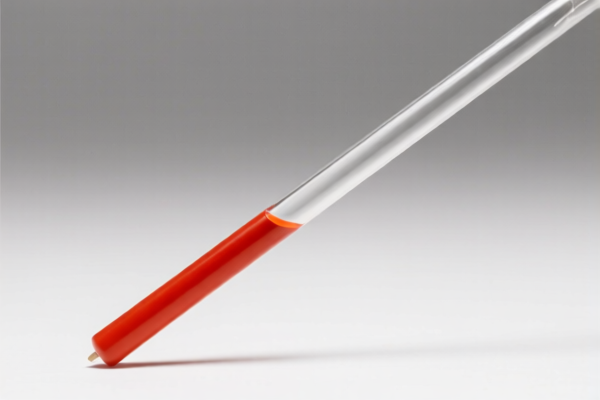
商品图片



AI分析
🔥 Immersion Rods (Heaters) | The Critical Tax Trap for US Importers
🌐 HS Code Reference & Customs Clearance Guide | 2026 Latest Tariff Analysis | Professional Compliance Strategy
📌 I. Product Definition & Classification: What is an "Immersion Rod"?
An Immersion Rod (also known as an immersion heater or dip heater) is a heating element designed to be submerged directly into liquids (water, oil, chemicals) to transfer heat. In international trade, the classification hinges on how it generates heat:
🔹 Non-Electric Heating Devices:
If the rod uses steam, hot gas, or hot liquid to heat the surrounding medium (indirect heat exchange), it falls under Chapter 84.
🔹 Electric Heating Appliances:
If the rod converts electrical energy directly into heat via resistance elements (the vast majority of commercial/industrial immersion rods), it falls under Chapter 85.
⚠️ Key Classification Point:
- If the device is purely a heat exchanger (no internal electrical resistance heating element) → 8419
- If the device contains electrical resistance coils that heat up when plugged in → 8516
📦 II. HS Code Classification Details (2026 Latest Tariff Authority)
Based on the provided data, here are the precise HS Code mappings for Immersion Rods:
| HS Code | Product Description | Applicable Scenario | Heating Mechanism |
|---|---|---|---|
8419.19.01.60 |
Other non-electric heating devices | Steam-heated immersion rods, indirect heat exchangers | ❌ Non-Electric (Indirect) |
8516.10.00.80 |
Immersion heaters, similar to classification explanation | Standard electric immersion heaters, functional consistency | ✅ Electric (Direct Resistance) |
8516.10.00.40 |
Immersion heaters, functional consistency | Industrial electric dip heaters, exact functional match | ✅ Electric (Direct Resistance) |
🔍 Crucial Note:
- Most common immersion rods (used in tanks, boilers, water heaters) are Electric. They should be classified under 8516.
- Only specialized industrial heat exchangers using steam/hot oil are classified under 8419.
- Misclassification leads to significant duty differences and compliance risks.
💰 III. 2026 Latest Tariff Rate Breakdown (Including Surtaxes)
✅ Applicable Country: United States (US)
✅ Country of Origin: China (CN)
✅ Effective Date: From 2025 onwards (including subsequent imports)
🎯 1. 8419.19.01.60 —— Non-Electric Immersion Heaters
| Item | Content |
|---|---|
| Base Tariff | 0.0% |
| Additional Tariff (Section 301) | +25.0% |
| IEEPA Surtax (Section 122) | +10.0% |
| Total Effective Tax Rate | 35.0% |
| Tax Calculation | CIF Value × 35% |
| De Minimis Exemption | ❌ Not Applicable (High duty rate exceeds threshold) |
| Legal Basis Path | USITC:8419.19.01.60 → SECTION301:25% → IEEPA:10% |
📌 Explanation:
- This code applies to non-electric heating devices.
- Despite being "non-electric," it is still subject to 25% Section 301 tariffs and 10% IEEPA tariffs due to its Chinese origin.
- Total Duty: 35%. This is a high-cost category.
🎯 2. 8516.10.00.80 —— Electric Immersion Heaters (Summary Match)
| Item | Content |
|---|---|
| Base Tariff | 0.0% |
| Additional Tariff (Section 301) | +7.5% |
| IEEPA Surtax (Section 122) | +10.0% |
| Total Effective Tax Rate | 17.5% |
| Tax Calculation | CIF Value × 17.5% |
| De Minimis Exemption | ❌ Not Applicable |
| Legal Basis Path | USITC:8516.10.00.80 → SECTION301:7.5% → IEEPA:10% |
📌 Explanation:
- This code matches the summary description of immersion heaters.
- Total Duty: 17.5%.
- Significant Savings: Compared to the non-electric category (35%), this code offers a 17.5% lower duty rate because the Section 301 rate is lower (7.5% vs 25%).
🎯 3. 8516.10.00.40 —— Electric Immersion Heaters (Functional Match)
| Item | Content |
|---|---|
| Base Tariff | 0.0% |
| Additional Tariff (Section 301) | +7.5% |
| IEEPA Surtax (Section 122) | +10.0% |
| Total Effective Tax Rate | 17.5% |
| Tax Calculation | CIF Value × 17.5% |
| De Minimis Exemption | ❌ Not Applicable |
| Legal Basis Path | USITC:8516.10.00.40 → SECTION301:7.5% → IEEPA:10% |
📌 Explanation:
- This code matches the functional description of immersion heaters.
- Total Duty: 17.5%.
- Strategic Advantage: If your product is electrically heated, choosing 8516 (either .40 or .80) over 8419 saves you 17.5% in duties.
🛠️ IV. Customs Clearance Practical Advice (Real-World Pitfall Avoidance)
✅ 1. Required Documentation Checklist (Non-Negotiable)
| Document | Mandatory? | Description |
|---|---|---|
| ✅ Product Specification Sheet | ✔️ | Must clearly state: Power (Watts/Volts), Heating Element Type, Material, Intended Liquid. |
| ✅ Circuit Diagram / Schematic | ✔️ | Critical to prove it is an electric device (for 8516) vs. a heat exchanger (for 8419). |
| ✅ Product Photos | ✔️ | Clear images of the heating element, wire connection, and label (with voltage/amperage). |
| ✅ Commercial Invoice | ✔️ | Must specify: "Electric Immersion Heater" or "Non-Electric Heat Exchanger" — Do not just write "Rod". |
| ✅ Origin Certificate (CO) | ✔️ | To prove Country of Origin (China). |
| ✅ Packing List | ✔️ | Detailed breakdown of contents. |
✅ 2. Declaration Tips (Key Mantra)
🔥 "Electric is 17.5%, Non-Electric is 35%! Prove the Circuit!"
| Scenario | Correct Declaration | Wrong Practice |
|---|---|---|
| Standard Electric Immersion Heater | 8516.10.00.80 or 8516.10.00.40 |
Misdeclare as 8419 → Pay 35% instead of 17.5% |
| Steam-Jacketed Tank Heater | 8419.19.01.60 |
Misdeclare as 8516 → Class Error + Penalty |
| Vague Description "Heating Rod" | ❌ Reject | Customs will audit, delay shipment, and potentially assign wrong code |
| Missing Voltage Info | ❌ Reject | Cannot determine if electric or non-electric |
✅ 3. Special Handling
| Scenario | Handling Advice |
|---|---|
| OEM Custom Heaters | Provide customer design specs + wiring diagram to justify 8516 classification. |
| Mixed Shipments | If a shipment contains both electric and non-electric rods, declare separately. Do not mix codes. |
| High-Power Industrial Rods | Ensure voltage/current specs are on the label. If no label, provide a declaration letter. |
| Certification | UL/ETL certification helps prove it is an electrical appliance, supporting 8516 classification. |
🌍 V. Global Market Clearance Comparison (2026)
| Country/Region | Recommended HS Code | Duty Rate (China Origin) | Key Requirement | Note |
|---|---|---|---|---|
| 🇺🇸 USA | 8516.10.00.40/80 |
17.5% (Total) | FCC/UL (if applicable) | Best Option for electric rods. 8419 is 35%. |
| 🇨🇳 China | 8516.10.00.00 |
~5% | CCC (if applicable) | Low duty, no surtaxes. |
| 🇪🇺 EU | 8516.10.00 |
0-3% | CE + RoHS | No trade war tariffs. |
| 🇨🇦 Canada | 8516.10.00 |
0% (if CUSMA eligible) | CSACert | Check preferential origin. |
| 🇯🇵 Japan | 8516.10.00 |
3.0-5% | PSE | Moderate duty. |
📌 Conclusion:
- USA is the most challenging market due to Section 301 and IEEPA tariffs.
- Correct classification is vital: 8516 (17.5%) vs. 8419 (35%) is a 17.5% cost difference.
- Electric immersion rods should almost always be 8516 unless they are specialized non-electric heat exchangers.
📌 VI. Common Mistakes & Pitfalls (Lessons Learned)
❌ Mistake 1: Labeling an electric immersion rod as 8419
👉 Consequence: You pay 35% instead of 17.5%. Overpayment of 17.5% is common!
❌ Mistake 2: Using a generic term "Immersion Rod" without specifying power source
👉 Consequence: Customs may reclassify to the higher rate or hold the shipment for additional documentation.
❌ Mistake 3: Not providing a circuit diagram or electrical specs
👉 Consequence: Inability to prove electric nature → Forced into 8419 category.
❌ Mistake 4: Ignoring IEEPA 10% surtax
👉 Consequence: Underpayment of duties → Penalties and interest.
✅ Correct Approach:
"Electric Immersion Heater, 500W, 220V, Stainless Steel, Model XYZ, UL Listed"
🎯 VII. Conclusion: Precision Classification Saves Money!
🎯 Remember the Mantra:
🔹 "Electric Rods = 8516 = 17.5%"
🔹 "Non-Electric Rods = 8419 = 35%"
🔹 "Prove the Electricity, Save the Duty!"
📌 Pro Tip:
- If your product is electric, ensure your Invoice and Packing List explicitly state "Electric Immersion Heater".
- Include Voltage, Amperage, and Wattage in the description.
- Provide a simple schematic or photo of the electrical connection if requested.
- Apply for a Binding Ruling if you have high-volume shipments to lock in the 8516 classification.
📣 Take Action Now:
📞 Contact your customs broker with product specs + electrical details
🚀 Declare Correctly, Pay Less, Clear Faster!
✨ Professional Classification = Maximum Profit
💼 Every 17.5% Saved is Pure Bottom Line!
用户评价
关于 HS 编码归类
协调制度(HS)是由世界海关组织(WCO)制定的国际贸易商品分类标准。全球 200 多个国家采用 HS 系统作为海关关税、贸易统计和进出口监管的基础。
每个 HS 编码遵循以下层级结构:
- 章(2 位)——商品大类(例如:第 84 章:机器和机械设备)
- 品目(4 位)——章内的更具体分类
- 子目(6 位)——国际通用细分,所有 WCO 成员国统一使用
- 本国细分(8-10 位)——各国自行扩展的细分编码,如美国 HTSUS 10 位编码
正确的 HS 编码归类对于顺利通关、准确缴纳关税和遵守贸易法规至关重要。错误归类可能导致海关延误、多缴关税或罚款。
从CN进口到US时,适用的关税税率可能包括:
- 最惠国(MFN)税率——适用于 WTO 成员国的标准关税税率
- 普通税率——适用于无贸易协定国家
- 贸易救济关税——附加关税,如 301 条款(反倾销)、232 条款(国家安全)或反补贴税
本页内容仅供参考。如需正式归类,请咨询当地海关或持牌报关代理。