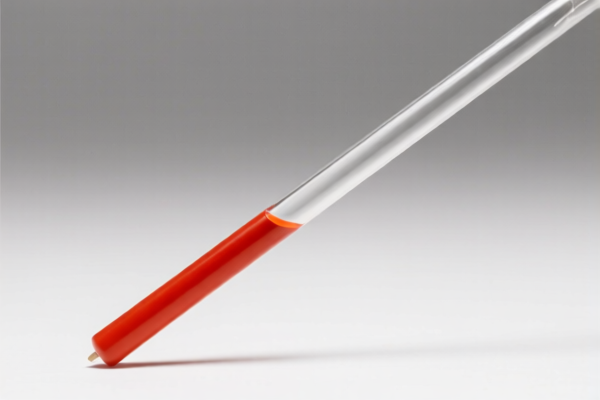
Immersion Rod
CN → US| HS Code | Tariff Rate | Origin | Destination | Doc |
|---|---|---|---|---|
| 8419190160 | 35.0% | CN | US | Official Doc |
| 8516100080 | 17.5% | CN | US | Official Doc |
| 8516100040 | 17.5% | CN | US | Official Doc |
Product Images



AI Analysis
🔥 Immersion Rod (Heater) – Ultimate HS Code & Clearance Guide 2026
🌐 HS Code Reference & Customs Clearance Strategy | 2026 Latest Tariff Analysis | Professional Compliance Protocol
📌 Part 1: Product Definition & Classification – What is an "Immersion Rod"?
An Immersion Rod (also known as an Immersion Heater or Heating Element) is a critical component used to transfer heat directly into a liquid. It consists of a metal tube (sheath) containing a resistive coil, insulated by magnesium oxide powder, with electrical terminals protruding from one end.
In international trade, the classification hinges on ONE critical factor: Is it electrically heated?
- Non-Electric / General Heating Equipment: If the device relies on steam, oil, or other non-electric thermal sources, or if its function is too generic to fit specific electrical categories, it may fall under broader mechanical categories.
- Electric Water Heaters: If the device uses electricity to heat water or other liquids via resistance, it falls under Chapter 85 (Electrical Machinery and Equipment).
⚠️ Key Distinction:
- If the heating element is electric and designed for water/liquid heating →归入 8516
- If the device is non-electric or categorized as a general "heater" not specific to water →归入 8419
- Common Mistake: Assuming all immersion rods are "electric heaters." While most are, HS 8419 is used for broader heating machinery or non-electric variants.
📦 Part 2: HS Code Classification Matrix (2026 Authoritative Mapping)
Based on the provided data, there are three valid HS Codes for Immersion Rods, depending on the specific classification interpretation applied by customs authorities regarding the "electric" vs. "general heater" distinction.
| HS Code | Summary Description | Tax Rate | Tax Detail Breakdown |
|---|---|---|---|
| 8419.19.01.60 | Non-Electric / General Heater Category Immersion heaters classified under heating equipment not specifically provided for elsewhere (non-electric or general category). |
35.0% | Base: 0.0% Section 301: 25.0% Section 122: 10% |
| 8516.10.00.80 | Electric Water Heater (Standard) Immersion heaters that are electrically powered and functionally identical to standard water heaters. |
17.5% | Base: 0.0% Section 301: 7.5% Section 122: 10% |
| 8516.10.00.40 | Electric Water Heater (Alternative Subheading) Immersion heaters where usage and function align with this specific subheading for electric water heaters. |
17.5% | Base: 0.0% Section 301: 7.5% Section 122: 10% |
🔍 Critical Analysis:
- 8516.10 codes (.80and.40) offer a significantly lower total tariff (17.5%) compared to 8419.19 (35.0%).
- The difference lies in whether the customs officer views the product as a "General Heater" (8419) or a specific "Electric Water Heater" (8516).
- For most standard electric immersion rods used in tanks, boilers, or industrial liquids, 8516.10 is the more accurate and cost-effective classification.
💰 Part 3: 2026 Tariff Rate Detailed Breakdown (US Market)
✅ Applicable Market: United States (US)
✅ Origin: China (CN)
✅ Effective Date: Current trade policy applies
🎯 1. 8419.19.01.60 – General Heating Equipment (Non-Electric/Other)
| Item | Detail |
|---|---|
| Base Tariff | 0.0% |
| Section 301 Tariff | +25.0% |
| Section 122 Tariff | +10.0% |
| Total Effective Rate | 35.0% |
| Calculation | CIF Value × 35% |
| De Minimis Exemption | ❌ Not Eligible (deny_de_minimis) |
| Legal Basis | Section 301 & Section 122 provisions applied to general heating machinery. |
📌 Explanation:
- This classification attracts the highest penalty tariff.
- The 25% is a standard Section 301 duty on Chinese goods.
- The 10% is an additional Section 122 duty (often related to national security or trade adjustments).
- Risk: High cost impact. Misclassification here when the product is clearly electric can lead to audits and penalties.
🎯 2. 8516.10.00.80 & 8516.10.00.40 – Electric Water Heaters
| Item | Detail |
|---|---|
| Base Tariff | 0.0% |
| Section 301 Tariff | +7.5% |
| Section 122 Tariff | +10.0% |
| Total Effective Rate | 17.5% |
| Calculation | CIF Value × 17.5% |
| De Minimis Exemption | ❌ Not Eligible (deny_de_minimis) |
| Legal Basis | HS 8516 (Electric Water Heaters), Section 301 (reduced rate for this category), Section 122. |
📌 Explanation:
- 8516.10 is the correct HTSUS for "Electric water heaters and immersion heaters."
- The Section 301 duty for this specific subheading is capped or reduced to 7.5% (instead of the standard 25% or 30% seen in other categories).
- Savings: Choosing 8516 over 8419 saves 17.5% in tariffs.
- Note: Both.80and.40have the same rate (17.5%). The difference is often in internal customs tracking or specific product descriptors.
🛠️ Part 4: Customs Clearance Practical Advice (Avoid Pitfalls)
✅ 1. Essential Documentation Checklist
| Document | Required? | Purpose |
|---|---|---|
| Product Specification Sheet | ✔️ | Must clearly state: Voltage, Wattage, Material (Sheath), Application (Water/Liquid). Proves it is electric. |
| Commercial Invoice | ✔️ | Description must say: "Electric Immersion Heater, Model XYZ, 220V 500W" NOT just "Heater". |
| HS Code Justification Letter | ✔️ | Explain why it falls under 8516 (Electric) rather than 8419 (General). Include technical diagrams. |
| Certificate of Origin | ✔️ | Required for tariff calculation and Section 301 applicability. |
| UL/CE/CSA Certification | ✔️ | Proof of safety compliance for electrical devices. |
✅ 2. Declaration Strategy (Key Tips)
🔥 Golden Rule: "Be Specific. Electric is Key. Avoid 'General Heater'."
| Scenario | Recommended HS Code | Why? |
|---|---|---|
| Standard Electric Immersion Rod | 8516.10.00.80 or 40 | It is explicitly an electric heater for water/liquid. Lower tax (17.5%). |
| Non-Electric Immersion Tube (Steam/Thermal Oil) | 8419.19.01.60 | Not powered by electricity. Falls under general heating machinery. Higher tax (35.0%). |
| Generic "Heating Element" (Ambiguous) | 8419.19.01.60 | If you cannot prove it is electric or specific to water, customs defaults to the broader category. |
📌 Warning:
- Do NOT declare an electric immersion rod as "Heating Part" or "Component of Boiler" under 8419 to save money if it is clearly a standalone electric heater. This is misclassification.
- Ensure the invoice explicitly mentions "Electric" and "Immersion Heater".
✅ 3. Special Cases
| Case | Advice |
|---|---|
| Customs Audit Trigger | If using 8419.19 for an electric rod, customs may ask for proof it is NOT electric. Have voltage/wattage docs ready. |
| Section 122 Applicability | Both 17.5% and 35% rates include the 10% Section 122 duty. This is non-negotiable for Chinese origin. |
| De Minimis | Immersion rods are not eligible for de minimis (Section 321) due to their electrical nature and high tariff status. |
🌍 Part 5: Market Comparison (2026 Outlook)
| Market | HS Code | Base Duty | Section 301 | Section 122 | Total | Notes |
|---|---|---|---|---|---|---|
| 🇺🇸 USA | 8516.10 | 0% | 7.5% | 10% | 17.5% | Best for electric immersion heaters. |
| 🇺🇸 USA | 8419.19 | 0% | 25.0% | 10% | 35.0% | Applies if classified as general heater. |
| 🇨🇳 China | 8516.10 | 0% | N/A | N/A | 0% | No export duties for China. |
| 🇪🇺 EU | 8516.10 | 0% | N/A | N/A | 0% | Standard EU duty for electric heaters is often 0% or low. |
📌 Conclusion:
- US Market: The difference between 8516 (17.5%) and 8419 (35%) is massive. Always aim for 8516 if the product is electric.
- Documentation is Key: Proving "Electric" and "Immersion" nature is the only way to qualify for the lower 17.5% rate.
📌 Part 6: Common Mistakes & Pitfalls
❌ Mistake 1: Using "Heater" as the description without specifying "Electric".
👉 Result: Customs assigns 8419.19 (35%) automatically.
✅ Fix: Always write "Electric Immersion Heater".
❌ Mistake 2: Assuming all immersion tubes are 8516.
👉 Result: If the tube is for a steam-heated tank (no electricity in the tube), 8516 is wrong.
✅ Fix: If no electricity, use 8419.
❌ Mistake 3: Ignoring Section 122.
👉 Result: Underestimating landed cost.
✅ Fix: Budget for the extra 10% on top of Section 301.
🎯 Part 7: Final Recommendation
🎯 Action Plan for Importers:
1. Verify Voltage: Ensure the product has voltage/wattage ratings.
2. Select HS 8516.10: Use either .80 or .40 based on your supplier's exact catalog or broker's advice.
3. Pay 17.5% Total Duty: This is the optimal legal rate for electric immersion rods.
4. Prepare Docs: Have specs and invoices ready to prove electric nature.
🚀 Pro Tip:
If your supplier claims it's "Non-Electric" to avoid 8516, verify this. If it's actually electric, you are risking a customs penalty. Truthful declaration is cheaper than fines.
✨ Professional Clearance Starts with Accurate Classification!
💼 Save 17.5% by choosing the right HS Code!
Customer Reviews
About HS Code Classification
The Harmonized System (HS) is an internationally standardized nomenclature developed by the World Customs Organization (WCO) to classify traded products. Over 200 countries use the HS system as the basis for customs tariffs, trade statistics, and import/export regulations.
Each HS code follows a hierarchical structure:
- Chapter (2 digits) — Broad category of goods (e.g., Chapter 84: Machinery and Mechanical Appliances)
- Heading (4 digits) — More specific grouping within the chapter
- Subheading (6 digits) — Internationally standardized breakdown, used by all WCO member countries
- National subdivisions (8-10 digits) — Country-specific extensions for further classification, such as US HTSUS 10-digit codes
Correct HS code classification is essential for smooth customs clearance, accurate duty payment, and compliance with trade regulations. Misclassification can lead to customs delays, overpayment of duties, or penalties.
When importing from CN to US, the applicable tariff rates may include:
- Most-Favored-Nation (MFN) rate — The standard duty rate applied to WTO members
- General rate — Applied to countries without trade agreements
- Trade remedy duties — Additional tariffs such as Section 301 (anti-dumping), Section 232 (national security), or countervailing duties
The information provided on this page is for reference purposes only. For official classification, please consult with your local customs authority or a licensed customs broker.