Industrial Grade Fatty Acid Soap
CN → US| HS编码 | 关税税率 | 原产国 | 目的国 | 文档 |
|---|---|---|---|---|
| 3404905150 | 35.0% | CN | US | 官方文档 |
| 3823130020 | 20.7% | CN | US | 官方文档 |
| 3823120000 | 0.0% | CN | US | 官方文档 |
| 3404905110 | 35.0% | CN | US | 官方文档 |
| 1521100060 | 17.5% | CN | US | 官方文档 |
商品图片


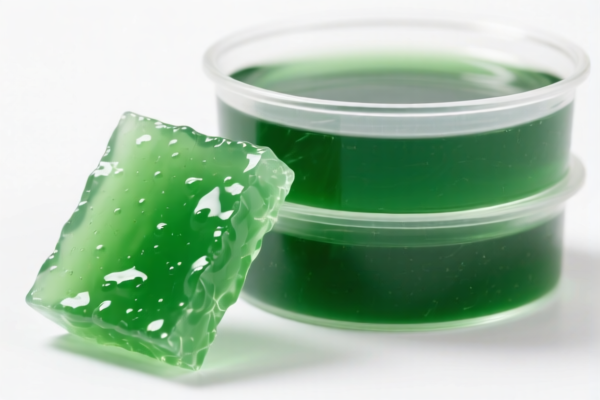

AI分析
🧪 Industrial Grade Fatty Acid Soap
🌐 HS Code Reference & Customs Clearance Guide | 2026 Latest Tariff Analysis | Professional Classification Strategy
📌 I. Product Definition & Classification: What Exactly is "Industrial Grade Fatty Acid Soap"?
"Fatty Acid Soap" in an industrial context is often a colloquial or commercial term for Fatty Acid Waxes, Fatty Acid Derivatives, or Industrial Fatty Acids. Unlike consumer "soap" (which implies surfactant/cleaning properties under Chapter 34 or 38), industrial-grade variants are primarily used as lubricants, mold release agents, waterproofing agents, or chemical intermediates.
The classification is critical because misclassification can lead to a tax disparity of up to 45% (e.g., misclassifying a wax as a fatty acid, or vice versa).
⚠️ Key Distinction Point:
- If the product is a pure fatty acid used as a chemical intermediate → Chapter 38 (Specifically 3823)
- If the product is a wax-like substance (synthetic or modified natural) used for physical properties → Chapter 34 (Artificial waxes)
- If it is a natural plant/animal wax derivative → Chapter 15 (Animal/vegetable waxes)
📦 II. HS Code Classification Details (Based on Provided Data)
Based on the provided <DATA> constraints, here are the valid classifications for "Industrial Grade Fatty Acid Soap" and the corresponding tax logic:
| HS Code | Product Description & Logic | Tax Rate (Total) | Tax Breakdown Details |
|---|---|---|---|
| 3404.90.51.50 | Industrial Fatty Acid Wax Classified as "Artificial/Prepared Waxes". The summary confirms it fits the "Other" category under 3404.90 due to its wax-like material properties, despite the "soap" name. |
35.0% | Base: 0.0% Add-on: 25.0% (Section 301) 122 Clause: 10% |
| 3404.90.51.10 | Fatty Acid Category Wax Falls under "Artificial Waxes & Prepared Waxes". It matches the material characteristics of waxes derived from fatty acids under Chapter 34. |
35.0% | Base: 0.0% Add-on: 25.0% (Section 301) 122 Clause: 10% |
| 3823.13.00.20 | Industrial Fatty Acid Matches the material "Fatty Acid" and "Industrial Use". The wax is considered a derivative but classified under industrial chemicals when specifically identified as fatty acids or their esters. |
20.7% | Base: 3.2% Add-on: 7.5% (Section 301) 122 Clause: 10% |
| 3823.12.00.00 | Industrial Fatty Acids Reasonable inference based on material (Fatty Acid) and Industrial Use. Falls under the category of fatty acids. |
2.1¢/kg + 30.7% | Base: 2.1¢/kg + 3.2% Add-on: 7.5% (Section 301) 122 Clause: 10% |
| 1521.10.00.60 | Vegetable Wax / Derivative Inferred from common sense that "Fatty Acid Soap/Wax" may be a plant-based wax or its derivative. Fits "Other Vegetable Waxes". |
17.5% | Base: 0.0% Add-on: 7.5% (Section 301) 122 Clause: 10% |
🔍 Critical Observation:
- Highest Risk: Classification under 3404 (Waxes) attracts a 35% total tax rate due to a 0% base rate + 25% Section 301 tariff. - Medium Risk: Classification under 3823 (Chemicals) has a 3.2% base but still incurs 7.5% Section 301 + 10% Clause 122, totaling ~20-30%. - Lowest Risk: Classification under 1521 (Vegetable Wax) has 0% base but still incurs 7.5% Section 301 + 10% Clause 122, totaling 17.5%.
💰 III. 2026 Tariff Rate Detailed Explanation
✅ Applicable Country: United States (US)
✅ Origin: China (CN) (Implied by "122 Clause" and "Section 301" context in data)
✅ Effective Time: Current US Trade Policy (2026)
🎯 1. HS Code 3404.90.51.50 & 3404.90.51.10 —— Artificial/Prepared Waxes
| Item | Detail |
|---|---|
| Base Duty | 0% (Ad Valorem) |
| Section 301 Duty | +25% (USITC Footnote) |
| Section 122 Duty | +10% (Specific Trade Remedy) |
| Total Effective Rate | 35.0% |
| Calculation | CIF Value × 35% |
| De Minimis Exemption | ❌ Not Available (High value goods typically excluded; 301 duties apply regardless of value in many contexts, but specifically denied here) |
📌 Interpretation:
- Despite a 0% base tariff, the 25% Section 301 and 10% Clause 122 penalties make this the most expensive classification. - This applies if the customs authority views the product primarily as a "Wax" (physical form) rather than a "Chemical" (molecular composition).
🎯 2. HS Code 3823.13.00.20 & 3823.12.00.00 —— Industrial Fatty Acids
| Item | Detail |
|---|---|
| Base Duty | 3.2% (3823.13) or 2.1¢/kg + 3.2% (3823.12) |
| Section 301 Duty | +7.5% |
| Section 122 Duty | +10% |
| Total Effective Rate | ~20.7% - 30.7% (Varies by specific subheading) |
| Calculation | CIF Value × Rate + Specific Duty (if any) |
| De Minimis Exemption | ❌ Not Available |
📌 Interpretation:
- If the product is proven to be a chemical intermediate (Fatty Acid) rather than a finished wax, the base rate is lower (3.2%), but the additional tariffs still push the total cost to >20%. - 3823.12.00.00 is unique because it has a specific duty (2.1¢/kg) in addition to ad valorem duties.
🎯 3. HS Code 1521.10.00.60 —— Other Vegetable Waxes
| Item | Detail |
|---|---|
| Base Duty | 0% |
| Section 301 Duty | +7.5% |
| Section 122 Duty | +10% |
| Total Effective Rate | 17.5% |
| Calculation | CIF Value × 17.5% |
| De Minimis Exemption | ❌ Not Available |
📌 Interpretation:
- This is the lowest tax bracket among the provided options (17.5%). - It requires the product to be definitively classified as a Vegetable Wax or derivative, not an artificial wax or chemical acid.
🛠️ IV. Customs Clearance Practical Advice
✅ 1. Documentation Checklist (Critical)
| Document | Required? | Explanation |
|---|---|---|
| ✅ Product Specification Sheet | ✔️ | Must clearly state CAS Number, chemical structure, and physical state (solid wax vs. powder/liquid acid). |
| ✅ Certificate of Origin (CO) | ✔️ | To determine eligibility for any potential exemptions (though unlikely for CN origin). |
| ✅ Third-Party Test Report | ✔️ | Lab analysis proving if it is a Fatty Acid (Chemical) or Wax (Physical) is crucial for 3404 vs 3823 dispute. |
| ✅ Commercial Invoice | ✔️ | Describe accurately: "Industrial Fatty Acid Wax" or "Industrial Fatty Acid Intermediate". Avoid vague terms like "Soap". |
| ✅ MSDS / SDS | ✔️ | To verify hazard classification and chemical composition. |
✅ 2. Declaration Strategy (Key Mnemonic)
🔥 "Identity Defines Tax: Wax is 35%, Acid is 20%, Veg is 17.5%!"
| Scenario | Recommended HS Code | Reason |
|---|---|---|
| Product is a solid, wax-like block with high melting point | 3404.90.51.50 | Customs will likely view it as a "Prepared Wax". High tax risk (35%). |
| Product is a chemical powder/granules used for further processing | 3823.13.00.20 | Viewed as an "Industrial Fatty Acid". Medium tax risk (20.7%). |
| Product is derived from palm/soy/carnauba oils | 1521.10.00.60 | Viewed as "Vegetable Wax". Lowest tax risk (17.5%). |
| Product is mixed (Fatty Acid + Wax) | 3404 or 3823 | Depends on principal use. If used as a lubricant/wax, go 3404. If used as a reagent, go 3823. |
⚠️ Warning:
- Do NOT declare as "Soap" (HS 3401). Industrial fatty acid soaps are rarely classified under 3401 because they lack surfactant cleaning properties in the industrial context. - 3404.90.51.10 and 3404.90.51.50 have identical tax rates (35%) but may differ in specific regulatory tracking. Ensure the description matches the specific subheading notes.
✅ 3. Special Circumstances
| Situation | Action |
|---|---|
| Customs Audit on 3404 vs 3823 | Provide a Use Statement: "Used as a chemical intermediate in polymer production" → Argue for 3823. "Used as a release agent/coating" → Argue for 3404. |
| Origin Denial | If origin is not China, Section 301 and Clause 122 may not apply, reducing the rate to just the Base Duty (0-3.2%). |
| De Minimis Loophole? | ❌ Do not attempt. The data explicitly states these duties apply, and Section 301 items are generally excluded from de minimis exemptions. |
🌍 V. Global Market Comparison (2026)
| Market | Recommended HS Code | Est. Total Tax (CN Origin) | Notes |
|---|---|---|---|
| 🇺🇸 USA | 3823.13.00.20 |
20.7% | Lowest among high-usage options if classified as chemical. |
| 🇺🇸 USA | 1521.10.00.60 |
17.5% | Best if product is 100% Vegetable Wax origin. |
| 🇪🇺 EU | 3823.19.99 |
~5-7% | EU typically does not have Section 301 equivalent, but VAT applies. |
| 🇨🇳 China | 3823.13.00 |
~3-6% | Import duties for CN origin are low, but check for consumption tax. |
📌 Conclusion:
- The US market is the most expensive due to Section 301 (7.5%-25%) and Clause 122 (10%) add-ons. - Classification Accuracy is Paramount: A shift from 3404 (35%) to 1521 (17.5%) saves 17.5% on the CIF value.
📌 VI. Common Errors & Pitfalls (Blood Lessons)
❌ Error 1: Using "Soap" in the declaration for an industrial wax.
👉 Consequence: Customs may reclassify to 3401 (Soap), leading to audits, delays, or penalties if it doesn't meet 3401 definitions.
❌ Error 2: Assuming "Fatty Acid" always means 3823.
👉 Consequence: If the product is physically a wax, customs will force 3404, resulting in a 35% tax instead of ~20%.
❌ Error 3: Ignoring the "122 Clause".
👉 Consequence: Underestimating costs by 10%. This clause is specific and often overlooked.
✅ Correct Approach:
"Industrial Fatty Acid Wax, Derived from Palm Oil, CAS No. 92566-63-1, Used as Mold Release Agent"
Target HS:1521.10.00.60(if 100% veg) or3823.13.00.20(if chemically processed acid).
🎯 VII. Conclusion: Professional Declaration, Cost Optimization
🎯 Remember the Mantra:
🔹 "Wax is 35%, Acid is 20%, Veg is 17.5%!"
🔹 "Clarify the Material: Chemical vs. Physical Form!"
🔹 "Clause 122 is the Silent Killer: Budget for 10% Extra!"
📌 Pro Tip:
If your product is 100% Vegetable-derived, aggressively argue for 1521.10.00.60 (17.5%).
If it is chemically synthesized, argue for 3823.13.00.20 (20.7%).
Avoid 3404 (35%) unless no other option exists, as it is the most punitive.
📣 Immediate Action:
📞 Contact a Customs Broker to review your SDS and Product Use.
🚀 Apply for an Advance Ruling if the classification is borderline between 3404 and 3823.
✨ Professional Clearance Starts with Precise Classification!
💼 Every Percentage Point Saved is Pure Profit!
用户评价
关于 HS 编码归类
协调制度(HS)是由世界海关组织(WCO)制定的国际贸易商品分类标准。全球 200 多个国家采用 HS 系统作为海关关税、贸易统计和进出口监管的基础。
每个 HS 编码遵循以下层级结构:
- 章(2 位)——商品大类(例如:第 84 章:机器和机械设备)
- 品目(4 位)——章内的更具体分类
- 子目(6 位)——国际通用细分,所有 WCO 成员国统一使用
- 本国细分(8-10 位)——各国自行扩展的细分编码,如美国 HTSUS 10 位编码
正确的 HS 编码归类对于顺利通关、准确缴纳关税和遵守贸易法规至关重要。错误归类可能导致海关延误、多缴关税或罚款。
从CN进口到US时,适用的关税税率可能包括:
- 最惠国(MFN)税率——适用于 WTO 成员国的标准关税税率
- 普通税率——适用于无贸易协定国家
- 贸易救济关税——附加关税,如 301 条款(反倾销)、232 条款(国家安全)或反补贴税
本页内容仅供参考。如需正式归类,请咨询当地海关或持牌报关代理。