Industrial Grade Fatty Acid Soap
CN → US| HS Code | Tariff Rate | Origin | Destination | Doc |
|---|---|---|---|---|
| 3404905150 | 35.0% | CN | US | Official Doc |
| 3823130020 | 20.7% | CN | US | Official Doc |
| 3823120000 | 0.0% | CN | US | Official Doc |
| 3404905110 | 35.0% | CN | US | Official Doc |
| 1521100060 | 17.5% | CN | US | Official Doc |
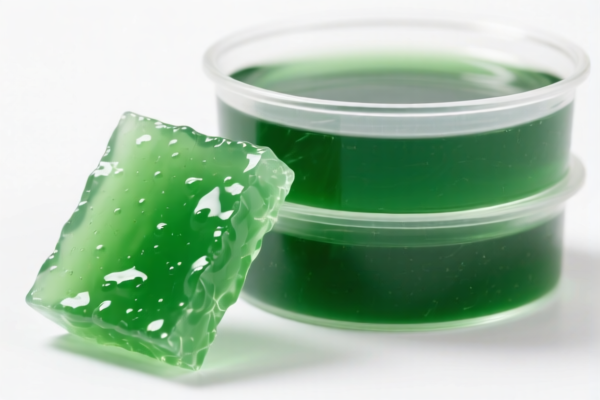
Product Images



AI Analysis
🧪 Industrial Grade Fatty Acid Soap
🌐 HS Code Reference & Customs Clearance Guide | 2026 Latest Tariff Analysis | Professional Classification Strategy
📌 I. Product Definition & Classification: What Exactly is "Industrial Grade Fatty Acid Soap"?
"Fatty Acid Soap" in an industrial context is often a colloquial or commercial term for Fatty Acid Waxes, Fatty Acid Derivatives, or Industrial Fatty Acids. Unlike consumer "soap" (which implies surfactant/cleaning properties under Chapter 34 or 38), industrial-grade variants are primarily used as lubricants, mold release agents, waterproofing agents, or chemical intermediates.
The classification is critical because misclassification can lead to a tax disparity of up to 45% (e.g., misclassifying a wax as a fatty acid, or vice versa).
⚠️ Key Distinction Point:
- If the product is a pure fatty acid used as a chemical intermediate → Chapter 38 (Specifically 3823)
- If the product is a wax-like substance (synthetic or modified natural) used for physical properties → Chapter 34 (Artificial waxes)
- If it is a natural plant/animal wax derivative → Chapter 15 (Animal/vegetable waxes)
📦 II. HS Code Classification Details (Based on Provided Data)
Based on the provided <DATA> constraints, here are the valid classifications for "Industrial Grade Fatty Acid Soap" and the corresponding tax logic:
| HS Code | Product Description & Logic | Tax Rate (Total) | Tax Breakdown Details |
|---|---|---|---|
| 3404.90.51.50 | Industrial Fatty Acid Wax Classified as "Artificial/Prepared Waxes". The summary confirms it fits the "Other" category under 3404.90 due to its wax-like material properties, despite the "soap" name. |
35.0% | Base: 0.0% Add-on: 25.0% (Section 301) 122 Clause: 10% |
| 3404.90.51.10 | Fatty Acid Category Wax Falls under "Artificial Waxes & Prepared Waxes". It matches the material characteristics of waxes derived from fatty acids under Chapter 34. |
35.0% | Base: 0.0% Add-on: 25.0% (Section 301) 122 Clause: 10% |
| 3823.13.00.20 | Industrial Fatty Acid Matches the material "Fatty Acid" and "Industrial Use". The wax is considered a derivative but classified under industrial chemicals when specifically identified as fatty acids or their esters. |
20.7% | Base: 3.2% Add-on: 7.5% (Section 301) 122 Clause: 10% |
| 3823.12.00.00 | Industrial Fatty Acids Reasonable inference based on material (Fatty Acid) and Industrial Use. Falls under the category of fatty acids. |
2.1¢/kg + 30.7% | Base: 2.1¢/kg + 3.2% Add-on: 7.5% (Section 301) 122 Clause: 10% |
| 1521.10.00.60 | Vegetable Wax / Derivative Inferred from common sense that "Fatty Acid Soap/Wax" may be a plant-based wax or its derivative. Fits "Other Vegetable Waxes". |
17.5% | Base: 0.0% Add-on: 7.5% (Section 301) 122 Clause: 10% |
🔍 Critical Observation:
- Highest Risk: Classification under 3404 (Waxes) attracts a 35% total tax rate due to a 0% base rate + 25% Section 301 tariff. - Medium Risk: Classification under 3823 (Chemicals) has a 3.2% base but still incurs 7.5% Section 301 + 10% Clause 122, totaling ~20-30%. - Lowest Risk: Classification under 1521 (Vegetable Wax) has 0% base but still incurs 7.5% Section 301 + 10% Clause 122, totaling 17.5%.
💰 III. 2026 Tariff Rate Detailed Explanation
✅ Applicable Country: United States (US)
✅ Origin: China (CN) (Implied by "122 Clause" and "Section 301" context in data)
✅ Effective Time: Current US Trade Policy (2026)
🎯 1. HS Code 3404.90.51.50 & 3404.90.51.10 —— Artificial/Prepared Waxes
| Item | Detail |
|---|---|
| Base Duty | 0% (Ad Valorem) |
| Section 301 Duty | +25% (USITC Footnote) |
| Section 122 Duty | +10% (Specific Trade Remedy) |
| Total Effective Rate | 35.0% |
| Calculation | CIF Value × 35% |
| De Minimis Exemption | ❌ Not Available (High value goods typically excluded; 301 duties apply regardless of value in many contexts, but specifically denied here) |
📌 Interpretation:
- Despite a 0% base tariff, the 25% Section 301 and 10% Clause 122 penalties make this the most expensive classification. - This applies if the customs authority views the product primarily as a "Wax" (physical form) rather than a "Chemical" (molecular composition).
🎯 2. HS Code 3823.13.00.20 & 3823.12.00.00 —— Industrial Fatty Acids
| Item | Detail |
|---|---|
| Base Duty | 3.2% (3823.13) or 2.1¢/kg + 3.2% (3823.12) |
| Section 301 Duty | +7.5% |
| Section 122 Duty | +10% |
| Total Effective Rate | ~20.7% - 30.7% (Varies by specific subheading) |
| Calculation | CIF Value × Rate + Specific Duty (if any) |
| De Minimis Exemption | ❌ Not Available |
📌 Interpretation:
- If the product is proven to be a chemical intermediate (Fatty Acid) rather than a finished wax, the base rate is lower (3.2%), but the additional tariffs still push the total cost to >20%. - 3823.12.00.00 is unique because it has a specific duty (2.1¢/kg) in addition to ad valorem duties.
🎯 3. HS Code 1521.10.00.60 —— Other Vegetable Waxes
| Item | Detail |
|---|---|
| Base Duty | 0% |
| Section 301 Duty | +7.5% |
| Section 122 Duty | +10% |
| Total Effective Rate | 17.5% |
| Calculation | CIF Value × 17.5% |
| De Minimis Exemption | ❌ Not Available |
📌 Interpretation:
- This is the lowest tax bracket among the provided options (17.5%). - It requires the product to be definitively classified as a Vegetable Wax or derivative, not an artificial wax or chemical acid.
🛠️ IV. Customs Clearance Practical Advice
✅ 1. Documentation Checklist (Critical)
| Document | Required? | Explanation |
|---|---|---|
| ✅ Product Specification Sheet | ✔️ | Must clearly state CAS Number, chemical structure, and physical state (solid wax vs. powder/liquid acid). |
| ✅ Certificate of Origin (CO) | ✔️ | To determine eligibility for any potential exemptions (though unlikely for CN origin). |
| ✅ Third-Party Test Report | ✔️ | Lab analysis proving if it is a Fatty Acid (Chemical) or Wax (Physical) is crucial for 3404 vs 3823 dispute. |
| ✅ Commercial Invoice | ✔️ | Describe accurately: "Industrial Fatty Acid Wax" or "Industrial Fatty Acid Intermediate". Avoid vague terms like "Soap". |
| ✅ MSDS / SDS | ✔️ | To verify hazard classification and chemical composition. |
✅ 2. Declaration Strategy (Key Mnemonic)
🔥 "Identity Defines Tax: Wax is 35%, Acid is 20%, Veg is 17.5%!"
| Scenario | Recommended HS Code | Reason |
|---|---|---|
| Product is a solid, wax-like block with high melting point | 3404.90.51.50 | Customs will likely view it as a "Prepared Wax". High tax risk (35%). |
| Product is a chemical powder/granules used for further processing | 3823.13.00.20 | Viewed as an "Industrial Fatty Acid". Medium tax risk (20.7%). |
| Product is derived from palm/soy/carnauba oils | 1521.10.00.60 | Viewed as "Vegetable Wax". Lowest tax risk (17.5%). |
| Product is mixed (Fatty Acid + Wax) | 3404 or 3823 | Depends on principal use. If used as a lubricant/wax, go 3404. If used as a reagent, go 3823. |
⚠️ Warning:
- Do NOT declare as "Soap" (HS 3401). Industrial fatty acid soaps are rarely classified under 3401 because they lack surfactant cleaning properties in the industrial context. - 3404.90.51.10 and 3404.90.51.50 have identical tax rates (35%) but may differ in specific regulatory tracking. Ensure the description matches the specific subheading notes.
✅ 3. Special Circumstances
| Situation | Action |
|---|---|
| Customs Audit on 3404 vs 3823 | Provide a Use Statement: "Used as a chemical intermediate in polymer production" → Argue for 3823. "Used as a release agent/coating" → Argue for 3404. |
| Origin Denial | If origin is not China, Section 301 and Clause 122 may not apply, reducing the rate to just the Base Duty (0-3.2%). |
| De Minimis Loophole? | ❌ Do not attempt. The data explicitly states these duties apply, and Section 301 items are generally excluded from de minimis exemptions. |
🌍 V. Global Market Comparison (2026)
| Market | Recommended HS Code | Est. Total Tax (CN Origin) | Notes |
|---|---|---|---|
| 🇺🇸 USA | 3823.13.00.20 |
20.7% | Lowest among high-usage options if classified as chemical. |
| 🇺🇸 USA | 1521.10.00.60 |
17.5% | Best if product is 100% Vegetable Wax origin. |
| 🇪🇺 EU | 3823.19.99 |
~5-7% | EU typically does not have Section 301 equivalent, but VAT applies. |
| 🇨🇳 China | 3823.13.00 |
~3-6% | Import duties for CN origin are low, but check for consumption tax. |
📌 Conclusion:
- The US market is the most expensive due to Section 301 (7.5%-25%) and Clause 122 (10%) add-ons. - Classification Accuracy is Paramount: A shift from 3404 (35%) to 1521 (17.5%) saves 17.5% on the CIF value.
📌 VI. Common Errors & Pitfalls (Blood Lessons)
❌ Error 1: Using "Soap" in the declaration for an industrial wax.
👉 Consequence: Customs may reclassify to 3401 (Soap), leading to audits, delays, or penalties if it doesn't meet 3401 definitions.
❌ Error 2: Assuming "Fatty Acid" always means 3823.
👉 Consequence: If the product is physically a wax, customs will force 3404, resulting in a 35% tax instead of ~20%.
❌ Error 3: Ignoring the "122 Clause".
👉 Consequence: Underestimating costs by 10%. This clause is specific and often overlooked.
✅ Correct Approach:
"Industrial Fatty Acid Wax, Derived from Palm Oil, CAS No. 92566-63-1, Used as Mold Release Agent"
Target HS:1521.10.00.60(if 100% veg) or3823.13.00.20(if chemically processed acid).
🎯 VII. Conclusion: Professional Declaration, Cost Optimization
🎯 Remember the Mantra:
🔹 "Wax is 35%, Acid is 20%, Veg is 17.5%!"
🔹 "Clarify the Material: Chemical vs. Physical Form!"
🔹 "Clause 122 is the Silent Killer: Budget for 10% Extra!"
📌 Pro Tip:
If your product is 100% Vegetable-derived, aggressively argue for 1521.10.00.60 (17.5%).
If it is chemically synthesized, argue for 3823.13.00.20 (20.7%).
Avoid 3404 (35%) unless no other option exists, as it is the most punitive.
📣 Immediate Action:
📞 Contact a Customs Broker to review your SDS and Product Use.
🚀 Apply for an Advance Ruling if the classification is borderline between 3404 and 3823.
✨ Professional Clearance Starts with Precise Classification!
💼 Every Percentage Point Saved is Pure Profit!
Customer Reviews
About HS Code Classification
The Harmonized System (HS) is an internationally standardized nomenclature developed by the World Customs Organization (WCO) to classify traded products. Over 200 countries use the HS system as the basis for customs tariffs, trade statistics, and import/export regulations.
Each HS code follows a hierarchical structure:
- Chapter (2 digits) — Broad category of goods (e.g., Chapter 84: Machinery and Mechanical Appliances)
- Heading (4 digits) — More specific grouping within the chapter
- Subheading (6 digits) — Internationally standardized breakdown, used by all WCO member countries
- National subdivisions (8-10 digits) — Country-specific extensions for further classification, such as US HTSUS 10-digit codes
Correct HS code classification is essential for smooth customs clearance, accurate duty payment, and compliance with trade regulations. Misclassification can lead to customs delays, overpayment of duties, or penalties.
When importing from CN to US, the applicable tariff rates may include:
- Most-Favored-Nation (MFN) rate — The standard duty rate applied to WTO members
- General rate — Applied to countries without trade agreements
- Trade remedy duties — Additional tariffs such as Section 301 (anti-dumping), Section 232 (national security), or countervailing duties
The information provided on this page is for reference purposes only. For official classification, please consult with your local customs authority or a licensed customs broker.