Industrial Grade Molybdenum Salt Catalyst
CN → US| HS编码 | 关税税率 | 原产国 | 目的国 | 文档 |
|---|---|---|---|---|
| 3824993400 | 37.8% | CN | US | 官方文档 |
| 3815902000 | 37.8% | CN | US | 官方文档 |
| 3824992900 | 41.5% | CN | US | 官方文档 |
| 3815190000 | 35.0% | CN | US | 官方文档 |
| 2825700000 | 13.2% | CN | US | 官方文档 |
| 2825909000 | 38.7% | CN | US | 官方文档 |
商品图片
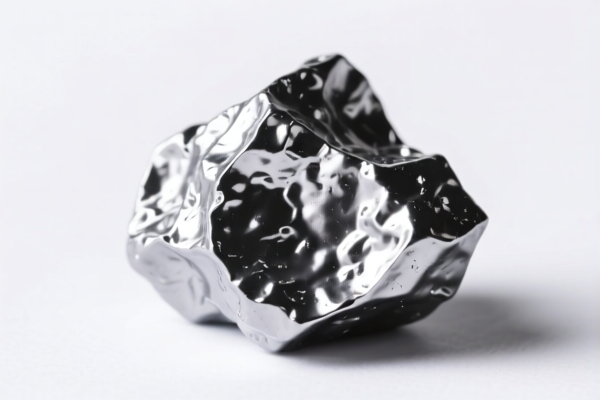
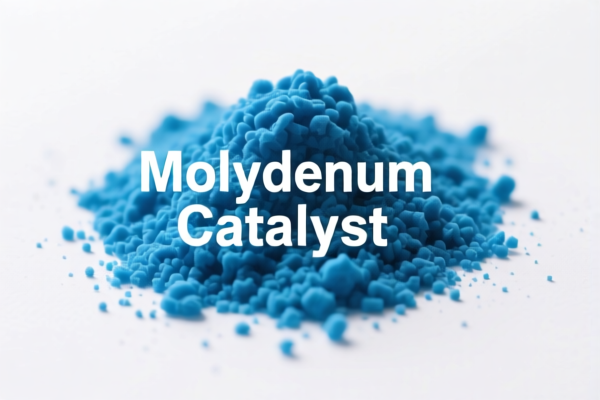
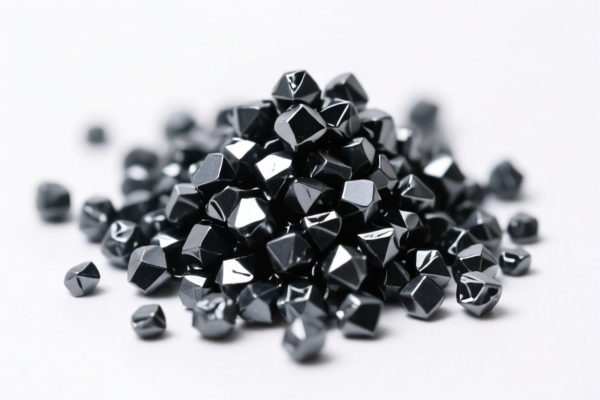

AI分析
🧪 Industrial Grade Molybdenum Salt Catalyst
🌐 HS Code Reference & Customs Clearance Guide | 2026 Latest Tariff Analysis | Professional Clearance Strategy
📌 Part 1: Product Definition & Classification: Do You Really Understand "Molybdenum Catalysts"?
Industrial Grade Molybdenum Salt Catalyst is a critical chemical reagent used in petroleum refining, chemical synthesis, and environmental protection processes. In international trade, it is primarily classified into two categories based on its form and function:
1. Pre-mixed Catalyst Preparations (Chemical Preparations):
These are commercial products specifically formulated for catalytic use, often containing binders, carriers, or stabilizers. They fall under Chapter 38 (Miscellaneous Chemical Products).
2. Raw Chemical Components (Inorganic Compounds):
These are pure or semi-pure molybdenum oxides, hydroxides, or salts intended as the active ingredient in the catalyst. They fall under Chapter 28 (Inorganic Chemicals).
⚠️ Key Distinction Point:
- If the product is a finished preparation designed for immediate catalytic use →归入 Chapter 38 (e.g., 3815, 3824)
- If the product is a raw chemical substance (oxide/salt) used as a component → 归入 Chapter 28 (e.g., 2825)
- Critical Rule: Pure chemicals generally do not fall under Chapter 38 unless they are specifically "preparations" for catalysis. However, commercial catalysts are almost always "preparations."
📦 Part 2: HS Code Classification Details (2026 Latest Tariff Authority Comparison)
| HS Code | Product Description | Application Scenario | Tax Rate Breakdown |
|---|---|---|---|
3824.99.34.00 |
Molybdenum-based catalysts, classified as chemical industry preparations, meeting the definition of inorganic compound mixtures | Commercially packed catalysts for specific industrial reactors | 37.8% |
3815.90.20.00 |
Molybdenum-based catalysts, material and use completely match | General-purpose catalytic preparations | 37.8% |
3824.99.29.00 |
Other chemical products and preparations not specifically mentioned, material is a chemical substance | Miscellaneous chemical mixtures not fitting specific catalyst codes | 41.5% |
3815.19.00.00 |
Catalyst preparations, consistent use, no material conflict | Standard catalyst preparations without specific molybdenum exclusions | 35.0% |
2825.70.00.00 |
Oxides or hydroxides of molybdenum, as the main component of the catalyst | Raw material form (pure chemical) | 13.2% |
2825.90.90.00 |
Other inorganic metal oxides, containing molybdenum, no material conflict | Mixed inorganic oxides where molybdenum is present | 38.7% |
🔍 Key Reminder:
- "Catalyst Preparations" (Chapter 38) are subject to higher additional tariffs due to trade restrictions.
- "Raw Chemicals" (Chapter 28) may have lower base tariffs but can trigger scrutiny if misdeclared as raw materials when they are actually finished preparations.
- Misclassification Risk: Declaring a ready-to-use catalyst as a raw oxide (2825) to avoid taxes is a common customs violation.
💰 Part 3: 2026 Latest Tariff Rate Details (Including Additional Taxes & Policy Add-ons)
✅ Applicable Country: United States (US)
✅ Country of Origin: China (CN)
✅ Effective Date: November 10, 2025 onwards (including subsequent imports)
🎯 1. 3824.99.34.00 —— Molybdenum-based Catalysts (Chemical Preparations)
| Item | Details |
|---|---|
| Base Tariff | 2.8% (ad valorem) |
| Section 301 Tariff | +25.0% |
| Section 122 Tariff | +10.0% |
| Total Tariff | 37.8% |
| Tax Calculation | CIF Value × 37.8% |
| De Minimis Exemption | ❌ Not Eligible (deny_de_minimis) |
| Legal Basis Path | Section 301: 9903.88.01 → Section 122: IEEPA → USITC: 3824.99.34.00 |
📌 Explanation:
- The 25% comes from the Section 301 Trade Action against China;
- The 10% is an additional penalty tariff under Section 122 (or specific enforcement actions);
- Total 37.8% is a significant cost factor. Must be pre-calculated!
🎯 2. 3815.90.20.00 —— Molybdenum-based Catalysts (Material & Use Match)
| Item | Details |
|---|---|
| Base Tariff | 2.8% |
| Section 301 Tariff | +25.0% |
| Section 122 Tariff | +10.0% |
| Total Tariff | 37.8% |
| Tax Calculation | CIF × 37.8% |
| De Minimis Exemption | ❌ Not Eligible |
| Legal Basis Path | Section 301: 9903.88.01 → USITC: 3815.90.20.00 |
📌 Note:
- Same tax structure as3824.99.34.00;
- Applies to catalysts where the material composition is explicitly molybdenum-based.
🎯 3. 3824.99.29.00 —— Other Chemical Preparations (No Specific Catalyst Code)
| Item | Details |
|---|---|
| Base Tariff | 6.5% |
| Section 301 Tariff | +25.0% |
| Section 122 Tariff | +10.0% |
| Total Tariff | 41.5% |
| Tax Calculation | CIF × 41.5% |
| De Minimis Exemption | ❌ Not Eligible |
| Legal Basis Path | Section 301: 9903.88.01 → USITC: 3824.99.29.00 |
📌 Warning:
- This is the highest tax bracket for general chemical preparations;
- Use only if the product cannot be classified under specific catalyst codes (3815or3824.34).
🎯 4. 3815.19.00.00 —— Catalyst Preparations (General)
| Item | Details |
|---|---|
| Base Tariff | 0.0% |
| Section 301 Tariff | +25.0% |
| Section 122 Tariff | +10.0% |
| Total Tariff | 35.0% |
| Tax Calculation | CIF × 35.0% |
| De Minimis Exemption | ❌ Not Eligible |
| Legal Basis Path | Section 301: 9903.88.01 → USITC: 3815.19.00.00 |
📌 Advantage:
- Lowest total tariff among Chapter 38 catalysts;
- Applicable if the catalyst is a general preparation not specifically listed as "Molybdenum-based" in the detailed subheadings.
🎯 5. 2825.70.00.00 —— Oxides or Hydroxides of Molybdenum (Raw Material)
| Item | Details |
|---|---|
| Base Tariff | 3.2% |
| Section 301 Tariff | 0.0% |
| Section 122 Tariff | +10.0% |
| Total Tariff | 13.2% |
| Tax Calculation | CIF × 13.2% |
| De Minimis Exemption | ❌ Not Eligible (if declared as catalyst component) |
| Legal Basis Path | Section 122: IEEPA → USITC: 2825.70.00.00 |
📌 Caution:
- Only applicable if the product is a pure chemical compound (e.g., Molybdenum Oxide, MoO₃);
- Do NOT use if the product is a formulated catalyst preparation;
- Misdeclaration can lead to severe penalties.
🎯 6. 2825.90.90.00 —— Other Inorganic Metal Oxides (Containing Molybdenum)
| Item | Details |
|---|---|
| Base Tariff | 3.7% |
| Section 301 Tariff | +25.0% |
| Section 122 Tariff | +10.0% |
| Total Tariff | 38.7% |
| Tax Calculation | CIF × 38.7% |
| De Minimis Exemption | ❌ Not Eligible |
| Legal Basis Path | Section 301: 9903.88.01 → USITC: 2825.90.90.00 |
📌 Note:
- For mixed inorganic oxides where molybdenum is present but not the primary defined substance;
- High tax burden similar to Chapter 38.
🛠️ Part 4: Customs Clearance Practical Advice (Combat Pitfalls Guide)
✅ 1. Required Documentation Checklist (Non-negotiable)
| Document | Mandatory | Description |
|---|---|---|
| ✅ Product Specification Sheet | ✔️ | Must detail chemical composition, CAS numbers, purity, and physical form |
| ✅ Certificate of Analysis (COA) | ✔️ | Proves chemical nature (pure oxide vs. preparation) |
| ✅ Product Photos (Clear Label) | ✔️ | Show packaging, warning labels, and product state |
| ✅ Safety Data Sheet (SDS) | ✔️ | Essential for chemical imports; classify under Hazmat if applicable |
| ✅ Commercial Invoice | ✔️ | Must explicitly state "Catalyst Preparation" or "Molybdenum Oxide" |
| ✅ Packing List | ✔️ | Details net/gross weight; crucial for volume-based taxes |
| ✅ Origin Certificate (CO) | ✔️ | If non-China origin, may qualify for exemptions |
✅ 2. Declaration Tips (Key Mantra)
🔥 "Pure Chemicals = Chapter 28, Formulated Catalysts = Chapter 38. Misclassification = Penalty!"
| Scenario | Correct Declaration | Wrong Practice |
|---|---|---|
| Ready-to-use catalyst powder | 3815.90.20.00 or 3824.99.34.00 |
Declaring as "Molybdenum Oxide" (2825) → High Risk |
| Pure Molybdenum Trioxide (MoO₃) | 2825.70.00.00 |
Declaring as "Catalyst" → Unnecessary High Tax |
| Mixed chemical solution for catalysis | 3824.99.29.00 |
Declaring as "Raw Material" |
| Catalyst pellets with binders | 3815.19.00.00 |
Declaring as simple metal salt |
✅ 3. Special Case Handling
| Scenario | Handling Advice |
|---|---|
| OEM Custom Catalyst | Provide client order + formulation diagram. Avoid vague terms like "Chemical Mix." |
| Catalyst with Toxic Components | Must declare as Hazmat (UN Number). Additional handling fees apply. |
| Small Sample Imports | No De Minimis Exemption for chemical catalysts from China. Full duty applies. |
| Molybdenum Oxide vs. Catalyst | If the product has binders, carriers, or promoters, it is a Preparation (Ch. 38). If it is >99% pure MoO₃, it is Chemical (Ch. 28). |
🌍 Part 5: Global Market Clearance Comparison (2026 Latest)
| Country/Region | Recommended HS Code | Tariff (China Origin) | Certification Requirements | Notes |
|---|---|---|---|---|
| 🇺🇸 USA | 3815.90.20.00 |
37.8% | SDS + Hazmat Declaration | High additional taxes |
| 🇨🇳 China | 3815.90.20.00 |
5-8% (Import Duty) | None (for import) | Low base duty |
| 🇪🇺 EU | 3815.90.20.00 |
4.5% + REACH Registration | REACH + CLP Labeling | REACH compliance is critical |
| 🇯🇵 Japan | 3815.90.20.00 |
6.0% | JIS Standards | No additional trade tariffs |
| 🇮🇳 India | 3815.90.20.00 |
7.5% + SBC | BIS Certification | Anti-dumping duties may apply |
📌 Conclusion:
- USA is the most expensive market due to Section 301 and Section 122 tariffs;
- EU requires strict REACH compliance;
- Chemical nature must be precisely defined to avoid misclassification penalties.
📌 Part 6: Common Errors & Pitfall Guide (Lessons Learned)
❌ Error 1: Declaring a formulated catalyst as Molybdenum Oxide (2825)
👉 Consequence: Customs rejects due to inconsistency in CAS numbers/additives. Delay + Penalty.
❌ Error 2: Using vague terms like "Industrial Chemical" on Invoice
👉 Consequence: Customs assigns highest possible tariff (3824.99.29.00 → 41.5%).
❌ Error 3: Ignoring Section 122 Tariff
👉 Consequence: Underpayment by 10% → Back Taxes + Interest.
❌ Error 4: Not providing SDS for chemical imports
👉 Consequence: Hold at Border until documentation is provided.
✅ Correct Practice:
"Molybdenum-based Catalyst Preparation, Formulated for Hydrodesulfurization, CAS No. XXXXX-XX-X, Purity 98%, Net Weight 25kg."
🎯 Part 7: Conclusion: Precision Classification Saves Costs!
🎯 Remember the Mantra:
🔹 "Pure Oxide = Ch. 28, Prepared Catalyst = Ch. 38."
🔹 "Section 301 + 122 = 35-41% Tariff on Catalysts."
🔹 "Misdeclaration is not worth the risk!"
📌 Pro Tip:
If your catalyst is originating from Vietnam, Mexico, or Thailand, you may apply for IEEPA Exemption or Section 301 Exclusion, reducing tariffs to 0%-5%.
Recommendation: Apply for Advance Ruling (Ruling Letter) from US CBP before shipment to ensure correct classification.
📣 Immediate Action:
📞 Contact a professional customs broker + Provide SDS & COA + Apply for HS Code Advance Ruling
🚀 Ensure your Molybdenum Catalyst clears customs smoothly, avoids penalties, and maximizes profit!
✨ Professional Clearance Starts with Accurate Classification!
💼 Every cent of tax cost should be precisely calculated!
用户评价
关于 HS 编码归类
协调制度(HS)是由世界海关组织(WCO)制定的国际贸易商品分类标准。全球 200 多个国家采用 HS 系统作为海关关税、贸易统计和进出口监管的基础。
每个 HS 编码遵循以下层级结构:
- 章(2 位)——商品大类(例如:第 84 章:机器和机械设备)
- 品目(4 位)——章内的更具体分类
- 子目(6 位)——国际通用细分,所有 WCO 成员国统一使用
- 本国细分(8-10 位)——各国自行扩展的细分编码,如美国 HTSUS 10 位编码
正确的 HS 编码归类对于顺利通关、准确缴纳关税和遵守贸易法规至关重要。错误归类可能导致海关延误、多缴关税或罚款。
从CN进口到US时,适用的关税税率可能包括:
- 最惠国(MFN)税率——适用于 WTO 成员国的标准关税税率
- 普通税率——适用于无贸易协定国家
- 贸易救济关税——附加关税,如 301 条款(反倾销)、232 条款(国家安全)或反补贴税
本页内容仅供参考。如需正式归类,请咨询当地海关或持牌报关代理。