Industrial Machinery Parts
CN → US| HS编码 | 关税税率 | 原产国 | 目的国 | 文档 |
|---|---|---|---|---|
| 8479899599 | 87.5% | CN | US | 官方文档 |
| 8479909596 | 85.0% | CN | US | 官方文档 |
| 8448595000 | 17.0% | CN | US | 官方文档 |
| 8436990090 | 35.0% | CN | US | 官方文档 |
| 8436990035 | 35.0% | CN | US | 官方文档 |
商品图片
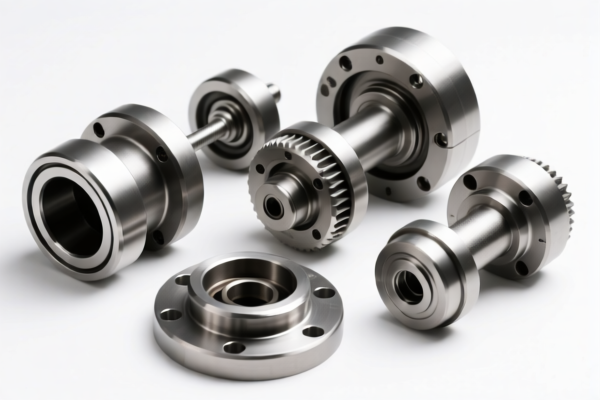
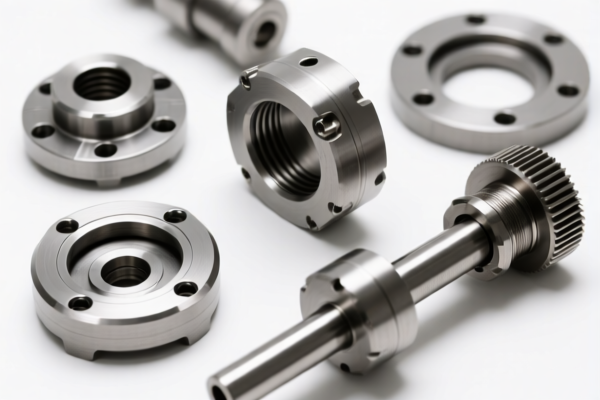
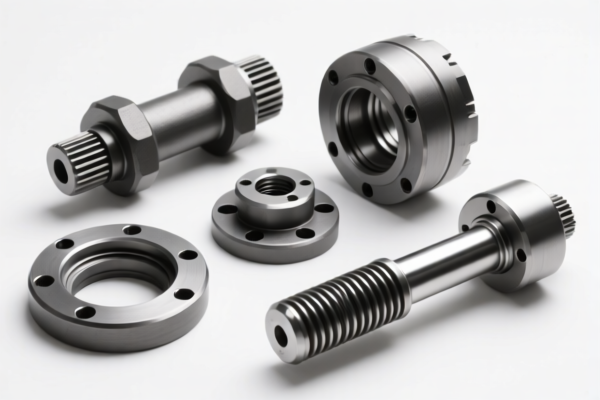
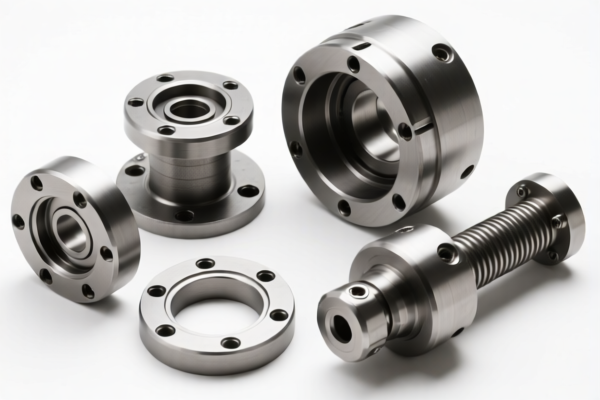
AI分析
🏭 Industrial Machinery Parts (Specifically: Textile & Agricultural Components)
🌐 HS Code Reference & Customs Clearance Guide | 2026 Latest Tariff Analysis | Professional Entry Strategies
📌 I. Product Definition & Classification: Decoding "Machinery Parts"
In international trade, "Industrial Machinery Parts" is a broad category that is strictly subdivided based on function, specific machinery type, and material. For this analysis, we focus on two primary sectors: Textile Machinery and Agricultural Machinery.
Key Distinction Logic: * Textile Machinery Parts: Must be specifically identifiable as parts of machines falling under Chapter 8447 (Weaving/knitting) or Chapter 8479 (Other machinery). * Agricultural Machinery Parts: Must be parts of machines for agriculture, horticulture, forestry, etc. (Chapter 8432/8436). * Generic/Unidentified Parts: If the specific machine type cannot be proven, customs may default to "Other" categories with higher tariffs.
⚠️ Critical Warning:
- Misclassifying Textile Parts as Agricultural Parts (or vice versa) can lead to significant tariff discrepancies (e.g., 87.5% vs. 35%).
- "Generic metal parts" often attract higher "catch-all" duties unless proven otherwise.
📦 II. HS Code Classification Matrix (2026 Latest Tariff Data)
Based on the provided data, here are the four specific HS Codes applicable to these industrial parts:
| HS Code | Product Description | Category | Material/Function Inference |
|---|---|---|---|
8479.89.95.99 |
Textile Machinery Parts (Other Machinery) | Other Independent Function Machinery | Metal or Hard Plastic |
8479.90.95.96 |
Textile Machinery Parts (Generic Catch-all) | Parts of Other Machinery | Other Catch-all Category |
8448.59.50.00 |
Textile Machinery Parts (Specific Support) | Parts/Accessories for Ch. 8447 | Specific to Weaving/Knitting Support |
8436.99.00.90 |
Agricultural Machinery Parts | Ag/Horticulture/Forestry Machinery | Other Ag Machinery Parts |
8436.99.00.35 |
Agricultural Machinery Parts (Catch-all) | Ag Machinery Parts | No Material Conflict |
🔍 Analysis:
- Textile Parts face two main classifications: Specific (8448) vs. General (8479).
- Agricultural Parts have a uniform tariff structure in this dataset (35.0%total).
- Highest Risk:8479.89.95.99has the highest total tax (87.5%).
- Lowest Risk:8448.59.50.00has the lowest total tax (17.0%).
💰 III. 2026 Latest Tariff Rate Breakdown (Detailed Analysis)
✅ Applicable Country: United States (US)
✅ Origin: China (CN)
✅ Effective Time: Current rates as per 2026 data
🎯 1. 8479.89.95.99 —— Textile Machinery Parts (General/Other Machinery)
⚠️ HIGHEST TAX RISK CATEGORY
| Item | Content |
|---|---|
| Base Tariff | 2.5% (Ad Valorem) |
| Section 301 Additional Tariff | +25.0% |
| Section 122 Tariff (Steel/Aluminum/Copper) | +10% (if applicable to base material) |
| Section 232 Tariff (Steel/Aluminum) | +50% (if material is steel/aluminum/copper) |
| Total Tax Rate | 87.5% |
| Tax Calculation | CIF Value × 87.5% |
| De Minimis Exemption | ❌ Not Available |
| Legal Path | Base Tariff → USITC Footnote 301 → IEEPA Section 122 → USITC Section 232 |
📌 Explanation:
- This code applies to machinery parts that do not fit specifically into weaving/knitting chapters (8447).
- The 87.5% rate is catastrophic for profitability. It combines base duties, Section 301 (trade war), Section 122, and Section 232 (metal tariffs).
- Key Trigger: If the part is made of Steel, Aluminum, or Copper, the 50% Section 232 tariff likely applies, pushing the rate to 87.5%.
🎯 2. 8479.90.95.96 —— Textile Machinery Parts (Catch-all)
📉 HIGH TAX RATE (Generic Category)
| Item | Content |
|---|---|
| Base Tariff | 0.0% |
| Section 301 Additional Tariff | +25.0% |
| Section 122 Tariff (Steel/Aluminum/Copper) | +10% (if applicable) |
| Section 232 Tariff (Steel/Aluminum) | +50% (if material is steel/aluminum/copper) |
| Total Tax Rate | 85.0% |
| Tax Calculation | CIF Value × 85.0% |
| De Minimis Exemption | ❌ Not Available |
| Legal Path | Base Tariff → USITC Footnote 301 → IEEPA Section 122 → USITC Section 232 |
📌 Explanation:
- This is a "catch-all" for machinery parts not specified elsewhere.
- Even with 0% base tariff, the 25% Section 301 and 50% Section 232 (if metal) make it extremely expensive.
- Note: If the part is NOT steel/aluminum/copper, the Section 232 (50%) might not apply, potentially lowering the rate. However, the data indicates 85.0%, implying the 50% metal tariff is included in the calculation.
🎯 3. 8448.59.50.00 —— Textile Machinery Parts (Specific Support)
✅ LOWEST TAX RATE – STRATEGIC CLASSIFICATION
| Item | Content |
|---|---|
| Base Tariff | 0.0% |
| Section 301 Additional Tariff | +7.0% (Reduced/Specific Rate) |
| Section 122 Tariff | +10% |
| Total Tax Rate | 17.0% |
| Tax Calculation | CIF Value × 17.0% |
| De Minimis Exemption | ❌ Not Available |
| Legal Path | Base Tariff → USITC Footnote 301 (Specific) → IEEPA Section 122 |
📌 Explanation:
- This code falls under Chapter 8447 (Weaving/Knitting Machines).
- Crucial Advantage: The Section 301 tariff is only 7.0% (instead of 25%), and there is NO 50% Section 232 metal tariff listed in the total.
- Strategy: If your textile part is specifically for a weaving/knitting machine (e.g., shuttle, heddle, needle bar), classify under 8448 to save 70%+ in taxes.
🎯 4. 8436.99.00.90 & 8436.99.00.35 —— Agricultural Machinery Parts
⚖️ MODERATE TAX RATE
| Item | Content |
|---|---|
| Base Tariff | 0.0% |
| Section 301 Additional Tariff | +25.0% |
| Section 122 Tariff | +10% |
| Total Tax Rate | 35.0% |
| Tax Calculation | CIF Value × 35.0% |
| De Minimis Exemption | ❌ Not Available |
| Legal Path | Base Tariff → USITC Footnote 301 → IEEPA Section 122 |
📌 Explanation:
- Applies to parts of agricultural, horticultural, forestry, poultry, or apiary machinery.
- Consistent Rate: Both sub-codes (90and35) have the same 35.0% total rate.
- Comparison: Significantly cheaper than textile parts (8479), but more expensive than specific textile parts (8448).
🛠️ IV. Customs Clearance Practical Advice (Avoiding Pitfalls)
✅ 1. Documentation Checklist (Mandatory)
| Document | Required | Purpose |
|---|---|---|
| ✅ Product Specification Sheet | ✔️ | Must detail: Function, Machine Type (Textile vs. Ag), Material (Steel/Plastic). |
| ✅ Technical Diagrams | ✔️ | To prove if the part is for a Weaving/Knitting Machine (8448) or General Machinery (8479). |
| ✅ Material Declaration | ✔️ | Critical for Section 232 (50% metal tariff). If it’s plastic or alloy not covered, savings are possible. |
| ✅ Commercial Invoice | ✔️ | Must explicitly state: "Part for [Specific Machine Model]" not just "Machinery Part." |
| ✅ Packing List | ✔️ | Ensure no mixed shipments (Textile + Ag) that confuse customs. |
✅ 2. Classification Strategy (Key Rules)
🔥 "Specificity Saves Money: 8448 is King, 8479 is Death!"
| Scenario | Recommended HS Code | Total Tax | Reason |
|---|---|---|---|
| Part for Weaving/Knitting Machine (e.g., needle, shuttle) | 8448.59.50.00 |
17.0% | Specific chapter allows lower Section 301 rate (7%) and avoids metal tariff. |
| Part for General Machinery (e.g., robot arm, conveyor) made of Steel/Aluminum | 8479.89.95.99 |
87.5% | High Section 301 (25%) + Section 232 (50%) = Catastrophic. |
| Part for General Machinery (e.g., plastic gear, non-metal) | 8479.90.95.96 |
85.0% | High Section 301 (25%) + Section 232 (50% assumed) = High. Verify if Section 232 applies. |
| Part for Tractor/Planter/Harvester | 8436.99.00.90 |
35.0% | Moderate rate. No Section 232 metal tariff listed. |
📌 Critical Note:
- If your part is made of Steel/Aluminum/Copper, the 50% Section 232 tariff is the biggest risk.
- Check Material: If you can prove the part is NOT steel/aluminum/copper (e.g., plastic, ceramic, specific alloys), you may avoid the 50% and reduce taxes from ~87% to ~35-30%.
✅ 3. Special Handling & Optimization
| Situation | Recommendation |
|---|---|
| OEM Parts for Textile Machines | Provide machine model numbers and diagrams to prove use in Chapter 8447 → Save 70% tax. |
| Mixed Material Parts | Clearly separate metal components from non-metal in documentation. If 8448 doesn't apply, try to argue for non-metal classification to avoid Section 232. |
| Agricultural Parts | Ensure they are not used for textile processing. Misclassification can lead to penalties. |
| Pre-Ruling | Apply for a Binding Ruling from CBP before shipping. This locks in the HS code and tax rate, avoiding surprise audits. |
🌍 V. Market Comparison (2026)
| Market | HS Code Example | Total Tax (China Origin) | Notes |
|---|---|---|---|
| 🇺🇸 USA | 8448.59.50.00 |
17.0% | Best rate for specific textile parts. |
| 🇺🇸 USA | 8479.89.95.99 |
87.5% | Worst rate for general textile/metal parts. |
| 🇺🇸 USA | 8436.99.00.90 |
35.0% | Moderate rate for ag parts. |
| 🇪🇺 EU | N/A | Varies | EU has different HS structure; generally lower base tariffs but high VAT. |
| 🇨🇳 China | N/A | ~5-10% | Import into China has lower duties but check VAT. |
📌 Conclusion:
- USA is the most expensive market due to Section 301 and Section 232 tariffs.
- Classifying under 8448 (Textile Specific) is the most effective tax-saving strategy for textile machinery parts.
- Avoid 8479 unless absolutely necessary, as the 87.5% rate is prohibitive.
📌 VI. Common Mistakes & Pitfalls (Learn from Others' Pain)
❌ Mistake 1: Using "Machinery Part" as a generic description.
👉 Result: Customs assigns 8479 (87.5%) instead of 8448 (17%).
👉 Fix: Specify "Part for [Weaving Machine Model]".
❌ Mistake 2: Ignoring Material Composition.
👉 Result: Unjustified 50% Section 232 tariff on non-metal parts.
👉 Fix: Provide material analysis reports (e.g., "Polymer, not Steel").
❌ Mistake 3: Mixing Textile and Agricultural Parts in One Shipment.
👉 Result: Customs inspects all, delays, and may apply the highest rate to all.
👉 Fix: Separate shipments by HS Code and Function.
❌ Mistake 4: Assuming "Agricultural Parts" are cheaper than "Textile Parts".
👉 Result: Misclassifying a textile part as agricultural (8436) leads to penalties for fraud.
👉 Fix: Accurate functional classification is mandatory.
🎯 VII. Conclusion: Strategic Tariff Optimization
🎯 Key Takeaway:
🔹 "Specificity is Profit: 8448 saves 70% over 8479."
🔹 "Material Matters: Avoid Steel/Aluminum to Escape Section 232."
🔹 "Agricultural Parts are Moderate: 35% is acceptable if Textile Options are Closed."
📌 Pro Tip:
If you are importing Textile Machinery Parts, always prioritize 8448.59.50.00 if the part is for weaving/knitting. Provide technical diagrams and machine compatibility lists to CBP. This can reduce your tax burden from 87.5% to 17.0%, saving $70,000 per $100,000 shipment.
📣 Immediate Action:
📞 Consult a Customs Broker: Submit product specs for HS Code Pre-Ruling.
🚀 Optimize Supply Chain: Source non-metal materials where possible to avoid Section 232.
💼 Precision Pays: Every dollar saved on tariffs goes directly to your bottom line.
✨ Professional Clearance Starts with Accurate Classification!
💼 Your Cost, Your Advantage!
用户评价
关于 HS 编码归类
协调制度(HS)是由世界海关组织(WCO)制定的国际贸易商品分类标准。全球 200 多个国家采用 HS 系统作为海关关税、贸易统计和进出口监管的基础。
每个 HS 编码遵循以下层级结构:
- 章(2 位)——商品大类(例如:第 84 章:机器和机械设备)
- 品目(4 位)——章内的更具体分类
- 子目(6 位)——国际通用细分,所有 WCO 成员国统一使用
- 本国细分(8-10 位)——各国自行扩展的细分编码,如美国 HTSUS 10 位编码
正确的 HS 编码归类对于顺利通关、准确缴纳关税和遵守贸易法规至关重要。错误归类可能导致海关延误、多缴关税或罚款。
从CN进口到US时,适用的关税税率可能包括:
- 最惠国(MFN)税率——适用于 WTO 成员国的标准关税税率
- 普通税率——适用于无贸易协定国家
- 贸易救济关税——附加关税,如 301 条款(反倾销)、232 条款(国家安全)或反补贴税
本页内容仅供参考。如需正式归类,请咨询当地海关或持牌报关代理。