Industrial Machinery Parts
CN → US| HS Code | Tariff Rate | Origin | Destination | Doc |
|---|---|---|---|---|
| 8479899599 | 87.5% | CN | US | Official Doc |
| 8479909596 | 85.0% | CN | US | Official Doc |
| 8448595000 | 17.0% | CN | US | Official Doc |
| 8436990090 | 35.0% | CN | US | Official Doc |
| 8436990035 | 35.0% | CN | US | Official Doc |
Product Images
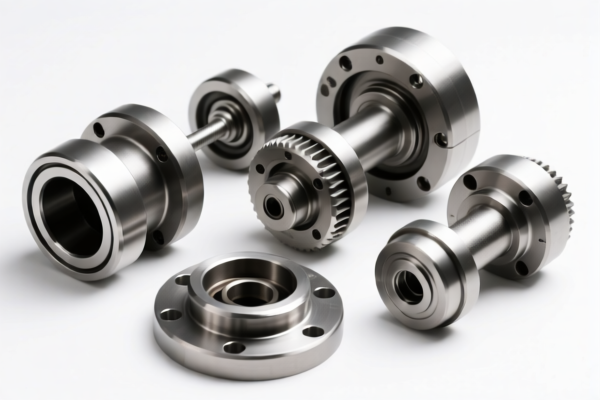
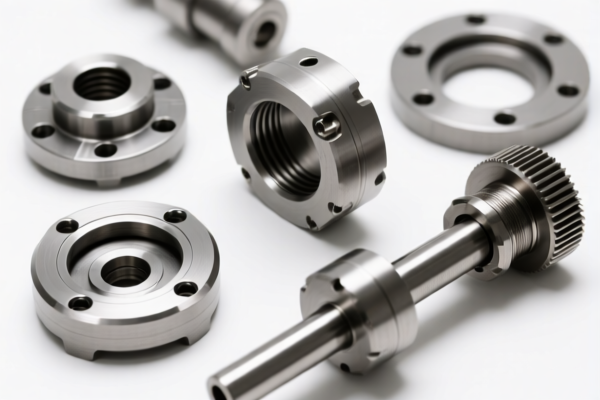
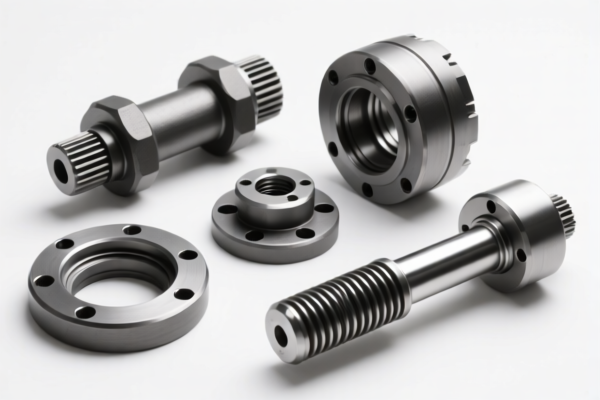
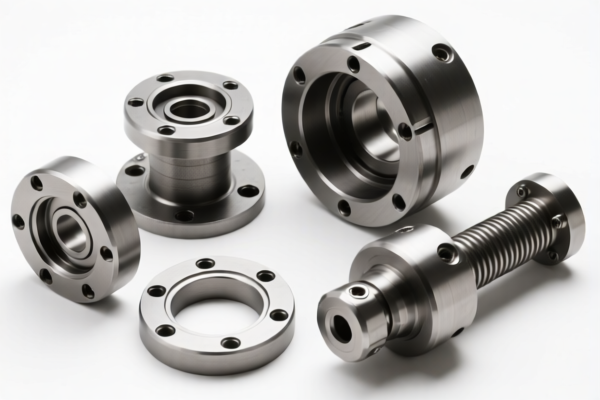
AI Analysis
🏭 Industrial Machinery Parts (Specifically: Textile & Agricultural Components)
🌐 HS Code Reference & Customs Clearance Guide | 2026 Latest Tariff Analysis | Professional Entry Strategies
📌 I. Product Definition & Classification: Decoding "Machinery Parts"
In international trade, "Industrial Machinery Parts" is a broad category that is strictly subdivided based on function, specific machinery type, and material. For this analysis, we focus on two primary sectors: Textile Machinery and Agricultural Machinery.
Key Distinction Logic: * Textile Machinery Parts: Must be specifically identifiable as parts of machines falling under Chapter 8447 (Weaving/knitting) or Chapter 8479 (Other machinery). * Agricultural Machinery Parts: Must be parts of machines for agriculture, horticulture, forestry, etc. (Chapter 8432/8436). * Generic/Unidentified Parts: If the specific machine type cannot be proven, customs may default to "Other" categories with higher tariffs.
⚠️ Critical Warning:
- Misclassifying Textile Parts as Agricultural Parts (or vice versa) can lead to significant tariff discrepancies (e.g., 87.5% vs. 35%).
- "Generic metal parts" often attract higher "catch-all" duties unless proven otherwise.
📦 II. HS Code Classification Matrix (2026 Latest Tariff Data)
Based on the provided data, here are the four specific HS Codes applicable to these industrial parts:
| HS Code | Product Description | Category | Material/Function Inference |
|---|---|---|---|
8479.89.95.99 |
Textile Machinery Parts (Other Machinery) | Other Independent Function Machinery | Metal or Hard Plastic |
8479.90.95.96 |
Textile Machinery Parts (Generic Catch-all) | Parts of Other Machinery | Other Catch-all Category |
8448.59.50.00 |
Textile Machinery Parts (Specific Support) | Parts/Accessories for Ch. 8447 | Specific to Weaving/Knitting Support |
8436.99.00.90 |
Agricultural Machinery Parts | Ag/Horticulture/Forestry Machinery | Other Ag Machinery Parts |
8436.99.00.35 |
Agricultural Machinery Parts (Catch-all) | Ag Machinery Parts | No Material Conflict |
🔍 Analysis:
- Textile Parts face two main classifications: Specific (8448) vs. General (8479).
- Agricultural Parts have a uniform tariff structure in this dataset (35.0%total).
- Highest Risk:8479.89.95.99has the highest total tax (87.5%).
- Lowest Risk:8448.59.50.00has the lowest total tax (17.0%).
💰 III. 2026 Latest Tariff Rate Breakdown (Detailed Analysis)
✅ Applicable Country: United States (US)
✅ Origin: China (CN)
✅ Effective Time: Current rates as per 2026 data
🎯 1. 8479.89.95.99 —— Textile Machinery Parts (General/Other Machinery)
⚠️ HIGHEST TAX RISK CATEGORY
| Item | Content |
|---|---|
| Base Tariff | 2.5% (Ad Valorem) |
| Section 301 Additional Tariff | +25.0% |
| Section 122 Tariff (Steel/Aluminum/Copper) | +10% (if applicable to base material) |
| Section 232 Tariff (Steel/Aluminum) | +50% (if material is steel/aluminum/copper) |
| Total Tax Rate | 87.5% |
| Tax Calculation | CIF Value × 87.5% |
| De Minimis Exemption | ❌ Not Available |
| Legal Path | Base Tariff → USITC Footnote 301 → IEEPA Section 122 → USITC Section 232 |
📌 Explanation:
- This code applies to machinery parts that do not fit specifically into weaving/knitting chapters (8447).
- The 87.5% rate is catastrophic for profitability. It combines base duties, Section 301 (trade war), Section 122, and Section 232 (metal tariffs).
- Key Trigger: If the part is made of Steel, Aluminum, or Copper, the 50% Section 232 tariff likely applies, pushing the rate to 87.5%.
🎯 2. 8479.90.95.96 —— Textile Machinery Parts (Catch-all)
📉 HIGH TAX RATE (Generic Category)
| Item | Content |
|---|---|
| Base Tariff | 0.0% |
| Section 301 Additional Tariff | +25.0% |
| Section 122 Tariff (Steel/Aluminum/Copper) | +10% (if applicable) |
| Section 232 Tariff (Steel/Aluminum) | +50% (if material is steel/aluminum/copper) |
| Total Tax Rate | 85.0% |
| Tax Calculation | CIF Value × 85.0% |
| De Minimis Exemption | ❌ Not Available |
| Legal Path | Base Tariff → USITC Footnote 301 → IEEPA Section 122 → USITC Section 232 |
📌 Explanation:
- This is a "catch-all" for machinery parts not specified elsewhere.
- Even with 0% base tariff, the 25% Section 301 and 50% Section 232 (if metal) make it extremely expensive.
- Note: If the part is NOT steel/aluminum/copper, the Section 232 (50%) might not apply, potentially lowering the rate. However, the data indicates 85.0%, implying the 50% metal tariff is included in the calculation.
🎯 3. 8448.59.50.00 —— Textile Machinery Parts (Specific Support)
✅ LOWEST TAX RATE – STRATEGIC CLASSIFICATION
| Item | Content |
|---|---|
| Base Tariff | 0.0% |
| Section 301 Additional Tariff | +7.0% (Reduced/Specific Rate) |
| Section 122 Tariff | +10% |
| Total Tax Rate | 17.0% |
| Tax Calculation | CIF Value × 17.0% |
| De Minimis Exemption | ❌ Not Available |
| Legal Path | Base Tariff → USITC Footnote 301 (Specific) → IEEPA Section 122 |
📌 Explanation:
- This code falls under Chapter 8447 (Weaving/Knitting Machines).
- Crucial Advantage: The Section 301 tariff is only 7.0% (instead of 25%), and there is NO 50% Section 232 metal tariff listed in the total.
- Strategy: If your textile part is specifically for a weaving/knitting machine (e.g., shuttle, heddle, needle bar), classify under 8448 to save 70%+ in taxes.
🎯 4. 8436.99.00.90 & 8436.99.00.35 —— Agricultural Machinery Parts
⚖️ MODERATE TAX RATE
| Item | Content |
|---|---|
| Base Tariff | 0.0% |
| Section 301 Additional Tariff | +25.0% |
| Section 122 Tariff | +10% |
| Total Tax Rate | 35.0% |
| Tax Calculation | CIF Value × 35.0% |
| De Minimis Exemption | ❌ Not Available |
| Legal Path | Base Tariff → USITC Footnote 301 → IEEPA Section 122 |
📌 Explanation:
- Applies to parts of agricultural, horticultural, forestry, poultry, or apiary machinery.
- Consistent Rate: Both sub-codes (90and35) have the same 35.0% total rate.
- Comparison: Significantly cheaper than textile parts (8479), but more expensive than specific textile parts (8448).
🛠️ IV. Customs Clearance Practical Advice (Avoiding Pitfalls)
✅ 1. Documentation Checklist (Mandatory)
| Document | Required | Purpose |
|---|---|---|
| ✅ Product Specification Sheet | ✔️ | Must detail: Function, Machine Type (Textile vs. Ag), Material (Steel/Plastic). |
| ✅ Technical Diagrams | ✔️ | To prove if the part is for a Weaving/Knitting Machine (8448) or General Machinery (8479). |
| ✅ Material Declaration | ✔️ | Critical for Section 232 (50% metal tariff). If it’s plastic or alloy not covered, savings are possible. |
| ✅ Commercial Invoice | ✔️ | Must explicitly state: "Part for [Specific Machine Model]" not just "Machinery Part." |
| ✅ Packing List | ✔️ | Ensure no mixed shipments (Textile + Ag) that confuse customs. |
✅ 2. Classification Strategy (Key Rules)
🔥 "Specificity Saves Money: 8448 is King, 8479 is Death!"
| Scenario | Recommended HS Code | Total Tax | Reason |
|---|---|---|---|
| Part for Weaving/Knitting Machine (e.g., needle, shuttle) | 8448.59.50.00 |
17.0% | Specific chapter allows lower Section 301 rate (7%) and avoids metal tariff. |
| Part for General Machinery (e.g., robot arm, conveyor) made of Steel/Aluminum | 8479.89.95.99 |
87.5% | High Section 301 (25%) + Section 232 (50%) = Catastrophic. |
| Part for General Machinery (e.g., plastic gear, non-metal) | 8479.90.95.96 |
85.0% | High Section 301 (25%) + Section 232 (50% assumed) = High. Verify if Section 232 applies. |
| Part for Tractor/Planter/Harvester | 8436.99.00.90 |
35.0% | Moderate rate. No Section 232 metal tariff listed. |
📌 Critical Note:
- If your part is made of Steel/Aluminum/Copper, the 50% Section 232 tariff is the biggest risk.
- Check Material: If you can prove the part is NOT steel/aluminum/copper (e.g., plastic, ceramic, specific alloys), you may avoid the 50% and reduce taxes from ~87% to ~35-30%.
✅ 3. Special Handling & Optimization
| Situation | Recommendation |
|---|---|
| OEM Parts for Textile Machines | Provide machine model numbers and diagrams to prove use in Chapter 8447 → Save 70% tax. |
| Mixed Material Parts | Clearly separate metal components from non-metal in documentation. If 8448 doesn't apply, try to argue for non-metal classification to avoid Section 232. |
| Agricultural Parts | Ensure they are not used for textile processing. Misclassification can lead to penalties. |
| Pre-Ruling | Apply for a Binding Ruling from CBP before shipping. This locks in the HS code and tax rate, avoiding surprise audits. |
🌍 V. Market Comparison (2026)
| Market | HS Code Example | Total Tax (China Origin) | Notes |
|---|---|---|---|
| 🇺🇸 USA | 8448.59.50.00 |
17.0% | Best rate for specific textile parts. |
| 🇺🇸 USA | 8479.89.95.99 |
87.5% | Worst rate for general textile/metal parts. |
| 🇺🇸 USA | 8436.99.00.90 |
35.0% | Moderate rate for ag parts. |
| 🇪🇺 EU | N/A | Varies | EU has different HS structure; generally lower base tariffs but high VAT. |
| 🇨🇳 China | N/A | ~5-10% | Import into China has lower duties but check VAT. |
📌 Conclusion:
- USA is the most expensive market due to Section 301 and Section 232 tariffs.
- Classifying under 8448 (Textile Specific) is the most effective tax-saving strategy for textile machinery parts.
- Avoid 8479 unless absolutely necessary, as the 87.5% rate is prohibitive.
📌 VI. Common Mistakes & Pitfalls (Learn from Others' Pain)
❌ Mistake 1: Using "Machinery Part" as a generic description.
👉 Result: Customs assigns 8479 (87.5%) instead of 8448 (17%).
👉 Fix: Specify "Part for [Weaving Machine Model]".
❌ Mistake 2: Ignoring Material Composition.
👉 Result: Unjustified 50% Section 232 tariff on non-metal parts.
👉 Fix: Provide material analysis reports (e.g., "Polymer, not Steel").
❌ Mistake 3: Mixing Textile and Agricultural Parts in One Shipment.
👉 Result: Customs inspects all, delays, and may apply the highest rate to all.
👉 Fix: Separate shipments by HS Code and Function.
❌ Mistake 4: Assuming "Agricultural Parts" are cheaper than "Textile Parts".
👉 Result: Misclassifying a textile part as agricultural (8436) leads to penalties for fraud.
👉 Fix: Accurate functional classification is mandatory.
🎯 VII. Conclusion: Strategic Tariff Optimization
🎯 Key Takeaway:
🔹 "Specificity is Profit: 8448 saves 70% over 8479."
🔹 "Material Matters: Avoid Steel/Aluminum to Escape Section 232."
🔹 "Agricultural Parts are Moderate: 35% is acceptable if Textile Options are Closed."
📌 Pro Tip:
If you are importing Textile Machinery Parts, always prioritize 8448.59.50.00 if the part is for weaving/knitting. Provide technical diagrams and machine compatibility lists to CBP. This can reduce your tax burden from 87.5% to 17.0%, saving $70,000 per $100,000 shipment.
📣 Immediate Action:
📞 Consult a Customs Broker: Submit product specs for HS Code Pre-Ruling.
🚀 Optimize Supply Chain: Source non-metal materials where possible to avoid Section 232.
💼 Precision Pays: Every dollar saved on tariffs goes directly to your bottom line.
✨ Professional Clearance Starts with Accurate Classification!
💼 Your Cost, Your Advantage!
Customer Reviews
About HS Code Classification
The Harmonized System (HS) is an internationally standardized nomenclature developed by the World Customs Organization (WCO) to classify traded products. Over 200 countries use the HS system as the basis for customs tariffs, trade statistics, and import/export regulations.
Each HS code follows a hierarchical structure:
- Chapter (2 digits) — Broad category of goods (e.g., Chapter 84: Machinery and Mechanical Appliances)
- Heading (4 digits) — More specific grouping within the chapter
- Subheading (6 digits) — Internationally standardized breakdown, used by all WCO member countries
- National subdivisions (8-10 digits) — Country-specific extensions for further classification, such as US HTSUS 10-digit codes
Correct HS code classification is essential for smooth customs clearance, accurate duty payment, and compliance with trade regulations. Misclassification can lead to customs delays, overpayment of duties, or penalties.
When importing from CN to US, the applicable tariff rates may include:
- Most-Favored-Nation (MFN) rate — The standard duty rate applied to WTO members
- General rate — Applied to countries without trade agreements
- Trade remedy duties — Additional tariffs such as Section 301 (anti-dumping), Section 232 (national security), or countervailing duties
The information provided on this page is for reference purposes only. For official classification, please consult with your local customs authority or a licensed customs broker.