Industrial V belt
CN → US| HS编码 | 关税税率 | 原产国 | 目的国 | 文档 |
|---|---|---|---|---|
| 3926905500 | 40.1% | CN | US | 官方文档 |
| 3926905900 | 37.4% | CN | US | 官方文档 |
| 5910001030 | 39.0% | CN | US | 官方文档 |
| 4010199100 | 38.3% | CN | US | 官方文档 |
| 4010399000 | 38.3% | CN | US | 官方文档 |
商品图片
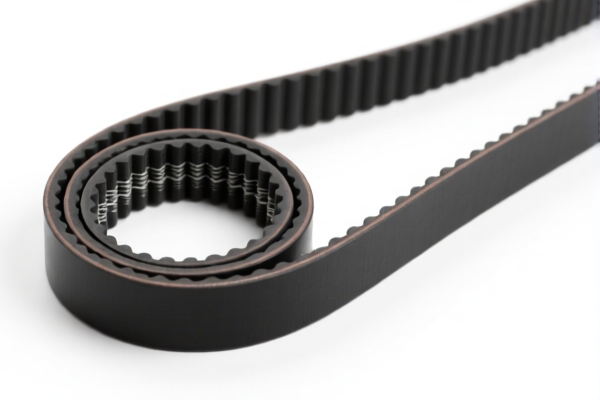
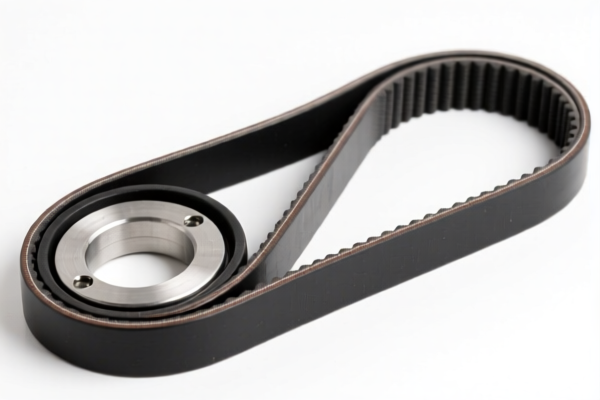
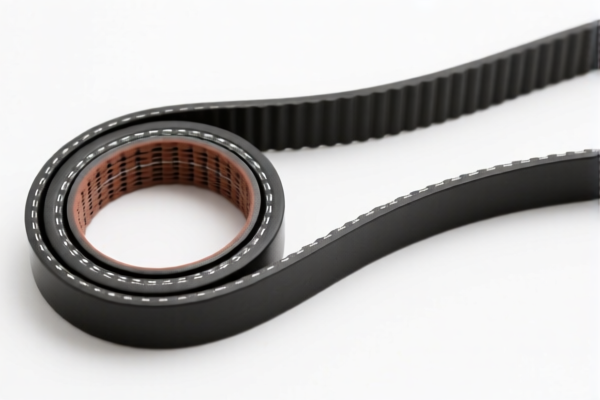
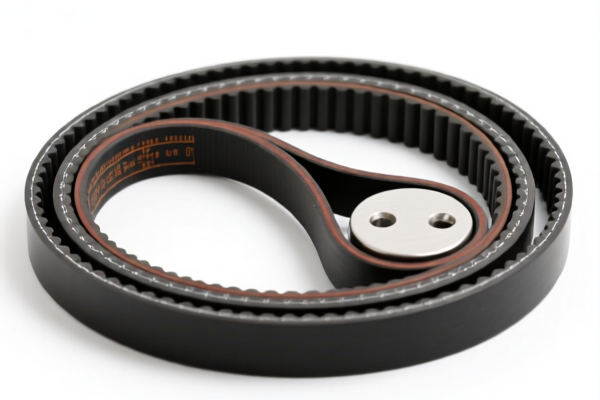
AI分析
🔩 Industrial V-Belts (Power Transmission Belts)
🌐 HS Code Reference & Customs Clearance Guide | 2026 Latest Tariff Analysis | Professional Clearance Strategy
📌 1. Product Definition & Classification: Do You Truly Understand "Industrial V-Belts"?
Industrial V-belts are critical components in mechanical power transmission systems, widely used in automotive, agricultural, industrial machinery, and HVAC applications. They transmit power from a driving pulley to a driven pulley through friction.
In international trade, classification depends heavily on material composition and structural design:
Rubber V-Belts (Classified under Chapter 40): Made primarily of vulcanized rubber, often reinforced with cord (polyester, aramid, or steel) for strength. These fall under heading 4010.
Textile/Composite V-Belts (Classified under Chapter 39 or 59): Made from synthetic fibers, plastic-coated fabrics, or composite materials. Depending on the primary material and binding agent, they may be classified under Chapter 39 (Plastics) or Chapter 59 (Impregnated Textiles).
⚠️ Key Distinction Points: - If the belt is predominantly rubber with cord reinforcement → Chapter 40 (4010.xx.xx) - If the belt is fabric/plastic-based with a rubber coating or binding → Chapter 39 (3926.90.5x) or Chapter 59 (5910.00.1x)
📦 2. HS Code Classification Matrix (2026 Latest Tariff Authority Cross-Reference)
| HS Code | Product Description | Application Scenario | Material Composition |
|---|---|---|---|
3926.90.55.00 |
Other articles of plastics: Belts for machinery | Industrial machinery using plastic/fabric belts | Plastic/Rubber composite or Textile fiber |
3926.90.59.00 |
Other articles of plastics: Other mechanical belts | Specialized industrial belts (non-standard) | Composite material (Textile/Plastic/Rubber) |
5910.00.10.30 |
Transmission/Conveyor belts: Textile-based belts | Heavy-duty industrial machinery, conveyor systems | Artificial fiber or synthetic material |
4010.19.91.00 |
Vulcanized rubber belts: Other transmission belts | Standard automotive/industrial V-belts | Primarily vulcanized rubber with cord |
4010.39.90.00 |
Vulcanized rubber belts: Other timing/power transmission belts | Synchronous V-belts, precision transmission | Rubber-based, specific tooth/profile design |
🔍 Critical Reminder: - Rubber vs. Plastic/Textile: Customs authorities strictly differentiate based on the primary material. If the belt is >50% rubber by weight and vulcanized, it typically falls under 4010. - Structure Matters: Smooth V-belts vs. cogged V-belts vs. toothed (synchronous) belts may have different subheadings within Chapter 40. - Misclassification Risk: Declaring a rubber belt as a plastic article (3926) or vice versa can lead to significant duty discrepancies and customs audits.
💰 3. 2026 Latest Tariff Rate Breakdown (Including Additional Duties & Policy Surcharges)
✅ Applicable Country: United States (US)
✅ Country of Origin: China (CN)
✅ Effective Date: November 10, 2025, onwards (including subsequent imports)
🎯 1. 3926.90.55.00 – Articles of Plastics: Mechanical Belts
| Item | Details |
|---|---|
| Base Duty Rate | 5.1% (ad valorem) |
| Section 301 Additional Duty | +25.0% (USITC Footnote 9903.88.01) |
| Section 122 IEEPA Surcharge | +10.0% (Specific to certain industrial goods from China) |
| Total Effective Rate | 40.1% |
| Tax Calculation | CIF Value × 40.1% |
| De Minimis Exemption Eligible? | ❌ No (deny_de_minimis) |
| Legal Basis Path | IEEPA:122 → USITC:3926.90.55.00 → FOOTNOTE:9903.88.01 |
📌 Explanation: - The 5.1% base duty is the standard MFN rate for plastic articles of machinery. - The 25% Section 301 duty applies to most Chinese-manufactured plastic articles. - The 10% Section 122 duty is an additional surcharge under the International Emergency Economic Powers Act (IEEPA) for specific industrial supply chains. - Total: 40.1%. This is a high-cost category for compliance.
🎯 2. 3926.90.59.00 – Other Plastic Articles: Other Belts
| Item | Details |
|---|---|
| Base Duty Rate | 2.4% (ad valorem) |
| Section 301 Additional Duty | +25.0% |
| Section 122 IEEPA Surcharge | +10.0% |
| Total Effective Rate | 37.4% |
| Tax Calculation | CIF Value × 37.4% |
| De Minimis Exemption Eligible? | ❌ No |
| Legal Basis Path | IEEPA:122 → USITC:3926.90.59.00 → FOOTNOTE:9903.88.01 |
📌 Note: - This subheading captures composite belts that don't fit neatly into 3926.90.55. - Despite a lower base rate (2.4% vs. 5.1%), the total impact remains high due to the fixed 35% surcharges.
🎯 3. 5910.00.10.30 – Textile-Based Transmission Belts
| Item | Details |
|---|---|
| Base Duty Rate | 4.0% (ad valorem) |
| Section 301 Additional Duty | +25.0% |
| Section 122 IEEPA Surcharge | +10.0% |
| Total Effective Rate | 39.0% |
| Tax Calculation | CIF Value × 39.0% |
| De Minimis Exemption Eligible? | ❌ No |
| Legal Basis Path | IEEPA:122 → USITC:5910.00.10.30 → FOOTNOTE:9903.88.01 |
📌 Key Insight: - This code is for belts made of artificial fibers or synthetic materials impregnated or coated. - Common in heavy-duty conveyor belts and specialized industrial drives. - The 39% total rate makes it slightly cheaper than plastic-based belts but still heavily taxed.
🎯 4. 4010.19.91.00 – Vulcanized Rubber Belts: Other Transmission Belts
| Item | Details |
|---|---|
| Base Duty Rate | 3.3% (ad valorem) |
| Section 301 Additional Duty | +25.0% |
| Section 122 IEEPA Surcharge | +10.0% |
| Total Effective Rate | 38.3% |
| Tax Calculation | CIF Value × 38.3% |
| De Minimis Exemption Eligible? | ❌ No |
| Legal Basis Path | IEEPA:122 → USITC:4010.19.91.00 → FOOTNOTE:9903.88.01 |
📌 Explanation: - This is the most common code for standard V-belts (e.g., A, B, C sections) made of rubber. - The base rate of 3.3% is competitive, but the 35% surcharge erodes the advantage.
🎯 5. 4010.39.90.00 – Other Rubber Transmission Belts
| Item | Details |
|---|---|
| Base Duty Rate | 3.3% (ad valorem) |
| Section 301 Additional Duty | +25.0% |
| Section 122 IEEPA Surcharge | +10.0% |
| Total Effective Rate | 38.3% |
| Tax Calculation | CIF Value × 38.3% |
| De Minimis Exemption Eligible? | ❌ No |
| Legal Basis Path | IEEPA:122 → USITC:4010.39.90.00 → FOOTNOTE:9903.88.01 |
📌 Note: - This often covers synchronous belts or specialty rubber belts not listed under 4010.19. - Identical total tax rate to
4010.19.91.00.
🛠️ 4. Customs Clearance Operational Advice (Practical Pitfall Avoidance Guide)
✅ 1. Documentation Checklist (Non-Negotiable)
| Document | Mandatory? | Description |
|---|---|---|
| ✅ Product Specification Sheet | ✔️ | Must detail material composition (Rubber % vs. Fabric %), dimensions, pitch, and length. |
| ✅ Material Safety Data Sheet (MSDS) | ✔️ | Required for rubber/chemical components. |
| ✅ High-Resolution Photos | ✔️ | Must show cross-section to prove material layering (rubber core vs. fabric cover). |
| ✅ Technical Diagram/Cross-Section | ✔️ | Crucial for distinguishing between Chapter 40 (Rubber) and Chapter 39/59 (Plastic/Textile). |
| ✅ Commercial Invoice | ✔️ | Must explicitly state "Industrial V-Belt" and material composition. Avoid vague terms like "Mechanical Part." |
| ✅ Packing List | ✔️ | Clear quantity and weight breakdown. |
✅ 2. Declaration Tips (Key Mnemonics)
🔥 "Material First, Structure Second, Name Specific, Tax Minimized!"
| Scenario | Correct Declaration | Wrong Practice |
|---|---|---|
| Standard Rubber V-Belt | 4010.19.91.00 "Vulcanized Rubber V-Belt" |
Declaring as "Plastic Belt" (3926) → Audit risk |
| Fabric-Covered Rubber Belt | 4010.19.91.00 (if rubber is dominant) |
Declaring as 5910 → Wrong duty base |
| All-Textile Belt | 5910.00.10.30 "Synthetic Fiber Transmission Belt" |
Declaring as Rubber → Significant underpayment |
| Plastic-Coated Belt | 3926.90.55.00 "Plastic Mechanical Belt" |
Declaring as Rubber → Overpayment or misclassification |
✅ 3. Special Case Handling
| Situation | Handling Advice |
|---|---|
| Hybrid Belts (Rubber + Fabric) | Provide lab test results showing % by weight. If Rubber > 50%, use 4010. If Fabric/Plastic > 50%, use 3926 or 5910. |
| OEM Custom Belts | Provide customer specification sheets to prove exact material composition. |
| Sample Shipments | Even samples are subject to full duty. No de minimis exemption for these HS codes. |
| Replacement Parts for Machinery | Still classified as goods in their own right. Do not assume "free" because they are for US-made equipment. |
🌍 5. Global Market Comparison (2026 Latest)
| Country/Region | Recommended HS Code | Duty Rate (China Origin) | Certification Requirements | Notes |
|---|---|---|---|---|
| 🇺🇸 USA | 4010.19.91.00 / 3926.90.55.00 |
37.4% – 40.1% | None specific for belts | Highest tariff due to 301 + 122 |
| 🇨🇳 China | 4010.19.91.00 |
5% – 8% | CCC (if for automotive) | Low duty, high volume |
| 🇪🇺 EU | 4010.11.00 / 3926.90 |
0% – 3% | REACH Compliance | No Section 301 equivalent |
| 🇬🇧 UK | 4010.19 / 3926.90 |
0% – 2% | UKCA Mark | Post-Brexit tariff structure |
| 🇲🇽 Mexico | 4010.19 |
0% – 5% | NOM Standards | USMCA benefit if originating |
📌 Conclusion: - The US market is the most expensive for importing industrial V-belts due to the叠加 (stacked) tariffs. - EU and UK markets are significantly cheaper but require strict chemical compliance (REACH). - Consider Supply Chain Diversification: If shipping to the US, consider sourcing from Vietnam, Thailand, or Mexico to potentially avoid Section 301 and 122 duties, provided USMCA/ASEAN rules of origin are met.
📌 6. Common Errors & Pitfall Avoidance (Lessons Learned)
❌ Error 1: Declaring "Rubber Belts" as "Plastic Belts" to seek lower base rates.
👉 Consequence: Customs laboratory testing will reveal rubber content → Back taxes + Penalties + Seizure.
❌ Error 2: Using generic terms like "Mechanical Parts" instead of "Transmission Belts."
👉 Consequence: Customs may classify under a different, higher duty code (e.g., Chapter 84 parts) → 20-30% unexpected tax increase.
❌ Error 3: Ignoring the Section 122 IEEPA Surcharge.
👉 Consequence: Many importers forget this 10% charge, leading to underpayment and interest fees.
❌ Error 4: Assuming de minimis ($800) applies to small orders.
👉 Consequence: These HS codes are explicitly denied de minimis. Even a $100 sample will be taxed at ~38%.
✅ Correct Practice:
"V-Belt, Vulcanized Rubber, Cord-Reinforced, Dimensions: 3V x 2000mm, Material: NR/BR/SBR Compound, For Industrial Motor Drive, Model: XYZ"
🎯 7. Conclusion: Precise Classification Saves Money
🎯 Remember the Mantra:
🔹 "Rubber is 40, Plastic is 39, Textile is 59, Tax is 38%+!"
🔹 "Material wins the case, Section 122 is the killer, No de minimis for belts!"
📌 Pro Tip:
If your V-belts are originating from Vietnam, Thailand, or Mexico, you may qualify for USMCA or ASEAN preferential tariffs, potentially reducing the 25% Section 301 duty to 0%.
Action Item:
📞 Contact your supplier for Certificate of Origin (COO).
📞 Apply for Advance Ruling with US CBP if the material composition is complex.
🚀 Optimize your supply chain to avoid the 35% US surcharge!
📣 Immediate Action:
🔹 Verify Material Composition: Get lab tests if unsure.
🔹 Check Origin: Is it 100% China? If yes, budget for 37-40% duty.
🔹 Declare Precisely: "Vulcanized Rubber V-Belt" not just "Belt."
✨ Professional Customs Clearance Starts with Accurate Classification!
💼 Your bottom line depends on getting this right!
用户评价
关于 HS 编码归类
协调制度(HS)是由世界海关组织(WCO)制定的国际贸易商品分类标准。全球 200 多个国家采用 HS 系统作为海关关税、贸易统计和进出口监管的基础。
每个 HS 编码遵循以下层级结构:
- 章(2 位)——商品大类(例如:第 84 章:机器和机械设备)
- 品目(4 位)——章内的更具体分类
- 子目(6 位)——国际通用细分,所有 WCO 成员国统一使用
- 本国细分(8-10 位)——各国自行扩展的细分编码,如美国 HTSUS 10 位编码
正确的 HS 编码归类对于顺利通关、准确缴纳关税和遵守贸易法规至关重要。错误归类可能导致海关延误、多缴关税或罚款。
从CN进口到US时,适用的关税税率可能包括:
- 最惠国(MFN)税率——适用于 WTO 成员国的标准关税税率
- 普通税率——适用于无贸易协定国家
- 贸易救济关税——附加关税,如 301 条款(反倾销)、232 条款(国家安全)或反补贴税
本页内容仅供参考。如需正式归类,请咨询当地海关或持牌报关代理。