Industrial V belt
CN → US| HS Code | Tariff Rate | Origin | Destination | Doc |
|---|---|---|---|---|
| 3926905500 | 40.1% | CN | US | Official Doc |
| 3926905900 | 37.4% | CN | US | Official Doc |
| 5910001030 | 39.0% | CN | US | Official Doc |
| 4010199100 | 38.3% | CN | US | Official Doc |
| 4010399000 | 38.3% | CN | US | Official Doc |
Product Images
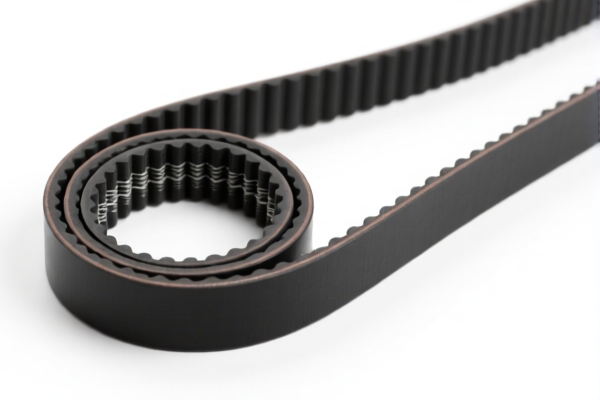
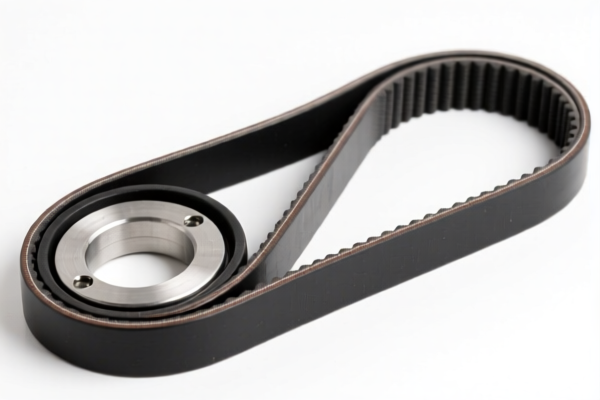
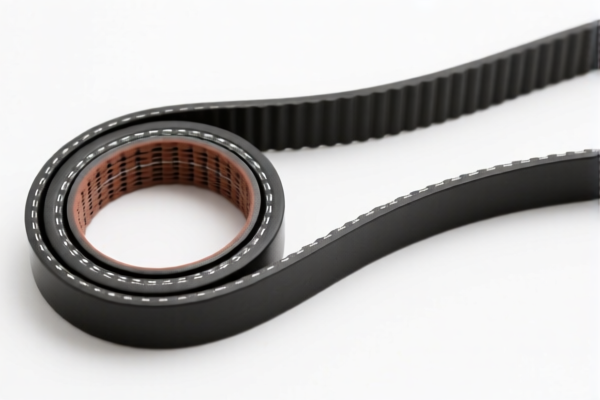
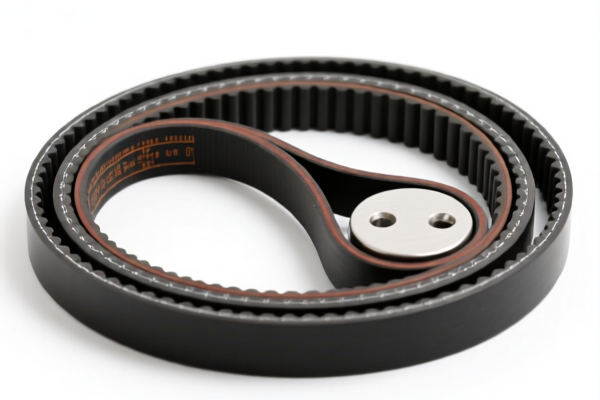
AI Analysis
🔩 Industrial V-Belts (Power Transmission Belts)
🌐 HS Code Reference & Customs Clearance Guide | 2026 Latest Tariff Analysis | Professional Clearance Strategy
📌 1. Product Definition & Classification: Do You Truly Understand "Industrial V-Belts"?
Industrial V-belts are critical components in mechanical power transmission systems, widely used in automotive, agricultural, industrial machinery, and HVAC applications. They transmit power from a driving pulley to a driven pulley through friction.
In international trade, classification depends heavily on material composition and structural design:
Rubber V-Belts (Classified under Chapter 40): Made primarily of vulcanized rubber, often reinforced with cord (polyester, aramid, or steel) for strength. These fall under heading 4010.
Textile/Composite V-Belts (Classified under Chapter 39 or 59): Made from synthetic fibers, plastic-coated fabrics, or composite materials. Depending on the primary material and binding agent, they may be classified under Chapter 39 (Plastics) or Chapter 59 (Impregnated Textiles).
⚠️ Key Distinction Points: - If the belt is predominantly rubber with cord reinforcement → Chapter 40 (4010.xx.xx) - If the belt is fabric/plastic-based with a rubber coating or binding → Chapter 39 (3926.90.5x) or Chapter 59 (5910.00.1x)
📦 2. HS Code Classification Matrix (2026 Latest Tariff Authority Cross-Reference)
| HS Code | Product Description | Application Scenario | Material Composition |
|---|---|---|---|
3926.90.55.00 |
Other articles of plastics: Belts for machinery | Industrial machinery using plastic/fabric belts | Plastic/Rubber composite or Textile fiber |
3926.90.59.00 |
Other articles of plastics: Other mechanical belts | Specialized industrial belts (non-standard) | Composite material (Textile/Plastic/Rubber) |
5910.00.10.30 |
Transmission/Conveyor belts: Textile-based belts | Heavy-duty industrial machinery, conveyor systems | Artificial fiber or synthetic material |
4010.19.91.00 |
Vulcanized rubber belts: Other transmission belts | Standard automotive/industrial V-belts | Primarily vulcanized rubber with cord |
4010.39.90.00 |
Vulcanized rubber belts: Other timing/power transmission belts | Synchronous V-belts, precision transmission | Rubber-based, specific tooth/profile design |
🔍 Critical Reminder: - Rubber vs. Plastic/Textile: Customs authorities strictly differentiate based on the primary material. If the belt is >50% rubber by weight and vulcanized, it typically falls under 4010. - Structure Matters: Smooth V-belts vs. cogged V-belts vs. toothed (synchronous) belts may have different subheadings within Chapter 40. - Misclassification Risk: Declaring a rubber belt as a plastic article (3926) or vice versa can lead to significant duty discrepancies and customs audits.
💰 3. 2026 Latest Tariff Rate Breakdown (Including Additional Duties & Policy Surcharges)
✅ Applicable Country: United States (US)
✅ Country of Origin: China (CN)
✅ Effective Date: November 10, 2025, onwards (including subsequent imports)
🎯 1. 3926.90.55.00 – Articles of Plastics: Mechanical Belts
| Item | Details |
|---|---|
| Base Duty Rate | 5.1% (ad valorem) |
| Section 301 Additional Duty | +25.0% (USITC Footnote 9903.88.01) |
| Section 122 IEEPA Surcharge | +10.0% (Specific to certain industrial goods from China) |
| Total Effective Rate | 40.1% |
| Tax Calculation | CIF Value × 40.1% |
| De Minimis Exemption Eligible? | ❌ No (deny_de_minimis) |
| Legal Basis Path | IEEPA:122 → USITC:3926.90.55.00 → FOOTNOTE:9903.88.01 |
📌 Explanation: - The 5.1% base duty is the standard MFN rate for plastic articles of machinery. - The 25% Section 301 duty applies to most Chinese-manufactured plastic articles. - The 10% Section 122 duty is an additional surcharge under the International Emergency Economic Powers Act (IEEPA) for specific industrial supply chains. - Total: 40.1%. This is a high-cost category for compliance.
🎯 2. 3926.90.59.00 – Other Plastic Articles: Other Belts
| Item | Details |
|---|---|
| Base Duty Rate | 2.4% (ad valorem) |
| Section 301 Additional Duty | +25.0% |
| Section 122 IEEPA Surcharge | +10.0% |
| Total Effective Rate | 37.4% |
| Tax Calculation | CIF Value × 37.4% |
| De Minimis Exemption Eligible? | ❌ No |
| Legal Basis Path | IEEPA:122 → USITC:3926.90.59.00 → FOOTNOTE:9903.88.01 |
📌 Note: - This subheading captures composite belts that don't fit neatly into 3926.90.55. - Despite a lower base rate (2.4% vs. 5.1%), the total impact remains high due to the fixed 35% surcharges.
🎯 3. 5910.00.10.30 – Textile-Based Transmission Belts
| Item | Details |
|---|---|
| Base Duty Rate | 4.0% (ad valorem) |
| Section 301 Additional Duty | +25.0% |
| Section 122 IEEPA Surcharge | +10.0% |
| Total Effective Rate | 39.0% |
| Tax Calculation | CIF Value × 39.0% |
| De Minimis Exemption Eligible? | ❌ No |
| Legal Basis Path | IEEPA:122 → USITC:5910.00.10.30 → FOOTNOTE:9903.88.01 |
📌 Key Insight: - This code is for belts made of artificial fibers or synthetic materials impregnated or coated. - Common in heavy-duty conveyor belts and specialized industrial drives. - The 39% total rate makes it slightly cheaper than plastic-based belts but still heavily taxed.
🎯 4. 4010.19.91.00 – Vulcanized Rubber Belts: Other Transmission Belts
| Item | Details |
|---|---|
| Base Duty Rate | 3.3% (ad valorem) |
| Section 301 Additional Duty | +25.0% |
| Section 122 IEEPA Surcharge | +10.0% |
| Total Effective Rate | 38.3% |
| Tax Calculation | CIF Value × 38.3% |
| De Minimis Exemption Eligible? | ❌ No |
| Legal Basis Path | IEEPA:122 → USITC:4010.19.91.00 → FOOTNOTE:9903.88.01 |
📌 Explanation: - This is the most common code for standard V-belts (e.g., A, B, C sections) made of rubber. - The base rate of 3.3% is competitive, but the 35% surcharge erodes the advantage.
🎯 5. 4010.39.90.00 – Other Rubber Transmission Belts
| Item | Details |
|---|---|
| Base Duty Rate | 3.3% (ad valorem) |
| Section 301 Additional Duty | +25.0% |
| Section 122 IEEPA Surcharge | +10.0% |
| Total Effective Rate | 38.3% |
| Tax Calculation | CIF Value × 38.3% |
| De Minimis Exemption Eligible? | ❌ No |
| Legal Basis Path | IEEPA:122 → USITC:4010.39.90.00 → FOOTNOTE:9903.88.01 |
📌 Note: - This often covers synchronous belts or specialty rubber belts not listed under 4010.19. - Identical total tax rate to
4010.19.91.00.
🛠️ 4. Customs Clearance Operational Advice (Practical Pitfall Avoidance Guide)
✅ 1. Documentation Checklist (Non-Negotiable)
| Document | Mandatory? | Description |
|---|---|---|
| ✅ Product Specification Sheet | ✔️ | Must detail material composition (Rubber % vs. Fabric %), dimensions, pitch, and length. |
| ✅ Material Safety Data Sheet (MSDS) | ✔️ | Required for rubber/chemical components. |
| ✅ High-Resolution Photos | ✔️ | Must show cross-section to prove material layering (rubber core vs. fabric cover). |
| ✅ Technical Diagram/Cross-Section | ✔️ | Crucial for distinguishing between Chapter 40 (Rubber) and Chapter 39/59 (Plastic/Textile). |
| ✅ Commercial Invoice | ✔️ | Must explicitly state "Industrial V-Belt" and material composition. Avoid vague terms like "Mechanical Part." |
| ✅ Packing List | ✔️ | Clear quantity and weight breakdown. |
✅ 2. Declaration Tips (Key Mnemonics)
🔥 "Material First, Structure Second, Name Specific, Tax Minimized!"
| Scenario | Correct Declaration | Wrong Practice |
|---|---|---|
| Standard Rubber V-Belt | 4010.19.91.00 "Vulcanized Rubber V-Belt" |
Declaring as "Plastic Belt" (3926) → Audit risk |
| Fabric-Covered Rubber Belt | 4010.19.91.00 (if rubber is dominant) |
Declaring as 5910 → Wrong duty base |
| All-Textile Belt | 5910.00.10.30 "Synthetic Fiber Transmission Belt" |
Declaring as Rubber → Significant underpayment |
| Plastic-Coated Belt | 3926.90.55.00 "Plastic Mechanical Belt" |
Declaring as Rubber → Overpayment or misclassification |
✅ 3. Special Case Handling
| Situation | Handling Advice |
|---|---|
| Hybrid Belts (Rubber + Fabric) | Provide lab test results showing % by weight. If Rubber > 50%, use 4010. If Fabric/Plastic > 50%, use 3926 or 5910. |
| OEM Custom Belts | Provide customer specification sheets to prove exact material composition. |
| Sample Shipments | Even samples are subject to full duty. No de minimis exemption for these HS codes. |
| Replacement Parts for Machinery | Still classified as goods in their own right. Do not assume "free" because they are for US-made equipment. |
🌍 5. Global Market Comparison (2026 Latest)
| Country/Region | Recommended HS Code | Duty Rate (China Origin) | Certification Requirements | Notes |
|---|---|---|---|---|
| 🇺🇸 USA | 4010.19.91.00 / 3926.90.55.00 |
37.4% – 40.1% | None specific for belts | Highest tariff due to 301 + 122 |
| 🇨🇳 China | 4010.19.91.00 |
5% – 8% | CCC (if for automotive) | Low duty, high volume |
| 🇪🇺 EU | 4010.11.00 / 3926.90 |
0% – 3% | REACH Compliance | No Section 301 equivalent |
| 🇬🇧 UK | 4010.19 / 3926.90 |
0% – 2% | UKCA Mark | Post-Brexit tariff structure |
| 🇲🇽 Mexico | 4010.19 |
0% – 5% | NOM Standards | USMCA benefit if originating |
📌 Conclusion: - The US market is the most expensive for importing industrial V-belts due to the叠加 (stacked) tariffs. - EU and UK markets are significantly cheaper but require strict chemical compliance (REACH). - Consider Supply Chain Diversification: If shipping to the US, consider sourcing from Vietnam, Thailand, or Mexico to potentially avoid Section 301 and 122 duties, provided USMCA/ASEAN rules of origin are met.
📌 6. Common Errors & Pitfall Avoidance (Lessons Learned)
❌ Error 1: Declaring "Rubber Belts" as "Plastic Belts" to seek lower base rates.
👉 Consequence: Customs laboratory testing will reveal rubber content → Back taxes + Penalties + Seizure.
❌ Error 2: Using generic terms like "Mechanical Parts" instead of "Transmission Belts."
👉 Consequence: Customs may classify under a different, higher duty code (e.g., Chapter 84 parts) → 20-30% unexpected tax increase.
❌ Error 3: Ignoring the Section 122 IEEPA Surcharge.
👉 Consequence: Many importers forget this 10% charge, leading to underpayment and interest fees.
❌ Error 4: Assuming de minimis ($800) applies to small orders.
👉 Consequence: These HS codes are explicitly denied de minimis. Even a $100 sample will be taxed at ~38%.
✅ Correct Practice:
"V-Belt, Vulcanized Rubber, Cord-Reinforced, Dimensions: 3V x 2000mm, Material: NR/BR/SBR Compound, For Industrial Motor Drive, Model: XYZ"
🎯 7. Conclusion: Precise Classification Saves Money
🎯 Remember the Mantra:
🔹 "Rubber is 40, Plastic is 39, Textile is 59, Tax is 38%+!"
🔹 "Material wins the case, Section 122 is the killer, No de minimis for belts!"
📌 Pro Tip:
If your V-belts are originating from Vietnam, Thailand, or Mexico, you may qualify for USMCA or ASEAN preferential tariffs, potentially reducing the 25% Section 301 duty to 0%.
Action Item:
📞 Contact your supplier for Certificate of Origin (COO).
📞 Apply for Advance Ruling with US CBP if the material composition is complex.
🚀 Optimize your supply chain to avoid the 35% US surcharge!
📣 Immediate Action:
🔹 Verify Material Composition: Get lab tests if unsure.
🔹 Check Origin: Is it 100% China? If yes, budget for 37-40% duty.
🔹 Declare Precisely: "Vulcanized Rubber V-Belt" not just "Belt."
✨ Professional Customs Clearance Starts with Accurate Classification!
💼 Your bottom line depends on getting this right!
Customer Reviews
About HS Code Classification
The Harmonized System (HS) is an internationally standardized nomenclature developed by the World Customs Organization (WCO) to classify traded products. Over 200 countries use the HS system as the basis for customs tariffs, trade statistics, and import/export regulations.
Each HS code follows a hierarchical structure:
- Chapter (2 digits) — Broad category of goods (e.g., Chapter 84: Machinery and Mechanical Appliances)
- Heading (4 digits) — More specific grouping within the chapter
- Subheading (6 digits) — Internationally standardized breakdown, used by all WCO member countries
- National subdivisions (8-10 digits) — Country-specific extensions for further classification, such as US HTSUS 10-digit codes
Correct HS code classification is essential for smooth customs clearance, accurate duty payment, and compliance with trade regulations. Misclassification can lead to customs delays, overpayment of duties, or penalties.
When importing from CN to US, the applicable tariff rates may include:
- Most-Favored-Nation (MFN) rate — The standard duty rate applied to WTO members
- General rate — Applied to countries without trade agreements
- Trade remedy duties — Additional tariffs such as Section 301 (anti-dumping), Section 232 (national security), or countervailing duties
The information provided on this page is for reference purposes only. For official classification, please consult with your local customs authority or a licensed customs broker.