Inorganic Additives for Flux
CN → US| HS编码 | 关税税率 | 原产国 | 目的国 | 文档 |
|---|---|---|---|---|
| 3811900000 | 41.5% | CN | US | 官方文档 |
| 3810901000 | 41.5% | CN | US | 官方文档 |
| 3810100000 | 40.0% | CN | US | 官方文档 |
| 3811190000 | 41.5% | CN | US | 官方文档 |
| 3824995500 | 38.7% | CN | US | 官方文档 |
商品图片
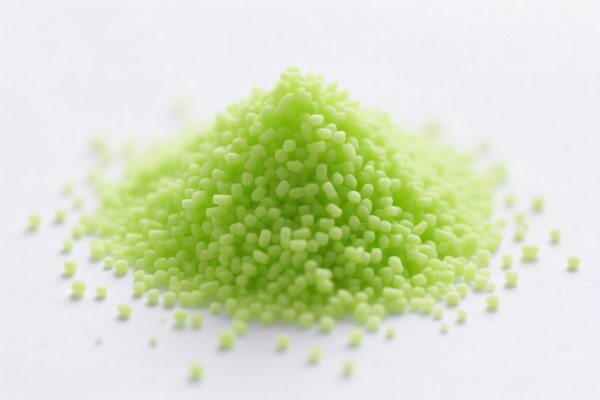
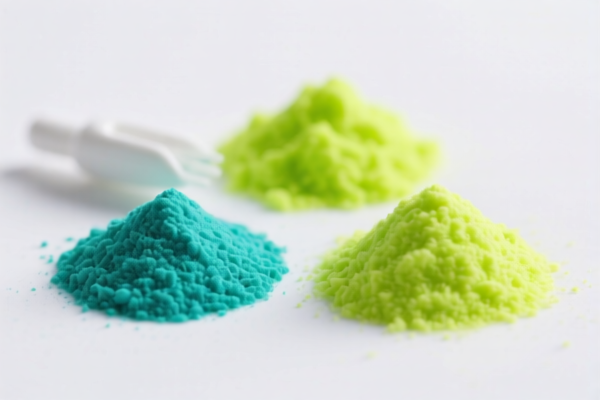
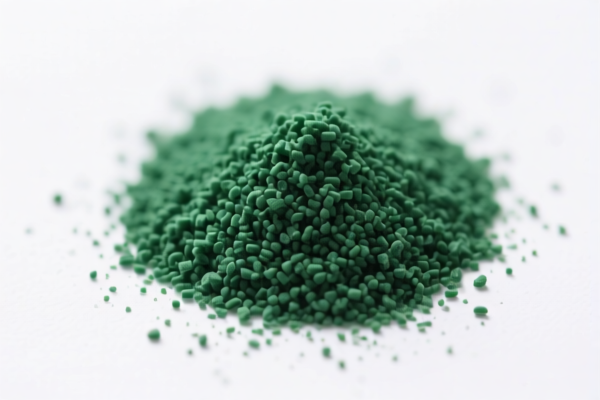
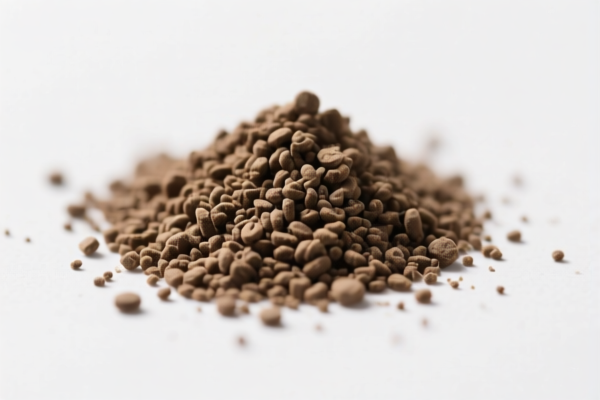
AI分析
🔥 Inorganic Additives for Flux (Welding Flux Ingredients)
🌐 HS Code Reference & Customs Clearance Guide | 2026 Latest Tariff Analysis | Professional Clearance Strategy
📌 I. Product Definition: What Are "Inorganic Additives for Flux"?
Inorganic additives for welding fluxes are specialized chemical compounds used to enhance the performance of soldering, brazing, and hard-soldering processes. They serve multiple functions, including: * Oxygen scavenging (removing oxides from metal surfaces). * Surface tension reduction (improving flow and wetting). * Slag formation (protecting the weld pool).
These additives are typically salts (e.g., chlorides, fluorides, borates) or oxides. In international trade, the classification depends heavily on whether the product is considered a "flux" itself or an "additive/preparation" for other uses.
⚠️ Critical Classification Logic:
- If the product is primarily a flux used in welding/brazing → Chapter 38, Heading 3810.
- If the product is a general-purpose chemical additive for mineral oils or similar liquids → Chapter 38, Heading 3811.
- If the product is a specialized chemical mixture not elsewhere specified → Chapter 38, Heading 3824.
📦 II. HS Code Classification Details (2026 Latest Tariff Reference)
Based on the provided data, here are the four possible HS Codes for "Inorganic Additives for Flux" and their logical justifications:
| HS Code | Product Description | Logical Justification (Why this code?) | Total Tax Rate |
|---|---|---|---|
3811.90.00.00 |
Chemical Preparations for Mineral Oils | Classified as an additive for mineral oils or similar liquids. Logic: No material conflict; fits the "preparation additive" use case. | 41.5% |
3810.90.10.00 |
Other Fluxes for Welding/Brazing | Most Likely Match. Directly matches the use of welding/brazing fluxes. Logic: Based on common sense, it is a chemical agent for metal joining. | 41.5% |
3810.10.00.00 |
Fluxes for Soldering/Brazing | Direct alignment with welding-related functions and morphology as an auxiliary welding material. Logic: Fits the definition of metal surface treatment agents for welding. | 40.0% |
3811.19.00.00 |
Other Chemical Additives | Inferred to contain chemical additives for liquid preparation. Logic: Fits "other types" in the anti-knock/additive category based on composition. | 41.5% |
3824.99.55.00 |
Halogenated Hydrocarbon Mixtures | Specific to Halogen-Free flux agents. Logic: "Halogen-free" relates to halocarbon attributes; fits chemical mixture characteristics. | 38.7% |
🔍 Key Insight:
-3810.10.00.00is often the most direct fit for "fluxes" with the lowest total tax (40.0%).
-3810.90.10.00and3811codes are alternative interpretations where the product might be classified as a general chemical preparation or additive rather than a dedicated flux.
-3824.99.55.00is niche, likely for specialized halogen-free formulations.
💰 III. 2026 Latest Tariff Rate Breakdown (Detailed Tax Clauses)
✅ Applicable Country: United States (US)
✅ Origin: China (CN)
✅ Effective Date: November 10, 2025 (and subsequent imports)
All HS Codes below are subject to the following tax structure:
🎯 1. 3810.10.00.00 – Fluxes for Soldering/Brazing (Recommended)
| Item | Content |
|---|---|
| Base Tariff | 5.0% (Ad Valorem) |
| Section 301 Tariff | +25.0% (USITC Footnote 9903.88.01) |
| Section 122 Tariff | +10.0% (IEEPA, China-specific) |
| Total Tax Rate | 40.0% |
| Tax Calculation | CIF Value × 40% |
| De Minimis Exemption | ❌ Not Eligible (deny_de_minimis) |
| Legal Basis Path | USITC:3810.10.00.00 → FOOTNOTE:301 → IEEPA:122 |
📌 Explanation:
- Base 5.0%: Standard Most Favored Nation (MFN) rate for welding fluxes.
- +25% Section 301: Applies to all Chinese-origin goods in Chapter 38, excluding specific exemptions.
- +10% Section 122: Additional tariff under IEEPA for Chinese goods.
- Total 40%: The most favorable rate among the flux-specific codes.
🎯 2. 3810.90.10.00 – Other Fluxes for Welding/Brazing
| Item | Content |
|---|---|
| Base Tariff | 6.5% |
| Section 301 Tariff | +25.0% |
| Section 122 Tariff | +10.0% |
| Total Tax Rate | 41.5% |
| Tax Calculation | CIF Value × 41.5% |
| De Minimis Exemption | ❌ Not Eligible |
| Legal Basis Path | USITC:3810.90.10.00 → FOOTNOTE:301 → IEEPA:122 |
📌 Note:
- Slightly higher base rate (6.5% vs 5.0%) leads to a 41.5% total rate.
- Used if the product is classified as "other" fluxes not specifically listed under 3810.10.
🎯 3. 3811.90.00.00 – Chemical Preparations for Mineral Oils
| Item | Content |
|---|---|
| Base Tariff | 6.5% |
| Section 301 Tariff | +25.0% |
| Section 122 Tariff | +10.0% |
| Total Tax Rate | 41.5% |
| Tax Calculation | CIF Value × 41.5% |
| De Minimis Exemption | ❌ Not Eligible |
📌 Note:
- Classified as a general chemical additive rather than a dedicated flux.
- Same tax burden as3810.90.10.00.
🎯 4. 3824.99.55.00 – Halogen-Free Flux Agents (Special Case)
| Item | Content |
|---|---|
| Base Tariff | 3.7% |
| Section 301 Tariff | +25.0% |
| Section 122 Tariff | +10.0% |
| Total Tax Rate | 38.7% |
| Tax Calculation | CIF Value × 38.7% |
| De Minimis Exemption | ❌ Not Eligible |
📌 Note:
- Lowest total tax rate (38.7%) if the product qualifies as a halogenated hydrocarbon mixture or specialized chemical.
- Risk: Requires strict proof that the product is a "halogen-free" mixture and fits the 3824 definition. Misclassification can lead to penalties.
🛠️ IV. Customs Clearance Practical Advice (Real-World Pitfall Guide)
✅ 1. Documentation Checklist (Essential)
| Document | Required? | Description |
|---|---|---|
| ✅ Product Specification Sheet | ✔️ | Must detail chemical composition, function (e.g., "flux for brazing"), and halogen content. |
| ✅ Safety Data Sheet (SDS) | ✔️ | Essential for chemical classification and safety compliance. |
| ✅ Third-Party Test Report | ✔️ | Confirm halogen-free status (if claiming 3824) or chemical properties. |
| ✅ Commercial Invoice | ✔️ | Clearly state: "Inorganic Additives for Welding Flux, Chemical Composition: [X], Function: [Y]". |
| ✅ Certificate of Origin (CO) | ✔️ | Required to determine applicable tariffs (China origin = high tariffs). |
| ✅ Packing List | ✔️ | Detail net/gross weight and packaging. |
✅ 2. Declaration Strategy (Key Tips)
🔥 "Function First, Composition Second; Be Precise, Avoid Delays!"
| Scenario | Correct Declaration | Wrong Practice |
|---|---|---|
| General Welding Flux Additive | 3810.10.00.00 or 3810.90.10.00 |
Misclassifying as "chemicals" (lower scrutiny but higher risk). |
| Halogen-Free Flux | 3824.99.55.00 |
Declaring as general flux → 40% tax vs 38.7% (small savings but high audit risk). |
| Mix of Flux & Oil Additive | 3811.90.00.00 |
Splitting shipment → Customs may consolidate and reclassify. |
| Raw Chemical Powder | Verify Chapter 28/29 first | If it's a pure chemical salt, it might not be Chapter 38! Check Chapter 28 (Inorganic Chemicals) first. |
📌 Critical Note:
- If the product is a pure inorganic salt (e.g., Zinc Chloride, Borax) without formulation, it may fall under Chapter 28 (Inorganic Chemicals) with 0% Section 301 exemption!
- Action: Consult a customs broker to check if pure chemicals qualify for Chapter 28. If so, tariffs could be 0%~6.5% without Section 301/122.
✅ 3. Special Cases
| Scenario | Handling Advice |
|---|---|
| Pure Chemicals (e.g., NaCl, KCl) | Check Chapter 28! If pure, may avoid Section 301/122 tariffs. |
| Halogen-Free Certification | Provide lab reports proving <100ppm halogens to support 3824 classification. |
| OEM/Private Label | Ensure invoice matches manufacturer details; avoid generic names that confuse customs. |
| Mixed Shipments | Declare flux additives separately from other chemicals to avoid misclassification. |
🌍 V. Global Market Comparison (2026 Latest)
| Country/Region | Recommended HS Code | Tariff (China Origin) | Certification Requirements | Notes |
|---|---|---|---|---|
| 🇺🇸 USA | 3810.10.00.00 |
40.0% | No specific, but SDS required | High tariffs due to Section 301/122. |
| 🇨🇳 China | 3810.10.00.00 |
5.0% | No additional | No Section 301/122. |
| 🇪🇺 EU | 3810.10.00.00 |
0%–2% | REACH, SDS | Low tariffs, strict chemical compliance. |
| 🇬🇧 UK | 3810.10.00.00 |
0%–2% | UK REACH | Similar to EU. |
| 🇯🇵 Japan | 3810.10.00.00 |
0%–2% | JIS, PSE (if electrical) | Low tariffs. |
📌 Conclusion:
- USA is the most expensive market due to 40%+ tariffs.
- EU/UK/Japan offer minimal tariffs (0–2%) but require strict chemical compliance (REACH, etc.).
- Strategy: Consider sourcing flux additives from non-Chinese origins (e.g., India, Vietnam) to avoid Section 301/122 tariffs in the US.
📌 VI. Common Errors & Pitfalls (Lessons Learned)
❌ Error 1: Classifying pure chemicals as "flux preparations"
👉 Consequence: Paying 40% tax instead of 0–6.5% (if Chapter 28 applies).
❌ Error 2: Failing to declare halogen-free status for 3824
👉 Consequence: Customs rejects 3824, reclassifies to 3810, and charges higher tax + penalties.
❌ Error 3: Using vague terms like "Chemical Mix"
👉 Consequence: Customs delays for inspection, potential reclassification.
❌ Error 4: Ignating Section 122 Tariff
👉 Consequence: Underestimating total cost by 10%. Always include IEEPA surcharges.
✅ Correct Approach:
"Welding Flux Additive, Inorganic, Halogen-Free, Chemical Grade, for Brazing Use"
+ Attach SDS + Lab Report (Halogen Content) + Certificate of Origin.
🎯 VII. Conclusion: Smart Classification Saves Money!
🎯 Key Takeaways:
🔹 Check Chapter 28 First: If pure chemicals, you may avoid Section 301/122 tariffs.
🔹3810.10.00.00is Safer: 40% total tax vs. 38.7% for3824(but3824requires strict proof).
🔹 Document Everything: SDS, Test Reports, and Precise Descriptions are critical.
🔹 Consider Supply Chain Shift: For US imports, non-Chinese origins can save 30–40% in tariffs.
📌 Pro Tip:
If your flux additives are pure inorganic salts (e.g., Borax, Zinc Chloride), do not assume Chapter 38. Check Chapter 28 with a customs broker. Potential savings: 30–40% in tariffs!
📣 Immediate Action:
📞 Consult a Licensed Customs Broker to confirm if your product qualifies for Chapter 28 (0–6.5% tax) instead of Chapter 38 (40% tax).
🚀 Get a Pre-Ruling from US CBP if unsure. Your cost savings depend on accurate classification!
✨ Precision Classification = Maximum Profit
💼 Every Percentage Point of Tariff Matters!
用户评价
关于 HS 编码归类
协调制度(HS)是由世界海关组织(WCO)制定的国际贸易商品分类标准。全球 200 多个国家采用 HS 系统作为海关关税、贸易统计和进出口监管的基础。
每个 HS 编码遵循以下层级结构:
- 章(2 位)——商品大类(例如:第 84 章:机器和机械设备)
- 品目(4 位)——章内的更具体分类
- 子目(6 位)——国际通用细分,所有 WCO 成员国统一使用
- 本国细分(8-10 位)——各国自行扩展的细分编码,如美国 HTSUS 10 位编码
正确的 HS 编码归类对于顺利通关、准确缴纳关税和遵守贸易法规至关重要。错误归类可能导致海关延误、多缴关税或罚款。
从CN进口到US时,适用的关税税率可能包括:
- 最惠国(MFN)税率——适用于 WTO 成员国的标准关税税率
- 普通税率——适用于无贸易协定国家
- 贸易救济关税——附加关税,如 301 条款(反倾销)、232 条款(国家安全)或反补贴税
本页内容仅供参考。如需正式归类,请咨询当地海关或持牌报关代理。