Inorganic Additives for Flux
CN → US| HS Code | Tariff Rate | Origin | Destination | Doc |
|---|---|---|---|---|
| 3811900000 | 41.5% | CN | US | Official Doc |
| 3810901000 | 41.5% | CN | US | Official Doc |
| 3810100000 | 40.0% | CN | US | Official Doc |
| 3811190000 | 41.5% | CN | US | Official Doc |
| 3824995500 | 38.7% | CN | US | Official Doc |
Product Images
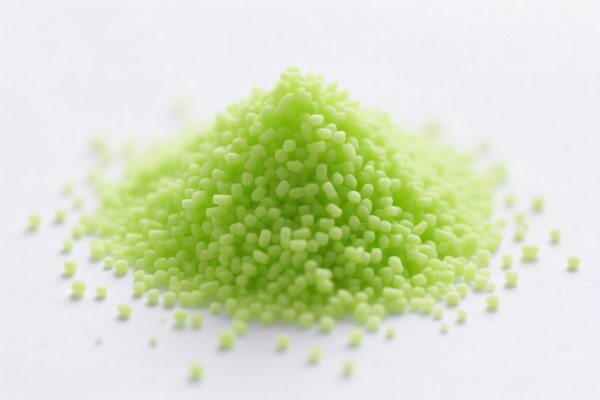
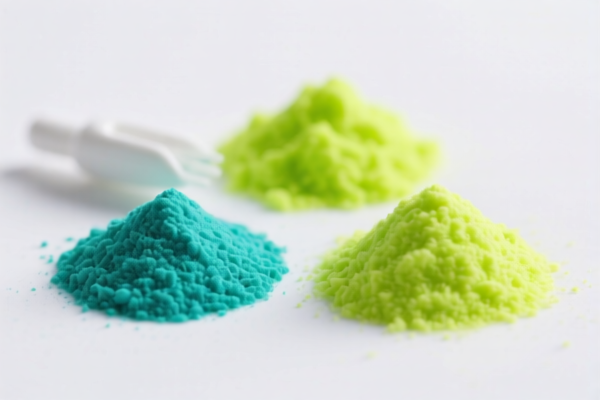
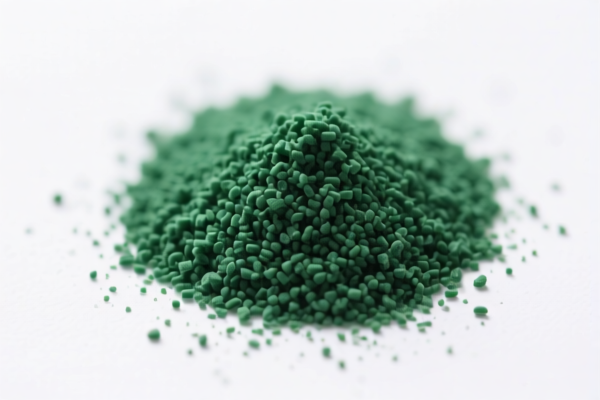
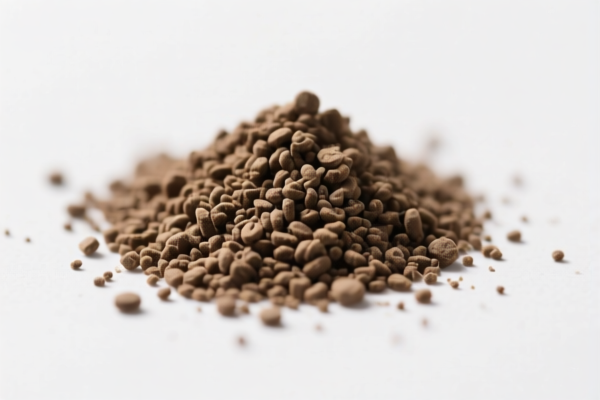
AI Analysis
🔥 Inorganic Additives for Flux (Welding Flux Ingredients)
🌐 HS Code Reference & Customs Clearance Guide | 2026 Latest Tariff Analysis | Professional Clearance Strategy
📌 I. Product Definition: What Are "Inorganic Additives for Flux"?
Inorganic additives for welding fluxes are specialized chemical compounds used to enhance the performance of soldering, brazing, and hard-soldering processes. They serve multiple functions, including: * Oxygen scavenging (removing oxides from metal surfaces). * Surface tension reduction (improving flow and wetting). * Slag formation (protecting the weld pool).
These additives are typically salts (e.g., chlorides, fluorides, borates) or oxides. In international trade, the classification depends heavily on whether the product is considered a "flux" itself or an "additive/preparation" for other uses.
⚠️ Critical Classification Logic:
- If the product is primarily a flux used in welding/brazing → Chapter 38, Heading 3810.
- If the product is a general-purpose chemical additive for mineral oils or similar liquids → Chapter 38, Heading 3811.
- If the product is a specialized chemical mixture not elsewhere specified → Chapter 38, Heading 3824.
📦 II. HS Code Classification Details (2026 Latest Tariff Reference)
Based on the provided data, here are the four possible HS Codes for "Inorganic Additives for Flux" and their logical justifications:
| HS Code | Product Description | Logical Justification (Why this code?) | Total Tax Rate |
|---|---|---|---|
3811.90.00.00 |
Chemical Preparations for Mineral Oils | Classified as an additive for mineral oils or similar liquids. Logic: No material conflict; fits the "preparation additive" use case. | 41.5% |
3810.90.10.00 |
Other Fluxes for Welding/Brazing | Most Likely Match. Directly matches the use of welding/brazing fluxes. Logic: Based on common sense, it is a chemical agent for metal joining. | 41.5% |
3810.10.00.00 |
Fluxes for Soldering/Brazing | Direct alignment with welding-related functions and morphology as an auxiliary welding material. Logic: Fits the definition of metal surface treatment agents for welding. | 40.0% |
3811.19.00.00 |
Other Chemical Additives | Inferred to contain chemical additives for liquid preparation. Logic: Fits "other types" in the anti-knock/additive category based on composition. | 41.5% |
3824.99.55.00 |
Halogenated Hydrocarbon Mixtures | Specific to Halogen-Free flux agents. Logic: "Halogen-free" relates to halocarbon attributes; fits chemical mixture characteristics. | 38.7% |
🔍 Key Insight:
-3810.10.00.00is often the most direct fit for "fluxes" with the lowest total tax (40.0%).
-3810.90.10.00and3811codes are alternative interpretations where the product might be classified as a general chemical preparation or additive rather than a dedicated flux.
-3824.99.55.00is niche, likely for specialized halogen-free formulations.
💰 III. 2026 Latest Tariff Rate Breakdown (Detailed Tax Clauses)
✅ Applicable Country: United States (US)
✅ Origin: China (CN)
✅ Effective Date: November 10, 2025 (and subsequent imports)
All HS Codes below are subject to the following tax structure:
🎯 1. 3810.10.00.00 – Fluxes for Soldering/Brazing (Recommended)
| Item | Content |
|---|---|
| Base Tariff | 5.0% (Ad Valorem) |
| Section 301 Tariff | +25.0% (USITC Footnote 9903.88.01) |
| Section 122 Tariff | +10.0% (IEEPA, China-specific) |
| Total Tax Rate | 40.0% |
| Tax Calculation | CIF Value × 40% |
| De Minimis Exemption | ❌ Not Eligible (deny_de_minimis) |
| Legal Basis Path | USITC:3810.10.00.00 → FOOTNOTE:301 → IEEPA:122 |
📌 Explanation:
- Base 5.0%: Standard Most Favored Nation (MFN) rate for welding fluxes.
- +25% Section 301: Applies to all Chinese-origin goods in Chapter 38, excluding specific exemptions.
- +10% Section 122: Additional tariff under IEEPA for Chinese goods.
- Total 40%: The most favorable rate among the flux-specific codes.
🎯 2. 3810.90.10.00 – Other Fluxes for Welding/Brazing
| Item | Content |
|---|---|
| Base Tariff | 6.5% |
| Section 301 Tariff | +25.0% |
| Section 122 Tariff | +10.0% |
| Total Tax Rate | 41.5% |
| Tax Calculation | CIF Value × 41.5% |
| De Minimis Exemption | ❌ Not Eligible |
| Legal Basis Path | USITC:3810.90.10.00 → FOOTNOTE:301 → IEEPA:122 |
📌 Note:
- Slightly higher base rate (6.5% vs 5.0%) leads to a 41.5% total rate.
- Used if the product is classified as "other" fluxes not specifically listed under 3810.10.
🎯 3. 3811.90.00.00 – Chemical Preparations for Mineral Oils
| Item | Content |
|---|---|
| Base Tariff | 6.5% |
| Section 301 Tariff | +25.0% |
| Section 122 Tariff | +10.0% |
| Total Tax Rate | 41.5% |
| Tax Calculation | CIF Value × 41.5% |
| De Minimis Exemption | ❌ Not Eligible |
📌 Note:
- Classified as a general chemical additive rather than a dedicated flux.
- Same tax burden as3810.90.10.00.
🎯 4. 3824.99.55.00 – Halogen-Free Flux Agents (Special Case)
| Item | Content |
|---|---|
| Base Tariff | 3.7% |
| Section 301 Tariff | +25.0% |
| Section 122 Tariff | +10.0% |
| Total Tax Rate | 38.7% |
| Tax Calculation | CIF Value × 38.7% |
| De Minimis Exemption | ❌ Not Eligible |
📌 Note:
- Lowest total tax rate (38.7%) if the product qualifies as a halogenated hydrocarbon mixture or specialized chemical.
- Risk: Requires strict proof that the product is a "halogen-free" mixture and fits the 3824 definition. Misclassification can lead to penalties.
🛠️ IV. Customs Clearance Practical Advice (Real-World Pitfall Guide)
✅ 1. Documentation Checklist (Essential)
| Document | Required? | Description |
|---|---|---|
| ✅ Product Specification Sheet | ✔️ | Must detail chemical composition, function (e.g., "flux for brazing"), and halogen content. |
| ✅ Safety Data Sheet (SDS) | ✔️ | Essential for chemical classification and safety compliance. |
| ✅ Third-Party Test Report | ✔️ | Confirm halogen-free status (if claiming 3824) or chemical properties. |
| ✅ Commercial Invoice | ✔️ | Clearly state: "Inorganic Additives for Welding Flux, Chemical Composition: [X], Function: [Y]". |
| ✅ Certificate of Origin (CO) | ✔️ | Required to determine applicable tariffs (China origin = high tariffs). |
| ✅ Packing List | ✔️ | Detail net/gross weight and packaging. |
✅ 2. Declaration Strategy (Key Tips)
🔥 "Function First, Composition Second; Be Precise, Avoid Delays!"
| Scenario | Correct Declaration | Wrong Practice |
|---|---|---|
| General Welding Flux Additive | 3810.10.00.00 or 3810.90.10.00 |
Misclassifying as "chemicals" (lower scrutiny but higher risk). |
| Halogen-Free Flux | 3824.99.55.00 |
Declaring as general flux → 40% tax vs 38.7% (small savings but high audit risk). |
| Mix of Flux & Oil Additive | 3811.90.00.00 |
Splitting shipment → Customs may consolidate and reclassify. |
| Raw Chemical Powder | Verify Chapter 28/29 first | If it's a pure chemical salt, it might not be Chapter 38! Check Chapter 28 (Inorganic Chemicals) first. |
📌 Critical Note:
- If the product is a pure inorganic salt (e.g., Zinc Chloride, Borax) without formulation, it may fall under Chapter 28 (Inorganic Chemicals) with 0% Section 301 exemption!
- Action: Consult a customs broker to check if pure chemicals qualify for Chapter 28. If so, tariffs could be 0%~6.5% without Section 301/122.
✅ 3. Special Cases
| Scenario | Handling Advice |
|---|---|
| Pure Chemicals (e.g., NaCl, KCl) | Check Chapter 28! If pure, may avoid Section 301/122 tariffs. |
| Halogen-Free Certification | Provide lab reports proving <100ppm halogens to support 3824 classification. |
| OEM/Private Label | Ensure invoice matches manufacturer details; avoid generic names that confuse customs. |
| Mixed Shipments | Declare flux additives separately from other chemicals to avoid misclassification. |
🌍 V. Global Market Comparison (2026 Latest)
| Country/Region | Recommended HS Code | Tariff (China Origin) | Certification Requirements | Notes |
|---|---|---|---|---|
| 🇺🇸 USA | 3810.10.00.00 |
40.0% | No specific, but SDS required | High tariffs due to Section 301/122. |
| 🇨🇳 China | 3810.10.00.00 |
5.0% | No additional | No Section 301/122. |
| 🇪🇺 EU | 3810.10.00.00 |
0%–2% | REACH, SDS | Low tariffs, strict chemical compliance. |
| 🇬🇧 UK | 3810.10.00.00 |
0%–2% | UK REACH | Similar to EU. |
| 🇯🇵 Japan | 3810.10.00.00 |
0%–2% | JIS, PSE (if electrical) | Low tariffs. |
📌 Conclusion:
- USA is the most expensive market due to 40%+ tariffs.
- EU/UK/Japan offer minimal tariffs (0–2%) but require strict chemical compliance (REACH, etc.).
- Strategy: Consider sourcing flux additives from non-Chinese origins (e.g., India, Vietnam) to avoid Section 301/122 tariffs in the US.
📌 VI. Common Errors & Pitfalls (Lessons Learned)
❌ Error 1: Classifying pure chemicals as "flux preparations"
👉 Consequence: Paying 40% tax instead of 0–6.5% (if Chapter 28 applies).
❌ Error 2: Failing to declare halogen-free status for 3824
👉 Consequence: Customs rejects 3824, reclassifies to 3810, and charges higher tax + penalties.
❌ Error 3: Using vague terms like "Chemical Mix"
👉 Consequence: Customs delays for inspection, potential reclassification.
❌ Error 4: Ignating Section 122 Tariff
👉 Consequence: Underestimating total cost by 10%. Always include IEEPA surcharges.
✅ Correct Approach:
"Welding Flux Additive, Inorganic, Halogen-Free, Chemical Grade, for Brazing Use"
+ Attach SDS + Lab Report (Halogen Content) + Certificate of Origin.
🎯 VII. Conclusion: Smart Classification Saves Money!
🎯 Key Takeaways:
🔹 Check Chapter 28 First: If pure chemicals, you may avoid Section 301/122 tariffs.
🔹3810.10.00.00is Safer: 40% total tax vs. 38.7% for3824(but3824requires strict proof).
🔹 Document Everything: SDS, Test Reports, and Precise Descriptions are critical.
🔹 Consider Supply Chain Shift: For US imports, non-Chinese origins can save 30–40% in tariffs.
📌 Pro Tip:
If your flux additives are pure inorganic salts (e.g., Borax, Zinc Chloride), do not assume Chapter 38. Check Chapter 28 with a customs broker. Potential savings: 30–40% in tariffs!
📣 Immediate Action:
📞 Consult a Licensed Customs Broker to confirm if your product qualifies for Chapter 28 (0–6.5% tax) instead of Chapter 38 (40% tax).
🚀 Get a Pre-Ruling from US CBP if unsure. Your cost savings depend on accurate classification!
✨ Precision Classification = Maximum Profit
💼 Every Percentage Point of Tariff Matters!
Customer Reviews
About HS Code Classification
The Harmonized System (HS) is an internationally standardized nomenclature developed by the World Customs Organization (WCO) to classify traded products. Over 200 countries use the HS system as the basis for customs tariffs, trade statistics, and import/export regulations.
Each HS code follows a hierarchical structure:
- Chapter (2 digits) — Broad category of goods (e.g., Chapter 84: Machinery and Mechanical Appliances)
- Heading (4 digits) — More specific grouping within the chapter
- Subheading (6 digits) — Internationally standardized breakdown, used by all WCO member countries
- National subdivisions (8-10 digits) — Country-specific extensions for further classification, such as US HTSUS 10-digit codes
Correct HS code classification is essential for smooth customs clearance, accurate duty payment, and compliance with trade regulations. Misclassification can lead to customs delays, overpayment of duties, or penalties.
When importing from CN to US, the applicable tariff rates may include:
- Most-Favored-Nation (MFN) rate — The standard duty rate applied to WTO members
- General rate — Applied to countries without trade agreements
- Trade remedy duties — Additional tariffs such as Section 301 (anti-dumping), Section 232 (national security), or countervailing duties
The information provided on this page is for reference purposes only. For official classification, please consult with your local customs authority or a licensed customs broker.