Inorganic Agricultural Anti freeze and De icing Agent
CN → US| HS编码 | 关税税率 | 原产国 | 目的国 | 文档 |
|---|---|---|---|---|
| 2836995050 | 10.0% | CN | US | 官方文档 |
| 2836993000 | 36.7% | CN | US | 官方文档 |
| 3105590000 | 35.0% | CN | US | 官方文档 |
| 3105900050 | 35.0% | CN | US | 官方文档 |
| 3824993990 | 35.0% | CN | US | 官方文档 |
商品图片
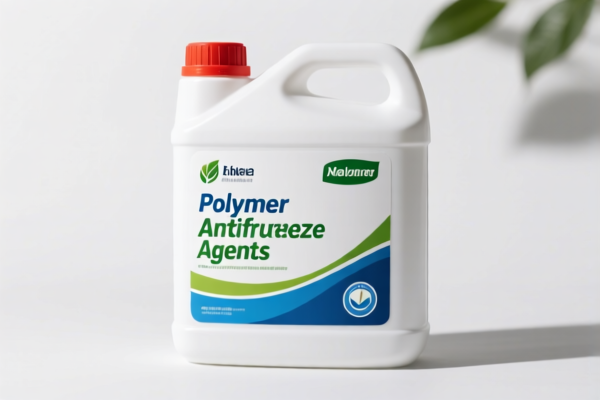
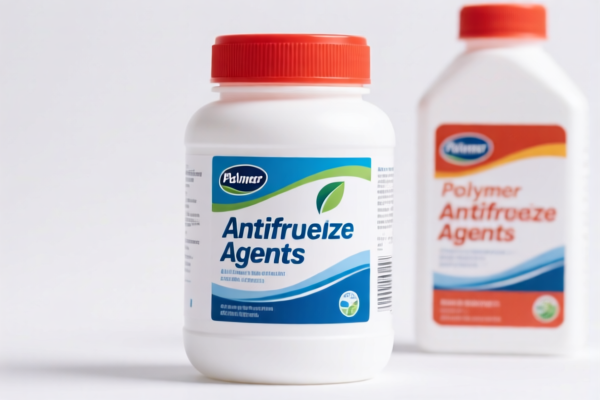


AI分析
🚜 Inorganic Agricultural Anti-freeze & De-icing Agent
🌐 HS Code Classification & Customs Clearance Guide | 2026 Latest Tariff Analysis
📌 Product Definition: What Are You Really Shipping?
Inorganic Agricultural Anti-freeze and De-icing Agent typically refers to chemical compounds used to lower the freezing point of water for crop protection (frost prevention) or surface de-icing in agricultural/infrastructure settings.
In the context of the provided data (<DATA>), the classification hinges on two competing interpretations:
1. Chemical Nature: Is it an inorganic salt (like Ammonium Carbonate or Calcium Chloride)?
2. Functional Use: Is it primarily a fertilizer (providing N/P/K nutrients) or a chemical mixture/product?
⚠️ Critical Distinction for Customs: * If the primary purpose is plant nutrition (fertilizing) with anti-freeze as a secondary physical property → Chapter 31 (Fertilizers). * If the primary purpose is chemical preservation/antifreeze using inorganic salts without significant nutrient value → Chapter 28 (Inorganic Chemicals) or Chapter 38 (Miscellaneous Chemical Products).
📦 HS Code Classification Matrix (Based on Provided Data)
| HS Code | Classification Logic | Tax Rate (Total) | Key Components |
|---|---|---|---|
| 2836.99.50.50 | Inorganic Chemicals: Carbonates | +10.0% | Base: 0%, Section 301: 0%, 122 Clause: 10% |
| 2836.99.30.00 | Inorganic Chemicals: Carbonates (Other) | 36.7% | Base: 1.7%, Section 301: 25%, 122 Clause: 10% |
| 3105.59.00.00 | Fertilizers: Nitrogen + Phosphorus | 35.0% | Base: 0%, Section 301: 25%, 122 Clause: 10% |
| 3105.90.00.50 | Fertilizers: Other/Residual | 35.0% | Base: 0%, Section 301: 25%, 122 Clause: 10% |
| 3824.99.39.90 | Chemical Mixtures/Preparations | 35.0% | Base: 0%, Section 301: 25%, 122 Clause: 10% |
💰 Detailed Tax Breakdown & Legal Basis
✅ Scope: United States Imports from China
✅ Components: Base Duty + USITC Section 301 Duty + IEEPA Section 122 Duty
🎯 1. The "Inorganic Salt" Route (Chapter 28)
- HS Code:
2836.99.30.00or2836.99.50.50 - Logic: Classified based on chemical identity (e.g., Ammonium Carbonate, Sodium Carbonate).
- Tax Analysis:
- Option A (2836.99.30.00): High burden. Base 1.7% + 25% (301) + 10% (122) = 36.7%.
- Option B (2836.99.50.50): Low burden. Base 0% + 0% (301) + 10% (122) = 10.0%.
- Note: The data suggests
2836.99.50.50has a 0% Section 301 duty, likely due to specific HTSUS footnote exemptions for certain agricultural chemicals or carbonates, whereas2836.99.30.00carries the full 25% trade war tariff.
🎯 2. The "Fertilizer" Route (Chapter 31)
- HS Code:
3105.59.00.00or3105.90.00.50 - Logic: If the product contains Nitrogen (N) and Phosphorus (P) and is marketed for crop growth, it falls under Fertilizers.
- Tax Analysis:
- Total Rate: 35.0%
- Breakdown: Base 0.0% + 25% (Section 301) + 10% (IEEPA 122) = 35.0%.
- Implication: While the base duty is 0%, the Section 301 tariff (25%) is heavily applied. This is significantly cheaper than
2836.99.30.00(36.7%) but more expensive than2836.99.50.50(10%).
🎯 3. The "Chemical Mixture" Route (Chapter 38)
- HS Code:
3824.99.39.90 - Logic: If the product is a complex mixture of inorganic compounds that doesn't fit neatly into pure chemical definitions or fertilizers.
- Tax Analysis:
- Total Rate: 35.0%
- Breakdown: Base 0.0% + 25% (Section 301) + 10% (IEEPA 122) = 35.0%.
- Implication: Same tax burden as fertilizers. Used when the specific chemical composition is proprietary or blended.
🛠️ Customs Clearance Strategy & Recommendations
✅ 1. Pre-Shipment Decision: Which HS Code to Choose?
| Scenario | Recommended HS Code | Why? | Total Tax |
|---|---|---|---|
| Pure Inorganic Salt (e.g., CaCl2) | 2836.99.50.50 | Lowest Tax (10%). Avoids the 25% Section 301 duty if eligible. | 10.0% |
| Fertilizer with Anti-freeze Property | 3105.59.00.00 | Must prove nutrient value (N/P). Avoids higher base duty of 2836.99.30. | 35.0% |
| Complex Mixture / Proprietary Blend | 3824.99.39.90 | Safe harbor for blends. No Section 301 exemption available. | 35.0% |
| Generic Inorganic Carbonate | 2836.99.30.00 | Avoid if possible. Highest total tax (36.7%) due to 25% 301 tariff. | 36.7% |
🚀 Pro Tip: If your product is purely inorganic and qualifies for
2836.99.50.50, always choose this code. It saves 25% in duties compared to the fertilizer or mixture codes.
✅ 2. Documentation Requirements
| Document | Requirement | Purpose |
|---|---|---|
| Product Specification Sheet | Must clearly list chemical composition (e.g., % Ammonium Carbonate, % Water) | To prove classification under Chapter 28 vs. 31 |
| Safety Data Sheet (SDS) | Section 2: Hazards; Section 9: Physical Properties (Freezing Point) | To prove "Anti-freeze" function and inorganic nature |
| Letter of Guarantee | Confirming No Urea or High-Nitrogen Fertilizer if claiming 2836.99.50.50 |
To prevent CBP from reclassifying as Fertilizer (3105) |
| Commercial Invoice | Description: "Inorganic Anti-freeze Agent, Chemical Grade, Not for Fertilization" | Clear naming to avoid ambiguity |
✅ 3. Pitfalls & Risk Mitigation
-
❌ Risk 1: Misclassification as Fertilizer
- Scenario: CBP reviews your SDS and sees Nitrogen content. They reclassify
2836.99.50.50→3105.59.00.00. - Result: You owe 25% more in duties (10% vs 35%).
- Fix: Ensure the product label and MSDS emphasize "Non-Fertilizer" or "Industrial/Anti-freeze Use Only".
- Scenario: CBP reviews your SDS and sees Nitrogen content. They reclassify
-
❌ Risk 2: The "122 Clause" Trap
- All codes in the data include a 10% IEEPA Section 122 tariff. This is mandatory for Chinese-origin goods. There is no exemption for this 10% in the provided data.
- Fix: Budget for this 10% in all cost calculations.
-
❌ Risk 3: Section 301 Exemption Eligibility
2836.99.50.50has 0% Section 301 duty. Other codes have 25%.- Why? Likely due to specific USITC exclusions for certain agricultural chemicals.
- Fix: Double-check the specific HTSUS notes for
2836.99.50.50to ensure your product meets the exact definition (e.g., specific carbonate type).
🌍 Global Market Context (2026)
- 🇺🇸 USA: High volatility. 10%–36.7% total tax. Aggressive CBP scrutiny on agricultural chemicals.
- 🇨🇳 China: Import duty usually 0%–5% for inorganic salts, but no major anti-dumping duties on generic carbonates.
- 🇪🇺 EU: Generally 0%–6.5% for inorganic salts (2836), but strict REACH registration required for chemical mixtures.
- 🇲🇽 Mexico: Under USMCA, duty may be 0% if originating in NAFTA region, but 30%+ if imported from China.
📌 Final Recommendation
🔥 "Target 10%, Avoid 36%!"
- First Choice: Try to classify under
2836.99.50.50(Inorganic Carbonates). It offers the lowest tax burden (10%) by leveraging the 0% Section 301 rate. - Backup Choice: If the product is definitely a fertilizer, use
3105.59.00.00(35%). - Avoid:
2836.99.30.00unless you have no other option, as it triggers the full 25% Section 301 tariff on top of base duties.
📞 Action Item:
Submit a Pre-Ruling Request to US CBP with your SDS and formulation sheet to confirm eligibility for 2836.99.50.50. Do not guess—get it in writing!
✨ Professional Clearance, Precision Savings.
💼 Don't let classification errors cost you 25% of your margin.
用户评价
关于 HS 编码归类
协调制度(HS)是由世界海关组织(WCO)制定的国际贸易商品分类标准。全球 200 多个国家采用 HS 系统作为海关关税、贸易统计和进出口监管的基础。
每个 HS 编码遵循以下层级结构:
- 章(2 位)——商品大类(例如:第 84 章:机器和机械设备)
- 品目(4 位)——章内的更具体分类
- 子目(6 位)——国际通用细分,所有 WCO 成员国统一使用
- 本国细分(8-10 位)——各国自行扩展的细分编码,如美国 HTSUS 10 位编码
正确的 HS 编码归类对于顺利通关、准确缴纳关税和遵守贸易法规至关重要。错误归类可能导致海关延误、多缴关税或罚款。
从CN进口到US时,适用的关税税率可能包括:
- 最惠国(MFN)税率——适用于 WTO 成员国的标准关税税率
- 普通税率——适用于无贸易协定国家
- 贸易救济关税——附加关税,如 301 条款(反倾销)、232 条款(国家安全)或反补贴税
本页内容仅供参考。如需正式归类,请咨询当地海关或持牌报关代理。