Inorganic Agricultural Anti freeze and De icing Agent
CN → US| HS Code | Tariff Rate | Origin | Destination | Doc |
|---|---|---|---|---|
| 2836995050 | 10.0% | CN | US | Official Doc |
| 2836993000 | 36.7% | CN | US | Official Doc |
| 3105590000 | 35.0% | CN | US | Official Doc |
| 3105900050 | 35.0% | CN | US | Official Doc |
| 3824993990 | 35.0% | CN | US | Official Doc |
Product Images
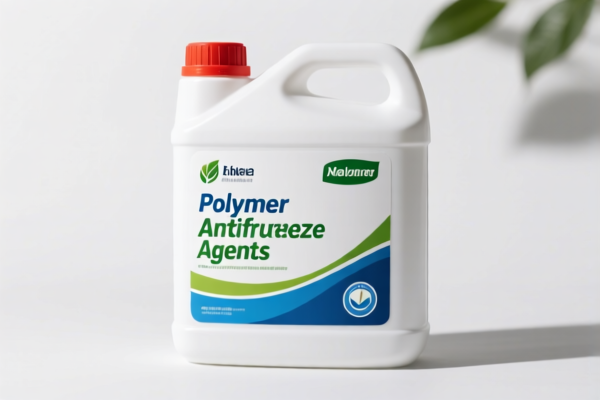
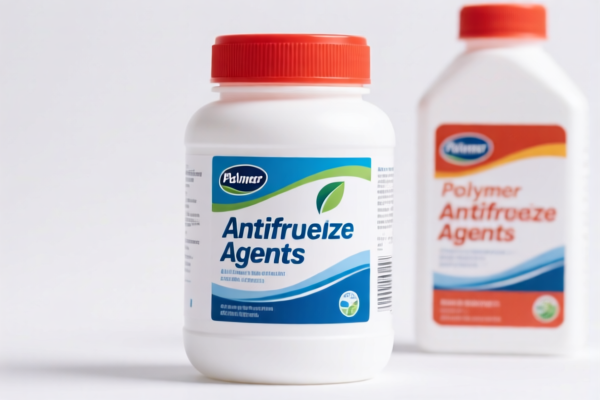


AI Analysis
🚜 Inorganic Agricultural Anti-freeze & De-icing Agent
🌐 HS Code Classification & Customs Clearance Guide | 2026 Latest Tariff Analysis
📌 Product Definition: What Are You Really Shipping?
Inorganic Agricultural Anti-freeze and De-icing Agent typically refers to chemical compounds used to lower the freezing point of water for crop protection (frost prevention) or surface de-icing in agricultural/infrastructure settings.
In the context of the provided data (<DATA>), the classification hinges on two competing interpretations:
1. Chemical Nature: Is it an inorganic salt (like Ammonium Carbonate or Calcium Chloride)?
2. Functional Use: Is it primarily a fertilizer (providing N/P/K nutrients) or a chemical mixture/product?
⚠️ Critical Distinction for Customs: * If the primary purpose is plant nutrition (fertilizing) with anti-freeze as a secondary physical property → Chapter 31 (Fertilizers). * If the primary purpose is chemical preservation/antifreeze using inorganic salts without significant nutrient value → Chapter 28 (Inorganic Chemicals) or Chapter 38 (Miscellaneous Chemical Products).
📦 HS Code Classification Matrix (Based on Provided Data)
| HS Code | Classification Logic | Tax Rate (Total) | Key Components |
|---|---|---|---|
| 2836.99.50.50 | Inorganic Chemicals: Carbonates | +10.0% | Base: 0%, Section 301: 0%, 122 Clause: 10% |
| 2836.99.30.00 | Inorganic Chemicals: Carbonates (Other) | 36.7% | Base: 1.7%, Section 301: 25%, 122 Clause: 10% |
| 3105.59.00.00 | Fertilizers: Nitrogen + Phosphorus | 35.0% | Base: 0%, Section 301: 25%, 122 Clause: 10% |
| 3105.90.00.50 | Fertilizers: Other/Residual | 35.0% | Base: 0%, Section 301: 25%, 122 Clause: 10% |
| 3824.99.39.90 | Chemical Mixtures/Preparations | 35.0% | Base: 0%, Section 301: 25%, 122 Clause: 10% |
💰 Detailed Tax Breakdown & Legal Basis
✅ Scope: United States Imports from China
✅ Components: Base Duty + USITC Section 301 Duty + IEEPA Section 122 Duty
🎯 1. The "Inorganic Salt" Route (Chapter 28)
- HS Code:
2836.99.30.00or2836.99.50.50 - Logic: Classified based on chemical identity (e.g., Ammonium Carbonate, Sodium Carbonate).
- Tax Analysis:
- Option A (2836.99.30.00): High burden. Base 1.7% + 25% (301) + 10% (122) = 36.7%.
- Option B (2836.99.50.50): Low burden. Base 0% + 0% (301) + 10% (122) = 10.0%.
- Note: The data suggests
2836.99.50.50has a 0% Section 301 duty, likely due to specific HTSUS footnote exemptions for certain agricultural chemicals or carbonates, whereas2836.99.30.00carries the full 25% trade war tariff.
🎯 2. The "Fertilizer" Route (Chapter 31)
- HS Code:
3105.59.00.00or3105.90.00.50 - Logic: If the product contains Nitrogen (N) and Phosphorus (P) and is marketed for crop growth, it falls under Fertilizers.
- Tax Analysis:
- Total Rate: 35.0%
- Breakdown: Base 0.0% + 25% (Section 301) + 10% (IEEPA 122) = 35.0%.
- Implication: While the base duty is 0%, the Section 301 tariff (25%) is heavily applied. This is significantly cheaper than
2836.99.30.00(36.7%) but more expensive than2836.99.50.50(10%).
🎯 3. The "Chemical Mixture" Route (Chapter 38)
- HS Code:
3824.99.39.90 - Logic: If the product is a complex mixture of inorganic compounds that doesn't fit neatly into pure chemical definitions or fertilizers.
- Tax Analysis:
- Total Rate: 35.0%
- Breakdown: Base 0.0% + 25% (Section 301) + 10% (IEEPA 122) = 35.0%.
- Implication: Same tax burden as fertilizers. Used when the specific chemical composition is proprietary or blended.
🛠️ Customs Clearance Strategy & Recommendations
✅ 1. Pre-Shipment Decision: Which HS Code to Choose?
| Scenario | Recommended HS Code | Why? | Total Tax |
|---|---|---|---|
| Pure Inorganic Salt (e.g., CaCl2) | 2836.99.50.50 | Lowest Tax (10%). Avoids the 25% Section 301 duty if eligible. | 10.0% |
| Fertilizer with Anti-freeze Property | 3105.59.00.00 | Must prove nutrient value (N/P). Avoids higher base duty of 2836.99.30. | 35.0% |
| Complex Mixture / Proprietary Blend | 3824.99.39.90 | Safe harbor for blends. No Section 301 exemption available. | 35.0% |
| Generic Inorganic Carbonate | 2836.99.30.00 | Avoid if possible. Highest total tax (36.7%) due to 25% 301 tariff. | 36.7% |
🚀 Pro Tip: If your product is purely inorganic and qualifies for
2836.99.50.50, always choose this code. It saves 25% in duties compared to the fertilizer or mixture codes.
✅ 2. Documentation Requirements
| Document | Requirement | Purpose |
|---|---|---|
| Product Specification Sheet | Must clearly list chemical composition (e.g., % Ammonium Carbonate, % Water) | To prove classification under Chapter 28 vs. 31 |
| Safety Data Sheet (SDS) | Section 2: Hazards; Section 9: Physical Properties (Freezing Point) | To prove "Anti-freeze" function and inorganic nature |
| Letter of Guarantee | Confirming No Urea or High-Nitrogen Fertilizer if claiming 2836.99.50.50 |
To prevent CBP from reclassifying as Fertilizer (3105) |
| Commercial Invoice | Description: "Inorganic Anti-freeze Agent, Chemical Grade, Not for Fertilization" | Clear naming to avoid ambiguity |
✅ 3. Pitfalls & Risk Mitigation
-
❌ Risk 1: Misclassification as Fertilizer
- Scenario: CBP reviews your SDS and sees Nitrogen content. They reclassify
2836.99.50.50→3105.59.00.00. - Result: You owe 25% more in duties (10% vs 35%).
- Fix: Ensure the product label and MSDS emphasize "Non-Fertilizer" or "Industrial/Anti-freeze Use Only".
- Scenario: CBP reviews your SDS and sees Nitrogen content. They reclassify
-
❌ Risk 2: The "122 Clause" Trap
- All codes in the data include a 10% IEEPA Section 122 tariff. This is mandatory for Chinese-origin goods. There is no exemption for this 10% in the provided data.
- Fix: Budget for this 10% in all cost calculations.
-
❌ Risk 3: Section 301 Exemption Eligibility
2836.99.50.50has 0% Section 301 duty. Other codes have 25%.- Why? Likely due to specific USITC exclusions for certain agricultural chemicals.
- Fix: Double-check the specific HTSUS notes for
2836.99.50.50to ensure your product meets the exact definition (e.g., specific carbonate type).
🌍 Global Market Context (2026)
- 🇺🇸 USA: High volatility. 10%–36.7% total tax. Aggressive CBP scrutiny on agricultural chemicals.
- 🇨🇳 China: Import duty usually 0%–5% for inorganic salts, but no major anti-dumping duties on generic carbonates.
- 🇪🇺 EU: Generally 0%–6.5% for inorganic salts (2836), but strict REACH registration required for chemical mixtures.
- 🇲🇽 Mexico: Under USMCA, duty may be 0% if originating in NAFTA region, but 30%+ if imported from China.
📌 Final Recommendation
🔥 "Target 10%, Avoid 36%!"
- First Choice: Try to classify under
2836.99.50.50(Inorganic Carbonates). It offers the lowest tax burden (10%) by leveraging the 0% Section 301 rate. - Backup Choice: If the product is definitely a fertilizer, use
3105.59.00.00(35%). - Avoid:
2836.99.30.00unless you have no other option, as it triggers the full 25% Section 301 tariff on top of base duties.
📞 Action Item:
Submit a Pre-Ruling Request to US CBP with your SDS and formulation sheet to confirm eligibility for 2836.99.50.50. Do not guess—get it in writing!
✨ Professional Clearance, Precision Savings.
💼 Don't let classification errors cost you 25% of your margin.
Customer Reviews
About HS Code Classification
The Harmonized System (HS) is an internationally standardized nomenclature developed by the World Customs Organization (WCO) to classify traded products. Over 200 countries use the HS system as the basis for customs tariffs, trade statistics, and import/export regulations.
Each HS code follows a hierarchical structure:
- Chapter (2 digits) — Broad category of goods (e.g., Chapter 84: Machinery and Mechanical Appliances)
- Heading (4 digits) — More specific grouping within the chapter
- Subheading (6 digits) — Internationally standardized breakdown, used by all WCO member countries
- National subdivisions (8-10 digits) — Country-specific extensions for further classification, such as US HTSUS 10-digit codes
Correct HS code classification is essential for smooth customs clearance, accurate duty payment, and compliance with trade regulations. Misclassification can lead to customs delays, overpayment of duties, or penalties.
When importing from CN to US, the applicable tariff rates may include:
- Most-Favored-Nation (MFN) rate — The standard duty rate applied to WTO members
- General rate — Applied to countries without trade agreements
- Trade remedy duties — Additional tariffs such as Section 301 (anti-dumping), Section 232 (national security), or countervailing duties
The information provided on this page is for reference purposes only. For official classification, please consult with your local customs authority or a licensed customs broker.