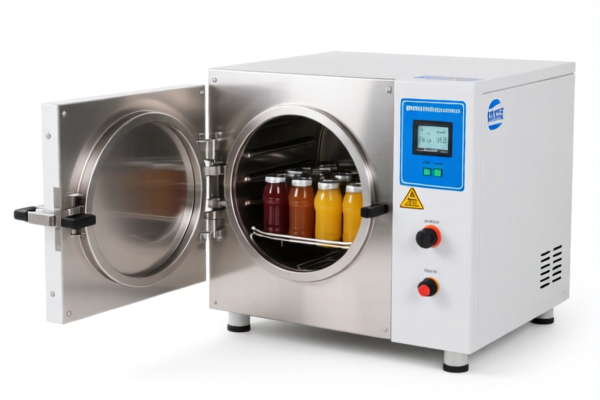
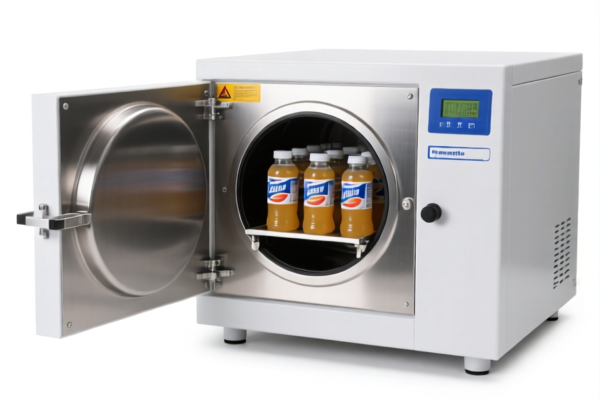
Inorganic Broad Spectrum Efficient Sterilizer
CN → US| HS编码 | 关税税率 | 原产国 | 目的国 | 文档 |
|---|---|---|---|---|
| 8479899599 | 87.5% | CN | US | 官方文档 |
| 8419200020 | 10.0% | CN | US | 官方文档 |
| 8419200010 | 10.0% | CN | US | 官方文档 |
| 9022298000 | 35.0% | CN | US | 官方文档 |
| 8479896500 | 20.3% | CN | US | 官方文档 |
商品图片


AI分析
☣️ Inorganic Broad Spectrum Efficient Sterilizer (Inorganic Sterilization Equipment)
🌐 HS Code Reference & Customs Clearance Guide | 2026 Latest Tariff Analysis | Professional Clearance Strategy
📌 I. Product Definition & Classification: Do You Really Understand "Sterilizers"?
The "Inorganic Broad Spectrum Efficient Sterilizer" is a specialized industrial or laboratory device designed to eliminate microorganisms using inorganic agents or methods (such as chemical oxidation, physical filtration, or specific non-ionizing radiation, distinct from radioactive sources). In international trade, its classification hinges on the primary function, energy source, and construction material.
It is generally categorized into two main paths: 1. Thermal/Physical Sterilization Units: If it uses heat, steam, or mechanical filtration (e.g., autoclaves, UV-ozone generators without radiation sources), it falls under Chapter 84 (Machinery). 2. Medical/Healthcare Specific Devices: If explicitly designed for medical or surgical use, it may fall under Chapter 84 (8419) or Chapter 90 (9018/9022). 3. Ionizing Radiation Equipment: If it utilizes Gamma rays or Electron beams (though "inorganic" usually implies non-radioactive, some regulatory frameworks might group high-energy electron sterilizers separately), it falls under Chapter 90 (9022).
⚠️ Key Distinction Point:
- If it is a general-purpose industrial/lab machine using heat/chemicals → Chapter 84.
- If it is a medical/surgical sterilizer → Chapter 84 (8419) or Chapter 90.
- If it uses Ionizing Radiation (Gamma/E-Beam) → Chapter 90 (9022).
📦 II. HS Code Classification Details (2026 Latest Tariff Authority Cross-Reference)
Based on the provided data for "Inorganic Broad Spectrum Efficient Sterilizer," here are the five most likely HS Code classifications with their corresponding tax implications.
| HS Code | Product Description | Application Scenario | Tax Rate (Total) | Key Tax Components |
|---|---|---|---|---|
8479.89.95.99 |
Other machinery with independent functions (General Industrial) | Industrial sterilization tanks, general mechanical devices | 87.5% | Base: 2.5%, Section 301: 25%, 122 Clauses: 50% (Steel/Alum/Copper) |
8419.20.00.20 |
Laboratory Sterilizing Equipment | Lab-grade sterilizers (non-medical) | 10.0% | Base: 0%, Section 301: 0%, 122 Clauses: 10% |
8419.20.00.10 |
Medical or Surgical Sterilizing Equipment | Hospital/Clinic grade sterilizers | 10.0% | Base: 0%, Section 301: 0%, 122 Clauses: 10% |
9022.29.80.00 |
Apparatus based on Ionizing Radiation (Gamma/E-Beam) | High-tech sterilization using ionizing radiation | 35.0% | Base: 0%, Section 301: 25%, 122 Clauses: 10% |
8479.89.65.00 |
Other Independent Function Machinery (Specialized) | Electromechanical sterilization units (non-standard) | 20.3% | Base: 2.8%, Section 301: 7.5%, 122 Clauses: 10% |
🔍 Critical Analysis:
- Lowest Risk/Lowest Tax: If the device is classified as Laboratory (8419.20.00.20) or Medical (8419.20.00.10), the total tariff is only 10%. This is significantly lower than the general machinery classification.
- Highest Risk/Highest Tax: If the device is made of steel/aluminum/copper and lacks a specific "medical/lab" designation, it may fall under8479.89.95.99, triggering the harsh 50% additional tariff under "122 Clauses" for steel/aluminum/copper products, leading to a massive 87.5% total tax.
- Radiation Warning: If the "efficient sterilization" involves ionizing radiation (even if "inorganic" refers to the agent), it shifts to 9022.29.80.00 with a 35% rate.
💰 III. 2026 Latest Tariff Rate Breakdown (Including Surtaxes & Policy Add-ons)
✅ Applicable Country: United States (US)
✅ Origin: China (CN)
✅ Effective Time: 2025/2026 (Current Trade Environment)
🎯 1. 8419.20.00.10 & 8419.20.00.20 —— Medical/Lab Sterilizers (Recommended)
| Item | Detail |
|---|---|
| Base Tariff | 0% (ad valorem) |
| USITC Surtax (Sec. 301) | 0% (Exempted for these subheadings) |
| 122 Clauses Tariff | +10% (Applied to "medical/healthcare" or specific lab equipment) |
| Total Tariff | 10% |
| Calculation Basis | CIF Value × 10% |
| De Minimis Eligibility | ❌ No (Standard commercial shipment rules apply) |
| Legal Basis Path | USITC:8419.20.00.10/20 → 122 Clauses: 10% |
📌 Explanation:
- These codes benefit from zero base tariffs and zero Section 301 surtaxes.
- The 10% is a specific surcharge related to the "122 Clauses" (likely targeting specific Chinese imports in this category).
- Total Cost Impact: Very low. This is the most tax-efficient classification if the product qualifies as lab/medical equipment.
🎯 2. 9022.29.80.00 —— Ionizing Radiation Apparatus
| Item | Detail |
|---|---|
| Base Tariff | 0% |
| USITC Surtax (Sec. 301) | +25% |
| 122 Clauses Tariff | +10% |
| Total Tariff | 35% |
| Calculation Basis | CIF Value × 35% |
| De Minimis Eligibility | ❌ No |
| Legal Basis Path | USITC:9022.29.80.00 → USITC:301 → 122 Clauses: 10% |
📌 Explanation:
- While the base is 0%, the 25% Section 301 tax applies because high-tech radiation equipment is often targeted.
- Total Cost Impact: Moderate. Higher than lab/medical, but much lower than general machinery.
🎯 3. 8479.89.65.00 —— Other Independent Machinery
| Item | Detail |
|---|---|
| Base Tariff | 2.8% |
| USITC Surtax (Sec. 301) | +7.5% |
| 122 Clauses Tariff | +10% |
| Total Tariff | 20.3% |
| Calculation Basis | CIF Value × 20.3% |
| De Minimis Eligibility | ❌ No |
| Legal Basis Path | USITC:8479.89.65.00 → USITC:301 → 122 Clauses: 10% |
📌 Explanation:
- A "middle-ground" classification for electromechanical devices that don't fit specific medical/lab definitions but aren't heavy industrial steel/copper products.
🎯 4. 8479.89.95.99 —— General Machinery (High Risk)
| Item | Detail |
|---|---|
| Base Tariff | 2.5% |
| USITC Surtax (Sec. 301) | +25% |
| 122 Clauses Tariff (Steel/Alum/Copper) | +50% |
| Total Tariff | 87.5% |
| Calculation Basis | CIF Value × 87.5% |
| De Minimis Eligibility | ❌ No |
| Legal Basis Path | USITC:8479.89.95.99 → USITC:301 → 122 Clauses: Steel/Alum/Copper |
📌 Explanation:
- CRITICAL WARNING: If the sterilizer is constructed primarily of steel, aluminum, or copper and is classified as a "general purpose machine," it triggers the 50% surcharge under the "122 Clauses."
- Combined with 2.5% base and 25% Section 301, the total hits 87.5%. This can make the product economically unviable unless the value is very low or the classification is challenged.
🛠️ IV. Customs Clearance Practical Advice (Real-World Pitfall Avoidance)
✅ 1. Required Documentation Checklist
| Document | Required? | Purpose |
|---|---|---|
| ✅ Product Specification Sheet | ✔️ | Must clearly state: "Non-Ionizing," "Lab Use," "Medical Use," or "Industrial Use." |
| ✅ Technical Diagram | ✔️ | To prove whether it contains radiation sources (9022) or is thermal/chemical (8419). |
| ✅ Material Composition Report | ✔️ | Crucial to avoid 8479.89.95.99. If it's mostly plastic/ceramic, you may avoid the 50% steel surcharge. |
| ✅ Intended Use Statement | ✔️ | Explicitly state "For Laboratory Use Only" or "For Medical/Surgical Use" to target 8419.20 codes. |
| ✅ Commercial Invoice | ✔️ | Must match the HS Code description exactly. |
| ✅ Third-Party Test Report | ✔️ | Efficacy reports proving "Sterilization" function. |
✅ 2. Declaration Strategy (Key Mantras)
🔥 “Function First, Material Second, Medical/Lab Label, Tax Cuts Half!”
| Scenario | Correct Declaration | Wrong Practice |
|---|---|---|
| Lab Sterilizer | 8419.20.00.20 |
Describing as "Industrial Boiler" → 87.5% |
| Medical Sterilizer | 8419.20.00.10 |
Describing as "General Machine" → 87.5% |
| Radiation Sterilizer | 9022.29.80.00 |
Hiding radiation source → Heavy penalty/Smuggling charge |
| Steel/Aluminum Body | Proving non-steel components | Ignoring material → 50% surcharge trigger |
✅ 3. Special Considerations
| Situation | Advice |
|---|---|
| Hybrid Device (e.g., UV + Heat) | Declare as 8419 if heat/UV is primary. Avoid 9022 unless ionizing radiation is present. |
| Component of a Larger System | If part of an assembly, ensure the main function dictates the classification. |
| Origin Marking | Ensure "Made in China" is clearly marked to apply the correct surtaxes accurately. |
| Pre-Ruling Request | Highly Recommended: Given the 87.5% risk, file an Advance Ruling with US Customs to confirm if your specific "Inorganic" sterilizer qualifies for the 10% rate. |
🌍 V. Global Market Clearance Comparison (2026)
| Country/Region | Recommended HS Code | Tariff Rate | Notes |
|---|---|---|---|
| 🇺🇸 USA | 8419.20.00.10 / .20 |
10% | Avoid 8479.89.95.99 (87.5%)! |
| 🇨🇳 China | 8419.20.00.00 |
~5-10% | Lower tariffs, focus on import quotas. |
| 🇪🇺 EU | 8419.20.00.00 |
0-3% | CE Marking required for medical/lab use. |
| 🇯🇵 Japan | 8419.89.00.00 |
0-5% | PSE Certification may be needed. |
📌 Conclusion:
- The US market is the most complex due to the "122 Clauses" steel/aluminum surcharge.
- Strategic Move: Classify as Medical (8419.20.00.10) or Lab (8419.20.00.20) to lock in the 10% rate.
- Avoid: General Machinery (8479.89.95.99) unless the device is explicitly non-medical, non-lab, and made of non-steel materials (rare for sterilizers).
📌 VI. Common Errors & Pitfalls (Lessons Learned)
❌ Error 1: Classifying a Steel Autoclave as 8419.20.00.20 without proving "Lab/Medical" specific design.
👉 Consequence: Customs reclassifies to 8479.89.95.99 → 87.5% Tax → Financial Loss.
❌ Error 2: Ignoring Material Composition.
👉 Consequence: If the casing is steel, the 50% surcharge applies to 8479 codes. Ensure documentation highlights non-metallic parts if possible.
❌ Error 3: Mislabeling UV/Ozone as Ionizing Radiation.
👉 Consequence: Incorrectly going to 9022 (35%) when 8419 (10%) is applicable. UV is non-ionizing.
❌ Error 4: Not providing Intended Use documents.
👉 Consequence: Customs assumes "General Industrial" → Highest tariff bracket.
✅ Correct Approach:
"Sterilizer, Laboratory Use, Thermal/Ozone Type, Non-Ionizing, Model XYZ, Made of Stainless Steel & Polycarbonate"
🎯 VII. Conclusion: Precision Classification Saves Money!
🎯 Remember the Mantra:
🔹 "Lab/Medical = 10%, General Steel = 87.5%, Radiation = 35%"
🔹 "Prove the Function, Define the Material, Choose the Code Wisely!"
📌 Pro Tip:
Given the massive difference between 10% and 87.5%, it is mandatory to:
1. Review the Bill of Materials (BOM) to assess metal content.
2. Draft a clear "Statement of Use" emphasizing Laboratory or Medical application.
3. Apply for a Binding Tariff Information (BTI) or Advance Ruling from CBP before shipping.
📣 Act Now:
📞 Engage a Licensed Customs Broker + Provide Technical Specs + Request Advance Ruling
🚀 Ensure Compliance, Minimize Duty, Maximize Profit!
✨ Professional Customs Clearance Starts with Accurate Classification!
💼 Every Percent Saved is Pure Profit!
用户评价
关于 HS 编码归类
协调制度(HS)是由世界海关组织(WCO)制定的国际贸易商品分类标准。全球 200 多个国家采用 HS 系统作为海关关税、贸易统计和进出口监管的基础。
每个 HS 编码遵循以下层级结构:
- 章(2 位)——商品大类(例如:第 84 章:机器和机械设备)
- 品目(4 位)——章内的更具体分类
- 子目(6 位)——国际通用细分,所有 WCO 成员国统一使用
- 本国细分(8-10 位)——各国自行扩展的细分编码,如美国 HTSUS 10 位编码
正确的 HS 编码归类对于顺利通关、准确缴纳关税和遵守贸易法规至关重要。错误归类可能导致海关延误、多缴关税或罚款。
从CN进口到US时,适用的关税税率可能包括:
- 最惠国(MFN)税率——适用于 WTO 成员国的标准关税税率
- 普通税率——适用于无贸易协定国家
- 贸易救济关税——附加关税,如 301 条款(反倾销)、232 条款(国家安全)或反补贴税
本页内容仅供参考。如需正式归类,请咨询当地海关或持牌报关代理。