Inorganic Broad Spectrum Efficient Sterilizer
CN → US| HS Code | Tariff Rate | Origin | Destination | Doc |
|---|---|---|---|---|
| 8479899599 | 87.5% | CN | US | Official Doc |
| 8419200020 | 10.0% | CN | US | Official Doc |
| 8419200010 | 10.0% | CN | US | Official Doc |
| 9022298000 | 35.0% | CN | US | Official Doc |
| 8479896500 | 20.3% | CN | US | Official Doc |
Product Images
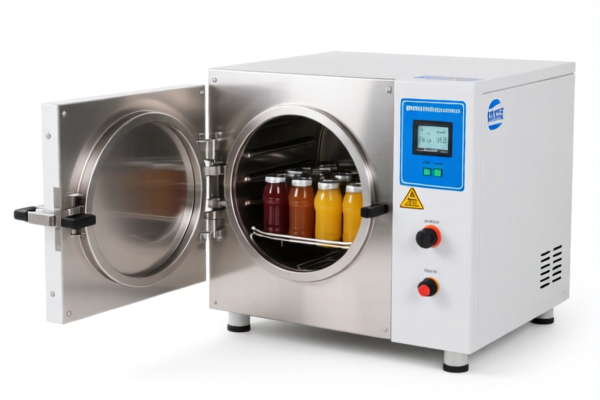
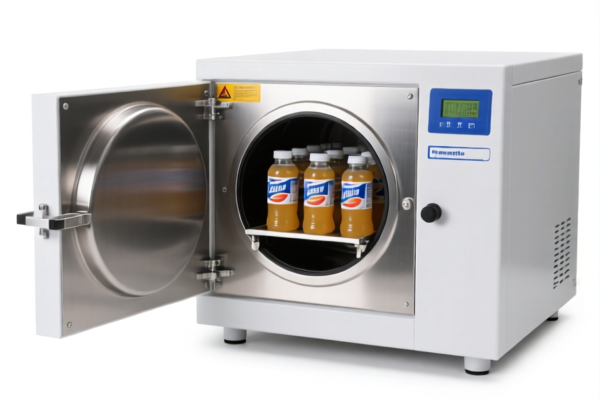


AI Analysis
☣️ Inorganic Broad Spectrum Efficient Sterilizer (Inorganic Sterilization Equipment)
🌐 HS Code Reference & Customs Clearance Guide | 2026 Latest Tariff Analysis | Professional Clearance Strategy
📌 I. Product Definition & Classification: Do You Really Understand "Sterilizers"?
The "Inorganic Broad Spectrum Efficient Sterilizer" is a specialized industrial or laboratory device designed to eliminate microorganisms using inorganic agents or methods (such as chemical oxidation, physical filtration, or specific non-ionizing radiation, distinct from radioactive sources). In international trade, its classification hinges on the primary function, energy source, and construction material.
It is generally categorized into two main paths: 1. Thermal/Physical Sterilization Units: If it uses heat, steam, or mechanical filtration (e.g., autoclaves, UV-ozone generators without radiation sources), it falls under Chapter 84 (Machinery). 2. Medical/Healthcare Specific Devices: If explicitly designed for medical or surgical use, it may fall under Chapter 84 (8419) or Chapter 90 (9018/9022). 3. Ionizing Radiation Equipment: If it utilizes Gamma rays or Electron beams (though "inorganic" usually implies non-radioactive, some regulatory frameworks might group high-energy electron sterilizers separately), it falls under Chapter 90 (9022).
⚠️ Key Distinction Point:
- If it is a general-purpose industrial/lab machine using heat/chemicals → Chapter 84.
- If it is a medical/surgical sterilizer → Chapter 84 (8419) or Chapter 90.
- If it uses Ionizing Radiation (Gamma/E-Beam) → Chapter 90 (9022).
📦 II. HS Code Classification Details (2026 Latest Tariff Authority Cross-Reference)
Based on the provided data for "Inorganic Broad Spectrum Efficient Sterilizer," here are the five most likely HS Code classifications with their corresponding tax implications.
| HS Code | Product Description | Application Scenario | Tax Rate (Total) | Key Tax Components |
|---|---|---|---|---|
8479.89.95.99 |
Other machinery with independent functions (General Industrial) | Industrial sterilization tanks, general mechanical devices | 87.5% | Base: 2.5%, Section 301: 25%, 122 Clauses: 50% (Steel/Alum/Copper) |
8419.20.00.20 |
Laboratory Sterilizing Equipment | Lab-grade sterilizers (non-medical) | 10.0% | Base: 0%, Section 301: 0%, 122 Clauses: 10% |
8419.20.00.10 |
Medical or Surgical Sterilizing Equipment | Hospital/Clinic grade sterilizers | 10.0% | Base: 0%, Section 301: 0%, 122 Clauses: 10% |
9022.29.80.00 |
Apparatus based on Ionizing Radiation (Gamma/E-Beam) | High-tech sterilization using ionizing radiation | 35.0% | Base: 0%, Section 301: 25%, 122 Clauses: 10% |
8479.89.65.00 |
Other Independent Function Machinery (Specialized) | Electromechanical sterilization units (non-standard) | 20.3% | Base: 2.8%, Section 301: 7.5%, 122 Clauses: 10% |
🔍 Critical Analysis:
- Lowest Risk/Lowest Tax: If the device is classified as Laboratory (8419.20.00.20) or Medical (8419.20.00.10), the total tariff is only 10%. This is significantly lower than the general machinery classification.
- Highest Risk/Highest Tax: If the device is made of steel/aluminum/copper and lacks a specific "medical/lab" designation, it may fall under8479.89.95.99, triggering the harsh 50% additional tariff under "122 Clauses" for steel/aluminum/copper products, leading to a massive 87.5% total tax.
- Radiation Warning: If the "efficient sterilization" involves ionizing radiation (even if "inorganic" refers to the agent), it shifts to 9022.29.80.00 with a 35% rate.
💰 III. 2026 Latest Tariff Rate Breakdown (Including Surtaxes & Policy Add-ons)
✅ Applicable Country: United States (US)
✅ Origin: China (CN)
✅ Effective Time: 2025/2026 (Current Trade Environment)
🎯 1. 8419.20.00.10 & 8419.20.00.20 —— Medical/Lab Sterilizers (Recommended)
| Item | Detail |
|---|---|
| Base Tariff | 0% (ad valorem) |
| USITC Surtax (Sec. 301) | 0% (Exempted for these subheadings) |
| 122 Clauses Tariff | +10% (Applied to "medical/healthcare" or specific lab equipment) |
| Total Tariff | 10% |
| Calculation Basis | CIF Value × 10% |
| De Minimis Eligibility | ❌ No (Standard commercial shipment rules apply) |
| Legal Basis Path | USITC:8419.20.00.10/20 → 122 Clauses: 10% |
📌 Explanation:
- These codes benefit from zero base tariffs and zero Section 301 surtaxes.
- The 10% is a specific surcharge related to the "122 Clauses" (likely targeting specific Chinese imports in this category).
- Total Cost Impact: Very low. This is the most tax-efficient classification if the product qualifies as lab/medical equipment.
🎯 2. 9022.29.80.00 —— Ionizing Radiation Apparatus
| Item | Detail |
|---|---|
| Base Tariff | 0% |
| USITC Surtax (Sec. 301) | +25% |
| 122 Clauses Tariff | +10% |
| Total Tariff | 35% |
| Calculation Basis | CIF Value × 35% |
| De Minimis Eligibility | ❌ No |
| Legal Basis Path | USITC:9022.29.80.00 → USITC:301 → 122 Clauses: 10% |
📌 Explanation:
- While the base is 0%, the 25% Section 301 tax applies because high-tech radiation equipment is often targeted.
- Total Cost Impact: Moderate. Higher than lab/medical, but much lower than general machinery.
🎯 3. 8479.89.65.00 —— Other Independent Machinery
| Item | Detail |
|---|---|
| Base Tariff | 2.8% |
| USITC Surtax (Sec. 301) | +7.5% |
| 122 Clauses Tariff | +10% |
| Total Tariff | 20.3% |
| Calculation Basis | CIF Value × 20.3% |
| De Minimis Eligibility | ❌ No |
| Legal Basis Path | USITC:8479.89.65.00 → USITC:301 → 122 Clauses: 10% |
📌 Explanation:
- A "middle-ground" classification for electromechanical devices that don't fit specific medical/lab definitions but aren't heavy industrial steel/copper products.
🎯 4. 8479.89.95.99 —— General Machinery (High Risk)
| Item | Detail |
|---|---|
| Base Tariff | 2.5% |
| USITC Surtax (Sec. 301) | +25% |
| 122 Clauses Tariff (Steel/Alum/Copper) | +50% |
| Total Tariff | 87.5% |
| Calculation Basis | CIF Value × 87.5% |
| De Minimis Eligibility | ❌ No |
| Legal Basis Path | USITC:8479.89.95.99 → USITC:301 → 122 Clauses: Steel/Alum/Copper |
📌 Explanation:
- CRITICAL WARNING: If the sterilizer is constructed primarily of steel, aluminum, or copper and is classified as a "general purpose machine," it triggers the 50% surcharge under the "122 Clauses."
- Combined with 2.5% base and 25% Section 301, the total hits 87.5%. This can make the product economically unviable unless the value is very low or the classification is challenged.
🛠️ IV. Customs Clearance Practical Advice (Real-World Pitfall Avoidance)
✅ 1. Required Documentation Checklist
| Document | Required? | Purpose |
|---|---|---|
| ✅ Product Specification Sheet | ✔️ | Must clearly state: "Non-Ionizing," "Lab Use," "Medical Use," or "Industrial Use." |
| ✅ Technical Diagram | ✔️ | To prove whether it contains radiation sources (9022) or is thermal/chemical (8419). |
| ✅ Material Composition Report | ✔️ | Crucial to avoid 8479.89.95.99. If it's mostly plastic/ceramic, you may avoid the 50% steel surcharge. |
| ✅ Intended Use Statement | ✔️ | Explicitly state "For Laboratory Use Only" or "For Medical/Surgical Use" to target 8419.20 codes. |
| ✅ Commercial Invoice | ✔️ | Must match the HS Code description exactly. |
| ✅ Third-Party Test Report | ✔️ | Efficacy reports proving "Sterilization" function. |
✅ 2. Declaration Strategy (Key Mantras)
🔥 “Function First, Material Second, Medical/Lab Label, Tax Cuts Half!”
| Scenario | Correct Declaration | Wrong Practice |
|---|---|---|
| Lab Sterilizer | 8419.20.00.20 |
Describing as "Industrial Boiler" → 87.5% |
| Medical Sterilizer | 8419.20.00.10 |
Describing as "General Machine" → 87.5% |
| Radiation Sterilizer | 9022.29.80.00 |
Hiding radiation source → Heavy penalty/Smuggling charge |
| Steel/Aluminum Body | Proving non-steel components | Ignoring material → 50% surcharge trigger |
✅ 3. Special Considerations
| Situation | Advice |
|---|---|
| Hybrid Device (e.g., UV + Heat) | Declare as 8419 if heat/UV is primary. Avoid 9022 unless ionizing radiation is present. |
| Component of a Larger System | If part of an assembly, ensure the main function dictates the classification. |
| Origin Marking | Ensure "Made in China" is clearly marked to apply the correct surtaxes accurately. |
| Pre-Ruling Request | Highly Recommended: Given the 87.5% risk, file an Advance Ruling with US Customs to confirm if your specific "Inorganic" sterilizer qualifies for the 10% rate. |
🌍 V. Global Market Clearance Comparison (2026)
| Country/Region | Recommended HS Code | Tariff Rate | Notes |
|---|---|---|---|
| 🇺🇸 USA | 8419.20.00.10 / .20 |
10% | Avoid 8479.89.95.99 (87.5%)! |
| 🇨🇳 China | 8419.20.00.00 |
~5-10% | Lower tariffs, focus on import quotas. |
| 🇪🇺 EU | 8419.20.00.00 |
0-3% | CE Marking required for medical/lab use. |
| 🇯🇵 Japan | 8419.89.00.00 |
0-5% | PSE Certification may be needed. |
📌 Conclusion:
- The US market is the most complex due to the "122 Clauses" steel/aluminum surcharge.
- Strategic Move: Classify as Medical (8419.20.00.10) or Lab (8419.20.00.20) to lock in the 10% rate.
- Avoid: General Machinery (8479.89.95.99) unless the device is explicitly non-medical, non-lab, and made of non-steel materials (rare for sterilizers).
📌 VI. Common Errors & Pitfalls (Lessons Learned)
❌ Error 1: Classifying a Steel Autoclave as 8419.20.00.20 without proving "Lab/Medical" specific design.
👉 Consequence: Customs reclassifies to 8479.89.95.99 → 87.5% Tax → Financial Loss.
❌ Error 2: Ignoring Material Composition.
👉 Consequence: If the casing is steel, the 50% surcharge applies to 8479 codes. Ensure documentation highlights non-metallic parts if possible.
❌ Error 3: Mislabeling UV/Ozone as Ionizing Radiation.
👉 Consequence: Incorrectly going to 9022 (35%) when 8419 (10%) is applicable. UV is non-ionizing.
❌ Error 4: Not providing Intended Use documents.
👉 Consequence: Customs assumes "General Industrial" → Highest tariff bracket.
✅ Correct Approach:
"Sterilizer, Laboratory Use, Thermal/Ozone Type, Non-Ionizing, Model XYZ, Made of Stainless Steel & Polycarbonate"
🎯 VII. Conclusion: Precision Classification Saves Money!
🎯 Remember the Mantra:
🔹 "Lab/Medical = 10%, General Steel = 87.5%, Radiation = 35%"
🔹 "Prove the Function, Define the Material, Choose the Code Wisely!"
📌 Pro Tip:
Given the massive difference between 10% and 87.5%, it is mandatory to:
1. Review the Bill of Materials (BOM) to assess metal content.
2. Draft a clear "Statement of Use" emphasizing Laboratory or Medical application.
3. Apply for a Binding Tariff Information (BTI) or Advance Ruling from CBP before shipping.
📣 Act Now:
📞 Engage a Licensed Customs Broker + Provide Technical Specs + Request Advance Ruling
🚀 Ensure Compliance, Minimize Duty, Maximize Profit!
✨ Professional Customs Clearance Starts with Accurate Classification!
💼 Every Percent Saved is Pure Profit!
Customer Reviews
About HS Code Classification
The Harmonized System (HS) is an internationally standardized nomenclature developed by the World Customs Organization (WCO) to classify traded products. Over 200 countries use the HS system as the basis for customs tariffs, trade statistics, and import/export regulations.
Each HS code follows a hierarchical structure:
- Chapter (2 digits) — Broad category of goods (e.g., Chapter 84: Machinery and Mechanical Appliances)
- Heading (4 digits) — More specific grouping within the chapter
- Subheading (6 digits) — Internationally standardized breakdown, used by all WCO member countries
- National subdivisions (8-10 digits) — Country-specific extensions for further classification, such as US HTSUS 10-digit codes
Correct HS code classification is essential for smooth customs clearance, accurate duty payment, and compliance with trade regulations. Misclassification can lead to customs delays, overpayment of duties, or penalties.
When importing from CN to US, the applicable tariff rates may include:
- Most-Favored-Nation (MFN) rate — The standard duty rate applied to WTO members
- General rate — Applied to countries without trade agreements
- Trade remedy duties — Additional tariffs such as Section 301 (anti-dumping), Section 232 (national security), or countervailing duties
The information provided on this page is for reference purposes only. For official classification, please consult with your local customs authority or a licensed customs broker.