Inorganic Granular Insecticide
CN → US| HS编码 | 关税税率 | 原产国 | 目的国 | 文档 |
|---|---|---|---|---|
| 2853909090 | 37.8% | CN | US | 官方文档 |
| 3808913000 | 40.0% | CN | US | 官方文档 |
| 2853100000 | 37.8% | CN | US | 官方文档 |
| 3808997000 | 40.0% | CN | US | 官方文档 |
| 2827399050 | 10.0% | CN | US | 官方文档 |
| 2827399010 | 10.0% | CN | US | 官方文档 |
商品图片
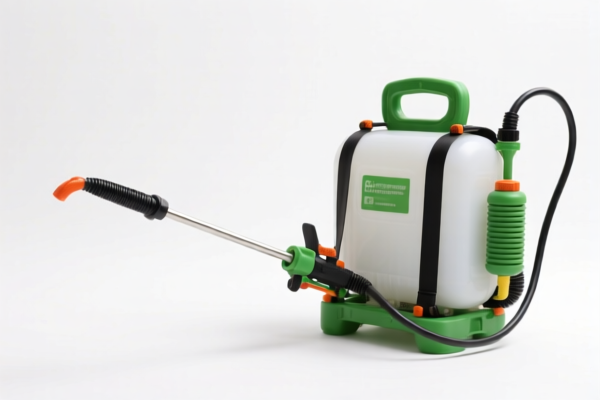
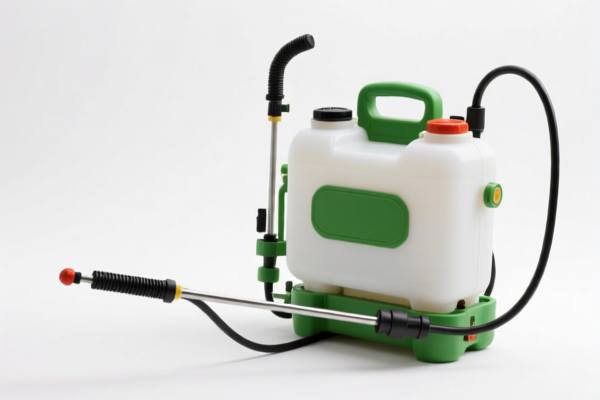
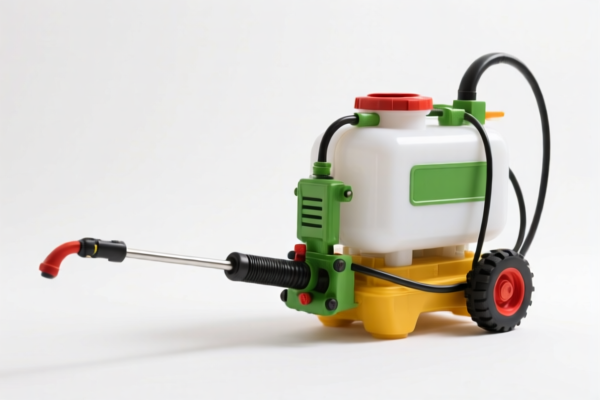

AI分析
🐞 Inorganic Granular Insecticide (无机杀虫剂颗粒剂)
🌐 HS Code Reference & Customs Clearance Guide | 2026 Latest Tariff Analysis | Professional Level Strategy
📌 I. Product Definition and Classification: Do You Really Understand "Inorganic Granular Insecticide"?
"Inorganic Granular Insecticides" are pest control agents derived from inorganic chemical compounds, formulated in a granular shape. In international trade, the classification hinges on two key factors: 1. Chemical Nature: Is it primarily an inorganic compound (Chapter 28) or a prepared pesticide (Chapter 38)? 2. Form: Is it a specific chemical class (e.g., phosphides, salts) or a general mixture?
⚠️ Key Distinction:
- If the product is defined by its chemical composition (e.g., specific phosphides or salts) rather than its pesticidal efficacy →归入 Chapter 28 (Inorganic Chemicals)
- If the product is defined by its pesticidal function and mixture status →归入 Chapter 38 (Pesticides)
📦 II. HS Code Classification Details (2026 Latest Tariff Authority Cross-Reference)
| HS Code | Product Description | Application Scenario | Tax Detail Breakdown |
|---|---|---|---|
2853.90.90.90 |
Inorganic granular insecticide, matching "Other Inorganic Compounds" material and granular form | General inorganic pesticides not specified elsewhere | Total Tax: 37.8% Base: 2.8%, Section 301: 25%, 122(e): 10% |
3808.91.30.00 |
Inorganic granular insecticide, explicitly including inorganic material and pesticidal use | General inorganic pesticides, prepared formulation | Total Tax: 40.0% Base: 5.0%, Section 301: 25%, 122(e): 10% |
2853.10.00.00 |
Inorganic granular insecticide, categorized as Phosphides class of inorganic compounds | Specifically Calcium Carbide/Aluminum Phosphate based | Total Tax: 37.8% Base: 2.8%, Section 301: 25%, 122(e): 10% |
3808.99.70.00 |
Inorganic insecticide, meeting definitions of inorganic substances and pesticides | Broad inorganic pesticide classification | Total Tax: 40.0% Base: 5.0%, Section 301: 25%, 122(e): 10% |
2827.39.90.50 |
Inorganic substance insecticide, within the category of Inorganic Salts | Specific inorganic salt formulations | Total Tax: +10.0% Base: N/A, Section 301: 0%, 122(e): 10% |
2827.39.90.10 |
Inorganic substance insecticide, conforming to inorganic chloride, bromide, etc. | Specific inorganic halide salts | Total Tax: +10.0% Base: N/A, Section 301: 0%, 122(e): 10% |
🔍 Key Reminder:
- Products under2827.39.90(Inorganic Salts) have significantly lower total tax rates (10%) compared to Chapter 38 or other Chapter 28 headings.
- However, proving the product is purely a "salt" and not a "prepared pesticide" requires rigorous chemical documentation.
💰 III. 2026 Latest Tariff Rate Explanation (Including Surtaxes, Policy Add-ons)
✅ Applicable Country: United States (US)
✅ Origin: China (CN)
✅ Effective Date: Post-November 2025 (Includes subsequent imports)
🎯 1. 2853.90.90.90 & 2853.10.00.00 —— Inorganic Compounds (Other/Phosphides)
| Item | Content |
|---|---|
| Base Tariff | 2.8% (ad valorem) |
| USITC Surcharge (Section 301) | +25% |
| Trade Representative Surcharge (122(e)) | +10% |
| Total Rate | 37.8% |
| Tax Calculation | CIF Value × 37.8% |
| De Minimis Exemption | ❌ Not Eligible (deny_de_minimis) |
| Legal Basis Path | USITC:2853 → SECTION_301:9903.01.25 → TRADE_REP:122e |
📌 Explanation:
- These codes fall under Chapter 28 but are subject to the standard 25% Section 301 tariff because they are not exempt from the trade war measures.
- The 122(e) tariff adds an extra 10%, bringing the total to 37.8%.
🎯 2. 3808.91.30.00 & 3808.99.70.00 —— Pesticides (Chapter 38)
| Item | Content |
|---|---|
| Base Tariff | 5.0% (ad valorem) |
| USITC Surcharge (Section 301) | +25% |
| Trade Representative Surcharge (122(e)) | +10% |
| Total Rate | 40.0% |
| Tax Calculation | CIF Value × 40.0% |
| De Minimis Exemption | ❌ Not Eligible (deny_de_minimis) |
| Legal Basis Path | USITC:3808 → SECTION_301:9903.01.25 → TRADE_REP:122e |
📌 Explanation:
- Chapter 38 pesticides have a higher base rate (5%) but are also subject to the full 25% + 10% surcharges.
- This is the most expensive classification among the options provided.
🎯 3. 2827.39.90.50 & 2827.39.90.10 —— Inorganic Salts (Special Case)
| Item | Content |
|---|---|
| Base Tariff | 0% (or N/A in data) |
| USITC Surcharge (Section 301) | 0% (Exempt from 301) |
| Trade Representative Surcharge (122(e)) | +10% |
| Total Rate | +10.0% |
| Tax Calculation | CIF Value × 10% |
| De Minimis Exemption | ❌ Not Eligible (deny_de_minimis) |
| Legal Basis Path | USITC:2827 → SECTION_301:EXEMPTION → TRADE_REP:122e |
📌 Critical Insight:
- These codes are the most cost-effective option.
- They are exempt from the 25% Section 301 tariff.
- However, they are only subject to the 10% 122(e) tariff.
- Condition: The product must be strictly classified as an Inorganic Salt (e.g., Chloride, Bromide) and not a broader "Inorganic Compound" or "Prepared Pesticide."
🛠️ IV. Customs Clearance Practical Advice (Avoid Pitfalls)
✅ 1. Documentation Checklist (Non-negotiable)
| Document | Required | Description |
|---|---|---|
| ✅ Chemical MSDS | ✔️ | Must clearly list ingredients, concentration, and chemical nature (e.g., "Calcium Phosphide"). |
| ✅ Formula Analysis | ✔️ | Proves the product is a specific salt or compound, justifying Chapter 28 over Chapter 38. |
| ✅ Product Label | ✔️ | Must indicate "Inorganic Insecticide" and specific chemical names. |
| ✅ Commercial Invoice | ✔️ | Explicitly state "Granular Form" and "Inorganic Composition." |
| ✅ Certificate of Analysis (COA) | ✔️ | Third-party lab report confirming purity and chemical structure. |
✅ 2. Declaration Strategy (Key Mnemonics)
🔥 “Salt First, Pesticide Last; Chapter 28 Saves the Cost!”
| Scenario | Correct Declaration | Risk of Misclassification |
|---|---|---|
| Product is Calcium Phosphide (Specific Salt) | 2827.39.90.10 or 2853.10.00.00 |
High risk if labeled only as "Insecticide" |
| Product is General Inorganic Mixture | 2853.90.90.90 |
Moderate cost (37.8%) |
| Product is Formulated Pesticide | 3808.91.30.00 |
Highest cost (40.0%) |
| Product is Inorganic Salt (Chloride/Bromide) | 2827.39.90.50 |
Lowest Cost (10%) – Best if chemically accurate |
✅ 3. Special Handling
| Situation | Recommendation |
|---|---|
| Customs Inquiry | If asked, emphasize the chemical identity (e.g., "It is a phosphate salt") rather than the "pesticidal effect." |
| Granular Form | Ensure packaging states "Granules" to match HS Code summaries. |
| 122(e) Tariff | Note that 122(e) applies to ALL Chinese imports in this category. There is no exemption from this 10% fee. |
🌍 V. Global Market Customs Comparison (2026 Latest)
| Country/Region | Recommended HS Code | Tariff Rate | Certification | Notes |
|---|---|---|---|---|
| 🇺🇸 USA | 2827.39.90.10 |
10% | EPA Registration Required | 122(e) applies. Cheapest option if classified as salt. |
| 🇨🇳 China | 2827.39.90.10 |
~2-5% | Pesticide License | No Section 301 or 122(e). |
| 🇪🇺 EU | 3808.91.00 |
6.5% | EU Pesticide Regulation | No 122(e) surcharge. |
| 🇦🇺 Australia | 3808.91.00 |
5% | APVMA Registration | No Section 301. |
📌 Conclusion:
- USA is the most complex market due to Section 301 (25%) and 122(e) (10%).
- Strategic Tip: If your product is chemically a simple inorganic salt (e.g., sodium chloride, calcium bromide), try to classify under2827.39.90to save 27-30% in tariffs.
- If it is a complex pesticide formulation, you will likely fall under3808or2853with higher rates.
📌 VI. Common Mistakes & Pitfalls (Lessons Learned)
❌ Mistake 1: Declaring a "Prepared Pesticide" as a "Raw Chemical Salt"
👉 Consequence: Customs audit, penalty for false declaration. Must have MSDS/COA to support chemical identity.
❌ Mistake 2: Ignoring the 122(e) Tariff
👉 Consequence: Unexpected 10% charge on top of base tariff. Applies to all products in the listed HS Codes.
❌ Mistake 3: Using "Insecticide" as the sole description
👉 Consequence: Customs may default to 3808 (Pesticides) with higher base tariff (5%) + 35% surcharge.
👉 Fix: Use specific chemical names (e.g., "Aluminum Phosphate").
❌ Mistake 4: Assuming Granular Form Changes Classification
👉 Consequence: Form (granular) does not change the chemical classification. Focus on composition, not shape.
✅ Correct Approach:
"Inorganic Insecticide, Granular Form, Composition: 98% Calcium Phosphide, 2% Silica, EPA Reg. No. XXXX"
🎯 VII. Conclusion: Professional Declaration for Cost Savings
🎯 Remember the Mnemonic:
🔹 "Chemical First, Function Second; Salt Saves 30%, Pesticide Costs More!"
🔹 "122(e) is 10%, Section 301 is 25%; Know Your Chapter 28 vs 38!"
📌 Pro Tip:
- If your product is not a simple salt but a complex mixture, consider Advance Ruling (Pre-classification) to avoid unexpected 40% tariffs.
- Consult a Customs Broker to verify if your specific formulation qualifies for the lower
2827or2853codes.
📣 Immediate Action:
📞 Provide MSDS + Formula to your customs broker
📝 Highlight "Inorganic Salt" composition in your invoice
🚀 Optimize your tariff burden from 40% down to 10% if possible!
✨ Professional Clearance Starts with Accurate Classification!
💼 Every percent saved is pure profit!
用户评价
关于 HS 编码归类
协调制度(HS)是由世界海关组织(WCO)制定的国际贸易商品分类标准。全球 200 多个国家采用 HS 系统作为海关关税、贸易统计和进出口监管的基础。
每个 HS 编码遵循以下层级结构:
- 章(2 位)——商品大类(例如:第 84 章:机器和机械设备)
- 品目(4 位)——章内的更具体分类
- 子目(6 位)——国际通用细分,所有 WCO 成员国统一使用
- 本国细分(8-10 位)——各国自行扩展的细分编码,如美国 HTSUS 10 位编码
正确的 HS 编码归类对于顺利通关、准确缴纳关税和遵守贸易法规至关重要。错误归类可能导致海关延误、多缴关税或罚款。
从CN进口到US时,适用的关税税率可能包括:
- 最惠国(MFN)税率——适用于 WTO 成员国的标准关税税率
- 普通税率——适用于无贸易协定国家
- 贸易救济关税——附加关税,如 301 条款(反倾销)、232 条款(国家安全)或反补贴税
本页内容仅供参考。如需正式归类,请咨询当地海关或持牌报关代理。