Inorganic Granular Insecticide
CN → US| HS Code | Tariff Rate | Origin | Destination | Doc |
|---|---|---|---|---|
| 2853909090 | 37.8% | CN | US | Official Doc |
| 3808913000 | 40.0% | CN | US | Official Doc |
| 2853100000 | 37.8% | CN | US | Official Doc |
| 3808997000 | 40.0% | CN | US | Official Doc |
| 2827399050 | 10.0% | CN | US | Official Doc |
| 2827399010 | 10.0% | CN | US | Official Doc |
Product Images
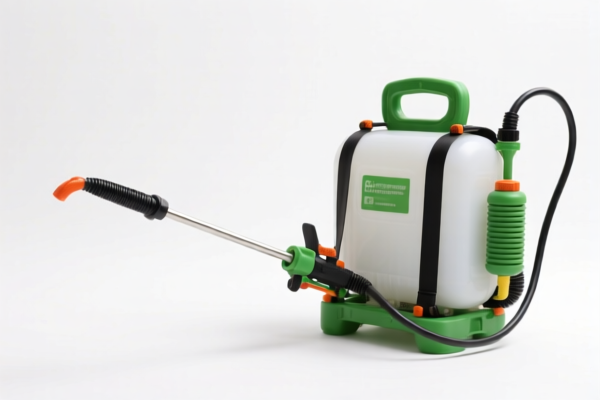
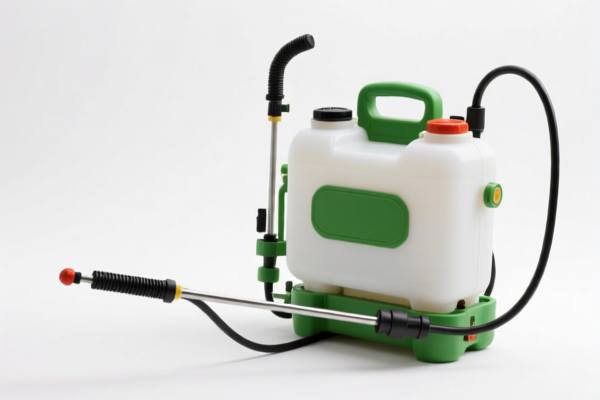
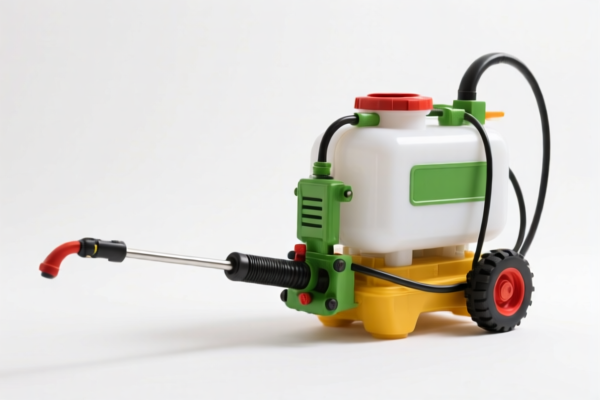

AI Analysis
🐞 Inorganic Granular Insecticide (无机杀虫剂颗粒剂)
🌐 HS Code Reference & Customs Clearance Guide | 2026 Latest Tariff Analysis | Professional Level Strategy
📌 I. Product Definition and Classification: Do You Really Understand "Inorganic Granular Insecticide"?
"Inorganic Granular Insecticides" are pest control agents derived from inorganic chemical compounds, formulated in a granular shape. In international trade, the classification hinges on two key factors: 1. Chemical Nature: Is it primarily an inorganic compound (Chapter 28) or a prepared pesticide (Chapter 38)? 2. Form: Is it a specific chemical class (e.g., phosphides, salts) or a general mixture?
⚠️ Key Distinction:
- If the product is defined by its chemical composition (e.g., specific phosphides or salts) rather than its pesticidal efficacy →归入 Chapter 28 (Inorganic Chemicals)
- If the product is defined by its pesticidal function and mixture status →归入 Chapter 38 (Pesticides)
📦 II. HS Code Classification Details (2026 Latest Tariff Authority Cross-Reference)
| HS Code | Product Description | Application Scenario | Tax Detail Breakdown |
|---|---|---|---|
2853.90.90.90 |
Inorganic granular insecticide, matching "Other Inorganic Compounds" material and granular form | General inorganic pesticides not specified elsewhere | Total Tax: 37.8% Base: 2.8%, Section 301: 25%, 122(e): 10% |
3808.91.30.00 |
Inorganic granular insecticide, explicitly including inorganic material and pesticidal use | General inorganic pesticides, prepared formulation | Total Tax: 40.0% Base: 5.0%, Section 301: 25%, 122(e): 10% |
2853.10.00.00 |
Inorganic granular insecticide, categorized as Phosphides class of inorganic compounds | Specifically Calcium Carbide/Aluminum Phosphate based | Total Tax: 37.8% Base: 2.8%, Section 301: 25%, 122(e): 10% |
3808.99.70.00 |
Inorganic insecticide, meeting definitions of inorganic substances and pesticides | Broad inorganic pesticide classification | Total Tax: 40.0% Base: 5.0%, Section 301: 25%, 122(e): 10% |
2827.39.90.50 |
Inorganic substance insecticide, within the category of Inorganic Salts | Specific inorganic salt formulations | Total Tax: +10.0% Base: N/A, Section 301: 0%, 122(e): 10% |
2827.39.90.10 |
Inorganic substance insecticide, conforming to inorganic chloride, bromide, etc. | Specific inorganic halide salts | Total Tax: +10.0% Base: N/A, Section 301: 0%, 122(e): 10% |
🔍 Key Reminder:
- Products under2827.39.90(Inorganic Salts) have significantly lower total tax rates (10%) compared to Chapter 38 or other Chapter 28 headings.
- However, proving the product is purely a "salt" and not a "prepared pesticide" requires rigorous chemical documentation.
💰 III. 2026 Latest Tariff Rate Explanation (Including Surtaxes, Policy Add-ons)
✅ Applicable Country: United States (US)
✅ Origin: China (CN)
✅ Effective Date: Post-November 2025 (Includes subsequent imports)
🎯 1. 2853.90.90.90 & 2853.10.00.00 —— Inorganic Compounds (Other/Phosphides)
| Item | Content |
|---|---|
| Base Tariff | 2.8% (ad valorem) |
| USITC Surcharge (Section 301) | +25% |
| Trade Representative Surcharge (122(e)) | +10% |
| Total Rate | 37.8% |
| Tax Calculation | CIF Value × 37.8% |
| De Minimis Exemption | ❌ Not Eligible (deny_de_minimis) |
| Legal Basis Path | USITC:2853 → SECTION_301:9903.01.25 → TRADE_REP:122e |
📌 Explanation:
- These codes fall under Chapter 28 but are subject to the standard 25% Section 301 tariff because they are not exempt from the trade war measures.
- The 122(e) tariff adds an extra 10%, bringing the total to 37.8%.
🎯 2. 3808.91.30.00 & 3808.99.70.00 —— Pesticides (Chapter 38)
| Item | Content |
|---|---|
| Base Tariff | 5.0% (ad valorem) |
| USITC Surcharge (Section 301) | +25% |
| Trade Representative Surcharge (122(e)) | +10% |
| Total Rate | 40.0% |
| Tax Calculation | CIF Value × 40.0% |
| De Minimis Exemption | ❌ Not Eligible (deny_de_minimis) |
| Legal Basis Path | USITC:3808 → SECTION_301:9903.01.25 → TRADE_REP:122e |
📌 Explanation:
- Chapter 38 pesticides have a higher base rate (5%) but are also subject to the full 25% + 10% surcharges.
- This is the most expensive classification among the options provided.
🎯 3. 2827.39.90.50 & 2827.39.90.10 —— Inorganic Salts (Special Case)
| Item | Content |
|---|---|
| Base Tariff | 0% (or N/A in data) |
| USITC Surcharge (Section 301) | 0% (Exempt from 301) |
| Trade Representative Surcharge (122(e)) | +10% |
| Total Rate | +10.0% |
| Tax Calculation | CIF Value × 10% |
| De Minimis Exemption | ❌ Not Eligible (deny_de_minimis) |
| Legal Basis Path | USITC:2827 → SECTION_301:EXEMPTION → TRADE_REP:122e |
📌 Critical Insight:
- These codes are the most cost-effective option.
- They are exempt from the 25% Section 301 tariff.
- However, they are only subject to the 10% 122(e) tariff.
- Condition: The product must be strictly classified as an Inorganic Salt (e.g., Chloride, Bromide) and not a broader "Inorganic Compound" or "Prepared Pesticide."
🛠️ IV. Customs Clearance Practical Advice (Avoid Pitfalls)
✅ 1. Documentation Checklist (Non-negotiable)
| Document | Required | Description |
|---|---|---|
| ✅ Chemical MSDS | ✔️ | Must clearly list ingredients, concentration, and chemical nature (e.g., "Calcium Phosphide"). |
| ✅ Formula Analysis | ✔️ | Proves the product is a specific salt or compound, justifying Chapter 28 over Chapter 38. |
| ✅ Product Label | ✔️ | Must indicate "Inorganic Insecticide" and specific chemical names. |
| ✅ Commercial Invoice | ✔️ | Explicitly state "Granular Form" and "Inorganic Composition." |
| ✅ Certificate of Analysis (COA) | ✔️ | Third-party lab report confirming purity and chemical structure. |
✅ 2. Declaration Strategy (Key Mnemonics)
🔥 “Salt First, Pesticide Last; Chapter 28 Saves the Cost!”
| Scenario | Correct Declaration | Risk of Misclassification |
|---|---|---|
| Product is Calcium Phosphide (Specific Salt) | 2827.39.90.10 or 2853.10.00.00 |
High risk if labeled only as "Insecticide" |
| Product is General Inorganic Mixture | 2853.90.90.90 |
Moderate cost (37.8%) |
| Product is Formulated Pesticide | 3808.91.30.00 |
Highest cost (40.0%) |
| Product is Inorganic Salt (Chloride/Bromide) | 2827.39.90.50 |
Lowest Cost (10%) – Best if chemically accurate |
✅ 3. Special Handling
| Situation | Recommendation |
|---|---|
| Customs Inquiry | If asked, emphasize the chemical identity (e.g., "It is a phosphate salt") rather than the "pesticidal effect." |
| Granular Form | Ensure packaging states "Granules" to match HS Code summaries. |
| 122(e) Tariff | Note that 122(e) applies to ALL Chinese imports in this category. There is no exemption from this 10% fee. |
🌍 V. Global Market Customs Comparison (2026 Latest)
| Country/Region | Recommended HS Code | Tariff Rate | Certification | Notes |
|---|---|---|---|---|
| 🇺🇸 USA | 2827.39.90.10 |
10% | EPA Registration Required | 122(e) applies. Cheapest option if classified as salt. |
| 🇨🇳 China | 2827.39.90.10 |
~2-5% | Pesticide License | No Section 301 or 122(e). |
| 🇪🇺 EU | 3808.91.00 |
6.5% | EU Pesticide Regulation | No 122(e) surcharge. |
| 🇦🇺 Australia | 3808.91.00 |
5% | APVMA Registration | No Section 301. |
📌 Conclusion:
- USA is the most complex market due to Section 301 (25%) and 122(e) (10%).
- Strategic Tip: If your product is chemically a simple inorganic salt (e.g., sodium chloride, calcium bromide), try to classify under2827.39.90to save 27-30% in tariffs.
- If it is a complex pesticide formulation, you will likely fall under3808or2853with higher rates.
📌 VI. Common Mistakes & Pitfalls (Lessons Learned)
❌ Mistake 1: Declaring a "Prepared Pesticide" as a "Raw Chemical Salt"
👉 Consequence: Customs audit, penalty for false declaration. Must have MSDS/COA to support chemical identity.
❌ Mistake 2: Ignoring the 122(e) Tariff
👉 Consequence: Unexpected 10% charge on top of base tariff. Applies to all products in the listed HS Codes.
❌ Mistake 3: Using "Insecticide" as the sole description
👉 Consequence: Customs may default to 3808 (Pesticides) with higher base tariff (5%) + 35% surcharge.
👉 Fix: Use specific chemical names (e.g., "Aluminum Phosphate").
❌ Mistake 4: Assuming Granular Form Changes Classification
👉 Consequence: Form (granular) does not change the chemical classification. Focus on composition, not shape.
✅ Correct Approach:
"Inorganic Insecticide, Granular Form, Composition: 98% Calcium Phosphide, 2% Silica, EPA Reg. No. XXXX"
🎯 VII. Conclusion: Professional Declaration for Cost Savings
🎯 Remember the Mnemonic:
🔹 "Chemical First, Function Second; Salt Saves 30%, Pesticide Costs More!"
🔹 "122(e) is 10%, Section 301 is 25%; Know Your Chapter 28 vs 38!"
📌 Pro Tip:
- If your product is not a simple salt but a complex mixture, consider Advance Ruling (Pre-classification) to avoid unexpected 40% tariffs.
- Consult a Customs Broker to verify if your specific formulation qualifies for the lower
2827or2853codes.
📣 Immediate Action:
📞 Provide MSDS + Formula to your customs broker
📝 Highlight "Inorganic Salt" composition in your invoice
🚀 Optimize your tariff burden from 40% down to 10% if possible!
✨ Professional Clearance Starts with Accurate Classification!
💼 Every percent saved is pure profit!
Customer Reviews
About HS Code Classification
The Harmonized System (HS) is an internationally standardized nomenclature developed by the World Customs Organization (WCO) to classify traded products. Over 200 countries use the HS system as the basis for customs tariffs, trade statistics, and import/export regulations.
Each HS code follows a hierarchical structure:
- Chapter (2 digits) — Broad category of goods (e.g., Chapter 84: Machinery and Mechanical Appliances)
- Heading (4 digits) — More specific grouping within the chapter
- Subheading (6 digits) — Internationally standardized breakdown, used by all WCO member countries
- National subdivisions (8-10 digits) — Country-specific extensions for further classification, such as US HTSUS 10-digit codes
Correct HS code classification is essential for smooth customs clearance, accurate duty payment, and compliance with trade regulations. Misclassification can lead to customs delays, overpayment of duties, or penalties.
When importing from CN to US, the applicable tariff rates may include:
- Most-Favored-Nation (MFN) rate — The standard duty rate applied to WTO members
- General rate — Applied to countries without trade agreements
- Trade remedy duties — Additional tariffs such as Section 301 (anti-dumping), Section 232 (national security), or countervailing duties
The information provided on this page is for reference purposes only. For official classification, please consult with your local customs authority or a licensed customs broker.