Inorganic Porous Catalyst
CN → US| HS编码 | 关税税率 | 原产国 | 目的国 | 文档 |
|---|---|---|---|---|
| 3815190000 | 35.0% | CN | US | 官方文档 |
| 3815903000 | 35.0% | CN | US | 官方文档 |
| 2835295100 | 39.1% | CN | US | 官方文档 |
商品图片
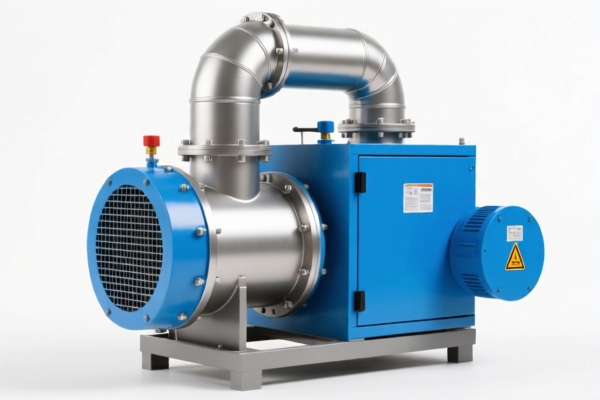
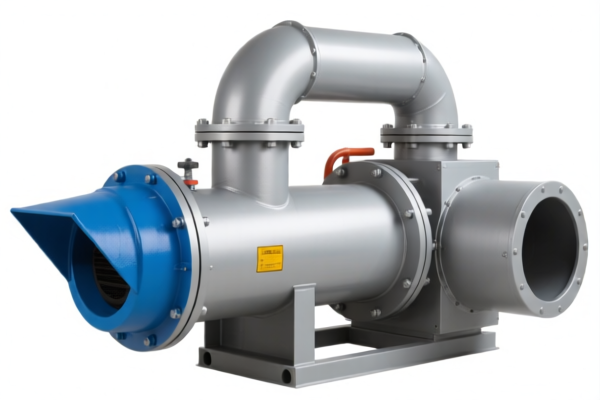
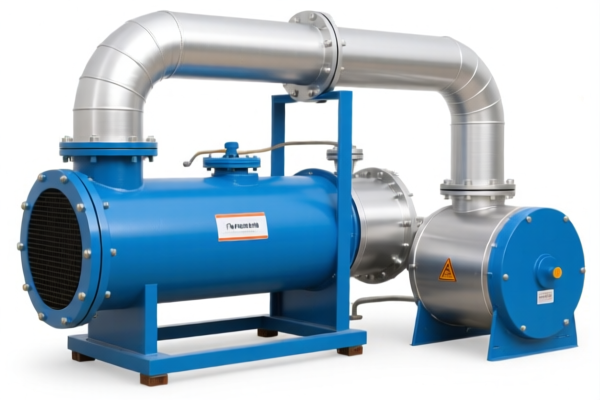

AI分析
⚗️ Inorganic Porous Catalyst | High-Tech Chemical Classification Guide
🌐 HS Code Reference & Customs Clearance Guide | 2026 Latest Tariff Analysis | Professional Clearance Strategy
📌 1. Product Definition & Classification: What Exactly is an "Inorganic Porous Catalyst"?
Inorganic Porous Catalysts are advanced chemical agents composed of non-organic materials with a highly porous structure, designed to accelerate chemical reactions without being consumed in the process. In international trade, they are primarily classified based on their material composition (inorganic) and function (catalytic制剂/preparations).
Two Main Classification Paths:
1. Catalyst Preparations (3815): Classified by function. If the product is explicitly prepared as a catalyst, it falls under Chapter 38.
2. Inorganic Salts/Compounds (2835): Classified by material. If viewed strictly as a chemical salt (e.g., phosphates) in primary form, it falls under Chapter 28.
⚠️ Key Distinction Point:
- If the product is described primarily by its catalytic function and is a prepared mixture/preparation → Go to3815.
- If the product is described primarily by its chemical composition (e.g., "Phosphate") and is in a basic/primary form → Go to2835.
- Crucial Note: For US imports from China,3815is often preferred for "catalysts" but carries higher specific duties depending on the exact subheading, while2835may have a base duty. However, both face significant additional tariffs.
📦 2. HS Code Classification Details (2026 Latest Tariff Authority Match)
Based on the provided data, here are the three most likely HS Codes and their matching logic:
| HS Code | Product Description | Matching Logic (Summary) | Total Tax Rate |
|---|---|---|---|
3815.19.00.00 |
Catalyst Preparations | Matches by Function: "Catalyst". "Inorganic" does not conflict with "Support Catalyst". Fits category for catalyst preparations. | 35.0% |
3815.90.30.00 |
Other Catalyst Preparations | Matches by Material & Function: Explicitly "Inorganic" + "Catalyst". Fully matches "Catalytic Preparations" and "Composed entirely of inorganic substances". | 35.0% |
2835.29.51.00 |
Other Phosphates (Inorganic) | Matches by Material: Assumed to be inorganic compounds/salts. Matches "Phosphate" category. Form (powder/granules) is consistent with primary chemical forms. | 39.1% |
🔍 Analysis of Divergence:
-3815Series: Focuses on the purpose (catalysis). If your product is sold specifically as a "Catalyst," this is the most accurate functional classification.
-2835Series: Focuses on the chemistry (phosphates/salts). If the catalyst is a simple phosphate compound without complex preparation, this might apply, but it carries a higher total tax rate (39.1%).
💰 3. 2026 Latest Tariff Rate Breakdown (Including Surcharges & Policy Add-ons)
✅ Applicable Country: United States (US)
✅ Origin: China (CN)
✅ Effective Time: 2025/2026 Import Period
🎯 1. 3815.19.00.00 & 3815.90.30.00 —— Catalyst Preparations
| Item | Content |
|---|---|
| Base Duty Rate | 0.0% (Ad Valorem) |
| Section 301 Additional Duty | +25.0% (USITC Footnote) |
| Section 122/IEEPA Additional Duty | +10.0% (Specific to China-origin goods) |
| Total Effective Rate | 35.0% |
| Calculation | CIF Value × 35% |
| De Minimis Exemption | ❌ Not Applicable (Denied for these HS codes under current trade policies) |
| Legal Basis Path | USITC:3815.19.00.00 → FOOTNOTE:301 → IEEPA:122 |
📌 Interpretation:
- Although the base tariff is 0%, the 25% Section 301 tariff (retaliatory/additional) and 10% Section 122/IEEPA tariff significantly increase the cost.
- Total 35% is high. This reflects the strategic importance of chemical catalysts and trade tensions.
🎯 2. 2835.29.51.00 —— Other Phosphates
| Item | Content |
|---|---|
| Base Duty Rate | 4.1% (Ad Valorem) |
| Section 301 Additional Duty | +25.0% |
| Section 122/IEEPA Additional Duty | +10.0% |
| Total Effective Rate | 39.1% |
| Calculation | CIF Value × 39.1% |
| De Minimis Exemption | ❌ Not Applicable |
| Legal Basis Path | USITC:2835.29.51.00 → FOOTNOTE:301 → IEEPA:122 |
📌 Interpretation:
- Even though the base rate is slightly higher (4.1%), the total rate is 39.1%, which is 4.1% higher than the3815category.
- Recommendation: Unless your product is strictly a basic phosphate salt and not prepared as a catalyst,3815is financially preferable due to the 0% base rate, resulting in a lower total burden (35% vs 39.1%).
🛠️ 4. Customs Clearance Practical Advice (Real-World Pitfall Guide)
✅ 1. Required Documentation Checklist (Mandatory)
| Document | Required? | Explanation |
|---|---|---|
| ✅ Product Specification Sheet | ✔️ | Must specify: Chemical composition, porosity, surface area, catalytic function, and inorganic nature. |
| ✅ Chemical Structure Diagram | ✔️ | Proves the "inorganic" nature (no carbon-based binders if claiming pure inorganic). |
| ✅ Third-Party Test Report | ✔️ | SGS/BV report confirming it is a Catalyst (for 3815) or Phosphate (for 2835). |
| ✅ Commercial Invoice | ✔️ | Clear description: "Inorganic Porous Catalyst for [Specific Reaction]", NOT just "Chemical Powder". |
| ✅ Certificate of Origin (CO) | ✔️ | Critical for determining origin-based tariffs. |
| ✅ Packaging List | ✔️ | Ensure quantities match invoice. |
✅ 2. Declaration Tips (Key Mantras)
🔥 "Function First for 3815, Composition for 2835. Be Precise, Avoid Confiscation!"
| Scenario | Correct Declaration | Wrong Practice | Consequence |
|---|---|---|---|
| Prepared Catalyst | Use 3815.19.00.00 or 3815.90.30.00. Describe as "Catalyst Preparation". |
Declare as "Raw Chemical" or "Salt". | Misclassification risk; potential 39.1% rate or penalty. |
| Basic Phosphate Powder | Use 2835.29.51.00. Describe as "Inorganic Phosphate, Primary Form". |
Declare as "Catalyst" if no catalytic activity is proven. | Rejection by customs for lack of catalytic proof. |
| Mixed Composition | Provide detailed % breakdown. If organic binders exist, 3815 may still apply if catalyst is primary function. |
Vague description "Chemical Mix". | Customs may assign higher duty code or demand further testing. |
✅ 3. Special Case Handling
| Situation | Handling Advice |
|---|---|
| High-Value Catalysts | Consider Advance Ruling (APA) from CBP to lock in the 35% rate and avoid 39.1% or higher. |
| Sample Imports | Even small samples are subject to 35-39.1% duty. No de minimis exemption. |
| Regulatory Compliance | Ensure compliance with EPA and OSHA regulations for hazardous chemicals if applicable. |
| Origin Fraud | Do not mislabel Chinese goods as originating from Vietnam/Mexico to avoid tariffs. Strict enforcement on catalysts/chemicals. |
🌍 5. Global Market Comparison (2026 Latest)
| Country/Region | Recommended HS Code | Estimated Total Duty (China Origin) | Certifications Required | Remarks |
|---|---|---|---|---|
| 🇺🇸 USA | 3815.19.00.00 |
35.0% | TSCA (EPA) | High tariffs. 2835 is 39.1%. |
| 🇨🇳 China | 3815.19.00.00 |
0-5% (depending on trade zone) | CCC (if applicable) | Low duty. Focus on domestic use. |
| 🇪🇺 EU | 3815.10.00 |
0% (Most Favored Nation) | REACH (ECHA) | No additional tariffs. REACH registration needed. |
| 🇦🇺 Australia | 3815.10.00 |
5% | AICIS | Moderate duty. |
| 🇯🇵 Japan | 3815.10.00 |
0% | PrTIS | No additional tariffs. |
📌 Conclusion:
- The USA is the most challenging market for Inorganic Porous Catalysts due to the 35% combined tariff.
- EU and Japan are significantly more favorable with 0% base duties.
- For US exports, cost optimization requires careful classification between3815and2835to ensure the lowest possible rate (35% is the best-case scenario for catalysts).
📌 6. Common Errors & Pitfall Guide (Lessons Learned)
❌ Error 1: Declaring "Catalyst" as "Raw Chemical" to avoid Section 301
👉 Consequence: Customs will reject based on functional description. Risk of penalty + 39.1% tax.
❌ Error 2: Using 2835 for a prepared catalyst
👉 Consequence: You pay 39.1% instead of 35%. You lose 4.1% in profit unnecessarily.
❌ Error 3: Vague description "Porosity Material"
👉 Consequence: Customs may assign a generic higher duty code or demand lab testing, causing delivery delays.
❌ Error 4: Ignoring IEEPA Section 122/122 Equivalent
👉 Consequence: Missing the 10% additional duty in calculations, leading to payment shortfalls at customs.
✅ Correct Practice:
"Inorganic Porous Catalyst, Preformed, for [Specific Chemical Process], Material: [e.g., Alumina/Silica], Composition: 100% Inorganic, HS Code: 3815.19.00.00"
🎯 7. Conclusion: Professional Declaration, Cost Optimization!
🎯 Remember the Mantra:
🔹 "Function = 3815 (35%), Material = 2835 (39.1%). Choose 3815 for Catalysts!"
🔹 "Tariffs are high, precision is key. A wrong code costs 4.1% more!"
📌 Pro Tip:
If your catalyst contains organic binders or support structures that change its nature, consult a trade lawyer. Some mixed compositions may qualify for different subheadings, but 3815 remains the safest for "Catalyst Preparations".
Apply for an Advance Ruling before shipment to lock in the 35% rate and avoid disputes.
📣 Immediate Action:
📞 Contact a licensed Customs Broker
📄 Provide TDS (Technical Data Sheet) and MSDS
🚀 Ensure correct HS Code:3815.19.00.00or3815.90.30.00for the lowest liability!
✨ Professional Clearance Starts with Accurate Classification!
💼 Every percentage point of duty counts! Optimize now!
用户评价
关于 HS 编码归类
协调制度(HS)是由世界海关组织(WCO)制定的国际贸易商品分类标准。全球 200 多个国家采用 HS 系统作为海关关税、贸易统计和进出口监管的基础。
每个 HS 编码遵循以下层级结构:
- 章(2 位)——商品大类(例如:第 84 章:机器和机械设备)
- 品目(4 位)——章内的更具体分类
- 子目(6 位)——国际通用细分,所有 WCO 成员国统一使用
- 本国细分(8-10 位)——各国自行扩展的细分编码,如美国 HTSUS 10 位编码
正确的 HS 编码归类对于顺利通关、准确缴纳关税和遵守贸易法规至关重要。错误归类可能导致海关延误、多缴关税或罚款。
从CN进口到US时,适用的关税税率可能包括:
- 最惠国(MFN)税率——适用于 WTO 成员国的标准关税税率
- 普通税率——适用于无贸易协定国家
- 贸易救济关税——附加关税,如 301 条款(反倾销)、232 条款(国家安全)或反补贴税
本页内容仅供参考。如需正式归类,请咨询当地海关或持牌报关代理。