Inorganic Porous Catalyst
CN → US| HS Code | Tariff Rate | Origin | Destination | Doc |
|---|---|---|---|---|
| 3815190000 | 35.0% | CN | US | Official Doc |
| 3815903000 | 35.0% | CN | US | Official Doc |
| 2835295100 | 39.1% | CN | US | Official Doc |
Product Images
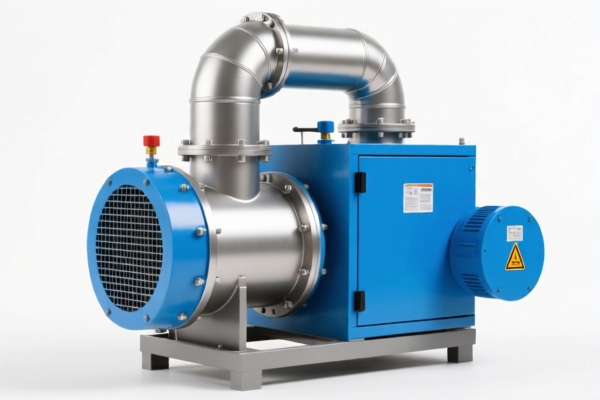
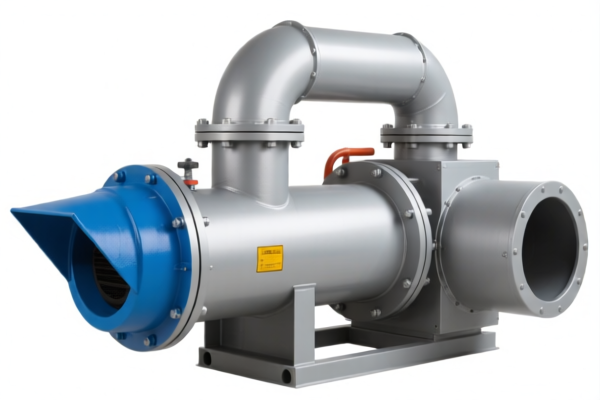
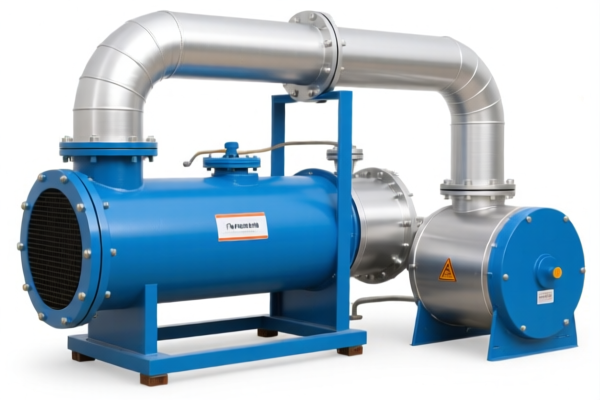

AI Analysis
⚗️ Inorganic Porous Catalyst | High-Tech Chemical Classification Guide
🌐 HS Code Reference & Customs Clearance Guide | 2026 Latest Tariff Analysis | Professional Clearance Strategy
📌 1. Product Definition & Classification: What Exactly is an "Inorganic Porous Catalyst"?
Inorganic Porous Catalysts are advanced chemical agents composed of non-organic materials with a highly porous structure, designed to accelerate chemical reactions without being consumed in the process. In international trade, they are primarily classified based on their material composition (inorganic) and function (catalytic制剂/preparations).
Two Main Classification Paths:
1. Catalyst Preparations (3815): Classified by function. If the product is explicitly prepared as a catalyst, it falls under Chapter 38.
2. Inorganic Salts/Compounds (2835): Classified by material. If viewed strictly as a chemical salt (e.g., phosphates) in primary form, it falls under Chapter 28.
⚠️ Key Distinction Point:
- If the product is described primarily by its catalytic function and is a prepared mixture/preparation → Go to3815.
- If the product is described primarily by its chemical composition (e.g., "Phosphate") and is in a basic/primary form → Go to2835.
- Crucial Note: For US imports from China,3815is often preferred for "catalysts" but carries higher specific duties depending on the exact subheading, while2835may have a base duty. However, both face significant additional tariffs.
📦 2. HS Code Classification Details (2026 Latest Tariff Authority Match)
Based on the provided data, here are the three most likely HS Codes and their matching logic:
| HS Code | Product Description | Matching Logic (Summary) | Total Tax Rate |
|---|---|---|---|
3815.19.00.00 |
Catalyst Preparations | Matches by Function: "Catalyst". "Inorganic" does not conflict with "Support Catalyst". Fits category for catalyst preparations. | 35.0% |
3815.90.30.00 |
Other Catalyst Preparations | Matches by Material & Function: Explicitly "Inorganic" + "Catalyst". Fully matches "Catalytic Preparations" and "Composed entirely of inorganic substances". | 35.0% |
2835.29.51.00 |
Other Phosphates (Inorganic) | Matches by Material: Assumed to be inorganic compounds/salts. Matches "Phosphate" category. Form (powder/granules) is consistent with primary chemical forms. | 39.1% |
🔍 Analysis of Divergence:
-3815Series: Focuses on the purpose (catalysis). If your product is sold specifically as a "Catalyst," this is the most accurate functional classification.
-2835Series: Focuses on the chemistry (phosphates/salts). If the catalyst is a simple phosphate compound without complex preparation, this might apply, but it carries a higher total tax rate (39.1%).
💰 3. 2026 Latest Tariff Rate Breakdown (Including Surcharges & Policy Add-ons)
✅ Applicable Country: United States (US)
✅ Origin: China (CN)
✅ Effective Time: 2025/2026 Import Period
🎯 1. 3815.19.00.00 & 3815.90.30.00 —— Catalyst Preparations
| Item | Content |
|---|---|
| Base Duty Rate | 0.0% (Ad Valorem) |
| Section 301 Additional Duty | +25.0% (USITC Footnote) |
| Section 122/IEEPA Additional Duty | +10.0% (Specific to China-origin goods) |
| Total Effective Rate | 35.0% |
| Calculation | CIF Value × 35% |
| De Minimis Exemption | ❌ Not Applicable (Denied for these HS codes under current trade policies) |
| Legal Basis Path | USITC:3815.19.00.00 → FOOTNOTE:301 → IEEPA:122 |
📌 Interpretation:
- Although the base tariff is 0%, the 25% Section 301 tariff (retaliatory/additional) and 10% Section 122/IEEPA tariff significantly increase the cost.
- Total 35% is high. This reflects the strategic importance of chemical catalysts and trade tensions.
🎯 2. 2835.29.51.00 —— Other Phosphates
| Item | Content |
|---|---|
| Base Duty Rate | 4.1% (Ad Valorem) |
| Section 301 Additional Duty | +25.0% |
| Section 122/IEEPA Additional Duty | +10.0% |
| Total Effective Rate | 39.1% |
| Calculation | CIF Value × 39.1% |
| De Minimis Exemption | ❌ Not Applicable |
| Legal Basis Path | USITC:2835.29.51.00 → FOOTNOTE:301 → IEEPA:122 |
📌 Interpretation:
- Even though the base rate is slightly higher (4.1%), the total rate is 39.1%, which is 4.1% higher than the3815category.
- Recommendation: Unless your product is strictly a basic phosphate salt and not prepared as a catalyst,3815is financially preferable due to the 0% base rate, resulting in a lower total burden (35% vs 39.1%).
🛠️ 4. Customs Clearance Practical Advice (Real-World Pitfall Guide)
✅ 1. Required Documentation Checklist (Mandatory)
| Document | Required? | Explanation |
|---|---|---|
| ✅ Product Specification Sheet | ✔️ | Must specify: Chemical composition, porosity, surface area, catalytic function, and inorganic nature. |
| ✅ Chemical Structure Diagram | ✔️ | Proves the "inorganic" nature (no carbon-based binders if claiming pure inorganic). |
| ✅ Third-Party Test Report | ✔️ | SGS/BV report confirming it is a Catalyst (for 3815) or Phosphate (for 2835). |
| ✅ Commercial Invoice | ✔️ | Clear description: "Inorganic Porous Catalyst for [Specific Reaction]", NOT just "Chemical Powder". |
| ✅ Certificate of Origin (CO) | ✔️ | Critical for determining origin-based tariffs. |
| ✅ Packaging List | ✔️ | Ensure quantities match invoice. |
✅ 2. Declaration Tips (Key Mantras)
🔥 "Function First for 3815, Composition for 2835. Be Precise, Avoid Confiscation!"
| Scenario | Correct Declaration | Wrong Practice | Consequence |
|---|---|---|---|
| Prepared Catalyst | Use 3815.19.00.00 or 3815.90.30.00. Describe as "Catalyst Preparation". |
Declare as "Raw Chemical" or "Salt". | Misclassification risk; potential 39.1% rate or penalty. |
| Basic Phosphate Powder | Use 2835.29.51.00. Describe as "Inorganic Phosphate, Primary Form". |
Declare as "Catalyst" if no catalytic activity is proven. | Rejection by customs for lack of catalytic proof. |
| Mixed Composition | Provide detailed % breakdown. If organic binders exist, 3815 may still apply if catalyst is primary function. |
Vague description "Chemical Mix". | Customs may assign higher duty code or demand further testing. |
✅ 3. Special Case Handling
| Situation | Handling Advice |
|---|---|
| High-Value Catalysts | Consider Advance Ruling (APA) from CBP to lock in the 35% rate and avoid 39.1% or higher. |
| Sample Imports | Even small samples are subject to 35-39.1% duty. No de minimis exemption. |
| Regulatory Compliance | Ensure compliance with EPA and OSHA regulations for hazardous chemicals if applicable. |
| Origin Fraud | Do not mislabel Chinese goods as originating from Vietnam/Mexico to avoid tariffs. Strict enforcement on catalysts/chemicals. |
🌍 5. Global Market Comparison (2026 Latest)
| Country/Region | Recommended HS Code | Estimated Total Duty (China Origin) | Certifications Required | Remarks |
|---|---|---|---|---|
| 🇺🇸 USA | 3815.19.00.00 |
35.0% | TSCA (EPA) | High tariffs. 2835 is 39.1%. |
| 🇨🇳 China | 3815.19.00.00 |
0-5% (depending on trade zone) | CCC (if applicable) | Low duty. Focus on domestic use. |
| 🇪🇺 EU | 3815.10.00 |
0% (Most Favored Nation) | REACH (ECHA) | No additional tariffs. REACH registration needed. |
| 🇦🇺 Australia | 3815.10.00 |
5% | AICIS | Moderate duty. |
| 🇯🇵 Japan | 3815.10.00 |
0% | PrTIS | No additional tariffs. |
📌 Conclusion:
- The USA is the most challenging market for Inorganic Porous Catalysts due to the 35% combined tariff.
- EU and Japan are significantly more favorable with 0% base duties.
- For US exports, cost optimization requires careful classification between3815and2835to ensure the lowest possible rate (35% is the best-case scenario for catalysts).
📌 6. Common Errors & Pitfall Guide (Lessons Learned)
❌ Error 1: Declaring "Catalyst" as "Raw Chemical" to avoid Section 301
👉 Consequence: Customs will reject based on functional description. Risk of penalty + 39.1% tax.
❌ Error 2: Using 2835 for a prepared catalyst
👉 Consequence: You pay 39.1% instead of 35%. You lose 4.1% in profit unnecessarily.
❌ Error 3: Vague description "Porosity Material"
👉 Consequence: Customs may assign a generic higher duty code or demand lab testing, causing delivery delays.
❌ Error 4: Ignoring IEEPA Section 122/122 Equivalent
👉 Consequence: Missing the 10% additional duty in calculations, leading to payment shortfalls at customs.
✅ Correct Practice:
"Inorganic Porous Catalyst, Preformed, for [Specific Chemical Process], Material: [e.g., Alumina/Silica], Composition: 100% Inorganic, HS Code: 3815.19.00.00"
🎯 7. Conclusion: Professional Declaration, Cost Optimization!
🎯 Remember the Mantra:
🔹 "Function = 3815 (35%), Material = 2835 (39.1%). Choose 3815 for Catalysts!"
🔹 "Tariffs are high, precision is key. A wrong code costs 4.1% more!"
📌 Pro Tip:
If your catalyst contains organic binders or support structures that change its nature, consult a trade lawyer. Some mixed compositions may qualify for different subheadings, but 3815 remains the safest for "Catalyst Preparations".
Apply for an Advance Ruling before shipment to lock in the 35% rate and avoid disputes.
📣 Immediate Action:
📞 Contact a licensed Customs Broker
📄 Provide TDS (Technical Data Sheet) and MSDS
🚀 Ensure correct HS Code:3815.19.00.00or3815.90.30.00for the lowest liability!
✨ Professional Clearance Starts with Accurate Classification!
💼 Every percentage point of duty counts! Optimize now!
Customer Reviews
About HS Code Classification
The Harmonized System (HS) is an internationally standardized nomenclature developed by the World Customs Organization (WCO) to classify traded products. Over 200 countries use the HS system as the basis for customs tariffs, trade statistics, and import/export regulations.
Each HS code follows a hierarchical structure:
- Chapter (2 digits) — Broad category of goods (e.g., Chapter 84: Machinery and Mechanical Appliances)
- Heading (4 digits) — More specific grouping within the chapter
- Subheading (6 digits) — Internationally standardized breakdown, used by all WCO member countries
- National subdivisions (8-10 digits) — Country-specific extensions for further classification, such as US HTSUS 10-digit codes
Correct HS code classification is essential for smooth customs clearance, accurate duty payment, and compliance with trade regulations. Misclassification can lead to customs delays, overpayment of duties, or penalties.
When importing from CN to US, the applicable tariff rates may include:
- Most-Favored-Nation (MFN) rate — The standard duty rate applied to WTO members
- General rate — Applied to countries without trade agreements
- Trade remedy duties — Additional tariffs such as Section 301 (anti-dumping), Section 232 (national security), or countervailing duties
The information provided on this page is for reference purposes only. For official classification, please consult with your local customs authority or a licensed customs broker.