Insulation Tape Waterproof
CN → US| HS编码 | 关税税率 | 原产国 | 目的国 | 文档 |
|---|---|---|---|---|
| 5906911000 | 37.7% | CN | US | 官方文档 |
| 5604909000 | 40.0% | CN | US | 官方文档 |
| 5906100000 | 37.9% | CN | US | 官方文档 |
| 3919905030 | 40.8% | CN | US | 官方文档 |
| 5604902000 | 43.8% | CN | US | 官方文档 |
商品图片
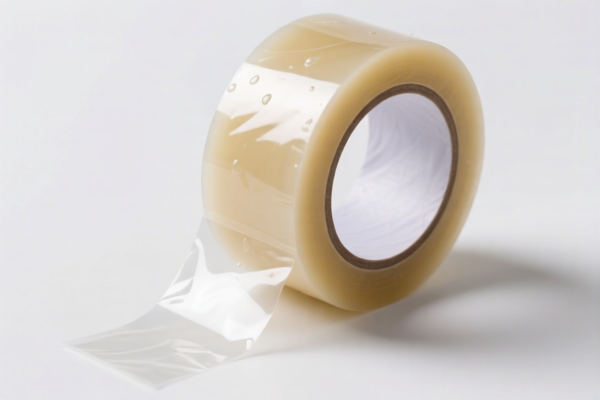


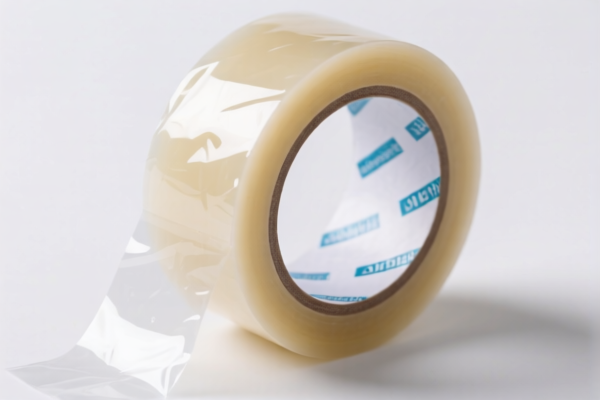
AI分析
🩹 Insulation Tape Waterproof
🌐 HS Code Reference & Customs Clearance Guide | 2026 Latest Tariff Analysis | Professional-Level Clearance Strategy
📌 I. Product Definition & Classification: Do You Really Understand “Waterproof Insulation Tape”?
Waterproof Insulation Tape is a specialized material used primarily for electrical insulation and waterproof sealing in harsh environments. It typically consists of an adhesive layer combined with a textile base or a polymer/film substrate. In international trade, its classification hinges on whether it is primarily viewed as a rubberized/coated textile or a plastic sheeting/tape.
Key Distinction:
- If the tape has a textile base (fabric, mesh) coated or impregnated with rubber/plastic to provide waterproofing and insulation → It falls under Chapter 59 (Rubberized Textiles).
- If the tape is a flexible plastic film (PVC, PE, synthetic resin) with adhesive, without a textile base → It falls under Chapter 39 (Plastics) or Chapter 56 (Impregnated Textiles if minor textile reinforcement exists, but usually Plastic if dominant).
⚠️ Critical Classification Point:
- If the textile substrate is the essential character (even if coated heavily with rubber) → 5906.xxxx or 5604.xxxx.
- If it is a plastic sheet with adhesive, not reinforced by textile → 3919.xxxx.
- Misclassification here leads to massive tariff differences (e.g., 37.7% vs. 43.8% or 40.8%).
📦 II. HS Code Classification Details (Based on Provided Data)
Below are the 5 possible HS Codes from the reference data, with detailed explanations for why each applies and the corresponding tax implications.
| HS Code | Product Description | Applicable Scenario | Reason for Classification | Total Tax Rate* |
|---|---|---|---|---|
5906.91.10.00 |
Rubberized Textiles, Not Otherwise Specified | Waterproof tape with textile/fabric base coated with rubber | The summary states it matches the attribute of “rubberized/coated textiles.” The waterproof feature aligns with “rubberized” properties. | 37.7% |
5604.90.90.00 |
Yarn, Stripe and the Like, Impregnated, Coated, Covered or Sheathed with Rubber or Plastic | Tape where rubber/plastic coating is the dominant feature on a textile support | The summary highlights “impregnated/coated with rubber or plastic.” This fits if the tape is essentially a textile strip treated with waterproofing agents. | 40.0% |
5906.10.00.00 |
Rubberized Textile Fabrics, of a Width Exceeding 30 cm (Note: Check Width!) | Wide rubberized textile fabrics/tapes | The summary notes “waterproof” aligns with “rubberized” material attributes and “tape” form. Note: Verify width; if ≤30cm, this code may not apply, but it is in the dataset. | 37.9% |
3919.90.50.30 |
Self-Adhesive Plates, Sheets, Film, Foil, Tape, Strip and Other Flat Shapes, of Plastics | Plastic-based waterproof tape (e.g., PVC, PE) without significant textile reinforcement | The summary infers “plastic or synthetic resin base” due to flat band shape. This is the correct code if the tape is purely plastic with adhesive. | 40.8% |
5604.90.20.00 |
Other Yarn, etc., Coated with Plastic (excluding Rubber) | Tape coated primarily with plastic (not rubber) | The summary mentions “impregnated or coated with polymer (plastic/rubber).” If the coating is plastic-heavy and distinct from rubber, this code applies. | 43.8% |
🔍 Key Insight:
- Textile-Based Tapes (Fabric-backed electrical tape, duct tape variants): Use5906or5604codes.
- Plastic-Based Tapes (PVC electrical tape, plumbing wrap): Use3919.
- The Total Tax Rate varies from 37.7% to 43.8%, driven by different base tariffs (2.7%–8.8%) plus the 25% Section 301 tariff and 10% 122 Clause tariff.
💰 III. 2026 Latest Tariff Rate Breakdown (Including Surtaxes & Policy Add-ons)
✅ Applicable Country: United States (US)
✅ Origin: China (CN)
✅ Effective Time: Ongoing (2025–2026)
All HS Codes listed above share the same additional tariff structure, but differ in Base Tariff. Here is the detailed breakdown:
🎯 Tariff Structure for All 5 HS Codes
| Item | Content |
|---|---|
| Base Tariff | Varies by HS Code (See below) |
| Section 301 Surtax (USITC) | +25% (Applied to all Chinese-origin goods in these categories) |
| 122 Clause Tariff (IEEPA) | +10% (Specific additional duty for certain Chinese goods under 122) |
| Total Tax Rate | Base + 25% + 10% |
| Calculation Basis | CIF Value (Cost, Insurance, Freight) |
| De Minimis Exemption | ❌ Not Eligible (Deny de minimis for goods under 301/122) |
| Legal Authority | 19 U.S.C. § 1677j (301), 50 U.S.C. § 1702 (122) |
📊 Base Tariff Breakdown by HS Code
| HS Code | Base Tariff | Additional Taxes (25% + 10%) | Total Effective Rate |
|---|---|---|---|
5906.91.10.00 |
2.7% | 35.0% | 37.7% |
5906.10.00.00 |
2.9% | 35.0% | 37.9% |
5604.90.90.00 |
5.0% | 35.0% | 40.0% |
3919.90.50.30 |
5.8% | 35.0% | 40.8% |
5604.90.20.00 |
8.8% | 35.0% | 43.8% |
📌 Explanation:
- The 25% is the standard Section 301 tariff on Chinese goods.
- The 10% is the additional 122 Clause tariff, which applies to specific industrial inputs.
- Total Cost Impact: For a $10,000 shipment, expect $3,770 to $4,380 in duties alone.
- No Free Trade Agreement (FTA) benefits apply for China-origin goods in this context.
🛠️ IV. Customs Clearance Practical Advice (Battle-Tested Pitfall Guide)
✅ 1. Required Documentation Checklist (Non-Negotiable)
| Document | Required | Purpose |
|---|---|---|
| ✅ Product Specification Sheet | ✔️ | Must detail: Base material (Textile vs. Plastic), Coating type (Rubber vs. Plastic), Width, Length, Adhesive type. |
| ✅ Material Composition Report | ✔️ | Critical: Proof of % composition. Is it >50% textile? Then Chapter 59/56. Is it >50% plastic? Then Chapter 39. |
| ✅ High-Resolution Photos | ✔️ | Show cross-section to identify base layer (fabric weave vs. smooth plastic). |
| ✅ Commercial Invoice | ✔️ | Clearly state: “Waterproof Insulation Tape, [Material], Self-Adhesive.” Avoid vague terms like “Tape.” |
| ✅ Certificate of Origin (CO) | ✔️ | Must indicate China origin to confirm applicability of 301/122 tariffs. |
| ✅ HS Code Pre-Ruling (Optional but Recommended) | ✔️ | Obtain a binding ruling from CBP to avoid reclassification disputes. |
✅ 2. Classification Strategy (Key Rules)
🔥 “Know Your Base: Textile = 59/56, Plastic = 39”
| Scenario | Correct HS Code | Risk if Misclassified |
|---|---|---|
| Fabric-backed tape (e.g., cloth electrical tape) with rubber/plastic coating | 5906.91.10.00 or 5906.10.00.00 |
If declared as plastic (3919), CBP may assess higher base duty (5.8%) + penalties. |
| Pure Plastic tape (e.g., PVC vinyl tape) | 3919.90.50.30 |
If declared as textile, CBP may reclassify to 5604 or 5906, causing delays. |
| Tape with minimal textile reinforcement (Plastic dominant) | 3919.90.50.30 |
Misclassifying as textile may lead to higher scrutiny on “essential character.” |
| Tape heavily impregnated with plastic (Textile hidden) | 5604.90.20.00 |
Higher duty (43.8%). Only use if plastic coating is the defining feature. |
✅ 3. Special Handling Tips
| Situation | Recommendation |
|---|---|
| Mixed Shipment | Clearly separate “Textile-based” and “Plastic-based” tapes in the invoice. Do not lump them under one HS code. |
| Width > 30 cm | If width exceeds 30 cm, it may fall under “Fabric” (5906.10) rather than “Tape.” Ensure dimensions are accurate. |
| Adhesive Type | Specify if it’s pressure-sensitive. This confirms it’s a “tape” and not a “sheet.” |
| End Use | State “Electrical Insulation” or “Waterproof Sealing.” Avoid “Packaging” if it’s primarily for electrical use, as packaging tapes may have different codes. |
🌍 V. Global Market Clearance Comparison (2026)
| Country/Region | Recommended HS Code | Base Tariff | 301/Extra Tariffs | Total Effective Rate |
|---|---|---|---|---|
| 🇺🇸 USA | 5906.91.10.00 / 3919.90.50.30 |
2.7% – 5.8% | +35% (25% 301 + 10% 122) | 37.7% – 40.8% |
| 🇨🇳 China | 5906.91.10.00 / 3919.90.50.30 |
5% – 10% | None | 5% – 10% |
| 🇪🇺 EU | 3919.90.90 / 5906.99 |
6.5% – 8% | None | 6.5% – 8% |
| 🇬🇧 UK | 3919.90.90 / 5906.99 |
6.5% – 8% | None | 6.5% – 8% |
| 🇦🇺 Australia | 3919.90.90 / 5906.99 |
5% | None | 5% + 10% GST |
📌 Conclusion:
- USA is the most expensive market due to the 35% combined surtax.
- EU/UK/AU have moderate base tariffs but no additional trade war tariffs.
- China has the lowest base tariffs.
- Strategy: If targeting the US, consider duty mitigation by sourcing from non-China origins (e.g., Vietnam, Thailand) if possible, as these may be exempt from Section 301.
📌 VI. Common Errors & Pitfall Guide (Lessons Learned)
❌ Error 1: Declaring “Plastic Tape” when it’s actually Fabric-Backed
👉 Consequence: CBP reclassifies to 5906 or 5604, potentially applying higher base duty (e.g., 5.0% vs. 2.7%) + penalties.
👉 Fix: Provide material composition report showing textile base.
❌ Error 2: Using vague description “Waterproof Tape” on Invoice
👉 Consequence: CBP requests additional info, causing delayed release (2–4 weeks).
👉 Fix: Use precise description: “Self-Adhesive PVC Insulation Tape, 18mm x 10m, Black.”
❌ Error 3: Ignoring the 122 Clause Tariff
👉 Consequence: Underpayment of 10% on top of 301 tariffs. CBP will assess back duties + interest.
👉 Fix: Always include the 10% 122 Clause in cost calculations for China-origin goods.
❌ Error 4: Confusing Rubberized vs. Plastic-Coated
👉 Consequence: Misclassification between 5604.90.90.00 (40.0%) and 5604.90.20.00 (43.8%).
👉 Fix: Identify the coating material. Rubber = 5604.90.90 (usually). Plastic = 5604.90.20 (if coated).
✅ Correct Declaration Example:
“Waterproof Electrical Insulation Tape, 18mm Width, 10m Length, PVC Plastic Base with Pressure-Sensitive Adhesive, HS 3919.90.50.30, Country of Origin: China”
🎯 VII. Conclusion: Professional Declaration Saves Money!
🎯 Key Takeaways:
🔹 “Base Material is King”: Textile = Chapter 59/56; Plastic = Chapter 39.
🔹 “Don’t Ignore the 35% Surtax”: 25% (301) + 10% (122) is mandatory for China-origin goods to the US.
🔹 “Be Specific”: Vague descriptions lead to audits. Use precise material and dimension details.
🔹 “Consider Sourcing Diversification”: For US-bound goods, non-China origins can save 35% in tariffs.
📌 Pro Tip:
If your Insulation Tape is fabric-backed (e.g., cloth electrical tape), it likely falls under 5906.91.10.00 (37.7% total) or 5604.90.90.00 (40.0%).
If it’s PVC/vinyl (plastic), it falls under 3919.90.50.30 (40.8%).
Always verify the base material before shipping!
📣 Immediate Action:
📞 Consult a Customs Broker: Provide your product’s material composition.
📄 Request an HS Code Pre-Ruling: From CBP to lock in the correct classification.
📊 Calculate Landed Cost: Include 35% additional tariffs in your pricing model.
✨ Professional Customs Clearance Starts with Accurate Classification!
💼 Your Bottom Line Depends on the Right HS Code!
用户评价
关于 HS 编码归类
协调制度(HS)是由世界海关组织(WCO)制定的国际贸易商品分类标准。全球 200 多个国家采用 HS 系统作为海关关税、贸易统计和进出口监管的基础。
每个 HS 编码遵循以下层级结构:
- 章(2 位)——商品大类(例如:第 84 章:机器和机械设备)
- 品目(4 位)——章内的更具体分类
- 子目(6 位)——国际通用细分,所有 WCO 成员国统一使用
- 本国细分(8-10 位)——各国自行扩展的细分编码,如美国 HTSUS 10 位编码
正确的 HS 编码归类对于顺利通关、准确缴纳关税和遵守贸易法规至关重要。错误归类可能导致海关延误、多缴关税或罚款。
从CN进口到US时,适用的关税税率可能包括:
- 最惠国(MFN)税率——适用于 WTO 成员国的标准关税税率
- 普通税率——适用于无贸易协定国家
- 贸易救济关税——附加关税,如 301 条款(反倾销)、232 条款(国家安全)或反补贴税
本页内容仅供参考。如需正式归类,请咨询当地海关或持牌报关代理。