Interlock Connector
CN → US| HS编码 | 关税税率 | 原产国 | 目的国 | 文档 |
|---|---|---|---|---|
| 7326190080 | 87.9% | CN | US | 官方文档 |
| 7326908688 | 87.9% | CN | US | 官方文档 |
| 8536698000 | 37.7% | CN | US | 官方文档 |
商品图片



AI分析
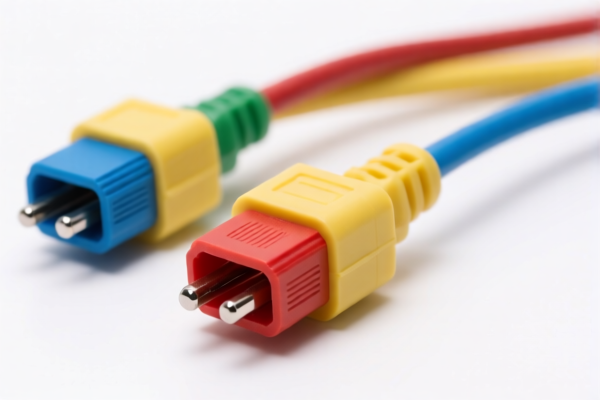
🔌 Interlock Connector (互锁连接器)
🌐 HS Code Reference & Customs Clearance Guide | 2026 Latest Tariff Analysis | Strategic Clearance Strategy
📌 I. Product Definition & Classification: Do You Really Understand "Interlock Connectors"?
Interlock connectors are critical electrical connection components used in industrial, automotive, and consumer electronics. They ensure safety by preventing connection/disconnection under load or ensuring mechanical interlocking with mating plugs/sockets.
In international trade, the classification hinges on material composition and functional intent. The data provides two distinct pathways: 1. Electrical Component Path: Classified as electrical parts (Plugs, Sockets, Connectors). 2. Metal Structure Path: Classified as metal parts/structures (Steel/Aluminum/Copper products).
⚠️ Key Distinction Point:
- If viewed primarily as an electrical interface (matching plugs/sockets) → HS 8536.69.80.00
- If viewed primarily as a metal structural/fastening component (based on industrial inference) → HS 7326.19.00.80 / 7326.90.86.88
📦 II. HS Code Classification Details (2026 Latest Tariff Authority)
| HS Code | Product Description | Applicable Scenario | Material Basis |
|---|---|---|---|
8536.69.80.00 |
Interlock connectors as electrical connection parts, matching plugs & sockets, under "other" sub-items. | Electrical assemblies, industrial control panels, appliance wiring. | Insulated metal/plastic mix, focus on electrical function. |
7326.19.00.80 |
Interlock connectors judged as structural parts made of metal or metal composites, fitting "other steel products" fallback. | Heavy industrial equipment, structural metal frames. | Steel/Metal Composite, focus on structural integrity. |
7326.90.86.88 |
Interlock connectors belonging to "other articles of iron or steel," parts/spare parts inferred from industrial fastening/structural components. | General industrial hardware, fastening systems. | Iron/Steel, focus on mechanical fastening. |
🔍 Important Reminder:
- The classification directly impacts the tariff rate (37.7% vs. 87.9%). - Misclassification from 8536 (Electrical) to 7326 (Metal) can lead to significant overpayment if not justified by material analysis. - Conversely, classifying a complex electrical unit as simple metal hardware may raise red flags for customs inspection regarding "functional misdeclaration."
💰 III. 2026 Latest Tariff Rate Breakdown (Including Surcharges & Policy Add-ons)
✅ Applicable Country: United States (US)
✅ Origin: China (CN)
✅ Effective Date: Current Trade Policy (Section 301 & 122)
🎯 1. 8536.69.80.00 —— Interlock Connectors (Electrical Parts)
| Item | Content |
|---|---|
| Base Tariff | 2.7% (Ad Valorem) |
| Section 301 Surcharge | +25.0% |
| Section 122 Tariff | +10.0% |
| Total Effective Tax Rate | 37.7% |
| Tax Calculation | CIF Value × 37.7% |
| De Minimis Exemption? | ❌ No (High tariff items usually excluded or scrutinized) |
| Legal Basis Path | HTSUS 8536.69.80.00 → Section 301 List 3 → Section 122 Statute |
📌 Explanation:
- "Base Tariff 2.7%": Standard Most Favored Nation (MFN) rate for electrical connectors. - "Section 301 Surcharge 25%": Added tariffs on Chinese goods under the Trade Promotion Authority Act. - "Section 122 Tariff 10%": Temporary surcharge under Section 122 of the Trade Act of 1974 (often applied to specific imports or broader national security contexts depending on current admin orders). - Total 37.7%: This is the lower tariff bracket. It is crucial to prove the product's primary function is electrical connection, not just metal fabrication.
🎯 2. 7326.19.00.80 / 7326.90.86.88 —— Interlock Connectors (Metal Structures)
| Item | Content |
|---|---|
| Base Tariff | 2.9% (Ad Valorem) |
| Section 301 Surcharge | +25.0% |
| Section 122 Tariff | +10.0% |
| Section 122 Steel/Al/Cu Surcharge | +50.0% |
| Total Effective Tax Rate | 87.9% |
| Tax Calculation | CIF Value × 87.9% |
| De Minimis Exemption? | ❌ No |
| Legal Basis Path | HTSUS 7326.19.00.80 / 7326.90.86.88 → Steel/Al/Cu Specific Rules → Section 301 → Section 122 |
📌 Explanation:
- "Steel, Aluminum, Copper Products Surcharge 50%": This is the critical differentiator. If the connector is deemed a "steel/aluminum/copper product" under specific provisions (often linked to recent steel/aluminum tariffs or specific 122 applications), an additional 50% is added. - "Total 87.9%": This is an extremely high tax rate. It reflects the penalty for classifying electrical components as basic metal commodities subject to heavy industrial tariffs. - Risk: Classifying here may be seen as "dumping" electrical goods into metal categories to avoid specific electrical safeguards, or it may be the only way if the product is purely a metal clamp without electrical certification.
🛠️ IV. Customs Clearance Practical Advice (Battle-Tested Pitfall Avoidance)
✅ 1. Documentation Checklist (Mandatory)
| Document | Must Provide | Purpose |
|---|---|---|
| ✅ Product Specifications | ✔️ | Detail electrical ratings (Voltage, Current), material composition (Metal vs. Plastic), and function. |
| ✅ Technical Diagrams | ✔️ | Show electrical contacts, insulation, and mechanical interlock mechanism. Prove it's an electrical component. |
| ✅ Material Composition Report | ✔️ | Specify % of steel, aluminum, plastic, copper. If <50% metal, avoid HS 7326. |
| ✅ Commercial Invoice | ✔️ | Clear description: "Electrical Interlock Connector, Model XYZ, Voltage: 120V." Avoid vague terms like "Metal Part." |
| ✅ Certifications | ✔️ | UL, CE, RoHS certificates. These prove electrical functionality, supporting HS 8536. |
| ✅ Packing List | ✔️ | Separate electrical components from pure hardware if shipped together. |
✅ 2. Declaration Strategy (Key Mantras)
🔥 “Electrical Function First, Metal Second, Avoid 87.9%!”
| Scenario | Correct Declaration | Wrong Practice |
|---|---|---|
| Standard Interlock Connector | HS 8536.69.80.00 (37.7%) | Declaring as "Metal Bracket" → 87.9% |
| Pure Metal Clamping Piece (No Electricity) | HS 7326.90.86.88 (87.9%) | Declaring as "Connector" → Risk of penalty |
| Mixed Kit (Connector + Mounting Bracket) | Split Declaration | Bundling → All taxed at highest rate |
| "Other Steel Products" with Electrical Features | ❌ Avoid HS 7326 | Use HS 8536 unless material is >50% steel AND function is structural |
✅ 3. Special Cases Handling
| Situation | Handling Advice |
|---|---|
| High Metal Content (>50%) | If the connector is heavily steel-based and primarily for structural holding, consider HS 7326. But prepare for 87.9%. Try to argue for HS 8536 if electrical function is primary. |
| Plastic Housing + Metal Contacts | Strong case for HS 8536.69.80.00. Emphasize the plastic insulation and electrical contact. |
| Industrial Automation Components | Provide automation system manuals showing the connector's role in circuit safety. |
| Customs Audit Risk | If audited, show UL/CSA listings. These agencies certify electrical safety, not just metal strength. |
🌍 V. Global Market Clearance Comparison (2026 Latest)
| Country/Region | Recommended HS Code | Tariff (China Origin) | Certification | Note |
|---|---|---|---|---|
| 🇺🇸 USA | 8536.69.80.00 |
37.7% | UL, FCC | Avoid 7326 (87.9%) unless purely structural. |
| 🇨🇳 China | 8536.69.80.00 |
~5-7% | CCC | Lower base rate, no Section 301. |
| 🇪🇺 EU | 8536.69.80.00 |
0-4% | CE, RoHS | No additional surcharges. |
| 🇯🇵 Japan | 8536.69.80.00 |
0-3% | PSE | Favorable for electrical parts. |
📌 Conclusion:
- USA is the most challenging market due to Section 301 and 122 tariffs. - Electrical Classification (8536) saves 50.2% in tax compared to Metal Classification (7326). - Strategy: Always prioritize electrical function and certifications to justify HS 8536.
📌 VI. Common Errors & Pitfall Guide (Blood Lessons)
❌ Error 1: Describing the product simply as "Connector" without specifying "Electrical."
👉 Consequence: Customs may default to metal hardware → 87.9% Tax.
❌ Error 2: Focusing only on the metal shell, ignoring the electrical contacts.
👉 Consequence: Misclassification → Audit → Back Taxes + Penalties.
❌ Error 3: Claiming "Plastic" to avoid metal tariffs, but the product is >50% Steel.
👉 Consequence: Fraud suspicion → Seizure of goods.
❌ Error 4: Ignoring Section 122 implications.
👉 Consequence: Underestimating total cost. 37.7% vs 87.9% is a massive profit margin difference.
✅ Correct Approach:
"Electrical Interlock Connector, Model ABC, Plastic Housing, Metal Contacts, UL Listed, for Industrial Panel Use."
🎯 VII. Conclusion: Precise Classification Saves Profits!
🎯 Remember the Mantra:
🔹 "Electrical Function = 37.7% | Metal Structure = 87.9%"
🔹 "Prove the Circuit, Not Just the Case!"
🔹 "One HS Code Mistake = 50% Profit Loss!"
📌 Pro Tip:
- If your product has UL/CSA/CE Certification, it is strong evidence for HS 8536.
- Consider Advance Ruling from US Customs (CBP) if the product is novel or high-value.
- For shipments to the US, ensure all documentation explicitly states "Electrical Component" and includes voltage/current ratings.
📣 Immediate Action:
📞 Consult a customs broker with electrical engineering expertise.
📄 Prepare Material Safety Data Sheets (MSDS) and Circuit Diagrams.
🚀 Optimize your HS Code to 8536.69.80.00 and save over 50% in tariffs!
✨ Professional Clearance Starts with Accurate Classification!
💼 Every Percent of Tariff Matters!
用户评价
关于 HS 编码归类
协调制度(HS)是由世界海关组织(WCO)制定的国际贸易商品分类标准。全球 200 多个国家采用 HS 系统作为海关关税、贸易统计和进出口监管的基础。
每个 HS 编码遵循以下层级结构:
- 章(2 位)——商品大类(例如:第 84 章:机器和机械设备)
- 品目(4 位)——章内的更具体分类
- 子目(6 位)——国际通用细分,所有 WCO 成员国统一使用
- 本国细分(8-10 位)——各国自行扩展的细分编码,如美国 HTSUS 10 位编码
正确的 HS 编码归类对于顺利通关、准确缴纳关税和遵守贸易法规至关重要。错误归类可能导致海关延误、多缴关税或罚款。
从CN进口到US时,适用的关税税率可能包括:
- 最惠国(MFN)税率——适用于 WTO 成员国的标准关税税率
- 普通税率——适用于无贸易协定国家
- 贸易救济关税——附加关税,如 301 条款(反倾销)、232 条款(国家安全)或反补贴税
本页内容仅供参考。如需正式归类,请咨询当地海关或持牌报关代理。