Interlock Connector
CN → US| HS Code | Tariff Rate | Origin | Destination | Doc |
|---|---|---|---|---|
| 7326190080 | 87.9% | CN | US | Official Doc |
| 7326908688 | 87.9% | CN | US | Official Doc |
| 8536698000 | 37.7% | CN | US | Official Doc |
Product Images


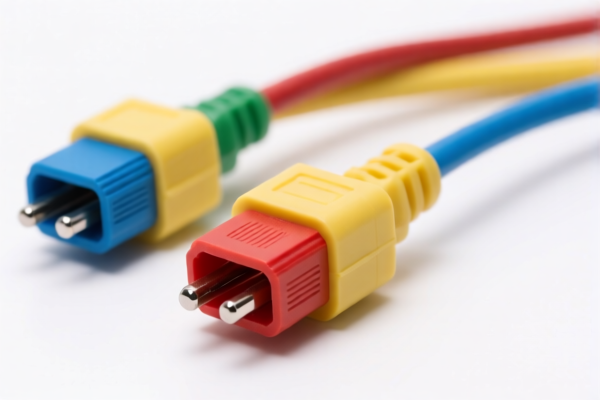

AI Analysis
🔌 Interlock Connector (互锁连接器)
🌐 HS Code Reference & Customs Clearance Guide | 2026 Latest Tariff Analysis | Strategic Clearance Strategy
📌 I. Product Definition & Classification: Do You Really Understand "Interlock Connectors"?
Interlock connectors are critical electrical connection components used in industrial, automotive, and consumer electronics. They ensure safety by preventing connection/disconnection under load or ensuring mechanical interlocking with mating plugs/sockets.
In international trade, the classification hinges on material composition and functional intent. The data provides two distinct pathways: 1. Electrical Component Path: Classified as electrical parts (Plugs, Sockets, Connectors). 2. Metal Structure Path: Classified as metal parts/structures (Steel/Aluminum/Copper products).
⚠️ Key Distinction Point:
- If viewed primarily as an electrical interface (matching plugs/sockets) → HS 8536.69.80.00
- If viewed primarily as a metal structural/fastening component (based on industrial inference) → HS 7326.19.00.80 / 7326.90.86.88
📦 II. HS Code Classification Details (2026 Latest Tariff Authority)
| HS Code | Product Description | Applicable Scenario | Material Basis |
|---|---|---|---|
8536.69.80.00 |
Interlock connectors as electrical connection parts, matching plugs & sockets, under "other" sub-items. | Electrical assemblies, industrial control panels, appliance wiring. | Insulated metal/plastic mix, focus on electrical function. |
7326.19.00.80 |
Interlock connectors judged as structural parts made of metal or metal composites, fitting "other steel products" fallback. | Heavy industrial equipment, structural metal frames. | Steel/Metal Composite, focus on structural integrity. |
7326.90.86.88 |
Interlock connectors belonging to "other articles of iron or steel," parts/spare parts inferred from industrial fastening/structural components. | General industrial hardware, fastening systems. | Iron/Steel, focus on mechanical fastening. |
🔍 Important Reminder:
- The classification directly impacts the tariff rate (37.7% vs. 87.9%). - Misclassification from 8536 (Electrical) to 7326 (Metal) can lead to significant overpayment if not justified by material analysis. - Conversely, classifying a complex electrical unit as simple metal hardware may raise red flags for customs inspection regarding "functional misdeclaration."
💰 III. 2026 Latest Tariff Rate Breakdown (Including Surcharges & Policy Add-ons)
✅ Applicable Country: United States (US)
✅ Origin: China (CN)
✅ Effective Date: Current Trade Policy (Section 301 & 122)
🎯 1. 8536.69.80.00 —— Interlock Connectors (Electrical Parts)
| Item | Content |
|---|---|
| Base Tariff | 2.7% (Ad Valorem) |
| Section 301 Surcharge | +25.0% |
| Section 122 Tariff | +10.0% |
| Total Effective Tax Rate | 37.7% |
| Tax Calculation | CIF Value × 37.7% |
| De Minimis Exemption? | ❌ No (High tariff items usually excluded or scrutinized) |
| Legal Basis Path | HTSUS 8536.69.80.00 → Section 301 List 3 → Section 122 Statute |
📌 Explanation:
- "Base Tariff 2.7%": Standard Most Favored Nation (MFN) rate for electrical connectors. - "Section 301 Surcharge 25%": Added tariffs on Chinese goods under the Trade Promotion Authority Act. - "Section 122 Tariff 10%": Temporary surcharge under Section 122 of the Trade Act of 1974 (often applied to specific imports or broader national security contexts depending on current admin orders). - Total 37.7%: This is the lower tariff bracket. It is crucial to prove the product's primary function is electrical connection, not just metal fabrication.
🎯 2. 7326.19.00.80 / 7326.90.86.88 —— Interlock Connectors (Metal Structures)
| Item | Content |
|---|---|
| Base Tariff | 2.9% (Ad Valorem) |
| Section 301 Surcharge | +25.0% |
| Section 122 Tariff | +10.0% |
| Section 122 Steel/Al/Cu Surcharge | +50.0% |
| Total Effective Tax Rate | 87.9% |
| Tax Calculation | CIF Value × 87.9% |
| De Minimis Exemption? | ❌ No |
| Legal Basis Path | HTSUS 7326.19.00.80 / 7326.90.86.88 → Steel/Al/Cu Specific Rules → Section 301 → Section 122 |
📌 Explanation:
- "Steel, Aluminum, Copper Products Surcharge 50%": This is the critical differentiator. If the connector is deemed a "steel/aluminum/copper product" under specific provisions (often linked to recent steel/aluminum tariffs or specific 122 applications), an additional 50% is added. - "Total 87.9%": This is an extremely high tax rate. It reflects the penalty for classifying electrical components as basic metal commodities subject to heavy industrial tariffs. - Risk: Classifying here may be seen as "dumping" electrical goods into metal categories to avoid specific electrical safeguards, or it may be the only way if the product is purely a metal clamp without electrical certification.
🛠️ IV. Customs Clearance Practical Advice (Battle-Tested Pitfall Avoidance)
✅ 1. Documentation Checklist (Mandatory)
| Document | Must Provide | Purpose |
|---|---|---|
| ✅ Product Specifications | ✔️ | Detail electrical ratings (Voltage, Current), material composition (Metal vs. Plastic), and function. |
| ✅ Technical Diagrams | ✔️ | Show electrical contacts, insulation, and mechanical interlock mechanism. Prove it's an electrical component. |
| ✅ Material Composition Report | ✔️ | Specify % of steel, aluminum, plastic, copper. If <50% metal, avoid HS 7326. |
| ✅ Commercial Invoice | ✔️ | Clear description: "Electrical Interlock Connector, Model XYZ, Voltage: 120V." Avoid vague terms like "Metal Part." |
| ✅ Certifications | ✔️ | UL, CE, RoHS certificates. These prove electrical functionality, supporting HS 8536. |
| ✅ Packing List | ✔️ | Separate electrical components from pure hardware if shipped together. |
✅ 2. Declaration Strategy (Key Mantras)
🔥 “Electrical Function First, Metal Second, Avoid 87.9%!”
| Scenario | Correct Declaration | Wrong Practice |
|---|---|---|
| Standard Interlock Connector | HS 8536.69.80.00 (37.7%) | Declaring as "Metal Bracket" → 87.9% |
| Pure Metal Clamping Piece (No Electricity) | HS 7326.90.86.88 (87.9%) | Declaring as "Connector" → Risk of penalty |
| Mixed Kit (Connector + Mounting Bracket) | Split Declaration | Bundling → All taxed at highest rate |
| "Other Steel Products" with Electrical Features | ❌ Avoid HS 7326 | Use HS 8536 unless material is >50% steel AND function is structural |
✅ 3. Special Cases Handling
| Situation | Handling Advice |
|---|---|
| High Metal Content (>50%) | If the connector is heavily steel-based and primarily for structural holding, consider HS 7326. But prepare for 87.9%. Try to argue for HS 8536 if electrical function is primary. |
| Plastic Housing + Metal Contacts | Strong case for HS 8536.69.80.00. Emphasize the plastic insulation and electrical contact. |
| Industrial Automation Components | Provide automation system manuals showing the connector's role in circuit safety. |
| Customs Audit Risk | If audited, show UL/CSA listings. These agencies certify electrical safety, not just metal strength. |
🌍 V. Global Market Clearance Comparison (2026 Latest)
| Country/Region | Recommended HS Code | Tariff (China Origin) | Certification | Note |
|---|---|---|---|---|
| 🇺🇸 USA | 8536.69.80.00 |
37.7% | UL, FCC | Avoid 7326 (87.9%) unless purely structural. |
| 🇨🇳 China | 8536.69.80.00 |
~5-7% | CCC | Lower base rate, no Section 301. |
| 🇪🇺 EU | 8536.69.80.00 |
0-4% | CE, RoHS | No additional surcharges. |
| 🇯🇵 Japan | 8536.69.80.00 |
0-3% | PSE | Favorable for electrical parts. |
📌 Conclusion:
- USA is the most challenging market due to Section 301 and 122 tariffs. - Electrical Classification (8536) saves 50.2% in tax compared to Metal Classification (7326). - Strategy: Always prioritize electrical function and certifications to justify HS 8536.
📌 VI. Common Errors & Pitfall Guide (Blood Lessons)
❌ Error 1: Describing the product simply as "Connector" without specifying "Electrical."
👉 Consequence: Customs may default to metal hardware → 87.9% Tax.
❌ Error 2: Focusing only on the metal shell, ignoring the electrical contacts.
👉 Consequence: Misclassification → Audit → Back Taxes + Penalties.
❌ Error 3: Claiming "Plastic" to avoid metal tariffs, but the product is >50% Steel.
👉 Consequence: Fraud suspicion → Seizure of goods.
❌ Error 4: Ignoring Section 122 implications.
👉 Consequence: Underestimating total cost. 37.7% vs 87.9% is a massive profit margin difference.
✅ Correct Approach:
"Electrical Interlock Connector, Model ABC, Plastic Housing, Metal Contacts, UL Listed, for Industrial Panel Use."
🎯 VII. Conclusion: Precise Classification Saves Profits!
🎯 Remember the Mantra:
🔹 "Electrical Function = 37.7% | Metal Structure = 87.9%"
🔹 "Prove the Circuit, Not Just the Case!"
🔹 "One HS Code Mistake = 50% Profit Loss!"
📌 Pro Tip:
- If your product has UL/CSA/CE Certification, it is strong evidence for HS 8536.
- Consider Advance Ruling from US Customs (CBP) if the product is novel or high-value.
- For shipments to the US, ensure all documentation explicitly states "Electrical Component" and includes voltage/current ratings.
📣 Immediate Action:
📞 Consult a customs broker with electrical engineering expertise.
📄 Prepare Material Safety Data Sheets (MSDS) and Circuit Diagrams.
🚀 Optimize your HS Code to 8536.69.80.00 and save over 50% in tariffs!
✨ Professional Clearance Starts with Accurate Classification!
💼 Every Percent of Tariff Matters!
Customer Reviews
About HS Code Classification
The Harmonized System (HS) is an internationally standardized nomenclature developed by the World Customs Organization (WCO) to classify traded products. Over 200 countries use the HS system as the basis for customs tariffs, trade statistics, and import/export regulations.
Each HS code follows a hierarchical structure:
- Chapter (2 digits) — Broad category of goods (e.g., Chapter 84: Machinery and Mechanical Appliances)
- Heading (4 digits) — More specific grouping within the chapter
- Subheading (6 digits) — Internationally standardized breakdown, used by all WCO member countries
- National subdivisions (8-10 digits) — Country-specific extensions for further classification, such as US HTSUS 10-digit codes
Correct HS code classification is essential for smooth customs clearance, accurate duty payment, and compliance with trade regulations. Misclassification can lead to customs delays, overpayment of duties, or penalties.
When importing from CN to US, the applicable tariff rates may include:
- Most-Favored-Nation (MFN) rate — The standard duty rate applied to WTO members
- General rate — Applied to countries without trade agreements
- Trade remedy duties — Additional tariffs such as Section 301 (anti-dumping), Section 232 (national security), or countervailing duties
The information provided on this page is for reference purposes only. For official classification, please consult with your local customs authority or a licensed customs broker.