Isobutene Isoprene (Butyl) Rubber Sheets
CN → US| HS编码 | 关税税率 | 原产国 | 目的国 | 文档 |
|---|---|---|---|---|
| 4002390000 | 35.0% | CN | US | 官方文档 |
| 4002310000 | 35.0% | CN | US | 官方文档 |
| 4008210000 | 35.0% | CN | US | 官方文档 |
| 4008292000 | 37.9% | CN | US | 官方文档 |
| 4005990000 | 35.0% | CN | US | 官方文档 |
商品图片
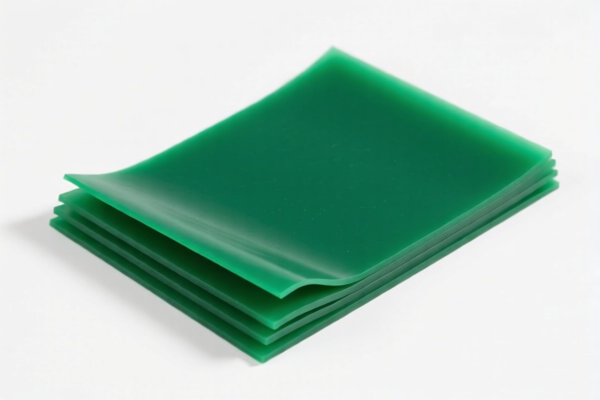
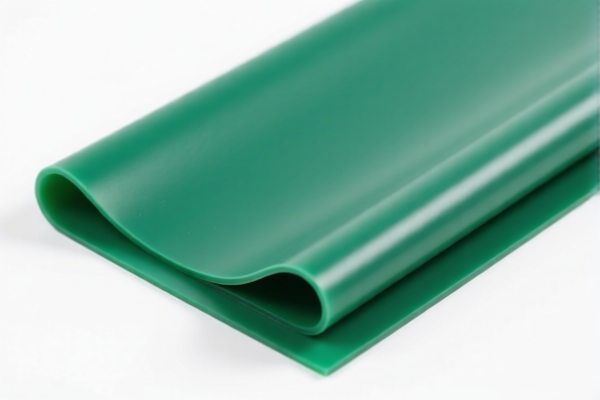
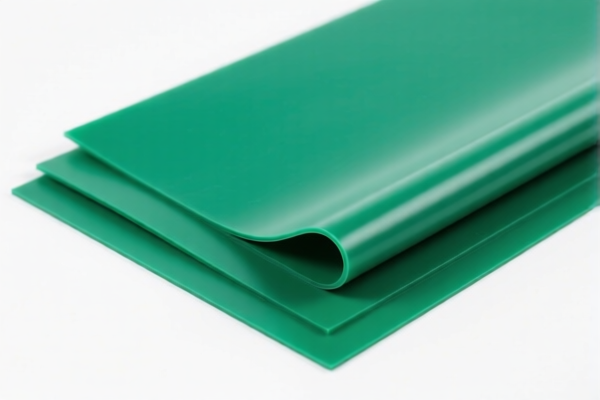
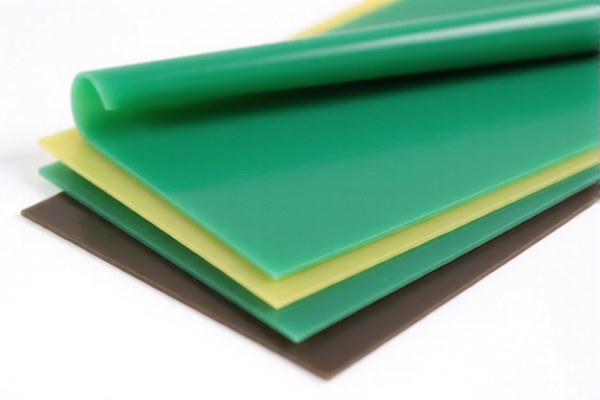
AI分析
🧪 Isobutene-Isoprene (Butyl) Rubber Sheets
🌐 HS Code Reference & Customs Clearance Guide | 2026 Latest Tariff Analysis | Professional-Level Entry Strategy
📌 Part 1: Product Definition & Classification: Do You Really Understand "Butyl Rubber Sheets"?
Isobutene-Isoprene rubber, commonly known as Butyl Rubber (IIR), is a synthetic rubber with exceptional gas permeability resistance, heat resistance, and chemical stability. In international trade, its classification depends heavily on its state (unvulcanized vs. vulcanized), form (sheets/planks), and processing status (compounded/milled).
Key Classification Scenarios: 1. Unvulcanized, Compound State (Milled/Sheet): Raw rubber mixed with additives, processed into sheets but not yet hardened by heat/pressure. 2. Vulcanized, Non-Foam Sheet/Plate: The final hardened product, used for sealing, roofing, or industrial linings. 3. Primary Form (Blocks/Slabs): Raw rubber in basic shapes, not yet cut into thin sheets or plates for direct use.
⚠️ Key Distinction Point:
- If the rubber is unvulcanized and in a mixed compound state (soft, pliable) → Classify under 4005 or 4002.
- If the rubber is vulcanized (hardened, elastic, non-foam) → Classify under 4008.
- If it is raw polymer in basic slab/block form → Classify under 4002.
📦 Part 2: HS Code Classification Details (2026 Latest Tariff Authority Comparison)
| HS Code | Product Description | Applicable Scenario | State |
|---|---|---|---|
4002.39.00.00 |
Isobutene-isoprene (butyl) rubber sheets, material and form match | Raw butyl rubber in sheet/plank primary form | ✅ Unvulcanized / Primary Form |
4002.31.00.00 |
Isobutene-isoprene rubber sheets, material matches sheet-like primary form | Basic raw rubber slabs/blocks before processing | ✅ Unvulcanized / Primary Form |
4008.21.00.00 |
Isobutene-isoprene vulcanized rubber sheets, fits definition of non-foam rubber plates/strips | Hardened, finished industrial rubber sheets | ✅ Vulcanized / Non-Foam |
4008.29.20.00 |
Isobutene-isoprene copolymer vulcanized rubber sheets, fits non-foam vulcanized sheet description | Specific vulcanized grades, possibly with specific additives | ✅ Vulcanized / Non-Foam |
4005.99.00.00 |
Isobutene-isoprene compounded rubber sheets, fits "other compounded unvulcanized rubber" features | Soft, mixed rubber sheets (compounded) ready for further processing | ✅ Unvulcanized / Compounded |
🔍 Key Reminder:
- Vulcanized (Hardened) products go to Chapter 40, Heading 4008.
- Unvulcanized (Soft/Raw) products go to Heading 4002 (raw polymer) or 4005 (compounded).
- "Sheet" vs. "Primary Form": If it's a basic slab ready for further manufacturing, it may be4002. If it's a finished sheet for sealing/lining, it is4008(if vulcanized) or4005(if compounded).
💰 Part 3: 2026 Latest Tariff Rate Details (Including Surtaxes, Policy Add-ons)
✅ Applicable Country: United States (US)
✅ Country of Origin: China (CN)
✅ Effective Date: Ongoing (Subject to Section 301 and IEEPA regulations)
🎯 1. 4002.39.00.00 & 4002.31.00.00 —— Unvulcanized Butyl Rubber (Primary Form)
| Item | Content |
|---|---|
| Base Duty Rate | 0% (ad valorem) |
| USITC Additional Duty | +25% (Under Section 301 Tariff List 3/4) |
| IEEPA Additional Duty | +10% (Under International Emergency Economic Powers Act, targeting China/HK products) |
| Total Effective Rate | 35.0% |
| Tax Calculation | CIF Value × 35% |
| De Minimis Exemption | ❌ Not Eligible (deny_de_minimis) |
| Legal Basis Path | IEEPA:9903.01.25 → Section 301:4002 → FOOTNOTE:9903.88.01 |
📌 Explanation:
- These codes cover raw or semi-processed butyl rubber.
- The 25% Section 301 tariff applies to most chemical/rubber products from China.
- The 10% IEEPA tariff is an additional layer on top, bringing the total to 35%.
🎯 2. 4005.99.00.00 —— Compounded Unvulcanized Rubber Sheets
| Item | Content |
|---|---|
| Base Duty Rate | 0% (ad valorem) |
| USITC Additional Duty | +25% |
| IEEPA Additional Duty | +10% |
| Total Effective Rate | 35.0% |
| Tax Calculation | CIF Value × 35% |
| De Minimis Exemption | ❌ Not Eligible |
| Legal Basis Path | IEEPA:9903.01.25 → Section 301:4005 → FOOTNOTE:9903.88.01 |
📌 Note:
- Even though this is "compounded" rubber, it is still subject to the same high surtaxes as raw rubber.
- Do not assume "processed" means "lower tax." Unvulcanized rubber remains heavily taxed.
🎯 3. 4008.21.00.00 —— Vulcanized Non-Foam Rubber Sheets
| Item | Content |
|---|---|
| Base Duty Rate | 0% (ad valorem) |
| USITC Additional Duty | +25% |
| IEEPA Additional Duty | +10% |
| Total Effective Rate | 35.0% |
| Tax Calculation | CIF Value × 35% |
| De Minimis Exemption | ❌ Not Eligible |
| Legal Basis Path | IEEPA:9903.01.25 → Section 301:4008 → FOOTNOTE:9903.88.01 |
📌 Explanation:
- Finished, hardened rubber sheets.
- The 35% total rate applies uniformly across both raw and finished forms from China.
🎯 4. 4008.29.20.00 —— Other Vulcanized Rubber Sheets (Specific Subheading)
| Item | Content |
|---|---|
| Base Duty Rate | 2.9% (ad valorem) |
| USITC Additional Duty | +25% |
| IEEPA Additional Duty | +10% |
| Total Effective Rate | 37.9% |
| Tax Calculation | CIF Value × 37.9% |
| De Minimis Exemption | ❌ Not Eligible |
| Legal Basis Path | IEEPA:9903.01.25 → Section 301:4008.29 → FOOTNOTE:9903.88.01 |
📌 Critical Warning:
- This code has a higher base rate (2.9%) than others (0%).
- The total rate becomes 37.9%, making it the most expensive option in this dataset.
- Use this code only if the product strictly fits this specific subheading (e.g., specific thickness or additive profiles defined by USITC). Otherwise, prefer4008.21.00.00for a 2.9% savings.
🛠️ Part 4: Customs Clearance Practical Advice (Battle-Tested Pitfall Guide)
✅ 1. Required Documentation Checklist (Non-Negotiable)
| Document | Must Provide | Explanation |
|---|---|---|
| ✅ Technical Data Sheet | ✔️ | Must specify: Vulcanization status, density, additives, thickness |
| ✅ Product Photos | ✔️ | Clear images showing texture, edges, and any labeling |
| ✅ Commercial Invoice | ✔️ | Must clearly state "Isobutene-Isoprene Rubber Sheets" and HS Code |
| ✅ Bill of Lading/Air Waybill | ✔️ | Consistent weight and description with invoice |
| ✅ Origin Certificate (CO) | ✔️ | Proof of Chinese origin (triggers 301/IEEPA taxes) |
| ✅ SDS (Safety Data Sheet) | ✔️ | Required for chemical/rubber imports |
✅ 2. Declaration Tips (Key Mantra)
🔥 "Vulcanized is 4008, Unvulcanized is 4002/4005; Check the Base Rate, Don't Pay Extra!"
| Scenario | Correct HS Code | Wrong Action | Consequence |
|---|---|---|---|
| Hardened, finished rubber sheets | 4008.21.00.00 |
Use 4008.29.20.00 |
Extra 2.9% tax (Total 37.9% vs 35%) |
| Soft, raw rubber sheets | 4002.39.00.00 |
Use 4008 |
Misclassification, potential penalty |
| Compounded rubber (mixed) | 4005.99.00.00 |
Use 4002 |
Possible reclassification, delay |
| Any Butyl Rubber from China | All Codes | Assume De Minimis | Seizure/Detention (35%+ tax applies) |
✅ 3. Special Situation Handling
| Situation | Handling Advice |
|---|---|
| Mixed Shipments | Separate raw and vulcanized rubber in different entries if possible to simplify clearance. |
| Customs Inquiry on "Sheet" Definition | Provide dimensional data. "Sheet" implies flexibility and specific dimensions, not just bulk polymer. |
| Pre-Arbitration (Advance Ruling) | Highly recommended for 4008.29.20.00 to confirm if your specific product truly falls under the higher base rate code. |
| Third-Country Transshipment | If rubber is processed in Vietnam/Malaysia, ensure substantial transformation occurs to avoid "China Origin" marking. |
🌍 Part 5: Global Market Comparison (2026 Update)
| Country/Region | Recommended HS Code | Tariff (CN Origin) | Certification | Notes |
|---|---|---|---|---|
| 🇺🇸 USA | 4008.21.00.00 |
35.0% | No special | High tariffs due to 301 + IEEPA |
| 🇨🇳 China | 4008.21.00.00 |
5-10% (Import) | None | Low domestic consumption tax |
| 🇪🇺 EU | 4008.21.00.00 |
0-6.5% | REACH | No 301 equivalent |
| 🇬🇧 UK | 4008.21.00.00 |
0-6.5% | UKCA | Post-Brexit rules apply |
| 🇦🇺 Australia | 4008.21.00.00 |
5% | ADR | No major surtaxes |
📌 Conclusion:
- USA is the highest-cost market for Butyl Rubber due to political tariffs.
- Base rate variation:4008.29.20.00is significantly more expensive than4008.21.00.00in the US.
- Strategic Advice: If exporting to the US, verify if your product fits4008.21.00.00to save 2.9% on the total CIF value.
📌 Part 6: Common Mistakes & Pitfall Guide (Lessons Learned)
❌ Mistake 1: Assuming all rubber sheets have the same tariff.
👉 Consequence: Using 4008.29.20.00 when 4008.21.00.00 applies → Overpaying 2.9% on every shipment.
❌ Mistake 2: Ignoring the "Vulcanized" status.
👉 Consequence: Declaring vulcanized rubber as unvulcanized → Customs detention, re-inspection, and potential fines.
❌ Mistake 3: Believing "De Minimis" ($800) applies.
👉 Consequence: Shipments under $800 are still subject to 35%+ taxes and must be formally declared for Chinese-origin rubber.
❌ Mistake 4: Vague description "Rubber Sheet."
👉 Consequence: Customs cannot determine HS Code → Delays of 14-30 days.
✅ Correct Practice:
"Isobutene-Isoprene (Butyl) Rubber Sheets, Vulcanized, Non-Foam, 5mm Thickness, Gray Color, HS 4008.21.00.00, Made in China"
🎯 Part 7: Conclusion: Precise Classification Saves Money!
🎯 Remember the Mantra:
🔹 "Vulcanized 4008, Raw 4002, Compounded 4005;
🔹 Check the Base Rate: 2.9% vs 0% makes a difference!
🔹 35% is the floor, 37.9% is the trap.
🔹 No De Minimis for China, declare it right!"
📌 Pro Tip:
If your Butyl Rubber is vulcanized, always try to classify it under 4008.21.00.00 instead of 4008.29.20.00 to avoid the 2.9% base tax difference.
For unvulcanized, 4002 or 4005 are standard, but ensure you don't misclassify finished sheets as raw material.
📣 Immediate Action:
📞 Verify your product's vulcanization status and additive composition.
📄 Apply for Customs Ruling if unsure about4008.29.20.00vs4008.21.00.00.
🚀 Clear customs smoothly, minimize tax burden, and boost your profit margins!
✨ Professional Customs Clearance Starts with Accurate Classification!
💼 Every percent of tax saved is pure profit added!
用户评价
关于 HS 编码归类
协调制度(HS)是由世界海关组织(WCO)制定的国际贸易商品分类标准。全球 200 多个国家采用 HS 系统作为海关关税、贸易统计和进出口监管的基础。
每个 HS 编码遵循以下层级结构:
- 章(2 位)——商品大类(例如:第 84 章:机器和机械设备)
- 品目(4 位)——章内的更具体分类
- 子目(6 位)——国际通用细分,所有 WCO 成员国统一使用
- 本国细分(8-10 位)——各国自行扩展的细分编码,如美国 HTSUS 10 位编码
正确的 HS 编码归类对于顺利通关、准确缴纳关税和遵守贸易法规至关重要。错误归类可能导致海关延误、多缴关税或罚款。
从CN进口到US时,适用的关税税率可能包括:
- 最惠国(MFN)税率——适用于 WTO 成员国的标准关税税率
- 普通税率——适用于无贸易协定国家
- 贸易救济关税——附加关税,如 301 条款(反倾销)、232 条款(国家安全)或反补贴税
本页内容仅供参考。如需正式归类,请咨询当地海关或持牌报关代理。