Isobutene Isoprene (Butyl) Rubber Sheets
CN → US| HS Code | Tariff Rate | Origin | Destination | Doc |
|---|---|---|---|---|
| 4002390000 | 35.0% | CN | US | Official Doc |
| 4002310000 | 35.0% | CN | US | Official Doc |
| 4008210000 | 35.0% | CN | US | Official Doc |
| 4008292000 | 37.9% | CN | US | Official Doc |
| 4005990000 | 35.0% | CN | US | Official Doc |
Product Images
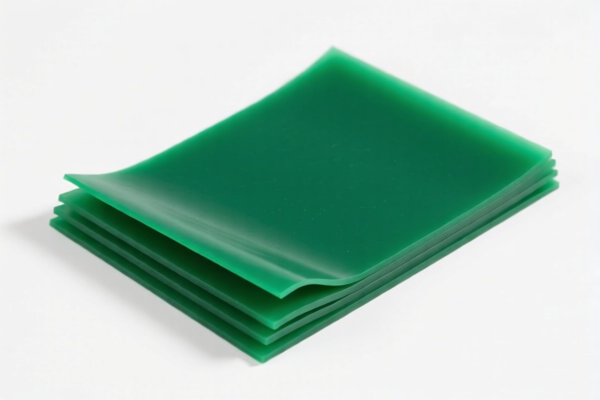
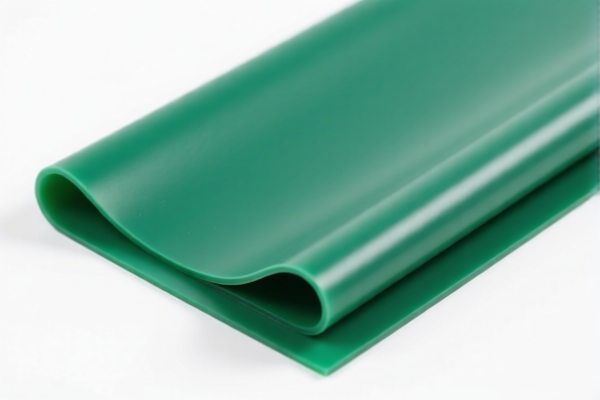
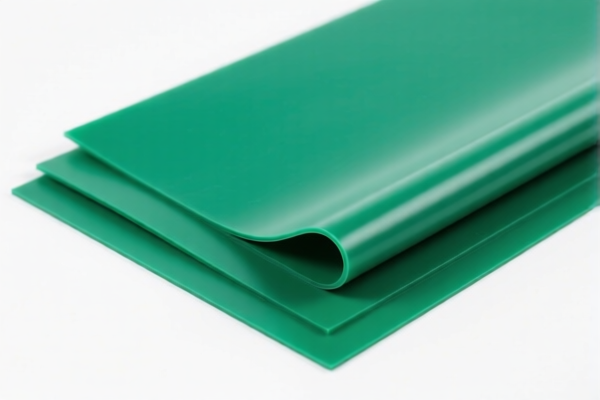
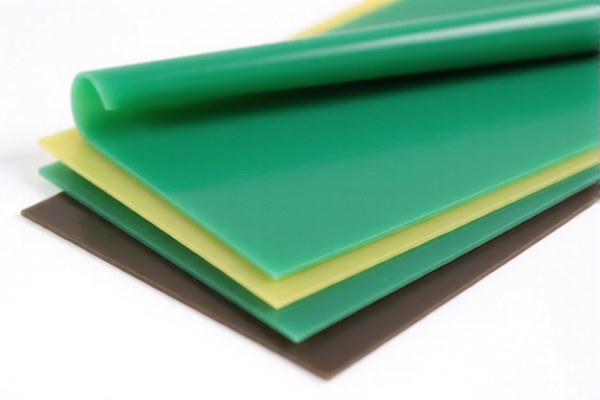
AI Analysis
🧪 Isobutene-Isoprene (Butyl) Rubber Sheets
🌐 HS Code Reference & Customs Clearance Guide | 2026 Latest Tariff Analysis | Professional-Level Entry Strategy
📌 Part 1: Product Definition & Classification: Do You Really Understand "Butyl Rubber Sheets"?
Isobutene-Isoprene rubber, commonly known as Butyl Rubber (IIR), is a synthetic rubber with exceptional gas permeability resistance, heat resistance, and chemical stability. In international trade, its classification depends heavily on its state (unvulcanized vs. vulcanized), form (sheets/planks), and processing status (compounded/milled).
Key Classification Scenarios: 1. Unvulcanized, Compound State (Milled/Sheet): Raw rubber mixed with additives, processed into sheets but not yet hardened by heat/pressure. 2. Vulcanized, Non-Foam Sheet/Plate: The final hardened product, used for sealing, roofing, or industrial linings. 3. Primary Form (Blocks/Slabs): Raw rubber in basic shapes, not yet cut into thin sheets or plates for direct use.
⚠️ Key Distinction Point:
- If the rubber is unvulcanized and in a mixed compound state (soft, pliable) → Classify under 4005 or 4002.
- If the rubber is vulcanized (hardened, elastic, non-foam) → Classify under 4008.
- If it is raw polymer in basic slab/block form → Classify under 4002.
📦 Part 2: HS Code Classification Details (2026 Latest Tariff Authority Comparison)
| HS Code | Product Description | Applicable Scenario | State |
|---|---|---|---|
4002.39.00.00 |
Isobutene-isoprene (butyl) rubber sheets, material and form match | Raw butyl rubber in sheet/plank primary form | ✅ Unvulcanized / Primary Form |
4002.31.00.00 |
Isobutene-isoprene rubber sheets, material matches sheet-like primary form | Basic raw rubber slabs/blocks before processing | ✅ Unvulcanized / Primary Form |
4008.21.00.00 |
Isobutene-isoprene vulcanized rubber sheets, fits definition of non-foam rubber plates/strips | Hardened, finished industrial rubber sheets | ✅ Vulcanized / Non-Foam |
4008.29.20.00 |
Isobutene-isoprene copolymer vulcanized rubber sheets, fits non-foam vulcanized sheet description | Specific vulcanized grades, possibly with specific additives | ✅ Vulcanized / Non-Foam |
4005.99.00.00 |
Isobutene-isoprene compounded rubber sheets, fits "other compounded unvulcanized rubber" features | Soft, mixed rubber sheets (compounded) ready for further processing | ✅ Unvulcanized / Compounded |
🔍 Key Reminder:
- Vulcanized (Hardened) products go to Chapter 40, Heading 4008.
- Unvulcanized (Soft/Raw) products go to Heading 4002 (raw polymer) or 4005 (compounded).
- "Sheet" vs. "Primary Form": If it's a basic slab ready for further manufacturing, it may be4002. If it's a finished sheet for sealing/lining, it is4008(if vulcanized) or4005(if compounded).
💰 Part 3: 2026 Latest Tariff Rate Details (Including Surtaxes, Policy Add-ons)
✅ Applicable Country: United States (US)
✅ Country of Origin: China (CN)
✅ Effective Date: Ongoing (Subject to Section 301 and IEEPA regulations)
🎯 1. 4002.39.00.00 & 4002.31.00.00 —— Unvulcanized Butyl Rubber (Primary Form)
| Item | Content |
|---|---|
| Base Duty Rate | 0% (ad valorem) |
| USITC Additional Duty | +25% (Under Section 301 Tariff List 3/4) |
| IEEPA Additional Duty | +10% (Under International Emergency Economic Powers Act, targeting China/HK products) |
| Total Effective Rate | 35.0% |
| Tax Calculation | CIF Value × 35% |
| De Minimis Exemption | ❌ Not Eligible (deny_de_minimis) |
| Legal Basis Path | IEEPA:9903.01.25 → Section 301:4002 → FOOTNOTE:9903.88.01 |
📌 Explanation:
- These codes cover raw or semi-processed butyl rubber.
- The 25% Section 301 tariff applies to most chemical/rubber products from China.
- The 10% IEEPA tariff is an additional layer on top, bringing the total to 35%.
🎯 2. 4005.99.00.00 —— Compounded Unvulcanized Rubber Sheets
| Item | Content |
|---|---|
| Base Duty Rate | 0% (ad valorem) |
| USITC Additional Duty | +25% |
| IEEPA Additional Duty | +10% |
| Total Effective Rate | 35.0% |
| Tax Calculation | CIF Value × 35% |
| De Minimis Exemption | ❌ Not Eligible |
| Legal Basis Path | IEEPA:9903.01.25 → Section 301:4005 → FOOTNOTE:9903.88.01 |
📌 Note:
- Even though this is "compounded" rubber, it is still subject to the same high surtaxes as raw rubber.
- Do not assume "processed" means "lower tax." Unvulcanized rubber remains heavily taxed.
🎯 3. 4008.21.00.00 —— Vulcanized Non-Foam Rubber Sheets
| Item | Content |
|---|---|
| Base Duty Rate | 0% (ad valorem) |
| USITC Additional Duty | +25% |
| IEEPA Additional Duty | +10% |
| Total Effective Rate | 35.0% |
| Tax Calculation | CIF Value × 35% |
| De Minimis Exemption | ❌ Not Eligible |
| Legal Basis Path | IEEPA:9903.01.25 → Section 301:4008 → FOOTNOTE:9903.88.01 |
📌 Explanation:
- Finished, hardened rubber sheets.
- The 35% total rate applies uniformly across both raw and finished forms from China.
🎯 4. 4008.29.20.00 —— Other Vulcanized Rubber Sheets (Specific Subheading)
| Item | Content |
|---|---|
| Base Duty Rate | 2.9% (ad valorem) |
| USITC Additional Duty | +25% |
| IEEPA Additional Duty | +10% |
| Total Effective Rate | 37.9% |
| Tax Calculation | CIF Value × 37.9% |
| De Minimis Exemption | ❌ Not Eligible |
| Legal Basis Path | IEEPA:9903.01.25 → Section 301:4008.29 → FOOTNOTE:9903.88.01 |
📌 Critical Warning:
- This code has a higher base rate (2.9%) than others (0%).
- The total rate becomes 37.9%, making it the most expensive option in this dataset.
- Use this code only if the product strictly fits this specific subheading (e.g., specific thickness or additive profiles defined by USITC). Otherwise, prefer4008.21.00.00for a 2.9% savings.
🛠️ Part 4: Customs Clearance Practical Advice (Battle-Tested Pitfall Guide)
✅ 1. Required Documentation Checklist (Non-Negotiable)
| Document | Must Provide | Explanation |
|---|---|---|
| ✅ Technical Data Sheet | ✔️ | Must specify: Vulcanization status, density, additives, thickness |
| ✅ Product Photos | ✔️ | Clear images showing texture, edges, and any labeling |
| ✅ Commercial Invoice | ✔️ | Must clearly state "Isobutene-Isoprene Rubber Sheets" and HS Code |
| ✅ Bill of Lading/Air Waybill | ✔️ | Consistent weight and description with invoice |
| ✅ Origin Certificate (CO) | ✔️ | Proof of Chinese origin (triggers 301/IEEPA taxes) |
| ✅ SDS (Safety Data Sheet) | ✔️ | Required for chemical/rubber imports |
✅ 2. Declaration Tips (Key Mantra)
🔥 "Vulcanized is 4008, Unvulcanized is 4002/4005; Check the Base Rate, Don't Pay Extra!"
| Scenario | Correct HS Code | Wrong Action | Consequence |
|---|---|---|---|
| Hardened, finished rubber sheets | 4008.21.00.00 |
Use 4008.29.20.00 |
Extra 2.9% tax (Total 37.9% vs 35%) |
| Soft, raw rubber sheets | 4002.39.00.00 |
Use 4008 |
Misclassification, potential penalty |
| Compounded rubber (mixed) | 4005.99.00.00 |
Use 4002 |
Possible reclassification, delay |
| Any Butyl Rubber from China | All Codes | Assume De Minimis | Seizure/Detention (35%+ tax applies) |
✅ 3. Special Situation Handling
| Situation | Handling Advice |
|---|---|
| Mixed Shipments | Separate raw and vulcanized rubber in different entries if possible to simplify clearance. |
| Customs Inquiry on "Sheet" Definition | Provide dimensional data. "Sheet" implies flexibility and specific dimensions, not just bulk polymer. |
| Pre-Arbitration (Advance Ruling) | Highly recommended for 4008.29.20.00 to confirm if your specific product truly falls under the higher base rate code. |
| Third-Country Transshipment | If rubber is processed in Vietnam/Malaysia, ensure substantial transformation occurs to avoid "China Origin" marking. |
🌍 Part 5: Global Market Comparison (2026 Update)
| Country/Region | Recommended HS Code | Tariff (CN Origin) | Certification | Notes |
|---|---|---|---|---|
| 🇺🇸 USA | 4008.21.00.00 |
35.0% | No special | High tariffs due to 301 + IEEPA |
| 🇨🇳 China | 4008.21.00.00 |
5-10% (Import) | None | Low domestic consumption tax |
| 🇪🇺 EU | 4008.21.00.00 |
0-6.5% | REACH | No 301 equivalent |
| 🇬🇧 UK | 4008.21.00.00 |
0-6.5% | UKCA | Post-Brexit rules apply |
| 🇦🇺 Australia | 4008.21.00.00 |
5% | ADR | No major surtaxes |
📌 Conclusion:
- USA is the highest-cost market for Butyl Rubber due to political tariffs.
- Base rate variation:4008.29.20.00is significantly more expensive than4008.21.00.00in the US.
- Strategic Advice: If exporting to the US, verify if your product fits4008.21.00.00to save 2.9% on the total CIF value.
📌 Part 6: Common Mistakes & Pitfall Guide (Lessons Learned)
❌ Mistake 1: Assuming all rubber sheets have the same tariff.
👉 Consequence: Using 4008.29.20.00 when 4008.21.00.00 applies → Overpaying 2.9% on every shipment.
❌ Mistake 2: Ignoring the "Vulcanized" status.
👉 Consequence: Declaring vulcanized rubber as unvulcanized → Customs detention, re-inspection, and potential fines.
❌ Mistake 3: Believing "De Minimis" ($800) applies.
👉 Consequence: Shipments under $800 are still subject to 35%+ taxes and must be formally declared for Chinese-origin rubber.
❌ Mistake 4: Vague description "Rubber Sheet."
👉 Consequence: Customs cannot determine HS Code → Delays of 14-30 days.
✅ Correct Practice:
"Isobutene-Isoprene (Butyl) Rubber Sheets, Vulcanized, Non-Foam, 5mm Thickness, Gray Color, HS 4008.21.00.00, Made in China"
🎯 Part 7: Conclusion: Precise Classification Saves Money!
🎯 Remember the Mantra:
🔹 "Vulcanized 4008, Raw 4002, Compounded 4005;
🔹 Check the Base Rate: 2.9% vs 0% makes a difference!
🔹 35% is the floor, 37.9% is the trap.
🔹 No De Minimis for China, declare it right!"
📌 Pro Tip:
If your Butyl Rubber is vulcanized, always try to classify it under 4008.21.00.00 instead of 4008.29.20.00 to avoid the 2.9% base tax difference.
For unvulcanized, 4002 or 4005 are standard, but ensure you don't misclassify finished sheets as raw material.
📣 Immediate Action:
📞 Verify your product's vulcanization status and additive composition.
📄 Apply for Customs Ruling if unsure about4008.29.20.00vs4008.21.00.00.
🚀 Clear customs smoothly, minimize tax burden, and boost your profit margins!
✨ Professional Customs Clearance Starts with Accurate Classification!
💼 Every percent of tax saved is pure profit added!
Customer Reviews
About HS Code Classification
The Harmonized System (HS) is an internationally standardized nomenclature developed by the World Customs Organization (WCO) to classify traded products. Over 200 countries use the HS system as the basis for customs tariffs, trade statistics, and import/export regulations.
Each HS code follows a hierarchical structure:
- Chapter (2 digits) — Broad category of goods (e.g., Chapter 84: Machinery and Mechanical Appliances)
- Heading (4 digits) — More specific grouping within the chapter
- Subheading (6 digits) — Internationally standardized breakdown, used by all WCO member countries
- National subdivisions (8-10 digits) — Country-specific extensions for further classification, such as US HTSUS 10-digit codes
Correct HS code classification is essential for smooth customs clearance, accurate duty payment, and compliance with trade regulations. Misclassification can lead to customs delays, overpayment of duties, or penalties.
When importing from CN to US, the applicable tariff rates may include:
- Most-Favored-Nation (MFN) rate — The standard duty rate applied to WTO members
- General rate — Applied to countries without trade agreements
- Trade remedy duties — Additional tariffs such as Section 301 (anti-dumping), Section 232 (national security), or countervailing duties
The information provided on this page is for reference purposes only. For official classification, please consult with your local customs authority or a licensed customs broker.