Juice Extractor Bucket
CN → US| HS编码 | 关税税率 | 原产国 | 目的国 | 文档 |
|---|---|---|---|---|
| 8509400030 | 14.2% | CN | US | 官方文档 |
| 8438800000 | 35.0% | CN | US | 官方文档 |
| 8438600000 | 35.0% | CN | US | 官方文档 |
| 8509400015 | 14.2% | CN | US | 官方文档 |
商品图片
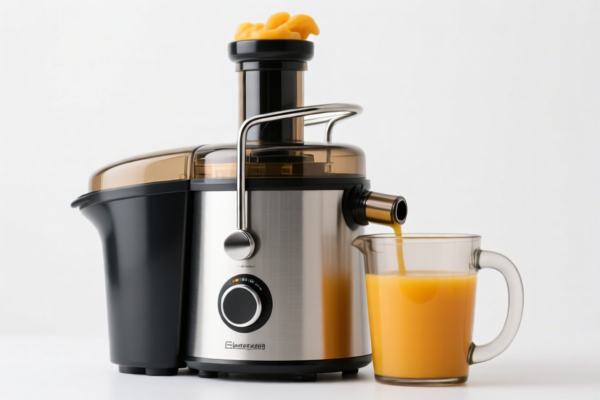
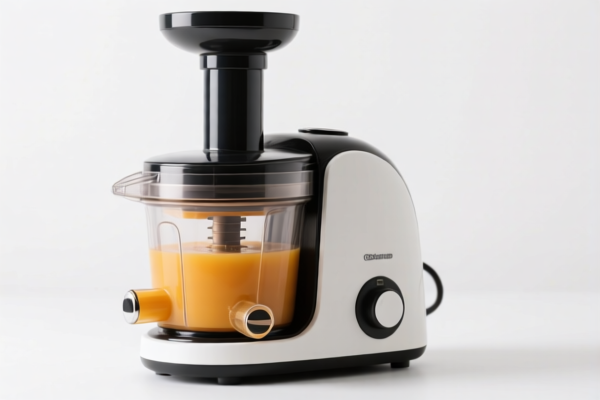
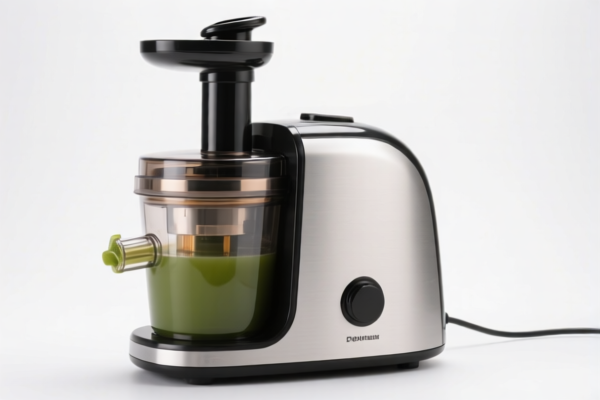
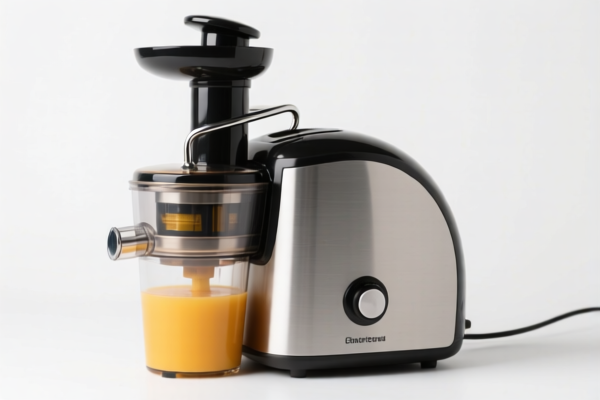
AI分析
🍹 Juice Extractor Bucket (Juicer)
🌐 HS Code Reference & Customs Clearance Guide | 2026 Latest Tariff Analysis | Professional Clearance Strategy
📌 I. Product Definition & Classification: Do You Really Know the "Juice Extractor"?
A "Juice Extractor Bucket" (commonly referred to as a Juicer) is a household or industrial appliance used to extract juice from fruits and vegetables. In international trade, classification depends heavily on its intended use and mechanism:
- Household/Personal Juicers: Small appliances designed for home use, extracting juice from fruits/vegetables. These typically fall under HS 8509.
- Industrial/Commercial Juicers: Machines used for preparing food or beverages on an industrial scale. These fall under HS 8438.
⚠️ Key Distinction Point:
- If it is a household appliance with an electric motor for extracting fruit/veg juice → HS 8509
- If it is an industrial machine for processing food/beverages → HS 8438
📦 II. HS Code Classification Details (2026 Latest Tariff Authority Comparison)
| HS Code | Product Description | Application Scenario | Tax Category |
|---|---|---|---|
8509.40.00.30 |
Electric Juicer for Fruits/Vegetables (Household) | Home use, countertop juicers | Low Tariff Base |
8509.40.00.15 |
Electric Juicer for Fruits/Vegetables (Household) | Home use, specific sub-category | Low Tariff Base |
8438.80.00.00 |
Machinery for Preparation of Food/Drink (Industrial) | Commercial kitchens, large-scale processing | High Tariff Base |
8438.60.00.00 |
Machinery for Preparation of Fruits/Nuts/Vegetables (Industrial) | Industrial juicing lines | High Tariff Base |
🔍 Key Reminder:
- Household Juicers (HS 8509) generally have a lower base tariff (4.2%) compared to industrial machines (HS 8438, which has 0% base but high surcharges).
- Total Tax Liability is critical: Even with a 0% base, HS 8438 may incur 35% total tax due to surcharges, while HS 8509 may only incur 14.2% total tax.
💰 III. 2026 Latest Tariff Rate Breakdown (Including Surcharges, Policy Add-ons)
✅ Applicable Country: United States (US)
✅ Country of Origin: China (CN)
✅ Effective Date: From November 10, 2025 (and subsequent imports)
🎯 1. 8509.40.00.30 & 8509.40.00.15 —— Household Electric Juicers
| Item | Content |
|---|---|
| Base Tariff | 4.2% (ad valorem) |
| Section 301 Surcharge | +0.0% (No additional 25% tariff for these specific sub-headings) |
| IEEPA Surcharge (Section 122) | +10.0% (Targeting China-origin products) |
| Total Tariff Rate | 14.2% |
| Tax Calculation | CIF Value × 14.2% |
| De Minimis Eligibility | ❌ Not Eligible (deny_de_minimis applies to high tariffs) |
| Legal Basis Path | IEEPA:9903.01.24 → USITC:8509.40.00.30 / 8509.40.00.15 |
📌 Explanation:
- Base Tariff: 4.2% is the standard MFN rate for electric household appliances.
- Section 301: Interestingly, for these specific household juicer sub-codes, the 25% Section 301 surcharge does not apply (or is 0%).
- IEEPA 10%: A 10% surcharge applies to China-origin goods under Section 122.
- Total: 14.2%. This is a moderate tariff burden.
🎯 2. 8438.80.00.00 —— Industrial Machinery for Food/Drink Preparation
| Item | Content |
|---|---|
| Base Tariff | 0.0% |
| Section 301 Surcharge | +25.0% |
| IEEPA Surcharge (Section 122) | +10.0% |
| Total Tariff Rate | 35.0% |
| Tax Calculation | CIF Value × 35.0% |
| De Minimis Eligibility | ❌ Not Eligible |
| Legal Basis Path | IEEPA:9903.01.24 → USITC:8438.80.00.00 |
📌 Explanation:
- Base Tariff: 0% because it's industrial machinery.
- Section 301: 25% surcharge applies heavily.
- IEEPA 10%: Additional 10% for China origin.
- Total: 35.0%. This is a high tariff burden.
🎯 3. 8438.60.00.00 —— Industrial Machinery for Fruit/Nut/Vegetable Preparation
| Item | Content |
|---|---|
| Base Tariff | 0.0% |
| Section 301 Surcharge | +25.0% |
| IEEPA Surcharge (Section 122) | +10.0% |
| Total Tariff Rate | 35.0% |
| Tax Calculation | CIF Value × 35.0% |
| De Minimis Eligibility | ❌ Not Eligible |
| Legal Basis Path | IEEPA:9903.01.24 → USITC:8438.60.00.00 |
📌 Explanation:
- Same tariff structure as8438.80.00.00.
- Total: 35.0%. High tariff burden.
🛠️ IV. Customs Clearance Practical Advice (Avoid Pitfalls)
✅ 1. Documentation Checklist (Essential)
| Document | Must Provide | Notes |
|---|---|---|
| ✅ Product Specification Sheet | ✔️ | Include power, voltage, capacity, material (food-grade?) |
| ✅ Product Photos (with Label) | ✔️ | Clear view of model number, brand, input/output |
| ✅ Commercial Invoice | ✔️ | Describe as "Electric Juicer for Household Use" OR "Industrial Food Processing Machine" |
| ✅ Packing List | ✔️ | Show contents clearly |
| ✅ Certificate of Origin (CO) | ✔️ | To determine eligibility for IEEPA surcharges |
✅ 2. Declaration Tips (Key Mnemonics)
🔥 "Home Use 8509, Industry 8438, Check the Surcharge!"
| Scenario | Correct HS Code | Mistake to Avoid |
|---|---|---|
| Household Juicer (countertop, small) | 8509.40.00.30 / 8509.40.00.15 |
Misdeclare as industrial → 35% tax |
| Industrial Juicer (large, commercial) | 8438.80.00.00 / 8438.60.00.00 |
Misdeclare as household → 14.2% tax (risk of penalty) |
| Mixed Shipment | Separate declarations | Do not mix |
✅ 3. Special Case Handling
| Scenario | Advice |
|---|---|
| OEM Juicers | Provide client order + design drawings to prove "Household" intent |
| Commercial Use at Home | If used for home business, still may be classified as household if design is similar |
| Industrial Juice Lines | Must declare as industrial machinery, accept 35% tax |
| Parts & Accessories | If shipping only parts, declare separately (e.g., blades, bases) |
🌍 V. Global Market Clearance Comparison (2026 Latest)
| Country/Region | Recommended HS Code | Tariff (China Origin) | Certification | Notes |
|---|---|---|---|---|
| 🇺🇸 USA | 8509.40.00.30 (Home) |
14.2% | UL, FCC, FDA | 35% for Industrial |
| 🇨🇳 China | 8509.40.00.30 |
5-10% | CCC | No IEEPA surcharge |
| 🇪🇺 EU | 8509.40.00.30 |
~6% | CE, RoHS | No Section 301/IEEPA |
| 🇬🇧 UK | 8509.40.00.30 |
~6% | UKCA, RoHS | Post-Brexit rules apply |
| 🇦🇺 Australia | 8509.40.00.30 |
~5% | RCM | No high surcharges |
📌 Conclusion:
- USA has unique high tariffs for industrial machinery (35%).
- Household juicers in the US face a moderate 14.2% tariff.
- Exporters should carefully distinguish between home and industrial use to optimize costs.
📌 VI. Common Errors & Pitfalls (Lessons Learned)
❌ Error 1: Declaring an industrial juicer as a household appliance
👉 Consequence: Customs may reclassify and impose 35% tax + penalties.
❌ Error 2: Declaring a household juicer as industrial
👉 Consequence: Overpaying tax (35% vs 14.2%) → Lost profit.
❌ Error 3: Vague product description ("Juicer Machine")
👉 Consequence: Customs request clarification, delay clearance.
✅ Correct Practice:
"Electric Household Juicer, 500W, 110V, BPA-Free Plastic Container, Model XYZ, UL Listed"
🎯 VII. Conclusion: Professional Declaration, Cost Optimization!
🎯 Remember the Rule:
🔹 "Home Use = 8509 (14.2%)"
🔹 "Industrial = 8438 (35%)"
🔹 "Declare Clearly, Save Money!"
📌 Tips:
- If your juicer is originating from Vietnam, Mexico, or Thailand, you may avoid IEEPA surcharges.
- Consider Advance Ruling for large shipments to ensure correct classification.
📣 Immediate Action:
📞 Consult a customs broker + Provide product details + Apply for HS Code pre-classification
🚀 Ensure smooth clearance, optimize costs, and maximize profit!
✨ Professional clearance starts with accurate classification!
💼 Every cent of cost should be precisely calculated!
用户评价
关于 HS 编码归类
协调制度(HS)是由世界海关组织(WCO)制定的国际贸易商品分类标准。全球 200 多个国家采用 HS 系统作为海关关税、贸易统计和进出口监管的基础。
每个 HS 编码遵循以下层级结构:
- 章(2 位)——商品大类(例如:第 84 章:机器和机械设备)
- 品目(4 位)——章内的更具体分类
- 子目(6 位)——国际通用细分,所有 WCO 成员国统一使用
- 本国细分(8-10 位)——各国自行扩展的细分编码,如美国 HTSUS 10 位编码
正确的 HS 编码归类对于顺利通关、准确缴纳关税和遵守贸易法规至关重要。错误归类可能导致海关延误、多缴关税或罚款。
从CN进口到US时,适用的关税税率可能包括:
- 最惠国(MFN)税率——适用于 WTO 成员国的标准关税税率
- 普通税率——适用于无贸易协定国家
- 贸易救济关税——附加关税,如 301 条款(反倾销)、232 条款(国家安全)或反补贴税
本页内容仅供参考。如需正式归类,请咨询当地海关或持牌报关代理。