Juice Extractor Bucket
CN → US| HS Code | Tariff Rate | Origin | Destination | Doc |
|---|---|---|---|---|
| 8509400030 | 14.2% | CN | US | Official Doc |
| 8438800000 | 35.0% | CN | US | Official Doc |
| 8438600000 | 35.0% | CN | US | Official Doc |
| 8509400015 | 14.2% | CN | US | Official Doc |
Product Images
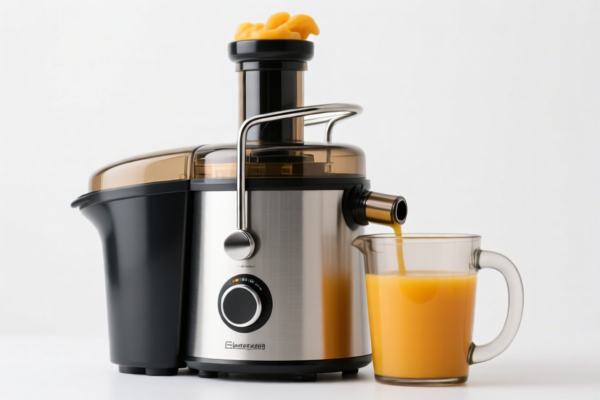
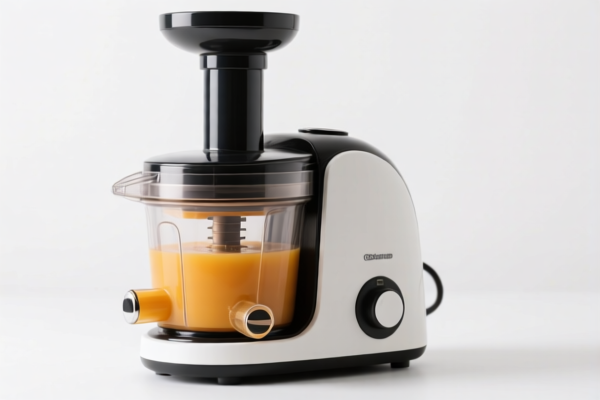
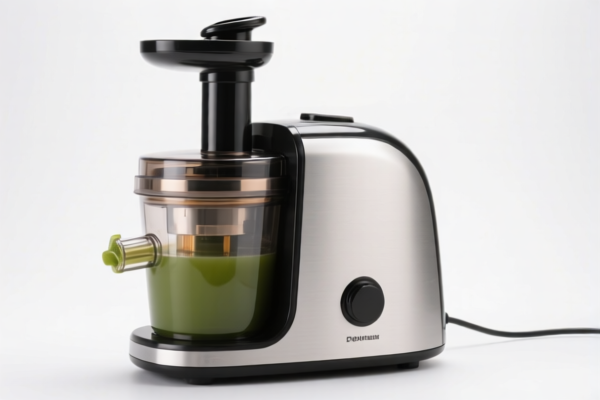
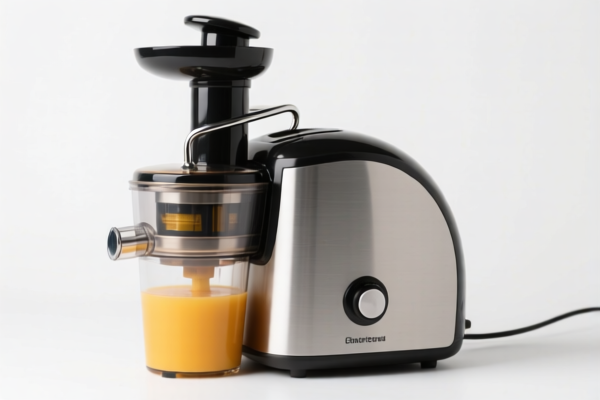
AI Analysis
🍹 Juice Extractor Bucket (Juicer)
🌐 HS Code Reference & Customs Clearance Guide | 2026 Latest Tariff Analysis | Professional Clearance Strategy
📌 I. Product Definition & Classification: Do You Really Know the "Juice Extractor"?
A "Juice Extractor Bucket" (commonly referred to as a Juicer) is a household or industrial appliance used to extract juice from fruits and vegetables. In international trade, classification depends heavily on its intended use and mechanism:
- Household/Personal Juicers: Small appliances designed for home use, extracting juice from fruits/vegetables. These typically fall under HS 8509.
- Industrial/Commercial Juicers: Machines used for preparing food or beverages on an industrial scale. These fall under HS 8438.
⚠️ Key Distinction Point:
- If it is a household appliance with an electric motor for extracting fruit/veg juice → HS 8509
- If it is an industrial machine for processing food/beverages → HS 8438
📦 II. HS Code Classification Details (2026 Latest Tariff Authority Comparison)
| HS Code | Product Description | Application Scenario | Tax Category |
|---|---|---|---|
8509.40.00.30 |
Electric Juicer for Fruits/Vegetables (Household) | Home use, countertop juicers | Low Tariff Base |
8509.40.00.15 |
Electric Juicer for Fruits/Vegetables (Household) | Home use, specific sub-category | Low Tariff Base |
8438.80.00.00 |
Machinery for Preparation of Food/Drink (Industrial) | Commercial kitchens, large-scale processing | High Tariff Base |
8438.60.00.00 |
Machinery for Preparation of Fruits/Nuts/Vegetables (Industrial) | Industrial juicing lines | High Tariff Base |
🔍 Key Reminder:
- Household Juicers (HS 8509) generally have a lower base tariff (4.2%) compared to industrial machines (HS 8438, which has 0% base but high surcharges).
- Total Tax Liability is critical: Even with a 0% base, HS 8438 may incur 35% total tax due to surcharges, while HS 8509 may only incur 14.2% total tax.
💰 III. 2026 Latest Tariff Rate Breakdown (Including Surcharges, Policy Add-ons)
✅ Applicable Country: United States (US)
✅ Country of Origin: China (CN)
✅ Effective Date: From November 10, 2025 (and subsequent imports)
🎯 1. 8509.40.00.30 & 8509.40.00.15 —— Household Electric Juicers
| Item | Content |
|---|---|
| Base Tariff | 4.2% (ad valorem) |
| Section 301 Surcharge | +0.0% (No additional 25% tariff for these specific sub-headings) |
| IEEPA Surcharge (Section 122) | +10.0% (Targeting China-origin products) |
| Total Tariff Rate | 14.2% |
| Tax Calculation | CIF Value × 14.2% |
| De Minimis Eligibility | ❌ Not Eligible (deny_de_minimis applies to high tariffs) |
| Legal Basis Path | IEEPA:9903.01.24 → USITC:8509.40.00.30 / 8509.40.00.15 |
📌 Explanation:
- Base Tariff: 4.2% is the standard MFN rate for electric household appliances.
- Section 301: Interestingly, for these specific household juicer sub-codes, the 25% Section 301 surcharge does not apply (or is 0%).
- IEEPA 10%: A 10% surcharge applies to China-origin goods under Section 122.
- Total: 14.2%. This is a moderate tariff burden.
🎯 2. 8438.80.00.00 —— Industrial Machinery for Food/Drink Preparation
| Item | Content |
|---|---|
| Base Tariff | 0.0% |
| Section 301 Surcharge | +25.0% |
| IEEPA Surcharge (Section 122) | +10.0% |
| Total Tariff Rate | 35.0% |
| Tax Calculation | CIF Value × 35.0% |
| De Minimis Eligibility | ❌ Not Eligible |
| Legal Basis Path | IEEPA:9903.01.24 → USITC:8438.80.00.00 |
📌 Explanation:
- Base Tariff: 0% because it's industrial machinery.
- Section 301: 25% surcharge applies heavily.
- IEEPA 10%: Additional 10% for China origin.
- Total: 35.0%. This is a high tariff burden.
🎯 3. 8438.60.00.00 —— Industrial Machinery for Fruit/Nut/Vegetable Preparation
| Item | Content |
|---|---|
| Base Tariff | 0.0% |
| Section 301 Surcharge | +25.0% |
| IEEPA Surcharge (Section 122) | +10.0% |
| Total Tariff Rate | 35.0% |
| Tax Calculation | CIF Value × 35.0% |
| De Minimis Eligibility | ❌ Not Eligible |
| Legal Basis Path | IEEPA:9903.01.24 → USITC:8438.60.00.00 |
📌 Explanation:
- Same tariff structure as8438.80.00.00.
- Total: 35.0%. High tariff burden.
🛠️ IV. Customs Clearance Practical Advice (Avoid Pitfalls)
✅ 1. Documentation Checklist (Essential)
| Document | Must Provide | Notes |
|---|---|---|
| ✅ Product Specification Sheet | ✔️ | Include power, voltage, capacity, material (food-grade?) |
| ✅ Product Photos (with Label) | ✔️ | Clear view of model number, brand, input/output |
| ✅ Commercial Invoice | ✔️ | Describe as "Electric Juicer for Household Use" OR "Industrial Food Processing Machine" |
| ✅ Packing List | ✔️ | Show contents clearly |
| ✅ Certificate of Origin (CO) | ✔️ | To determine eligibility for IEEPA surcharges |
✅ 2. Declaration Tips (Key Mnemonics)
🔥 "Home Use 8509, Industry 8438, Check the Surcharge!"
| Scenario | Correct HS Code | Mistake to Avoid |
|---|---|---|
| Household Juicer (countertop, small) | 8509.40.00.30 / 8509.40.00.15 |
Misdeclare as industrial → 35% tax |
| Industrial Juicer (large, commercial) | 8438.80.00.00 / 8438.60.00.00 |
Misdeclare as household → 14.2% tax (risk of penalty) |
| Mixed Shipment | Separate declarations | Do not mix |
✅ 3. Special Case Handling
| Scenario | Advice |
|---|---|
| OEM Juicers | Provide client order + design drawings to prove "Household" intent |
| Commercial Use at Home | If used for home business, still may be classified as household if design is similar |
| Industrial Juice Lines | Must declare as industrial machinery, accept 35% tax |
| Parts & Accessories | If shipping only parts, declare separately (e.g., blades, bases) |
🌍 V. Global Market Clearance Comparison (2026 Latest)
| Country/Region | Recommended HS Code | Tariff (China Origin) | Certification | Notes |
|---|---|---|---|---|
| 🇺🇸 USA | 8509.40.00.30 (Home) |
14.2% | UL, FCC, FDA | 35% for Industrial |
| 🇨🇳 China | 8509.40.00.30 |
5-10% | CCC | No IEEPA surcharge |
| 🇪🇺 EU | 8509.40.00.30 |
~6% | CE, RoHS | No Section 301/IEEPA |
| 🇬🇧 UK | 8509.40.00.30 |
~6% | UKCA, RoHS | Post-Brexit rules apply |
| 🇦🇺 Australia | 8509.40.00.30 |
~5% | RCM | No high surcharges |
📌 Conclusion:
- USA has unique high tariffs for industrial machinery (35%).
- Household juicers in the US face a moderate 14.2% tariff.
- Exporters should carefully distinguish between home and industrial use to optimize costs.
📌 VI. Common Errors & Pitfalls (Lessons Learned)
❌ Error 1: Declaring an industrial juicer as a household appliance
👉 Consequence: Customs may reclassify and impose 35% tax + penalties.
❌ Error 2: Declaring a household juicer as industrial
👉 Consequence: Overpaying tax (35% vs 14.2%) → Lost profit.
❌ Error 3: Vague product description ("Juicer Machine")
👉 Consequence: Customs request clarification, delay clearance.
✅ Correct Practice:
"Electric Household Juicer, 500W, 110V, BPA-Free Plastic Container, Model XYZ, UL Listed"
🎯 VII. Conclusion: Professional Declaration, Cost Optimization!
🎯 Remember the Rule:
🔹 "Home Use = 8509 (14.2%)"
🔹 "Industrial = 8438 (35%)"
🔹 "Declare Clearly, Save Money!"
📌 Tips:
- If your juicer is originating from Vietnam, Mexico, or Thailand, you may avoid IEEPA surcharges.
- Consider Advance Ruling for large shipments to ensure correct classification.
📣 Immediate Action:
📞 Consult a customs broker + Provide product details + Apply for HS Code pre-classification
🚀 Ensure smooth clearance, optimize costs, and maximize profit!
✨ Professional clearance starts with accurate classification!
💼 Every cent of cost should be precisely calculated!
Customer Reviews
About HS Code Classification
The Harmonized System (HS) is an internationally standardized nomenclature developed by the World Customs Organization (WCO) to classify traded products. Over 200 countries use the HS system as the basis for customs tariffs, trade statistics, and import/export regulations.
Each HS code follows a hierarchical structure:
- Chapter (2 digits) — Broad category of goods (e.g., Chapter 84: Machinery and Mechanical Appliances)
- Heading (4 digits) — More specific grouping within the chapter
- Subheading (6 digits) — Internationally standardized breakdown, used by all WCO member countries
- National subdivisions (8-10 digits) — Country-specific extensions for further classification, such as US HTSUS 10-digit codes
Correct HS code classification is essential for smooth customs clearance, accurate duty payment, and compliance with trade regulations. Misclassification can lead to customs delays, overpayment of duties, or penalties.
When importing from CN to US, the applicable tariff rates may include:
- Most-Favored-Nation (MFN) rate — The standard duty rate applied to WTO members
- General rate — Applied to countries without trade agreements
- Trade remedy duties — Additional tariffs such as Section 301 (anti-dumping), Section 232 (national security), or countervailing duties
The information provided on this page is for reference purposes only. For official classification, please consult with your local customs authority or a licensed customs broker.