Jute Textile Reinforced Rubber Conveyor Belt
CN → US| HS编码 | 关税税率 | 原产国 | 目的国 | 文档 |
|---|---|---|---|---|
| 5911101000 | 37.9% | CN | US | 官方文档 |
| 8431390010 | 35.0% | CN | US | 官方文档 |
| 5911102000 | 38.8% | CN | US | 官方文档 |
商品图片
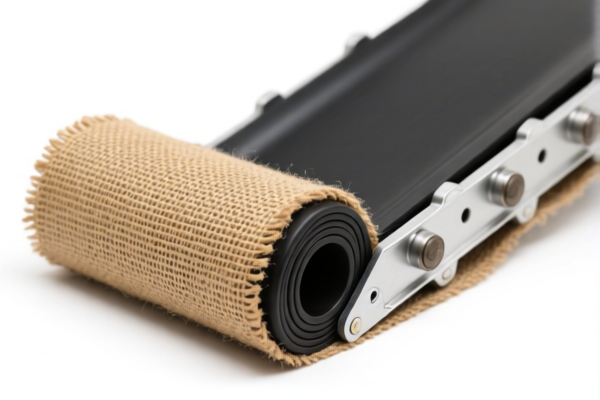
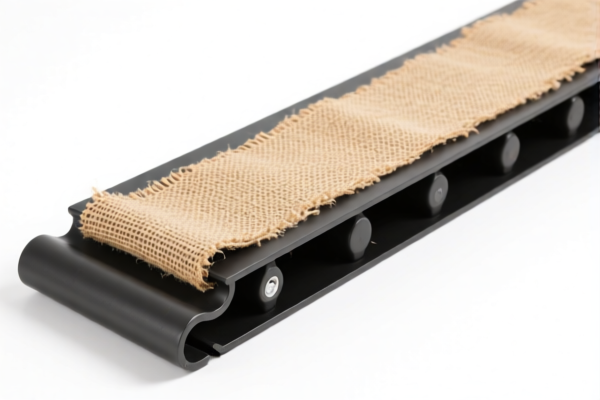
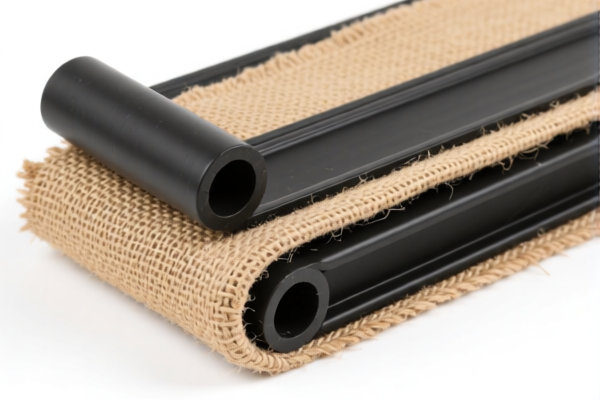
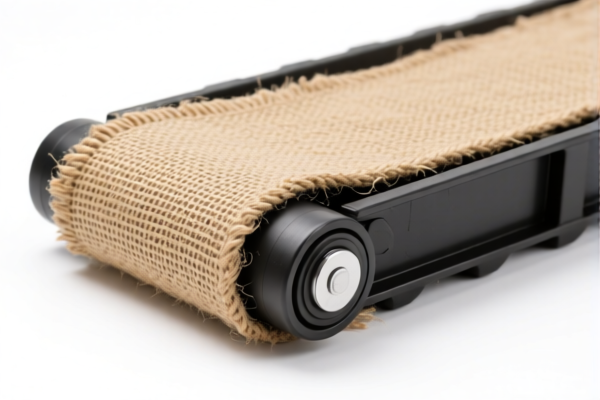
AI分析
🏭 Jute Textile Reinforced Rubber Conveyor Belt
🌐 HS Code Reference & Customs Clearance Guide | 2026 Latest Tariff Analysis | Professional Strategy for Industrial Imports
📌 Part I: Product Definition & Classification: Do You Understand "Conveyor Belts"?
A Jute Textile Reinforced Rubber Conveyor Belt is a critical component in industrial logistics, mining, and agriculture. It consists of a rubber carcass reinforced with jute fabric (a natural fiber) to provide tensile strength and flexibility. In international trade, classification depends heavily on whether it is viewed as a textile product covered with rubber or a mechanical part for machinery.
⚠️ Key Classification Distinction:
- If classified as a Textile Product: It falls under Chapter 59 (Textile articles impregnated, coated, covered or laminated).
- If classified as a Machine Part: It falls under Chapter 84 (Machinery and mechanical appliances).Critical Warning: The distinction drastically changes the tariff burden due to Section 301 (China tariffs) and Section 122 restrictions.
📦 Part II: HS Code Classification Details (2026 Authoritative Mapping)
Based on the provided data, here are the three possible HS Codes with matching logic:
| HS Code | Product Description | Matching Logic | Total Tax Rate |
|---|---|---|---|
| 5911.10.10.00 | Rubber-Coated Textile Fabrics for Technical Uses | Matches criteria: Contains rubber material and fabric form. Fits the characteristic of "rubber-coated textile fabrics suitable for technical purposes." No obvious material or form conflict. | 37.9% |
| 8431.39.00.10 | Parts of Lifting/Handling Machinery (Conveyor Belts) | Matches criteria: The item is a conveyor belt, falling under the category of lifting and conveying machinery. Rubber and jute fabric serve as components of mechanical transmission parts. Fits the logic of "other parts" inference. | 35.0% |
| 5911.10.20.00 | Other Rubber-Coated Textiles for Technical Uses | Matches criteria: The product contains rubber material and fabric form. Belongs to rubber-coated textiles for technical uses. No obvious material or form conflict. | 38.8% |
🔍 Important Note:
- HS 5911.10.10.00 and 5911.10.20.00 are in the same chapter (Textiles), but differ in specific sub-classification based on exact material composition or technical specification nuances.
- HS 8431.39.00.10 is in Chapter 84 (Machinery). This classification is often preferred for functional conveyor belts used in industrial systems, but carries different tariff implications.
💰 Part III: 2026 Latest Tariff Rate Breakdown (Including Additional Taxes)
✅ Applicable Country: United States (US)
✅ Origin: China (CN)
✅ Effective Time: 2025/2026 (Current Trade Policies)
🎯 1. 5911.10.10.00 —— Rubber-Coated Textile Fabrics (Technical Use)
| Item | Detail |
|---|---|
| Base Duty Rate | 2.9% |
| Section 301 Additional Duty | +25.0% |
| Section 122 Duty (China) | +10.0% |
| Total Tax Rate | 37.9% |
| Calculation Method | CIF Value × 37.9% |
| De Minimis Eligibility | ❌ Not Eligible (Deny De Minimis for Section 122 items) |
📌 Explanation:
- Base 2.9%: Standard Most Favored Nation (MFN) rate for textile/rubber composite goods.
- 25% (Sec 301): Standard retaliatory tariff on Chinese manufactured goods.
- 10% (Sec 122): Specific additional duty targeting certain goods from China under the International Emergency Economic Powers Act (IEEPA) or related trade remedies.
- Total: 37.9%. High cost requires careful supply chain planning.
🎯 2. 8431.39.00.10 —— Parts of Machinery (Conveyor Belts)
| Item | Detail |
|---|---|
| Base Duty Rate | 0.0% |
| Section 301 Additional Duty | +25.0% |
| Section 122 Duty (China) | +10.0% |
| Total Tax Rate | 35.0% |
| Calculation Method | CIF Value × 35.0% |
| De Minimis Eligibility | ❌ Not Eligible |
📌 Explanation:
- Base 0.0%: Many machinery parts have low or zero base duties under Harmonized Tariff Schedule (HTS).
- 25% (Sec 301) + 10% (Sec 122): Despite the low base rate, the additional duties apply significantly.
- Total: 35.0%. This is the lowest total tax rate among the three options, making8431.39.00.10the most cost-effective if defensible.
🎯 3. 5911.10.20.00 —— Other Rubber-Coated Textiles (Technical Use)
| Item | Detail |
|---|---|
| Base Duty Rate | 3.8% |
| Section 301 Additional Duty | +25.0% |
| Section 122 Duty (China) | +10.0% |
| Total Tax Rate | 38.8% |
| Calculation Method | CIF Value × 38.8% |
| De Minimis Eligibility | ❌ Not Eligible |
📌 Explanation:
- Base 3.8%: Slightly higher base rate than 5911.10.10.00.
- Total: 38.8%. This is the highest total tax rate. Avoid this classification unless the product strictly matches the specific legal definition of this subheading and cannot be classified under 5911.10.10.00 or 8431.39.00.10.
🛠️ Part IV: Customs Clearance Practical Advice (Avoid Pitfalls)
✅ 1. Documentation Checklist (Mandatory)
| Document | Required? | Description |
|---|---|---|
| ✅ Technical Specification Sheet | ✔️ | Must detail: Rubber composition, Jute fabric strength, Belt dimensions, Application (mining, food, general). |
| ✅ Product Photos | ✔️ | Clear images showing the belt structure (rubber surface, fabric layers). |
| ✅ Commercial Invoice | ✔️ | Clearly state: "Jute Reinforced Rubber Conveyor Belt for Industrial Machinery." |
| ✅ Origin Certificate | ✔️ | Confirm Chinese origin to assess correct Section 301/122 applicability. |
| ✅ Structure Diagram | ✔️ | To support classification as a "Machinery Part" (HS 8431) vs. "Textile" (HS 5911). |
✅ 2. Classification Strategy & Tips
🔥 Golden Rule:
"Function over Form: If it moves the machine, classify as Machinery Part (8431). If it's just fabric, classify as Textile (5911)."
| Scenario | Recommended HS Code | Reason |
|---|---|---|
| Industrial Conveyor Belt | 8431.39.00.10 |
Primary function is mechanical transmission/transport in a system. Lowest Tax (35%). |
| Cut Rubber-Jute Fabric Rolls | 5911.10.10.00 |
Sold as material for further processing. No pre-formed mechanical part structure. |
| Specialized Technical Textile | 5911.10.20.00 |
Only if it does not meet the specific criteria for 5911.10.10.00 and is not a machine part. Highest Tax (38.8%). |
✅ 3. Critical Warnings for Section 122 & 301
- Section 122 Impact: The 10% additional duty applies to all three HS codes because the product originates from China. This is non-negotiable for Chinese-origin goods.
- Section 301 Impact: The 25% additional duty applies to all three.
- De Minimis Loophole Closure: Packages under $800 (De Minimis) are NOT exempt from these duties. They will be seized or assessed taxes at the border.
🌍 Part V: Global Market Comparison (2026)
| Country/Region | Recommended HS Code | Est. Total Tax (CN Origin) | Notes |
|---|---|---|---|
| 🇺🇸 USA | 8431.39.00.10 |
35.0% | Best rate. Requires strong evidence of being a "part of machinery." |
| 🇨🇳 China | 4010.12.00.00 |
2.0% | Import duty is low; VAT applies. Not applicable for US exports. |
| 🇪🇺 EU | 4010.12.00.00 |
3.5% | No Section 301/122 equivalents. Much lower cost. |
| 🇯🇵 Japan | 4010.12.00.00 |
5.0% | Standard MFN rate. No punitive tariffs. |
📌 Conclusion:
- The US market is the most expensive due to Section 301 and 122 tariffs.
- HS 8431.39.00.10 offers the best savings in the US by leveraging a 0% base rate.
- For non-US markets, classify under Chapter 40 (Rubber and articles thereof) for significantly lower duties.
📌 Part VI: Common Mistakes & Pitfalls (Blood Lessons)
❌ Mistake 1: Classifying as 5911.10.20.00 without justification.
👉 Consequence: Paying 38.8% instead of 35.0%. Unnecessary loss of profit.
❌ Mistake 2: Declaring as "Textile Fabric" when it is a pre-formed Conveyor Belt.
👉 Consequence: Customs may reclassify to 8431.39.00.10 (lower tax) but penalize for inaccurate description, or reclassify to a higher-tariff category if the textile argument fails.
❌ Mistake 3: Ignoring Section 122.
👉 Consequence: Failure to declare 10% Section 122 duty leads to seizure, fines, and port delays.
❌ Mistake 4: Assuming De Minimis applies.
👉 Consequence: Small shipments are still subject to full duties. Do not split shipments to avoid detection; CBP has advanced analytics.
✅ Correct Action:
Use the term "Conveyor Belt" in the description. Provide engineering diagrams showing how the belt integrates with pulleys and rollers. Argue for HS 8431.39.00.10 to save 2.9%–3.8% compared to textile classifications.
🎯 Part VII: Conclusion: Precision Saves Money
🎯 Remember:
🔹 "Machinery Part (8431) is Cheaper: 35% vs. 37.9% or 38.8%."
🔹 "Section 122 is Universal: 10% extra for all Chinese origins."
🔹 "Don't Guess: Engineering data supports HS 8431."
📌 Pro Tip:
If your conveyor belt is made from natural rubber + jute, ensure the jute content is documented. Some classifiers might argue for textile chapters. However, the primary function (conveying materials in a machine) strongly supports Chapter 84.
📣 Immediate Action:
📞 Consult a Customs Broker to submit a Pre-Immigration Advance Ruling for HS
8431.39.00.10.
🚀 Optimize Supply Chain: Consider sourcing from non-US-tariff countries if volume is high, but for Chinese origin, 8431.39.00.10 is your best defense.
✨ Professional Clearance Starts with Accurate Classification!
💼 Every 1% Tax Saved is Pure Profit!
用户评价
关于 HS 编码归类
协调制度(HS)是由世界海关组织(WCO)制定的国际贸易商品分类标准。全球 200 多个国家采用 HS 系统作为海关关税、贸易统计和进出口监管的基础。
每个 HS 编码遵循以下层级结构:
- 章(2 位)——商品大类(例如:第 84 章:机器和机械设备)
- 品目(4 位)——章内的更具体分类
- 子目(6 位)——国际通用细分,所有 WCO 成员国统一使用
- 本国细分(8-10 位)——各国自行扩展的细分编码,如美国 HTSUS 10 位编码
正确的 HS 编码归类对于顺利通关、准确缴纳关税和遵守贸易法规至关重要。错误归类可能导致海关延误、多缴关税或罚款。
从CN进口到US时,适用的关税税率可能包括:
- 最惠国(MFN)税率——适用于 WTO 成员国的标准关税税率
- 普通税率——适用于无贸易协定国家
- 贸易救济关税——附加关税,如 301 条款(反倾销)、232 条款(国家安全)或反补贴税
本页内容仅供参考。如需正式归类,请咨询当地海关或持牌报关代理。