Jute Textile Reinforced Rubber Conveyor Belt
CN → US| HS Code | Tariff Rate | Origin | Destination | Doc |
|---|---|---|---|---|
| 5911101000 | 37.9% | CN | US | Official Doc |
| 8431390010 | 35.0% | CN | US | Official Doc |
| 5911102000 | 38.8% | CN | US | Official Doc |
Product Images
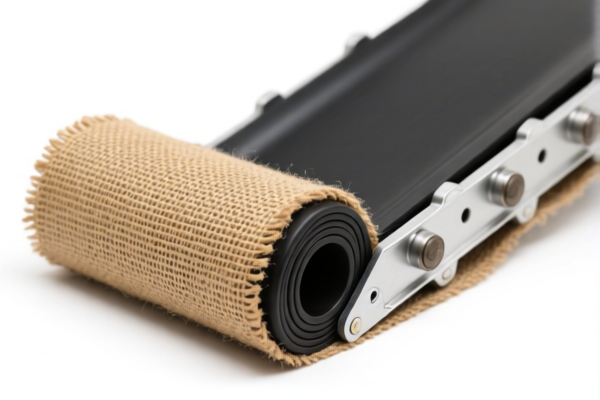
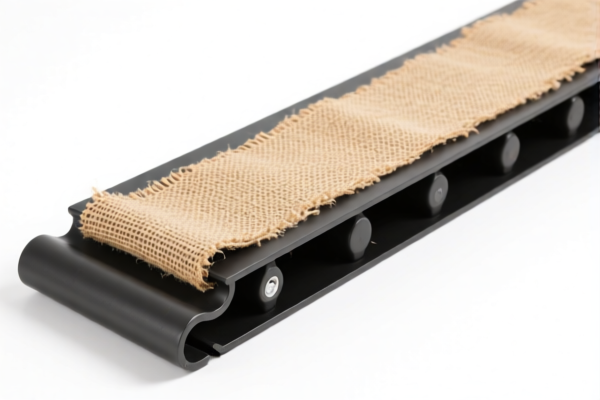
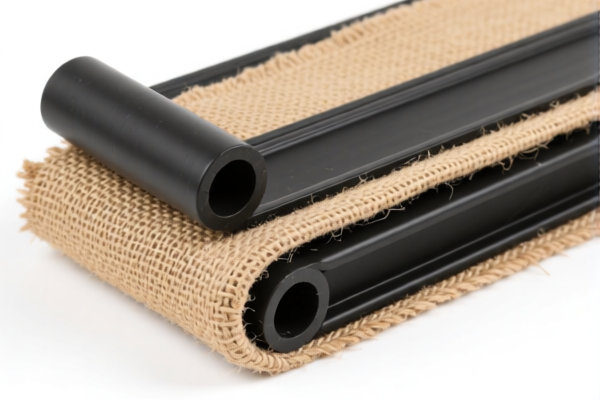
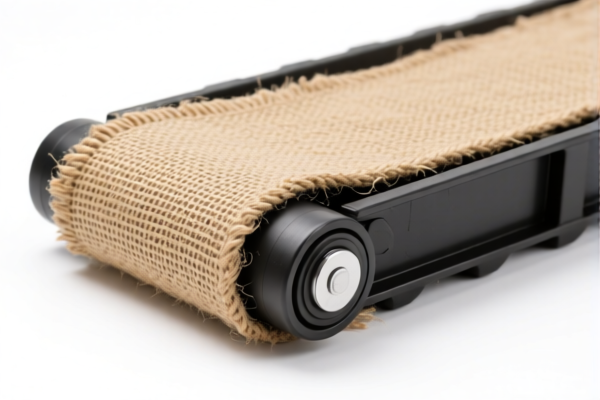
AI Analysis
🏭 Jute Textile Reinforced Rubber Conveyor Belt
🌐 HS Code Reference & Customs Clearance Guide | 2026 Latest Tariff Analysis | Professional Strategy for Industrial Imports
📌 Part I: Product Definition & Classification: Do You Understand "Conveyor Belts"?
A Jute Textile Reinforced Rubber Conveyor Belt is a critical component in industrial logistics, mining, and agriculture. It consists of a rubber carcass reinforced with jute fabric (a natural fiber) to provide tensile strength and flexibility. In international trade, classification depends heavily on whether it is viewed as a textile product covered with rubber or a mechanical part for machinery.
⚠️ Key Classification Distinction:
- If classified as a Textile Product: It falls under Chapter 59 (Textile articles impregnated, coated, covered or laminated).
- If classified as a Machine Part: It falls under Chapter 84 (Machinery and mechanical appliances).Critical Warning: The distinction drastically changes the tariff burden due to Section 301 (China tariffs) and Section 122 restrictions.
📦 Part II: HS Code Classification Details (2026 Authoritative Mapping)
Based on the provided data, here are the three possible HS Codes with matching logic:
| HS Code | Product Description | Matching Logic | Total Tax Rate |
|---|---|---|---|
| 5911.10.10.00 | Rubber-Coated Textile Fabrics for Technical Uses | Matches criteria: Contains rubber material and fabric form. Fits the characteristic of "rubber-coated textile fabrics suitable for technical purposes." No obvious material or form conflict. | 37.9% |
| 8431.39.00.10 | Parts of Lifting/Handling Machinery (Conveyor Belts) | Matches criteria: The item is a conveyor belt, falling under the category of lifting and conveying machinery. Rubber and jute fabric serve as components of mechanical transmission parts. Fits the logic of "other parts" inference. | 35.0% |
| 5911.10.20.00 | Other Rubber-Coated Textiles for Technical Uses | Matches criteria: The product contains rubber material and fabric form. Belongs to rubber-coated textiles for technical uses. No obvious material or form conflict. | 38.8% |
🔍 Important Note:
- HS 5911.10.10.00 and 5911.10.20.00 are in the same chapter (Textiles), but differ in specific sub-classification based on exact material composition or technical specification nuances.
- HS 8431.39.00.10 is in Chapter 84 (Machinery). This classification is often preferred for functional conveyor belts used in industrial systems, but carries different tariff implications.
💰 Part III: 2026 Latest Tariff Rate Breakdown (Including Additional Taxes)
✅ Applicable Country: United States (US)
✅ Origin: China (CN)
✅ Effective Time: 2025/2026 (Current Trade Policies)
🎯 1. 5911.10.10.00 —— Rubber-Coated Textile Fabrics (Technical Use)
| Item | Detail |
|---|---|
| Base Duty Rate | 2.9% |
| Section 301 Additional Duty | +25.0% |
| Section 122 Duty (China) | +10.0% |
| Total Tax Rate | 37.9% |
| Calculation Method | CIF Value × 37.9% |
| De Minimis Eligibility | ❌ Not Eligible (Deny De Minimis for Section 122 items) |
📌 Explanation:
- Base 2.9%: Standard Most Favored Nation (MFN) rate for textile/rubber composite goods.
- 25% (Sec 301): Standard retaliatory tariff on Chinese manufactured goods.
- 10% (Sec 122): Specific additional duty targeting certain goods from China under the International Emergency Economic Powers Act (IEEPA) or related trade remedies.
- Total: 37.9%. High cost requires careful supply chain planning.
🎯 2. 8431.39.00.10 —— Parts of Machinery (Conveyor Belts)
| Item | Detail |
|---|---|
| Base Duty Rate | 0.0% |
| Section 301 Additional Duty | +25.0% |
| Section 122 Duty (China) | +10.0% |
| Total Tax Rate | 35.0% |
| Calculation Method | CIF Value × 35.0% |
| De Minimis Eligibility | ❌ Not Eligible |
📌 Explanation:
- Base 0.0%: Many machinery parts have low or zero base duties under Harmonized Tariff Schedule (HTS).
- 25% (Sec 301) + 10% (Sec 122): Despite the low base rate, the additional duties apply significantly.
- Total: 35.0%. This is the lowest total tax rate among the three options, making8431.39.00.10the most cost-effective if defensible.
🎯 3. 5911.10.20.00 —— Other Rubber-Coated Textiles (Technical Use)
| Item | Detail |
|---|---|
| Base Duty Rate | 3.8% |
| Section 301 Additional Duty | +25.0% |
| Section 122 Duty (China) | +10.0% |
| Total Tax Rate | 38.8% |
| Calculation Method | CIF Value × 38.8% |
| De Minimis Eligibility | ❌ Not Eligible |
📌 Explanation:
- Base 3.8%: Slightly higher base rate than 5911.10.10.00.
- Total: 38.8%. This is the highest total tax rate. Avoid this classification unless the product strictly matches the specific legal definition of this subheading and cannot be classified under 5911.10.10.00 or 8431.39.00.10.
🛠️ Part IV: Customs Clearance Practical Advice (Avoid Pitfalls)
✅ 1. Documentation Checklist (Mandatory)
| Document | Required? | Description |
|---|---|---|
| ✅ Technical Specification Sheet | ✔️ | Must detail: Rubber composition, Jute fabric strength, Belt dimensions, Application (mining, food, general). |
| ✅ Product Photos | ✔️ | Clear images showing the belt structure (rubber surface, fabric layers). |
| ✅ Commercial Invoice | ✔️ | Clearly state: "Jute Reinforced Rubber Conveyor Belt for Industrial Machinery." |
| ✅ Origin Certificate | ✔️ | Confirm Chinese origin to assess correct Section 301/122 applicability. |
| ✅ Structure Diagram | ✔️ | To support classification as a "Machinery Part" (HS 8431) vs. "Textile" (HS 5911). |
✅ 2. Classification Strategy & Tips
🔥 Golden Rule:
"Function over Form: If it moves the machine, classify as Machinery Part (8431). If it's just fabric, classify as Textile (5911)."
| Scenario | Recommended HS Code | Reason |
|---|---|---|
| Industrial Conveyor Belt | 8431.39.00.10 |
Primary function is mechanical transmission/transport in a system. Lowest Tax (35%). |
| Cut Rubber-Jute Fabric Rolls | 5911.10.10.00 |
Sold as material for further processing. No pre-formed mechanical part structure. |
| Specialized Technical Textile | 5911.10.20.00 |
Only if it does not meet the specific criteria for 5911.10.10.00 and is not a machine part. Highest Tax (38.8%). |
✅ 3. Critical Warnings for Section 122 & 301
- Section 122 Impact: The 10% additional duty applies to all three HS codes because the product originates from China. This is non-negotiable for Chinese-origin goods.
- Section 301 Impact: The 25% additional duty applies to all three.
- De Minimis Loophole Closure: Packages under $800 (De Minimis) are NOT exempt from these duties. They will be seized or assessed taxes at the border.
🌍 Part V: Global Market Comparison (2026)
| Country/Region | Recommended HS Code | Est. Total Tax (CN Origin) | Notes |
|---|---|---|---|
| 🇺🇸 USA | 8431.39.00.10 |
35.0% | Best rate. Requires strong evidence of being a "part of machinery." |
| 🇨🇳 China | 4010.12.00.00 |
2.0% | Import duty is low; VAT applies. Not applicable for US exports. |
| 🇪🇺 EU | 4010.12.00.00 |
3.5% | No Section 301/122 equivalents. Much lower cost. |
| 🇯🇵 Japan | 4010.12.00.00 |
5.0% | Standard MFN rate. No punitive tariffs. |
📌 Conclusion:
- The US market is the most expensive due to Section 301 and 122 tariffs.
- HS 8431.39.00.10 offers the best savings in the US by leveraging a 0% base rate.
- For non-US markets, classify under Chapter 40 (Rubber and articles thereof) for significantly lower duties.
📌 Part VI: Common Mistakes & Pitfalls (Blood Lessons)
❌ Mistake 1: Classifying as 5911.10.20.00 without justification.
👉 Consequence: Paying 38.8% instead of 35.0%. Unnecessary loss of profit.
❌ Mistake 2: Declaring as "Textile Fabric" when it is a pre-formed Conveyor Belt.
👉 Consequence: Customs may reclassify to 8431.39.00.10 (lower tax) but penalize for inaccurate description, or reclassify to a higher-tariff category if the textile argument fails.
❌ Mistake 3: Ignoring Section 122.
👉 Consequence: Failure to declare 10% Section 122 duty leads to seizure, fines, and port delays.
❌ Mistake 4: Assuming De Minimis applies.
👉 Consequence: Small shipments are still subject to full duties. Do not split shipments to avoid detection; CBP has advanced analytics.
✅ Correct Action:
Use the term "Conveyor Belt" in the description. Provide engineering diagrams showing how the belt integrates with pulleys and rollers. Argue for HS 8431.39.00.10 to save 2.9%–3.8% compared to textile classifications.
🎯 Part VII: Conclusion: Precision Saves Money
🎯 Remember:
🔹 "Machinery Part (8431) is Cheaper: 35% vs. 37.9% or 38.8%."
🔹 "Section 122 is Universal: 10% extra for all Chinese origins."
🔹 "Don't Guess: Engineering data supports HS 8431."
📌 Pro Tip:
If your conveyor belt is made from natural rubber + jute, ensure the jute content is documented. Some classifiers might argue for textile chapters. However, the primary function (conveying materials in a machine) strongly supports Chapter 84.
📣 Immediate Action:
📞 Consult a Customs Broker to submit a Pre-Immigration Advance Ruling for HS
8431.39.00.10.
🚀 Optimize Supply Chain: Consider sourcing from non-US-tariff countries if volume is high, but for Chinese origin, 8431.39.00.10 is your best defense.
✨ Professional Clearance Starts with Accurate Classification!
💼 Every 1% Tax Saved is Pure Profit!
Customer Reviews
About HS Code Classification
The Harmonized System (HS) is an internationally standardized nomenclature developed by the World Customs Organization (WCO) to classify traded products. Over 200 countries use the HS system as the basis for customs tariffs, trade statistics, and import/export regulations.
Each HS code follows a hierarchical structure:
- Chapter (2 digits) — Broad category of goods (e.g., Chapter 84: Machinery and Mechanical Appliances)
- Heading (4 digits) — More specific grouping within the chapter
- Subheading (6 digits) — Internationally standardized breakdown, used by all WCO member countries
- National subdivisions (8-10 digits) — Country-specific extensions for further classification, such as US HTSUS 10-digit codes
Correct HS code classification is essential for smooth customs clearance, accurate duty payment, and compliance with trade regulations. Misclassification can lead to customs delays, overpayment of duties, or penalties.
When importing from CN to US, the applicable tariff rates may include:
- Most-Favored-Nation (MFN) rate — The standard duty rate applied to WTO members
- General rate — Applied to countries without trade agreements
- Trade remedy duties — Additional tariffs such as Section 301 (anti-dumping), Section 232 (national security), or countervailing duties
The information provided on this page is for reference purposes only. For official classification, please consult with your local customs authority or a licensed customs broker.