Kitchen Garbage Disposal
CN → US| HS编码 | 关税税率 | 原产国 | 目的国 | 文档 |
|---|---|---|---|---|
| 8509802000 | 35.0% | CN | US | 官方文档 |
| 8509400040 | 14.2% | CN | US | 官方文档 |
| 8438800000 | 35.0% | CN | US | 官方文档 |
| 8479820080 | 35.0% | CN | US | 官方文档 |
| 8479895500 | 20.3% | CN | US | 官方文档 |
商品图片
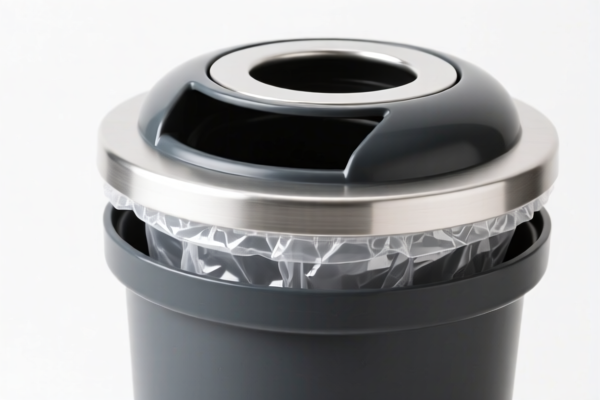
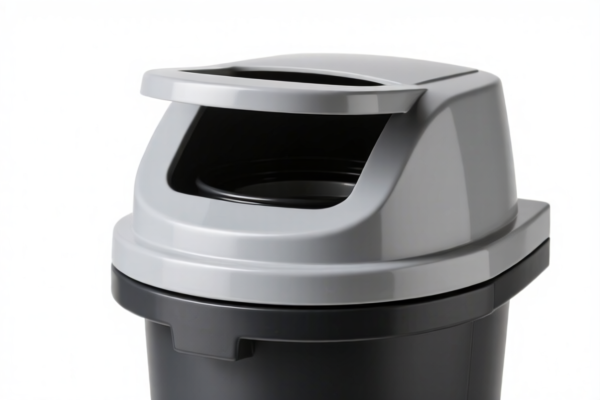
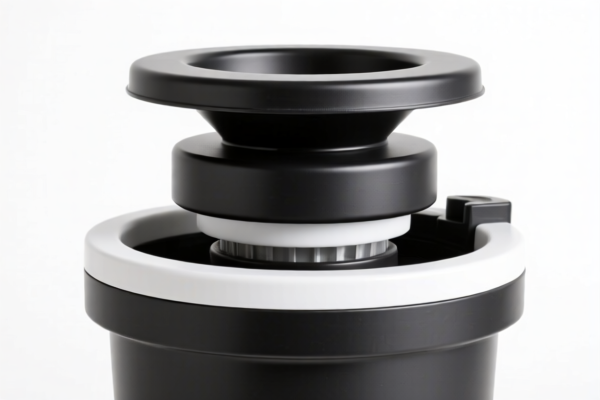
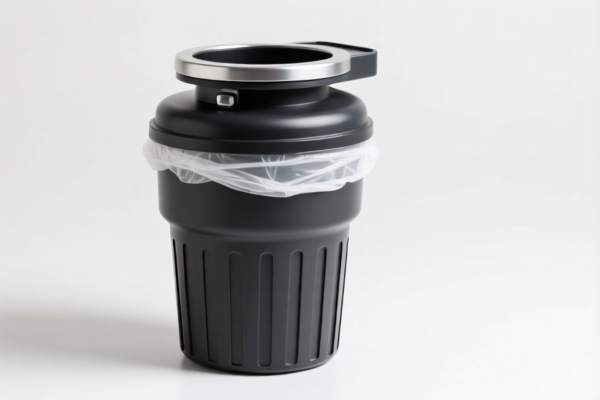
AI分析
🗑️ Kitchen Garbage Disposal (Kitchen Waste Grinders)
🌐 HS Code Reference & Customs Clearance Guide | 2026 Latest Tariff Analysis | Professional通关 Strategy
📌 I. Product Definition & Classification: What Exactly Is a "Kitchen Garbage Disposer"?
A Kitchen Garbage Disposer (often called a garbage disposal unit) is an electrically powered device, usually mounted under a kitchen sink, that grinds up food waste so that it will pass through the plumbing instead of ending up in a trash can. In international trade, its classification depends heavily on whether it is viewed as a food processing machine or an electromechanical household appliance.
Key Distinction: - Food Processing Machinery: If viewed primarily as a device for preparing food waste for disposal (grinding/mixing), it may fall under Chapter 84. - Household Electric Appliances: If viewed as a consumer appliance for household waste handling, it typically falls under Chapter 85.
⚠️ Critical Classification Point:
- If the primary function is grinding food waste using a motorized grinder unit → Often classified under 8509 (Domestic Electric Appliances).
- If the machinery is interpreted as industrial/semi-industrial food processing equipment → May fall under 8438 or 8479.
- Note: The final HS Code significantly impacts the tariff rate, especially with current US trade policies.
📦 II. HS Code Classification Details (2026 Latest Tariff Authority Comparison)
| HS Code | Product Description | Application Scenario | Tax Rate (Total) |
|---|---|---|---|
8438.80.00.00 |
Machinery for industrial preparation or manufacturing of food or drinks | Industrial food processing equipment; large-scale grinders | 35.0% |
8479.82.00.80 |
Machines and mechanical appliances with mixing, kneading, crushing, grinding functions | Machines with crushing/grinding functions, not elsewhere specified | 35.0% |
8479.89.55.00 |
Other machines and mechanical appliances (including garbage compressors) | General industrial machinery, including waste compression/handling | 20.3% |
8509.80.20.00 |
Other household electric appliances (specifically "Kitchen Waste Disposers") | Domestic electric appliances for kitchen waste processing | 35.0% |
8509.40.00.40 |
Food grinders and processors, household type | Household food grinders/processors (closest functional match) | 14.2% |
🔍 Key Insight:
- 8509.40.00.40 offers the lowest total tariff (14.2%) but is strictly for household food grinders.
- 8509.80.20.00 is explicitly for "Kitchen Waste Disposers" (厨余垃圾处理器) but carries a higher tariff (35.0%).
- 8438.80.00.00 and 8479.82.00.80 are for industrial/commercial use and carry 35.0%.
- 8479.89.55.00 is a fallback category for machinery including garbage compressors, with a 20.3% rate.
💰 III. 2026 Latest Tariff Rate Breakdown (Including Additional Taxes & Policy Add-ons)
✅ Applicable Country: United States (US)
✅ Origin: China (CN)
✅ Effective Date: From November 10, 2025 (for imports thereafter)
🎯 1. 8438.80.00.00 – Machinery for Food Preparation (Industrial)
| Item | Detail |
|---|---|
| Basic Tariff | 0.0% (ad valorem) |
| Section 301 Additional Tariff | +25.0% |
| Section 122 Tariff | +10.0% |
| Total Tariff Rate | 35.0% |
| Tax Calculation | CIF Value × 35% |
| De Minimis Exemption | ❌ Not Applicable (deny_de_minimis) |
| Legal Basis Path | USITC:8438.80.00.00 → 301:25% → 122:10% |
📌 Explanation:
- Classified as industrial food machinery.
- Subject to both Section 301 (25%) and Section 122 (10%) tariffs.
- High risk of customs scrutiny regarding "industrial vs. household" use.
🎯 2. 8479.82.00.80 – Machines with Crushing/Grinding Functions
| Item | Detail |
|---|---|
| Basic Tariff | 0.0% |
| Section 301 Additional Tariff | +25.0% |
| Section 122 Tariff | +10.0% |
| Total Tariff Rate | 35.0% |
| Tax Calculation | CIF × 35% |
| De Minimis Exemption | ❌ Not Applicable |
| Legal Basis Path | USITC:8479.82.00.80 → 301:25% → 122:10% |
📌 Note:
- Used if the device is marketed as a general-purpose crushing/grinding machine.
- Same high tariff burden as 8438.80.00.00.
🎯 3. 8479.89.55.00 – Other Machines (Including Garbage Compressors)
| Item | Detail |
|---|---|
| Basic Tariff | 2.8% |
| Section 301 Additional Tariff | +7.5% |
| Section 122 Tariff | +10.0% |
| Total Tariff Rate | 20.3% |
| Tax Calculation | CIF × 20.3% |
| De Minimis Exemption | ❌ Not Applicable |
| Legal Basis Path | USITC:8479.89.55.00 → 301:7.5% → 122:10% |
📌 Note:
- This classification applies if the device is interpreted as a "garbage compressor" or general waste machinery.
- Lower total tariff (20.3%) compared to other categories, but requires justification that it is not a standard household electric appliance.
🎯 4. 8509.80.20.00 – Household Electric Appliances (Kitchen Waste Disposers)
| Item | Detail |
|---|---|
| Basic Tariff | 0.0% |
| Section 301 Additional Tariff | +25.0% |
| Section 122 Tariff | +10.0% |
| Total Tariff Rate | 35.0% |
| Tax Calculation | CIF × 35% |
| De Minimis Exemption | ❌ Not Applicable |
| Legal Basis Path | USITC:8509.80.20.00 → 301:25% → 122:10% |
📌 Explanation:
- Explicitly matches the term "Kitchen Waste Disposer" (厨余垃圾处理器).
- Despite being a "household" item, it is not exempt from Section 301 and Section 122 tariffs.
- High risk: Customs may scrutinize if it is truly a "disposer" or a "food grinder" (which has lower taxes).
🎯 5. 8509.40.00.40 – Household Food Grinders and Processors
| Item | Detail |
|---|---|
| Basic Tariff | 4.2% |
| Section 301 Additional Tariff | 0.0% |
| Section 122 Tariff | +10.0% |
| Total Tariff Rate | 14.2% |
| Tax Calculation | CIF × 14.2% |
| De Minimis Exemption | ❌ Not Applicable |
| Legal Basis Path | USITC:8509.40.00.40 → 122:10% |
📌 Strategic Advantage:
- This is the most cost-effective classification (14.2% total).
- Key Argument: The device is a "food grinder/processor" (grinding food waste), not just a "waste disposal" unit.
- Risk: Must prove it is primarily for food processing (grinding) rather than waste management. If customs deems it a "waste disposer," it will be reclassified to 8509.80.20.00 (35.0%).
🛠️ IV. Customs Clearance Practical Advice (Avoid Pitfalls)
✅ 1. Documentation Checklist (Mandatory)
| Document | Required | Notes |
|---|---|---|
| ✅ Product Specification Sheet | ✔️ | Detail dimensions, power, grinder type, noise level |
| ✅ Technical Diagram | ✔️ | Show internal grinding chamber, motor, and electrical components |
| ✅ Product Photos (with Label) | ✔️ | Clear view of model number, brand, input/output specs |
| ✅ Commercial Invoice | ✔️ | Use precise description: "Household Electric Food Grinder for Kitchen Waste Processing" |
| ✅ Packing List | ✔️ | Include all accessories (sink flange, power cord, air switch) |
| ✅ Third-Party Test Report | ✔️ | UL, ETL, NSF, FCC (if applicable) |
✅ 2. Declaration Strategy (Key Tips)
🔥 "Describe as Food Grinder, Avoid Waste Disposer!"
| Situation | Correct Declaration | Incorrect Declaration |
|---|---|---|
| Household Unit | 8509.40.00.40 (Food Grinder) |
8509.80.20.00 (Waste Disposer) → 35% Tax |
| Industrial Machine | 8438.80.00.00 or 8479.82.00.80 |
Misclassified as household → Penalty |
| Waste Compressor | 8479.89.55.00 |
Misclassified as food grinder → Risk |
📌 Critical Tip:
- Use terms like "Food Waste Grinder", "Kitchen Sink Grinder", or "Food Processor" in descriptions.
- Avoid standalone terms like "Garbage Disposal" without context, as it may trigger the higher 35.0% tariff under 8509.80.20.00.
- If using 8509.40.00.40, emphasize the grinding function for food/preparation purposes.
✅ 3. Special Cases
| Case | Handling Advice |
|---|---|
| OEM/White Label | Provide supplier agreement and technical specs to prove functionality |
| Combo Units (Grinder + Filter) | Declare as primary function (grinder) |
| Industrial-Sized Units | Classify under 8438 or 8479, not 8509 |
| Imported for Testing/Sample | Declare as "Sample," but tax rates still apply |
🌍 V. Global Customs Comparison (2026 Latest)
| Country/Region | Recommended HS Code | Tariff | Certification | Notes |
|---|---|---|---|---|
| 🇺🇸 US | 8509.40.00.40 |
14.2% | UL/ETL, NSF | Best rate for household units |
| 🇺🇸 US | 8509.80.20.00 |
35.0% | UL/ETL | Explicit "Waste Disposer" classification |
| 🇨🇳 China | 8509.40.00.40 |
4.2% | CCC | Low import tax |
| 🇪🇺 EU | 8509.40.00.40 |
0% | CE, RoHS | No additional duties |
| 🇯🇵 Japan | 8509.40.00.40 |
0% | PSE | No additional duties |
📌 Conclusion:
- USA is the most complex market due to Section 301 and Section 122 tariffs.
- Strategy: Aim for8509.40.00.40to save 20.8% in tariffs compared to8509.80.20.00.
- EU/Japan/China have much lower or zero tariffs, making them easier entry points.
📌 VI. Common Errors & Pitfalls (Lessons Learned)
❌ Error 1: Declaring as "Kitchen Waste Disposer" without emphasizing "Food Grinding"
👉 Consequence: Customs applies 8509.80.20.00 → 35% Tax instead of 14.2%.
❌ Error 2: Using "Garbage Disposal" as the sole product name
👉 Consequence: Triggers scrutiny for Section 301/122 tariffs.
❌ Error 3: Misclassifying industrial units as household appliances
👉 Consequence: Duty evasion penalty + back taxes.
❌ Error 4: Ignoring Section 122 Tariff (10%)
👉 Consequence: Unexpected 10% additional cost on all items, even if Section 301 is 0%.
✅ Correct Practice:
"Household Electric Food Grinder for Kitchen Sink, Model XYZ, UL Certified, 1/2 HP Motor"
🎯 VII. Conclusion: Professional Declaration for Cost Savings
🎯 Remember the Golden Rule:
🔹 "Grinder = 14.2%, Disposer = 35.0% – Choose Your Words Wisely!"
🔹 "Section 122 is 10% – Always Factor It In!"
📌 Pro Tip:
- If your product is originally designed for food processing (e.g., grinding food scraps before composting), emphasize this in documentation to support 8509.40.00.40.
- Consider applying for an Advance Ruling from US Customs to lock in the favorable classification.
📣 Take Action Now:
📞 Consult a professional customs broker + Provide technical specs + Seek Advance Ruling
🚀 Minimize Duties, Maximize Profits, Clear Customs Smoothly!
✨ Professional Customs Clearance Starts with Accurate Classification!
💼 Every Percent Saved is Pure Profit!
用户评价
关于 HS 编码归类
协调制度(HS)是由世界海关组织(WCO)制定的国际贸易商品分类标准。全球 200 多个国家采用 HS 系统作为海关关税、贸易统计和进出口监管的基础。
每个 HS 编码遵循以下层级结构:
- 章(2 位)——商品大类(例如:第 84 章:机器和机械设备)
- 品目(4 位)——章内的更具体分类
- 子目(6 位)——国际通用细分,所有 WCO 成员国统一使用
- 本国细分(8-10 位)——各国自行扩展的细分编码,如美国 HTSUS 10 位编码
正确的 HS 编码归类对于顺利通关、准确缴纳关税和遵守贸易法规至关重要。错误归类可能导致海关延误、多缴关税或罚款。
从CN进口到US时,适用的关税税率可能包括:
- 最惠国(MFN)税率——适用于 WTO 成员国的标准关税税率
- 普通税率——适用于无贸易协定国家
- 贸易救济关税——附加关税,如 301 条款(反倾销)、232 条款(国家安全)或反补贴税
本页内容仅供参考。如需正式归类,请咨询当地海关或持牌报关代理。