Kitchen Garbage Disposal
CN → US| HS Code | Tariff Rate | Origin | Destination | Doc |
|---|---|---|---|---|
| 8509802000 | 35.0% | CN | US | Official Doc |
| 8509400040 | 14.2% | CN | US | Official Doc |
| 8438800000 | 35.0% | CN | US | Official Doc |
| 8479820080 | 35.0% | CN | US | Official Doc |
| 8479895500 | 20.3% | CN | US | Official Doc |
Product Images
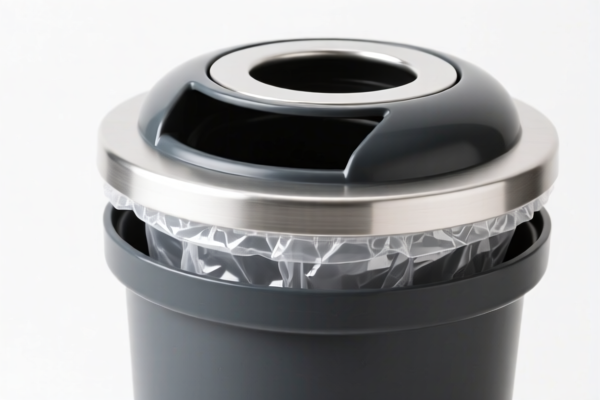
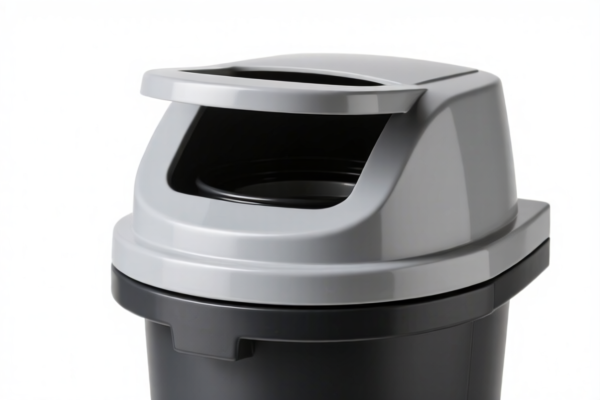
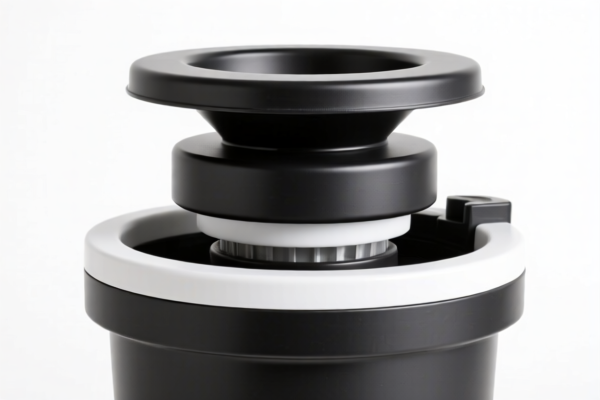
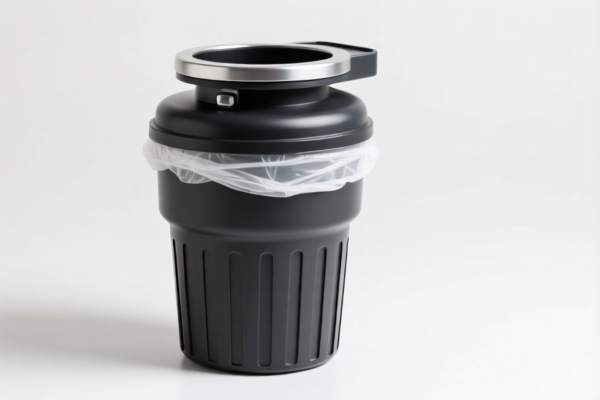
AI Analysis
🗑️ Kitchen Garbage Disposal (Kitchen Waste Grinders)
🌐 HS Code Reference & Customs Clearance Guide | 2026 Latest Tariff Analysis | Professional通关 Strategy
📌 I. Product Definition & Classification: What Exactly Is a "Kitchen Garbage Disposer"?
A Kitchen Garbage Disposer (often called a garbage disposal unit) is an electrically powered device, usually mounted under a kitchen sink, that grinds up food waste so that it will pass through the plumbing instead of ending up in a trash can. In international trade, its classification depends heavily on whether it is viewed as a food processing machine or an electromechanical household appliance.
Key Distinction: - Food Processing Machinery: If viewed primarily as a device for preparing food waste for disposal (grinding/mixing), it may fall under Chapter 84. - Household Electric Appliances: If viewed as a consumer appliance for household waste handling, it typically falls under Chapter 85.
⚠️ Critical Classification Point:
- If the primary function is grinding food waste using a motorized grinder unit → Often classified under 8509 (Domestic Electric Appliances).
- If the machinery is interpreted as industrial/semi-industrial food processing equipment → May fall under 8438 or 8479.
- Note: The final HS Code significantly impacts the tariff rate, especially with current US trade policies.
📦 II. HS Code Classification Details (2026 Latest Tariff Authority Comparison)
| HS Code | Product Description | Application Scenario | Tax Rate (Total) |
|---|---|---|---|
8438.80.00.00 |
Machinery for industrial preparation or manufacturing of food or drinks | Industrial food processing equipment; large-scale grinders | 35.0% |
8479.82.00.80 |
Machines and mechanical appliances with mixing, kneading, crushing, grinding functions | Machines with crushing/grinding functions, not elsewhere specified | 35.0% |
8479.89.55.00 |
Other machines and mechanical appliances (including garbage compressors) | General industrial machinery, including waste compression/handling | 20.3% |
8509.80.20.00 |
Other household electric appliances (specifically "Kitchen Waste Disposers") | Domestic electric appliances for kitchen waste processing | 35.0% |
8509.40.00.40 |
Food grinders and processors, household type | Household food grinders/processors (closest functional match) | 14.2% |
🔍 Key Insight:
- 8509.40.00.40 offers the lowest total tariff (14.2%) but is strictly for household food grinders.
- 8509.80.20.00 is explicitly for "Kitchen Waste Disposers" (厨余垃圾处理器) but carries a higher tariff (35.0%).
- 8438.80.00.00 and 8479.82.00.80 are for industrial/commercial use and carry 35.0%.
- 8479.89.55.00 is a fallback category for machinery including garbage compressors, with a 20.3% rate.
💰 III. 2026 Latest Tariff Rate Breakdown (Including Additional Taxes & Policy Add-ons)
✅ Applicable Country: United States (US)
✅ Origin: China (CN)
✅ Effective Date: From November 10, 2025 (for imports thereafter)
🎯 1. 8438.80.00.00 – Machinery for Food Preparation (Industrial)
| Item | Detail |
|---|---|
| Basic Tariff | 0.0% (ad valorem) |
| Section 301 Additional Tariff | +25.0% |
| Section 122 Tariff | +10.0% |
| Total Tariff Rate | 35.0% |
| Tax Calculation | CIF Value × 35% |
| De Minimis Exemption | ❌ Not Applicable (deny_de_minimis) |
| Legal Basis Path | USITC:8438.80.00.00 → 301:25% → 122:10% |
📌 Explanation:
- Classified as industrial food machinery.
- Subject to both Section 301 (25%) and Section 122 (10%) tariffs.
- High risk of customs scrutiny regarding "industrial vs. household" use.
🎯 2. 8479.82.00.80 – Machines with Crushing/Grinding Functions
| Item | Detail |
|---|---|
| Basic Tariff | 0.0% |
| Section 301 Additional Tariff | +25.0% |
| Section 122 Tariff | +10.0% |
| Total Tariff Rate | 35.0% |
| Tax Calculation | CIF × 35% |
| De Minimis Exemption | ❌ Not Applicable |
| Legal Basis Path | USITC:8479.82.00.80 → 301:25% → 122:10% |
📌 Note:
- Used if the device is marketed as a general-purpose crushing/grinding machine.
- Same high tariff burden as 8438.80.00.00.
🎯 3. 8479.89.55.00 – Other Machines (Including Garbage Compressors)
| Item | Detail |
|---|---|
| Basic Tariff | 2.8% |
| Section 301 Additional Tariff | +7.5% |
| Section 122 Tariff | +10.0% |
| Total Tariff Rate | 20.3% |
| Tax Calculation | CIF × 20.3% |
| De Minimis Exemption | ❌ Not Applicable |
| Legal Basis Path | USITC:8479.89.55.00 → 301:7.5% → 122:10% |
📌 Note:
- This classification applies if the device is interpreted as a "garbage compressor" or general waste machinery.
- Lower total tariff (20.3%) compared to other categories, but requires justification that it is not a standard household electric appliance.
🎯 4. 8509.80.20.00 – Household Electric Appliances (Kitchen Waste Disposers)
| Item | Detail |
|---|---|
| Basic Tariff | 0.0% |
| Section 301 Additional Tariff | +25.0% |
| Section 122 Tariff | +10.0% |
| Total Tariff Rate | 35.0% |
| Tax Calculation | CIF × 35% |
| De Minimis Exemption | ❌ Not Applicable |
| Legal Basis Path | USITC:8509.80.20.00 → 301:25% → 122:10% |
📌 Explanation:
- Explicitly matches the term "Kitchen Waste Disposer" (厨余垃圾处理器).
- Despite being a "household" item, it is not exempt from Section 301 and Section 122 tariffs.
- High risk: Customs may scrutinize if it is truly a "disposer" or a "food grinder" (which has lower taxes).
🎯 5. 8509.40.00.40 – Household Food Grinders and Processors
| Item | Detail |
|---|---|
| Basic Tariff | 4.2% |
| Section 301 Additional Tariff | 0.0% |
| Section 122 Tariff | +10.0% |
| Total Tariff Rate | 14.2% |
| Tax Calculation | CIF × 14.2% |
| De Minimis Exemption | ❌ Not Applicable |
| Legal Basis Path | USITC:8509.40.00.40 → 122:10% |
📌 Strategic Advantage:
- This is the most cost-effective classification (14.2% total).
- Key Argument: The device is a "food grinder/processor" (grinding food waste), not just a "waste disposal" unit.
- Risk: Must prove it is primarily for food processing (grinding) rather than waste management. If customs deems it a "waste disposer," it will be reclassified to 8509.80.20.00 (35.0%).
🛠️ IV. Customs Clearance Practical Advice (Avoid Pitfalls)
✅ 1. Documentation Checklist (Mandatory)
| Document | Required | Notes |
|---|---|---|
| ✅ Product Specification Sheet | ✔️ | Detail dimensions, power, grinder type, noise level |
| ✅ Technical Diagram | ✔️ | Show internal grinding chamber, motor, and electrical components |
| ✅ Product Photos (with Label) | ✔️ | Clear view of model number, brand, input/output specs |
| ✅ Commercial Invoice | ✔️ | Use precise description: "Household Electric Food Grinder for Kitchen Waste Processing" |
| ✅ Packing List | ✔️ | Include all accessories (sink flange, power cord, air switch) |
| ✅ Third-Party Test Report | ✔️ | UL, ETL, NSF, FCC (if applicable) |
✅ 2. Declaration Strategy (Key Tips)
🔥 "Describe as Food Grinder, Avoid Waste Disposer!"
| Situation | Correct Declaration | Incorrect Declaration |
|---|---|---|
| Household Unit | 8509.40.00.40 (Food Grinder) |
8509.80.20.00 (Waste Disposer) → 35% Tax |
| Industrial Machine | 8438.80.00.00 or 8479.82.00.80 |
Misclassified as household → Penalty |
| Waste Compressor | 8479.89.55.00 |
Misclassified as food grinder → Risk |
📌 Critical Tip:
- Use terms like "Food Waste Grinder", "Kitchen Sink Grinder", or "Food Processor" in descriptions.
- Avoid standalone terms like "Garbage Disposal" without context, as it may trigger the higher 35.0% tariff under 8509.80.20.00.
- If using 8509.40.00.40, emphasize the grinding function for food/preparation purposes.
✅ 3. Special Cases
| Case | Handling Advice |
|---|---|
| OEM/White Label | Provide supplier agreement and technical specs to prove functionality |
| Combo Units (Grinder + Filter) | Declare as primary function (grinder) |
| Industrial-Sized Units | Classify under 8438 or 8479, not 8509 |
| Imported for Testing/Sample | Declare as "Sample," but tax rates still apply |
🌍 V. Global Customs Comparison (2026 Latest)
| Country/Region | Recommended HS Code | Tariff | Certification | Notes |
|---|---|---|---|---|
| 🇺🇸 US | 8509.40.00.40 |
14.2% | UL/ETL, NSF | Best rate for household units |
| 🇺🇸 US | 8509.80.20.00 |
35.0% | UL/ETL | Explicit "Waste Disposer" classification |
| 🇨🇳 China | 8509.40.00.40 |
4.2% | CCC | Low import tax |
| 🇪🇺 EU | 8509.40.00.40 |
0% | CE, RoHS | No additional duties |
| 🇯🇵 Japan | 8509.40.00.40 |
0% | PSE | No additional duties |
📌 Conclusion:
- USA is the most complex market due to Section 301 and Section 122 tariffs.
- Strategy: Aim for8509.40.00.40to save 20.8% in tariffs compared to8509.80.20.00.
- EU/Japan/China have much lower or zero tariffs, making them easier entry points.
📌 VI. Common Errors & Pitfalls (Lessons Learned)
❌ Error 1: Declaring as "Kitchen Waste Disposer" without emphasizing "Food Grinding"
👉 Consequence: Customs applies 8509.80.20.00 → 35% Tax instead of 14.2%.
❌ Error 2: Using "Garbage Disposal" as the sole product name
👉 Consequence: Triggers scrutiny for Section 301/122 tariffs.
❌ Error 3: Misclassifying industrial units as household appliances
👉 Consequence: Duty evasion penalty + back taxes.
❌ Error 4: Ignoring Section 122 Tariff (10%)
👉 Consequence: Unexpected 10% additional cost on all items, even if Section 301 is 0%.
✅ Correct Practice:
"Household Electric Food Grinder for Kitchen Sink, Model XYZ, UL Certified, 1/2 HP Motor"
🎯 VII. Conclusion: Professional Declaration for Cost Savings
🎯 Remember the Golden Rule:
🔹 "Grinder = 14.2%, Disposer = 35.0% – Choose Your Words Wisely!"
🔹 "Section 122 is 10% – Always Factor It In!"
📌 Pro Tip:
- If your product is originally designed for food processing (e.g., grinding food scraps before composting), emphasize this in documentation to support 8509.40.00.40.
- Consider applying for an Advance Ruling from US Customs to lock in the favorable classification.
📣 Take Action Now:
📞 Consult a professional customs broker + Provide technical specs + Seek Advance Ruling
🚀 Minimize Duties, Maximize Profits, Clear Customs Smoothly!
✨ Professional Customs Clearance Starts with Accurate Classification!
💼 Every Percent Saved is Pure Profit!
Customer Reviews
About HS Code Classification
The Harmonized System (HS) is an internationally standardized nomenclature developed by the World Customs Organization (WCO) to classify traded products. Over 200 countries use the HS system as the basis for customs tariffs, trade statistics, and import/export regulations.
Each HS code follows a hierarchical structure:
- Chapter (2 digits) — Broad category of goods (e.g., Chapter 84: Machinery and Mechanical Appliances)
- Heading (4 digits) — More specific grouping within the chapter
- Subheading (6 digits) — Internationally standardized breakdown, used by all WCO member countries
- National subdivisions (8-10 digits) — Country-specific extensions for further classification, such as US HTSUS 10-digit codes
Correct HS code classification is essential for smooth customs clearance, accurate duty payment, and compliance with trade regulations. Misclassification can lead to customs delays, overpayment of duties, or penalties.
When importing from CN to US, the applicable tariff rates may include:
- Most-Favored-Nation (MFN) rate — The standard duty rate applied to WTO members
- General rate — Applied to countries without trade agreements
- Trade remedy duties — Additional tariffs such as Section 301 (anti-dumping), Section 232 (national security), or countervailing duties
The information provided on this page is for reference purposes only. For official classification, please consult with your local customs authority or a licensed customs broker.