Knitted Chair Leg Anti Slip Cover
CN → US| HS编码 | 关税税率 | 原产国 | 目的国 | 文档 |
|---|---|---|---|---|
| 6115956000 | 27.5% | CN | US | 官方文档 |
| 6217109510 | 32.1% | CN | US | 官方文档 |
| 6115959000 | 31.0% | CN | US | 官方文档 |
| 6117809570 | 32.1% | CN | US | 官方文档 |
| 6217108500 | 24.6% | CN | US | 官方文档 |
商品图片
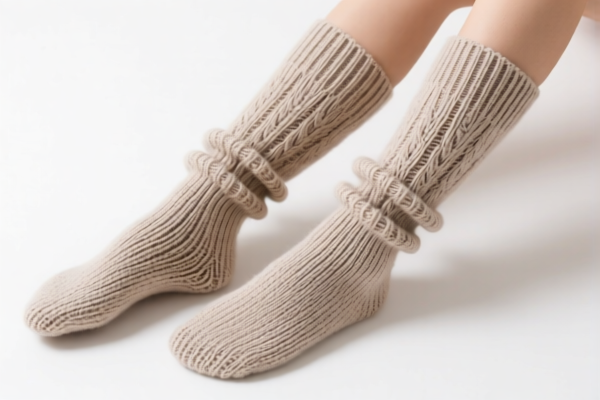
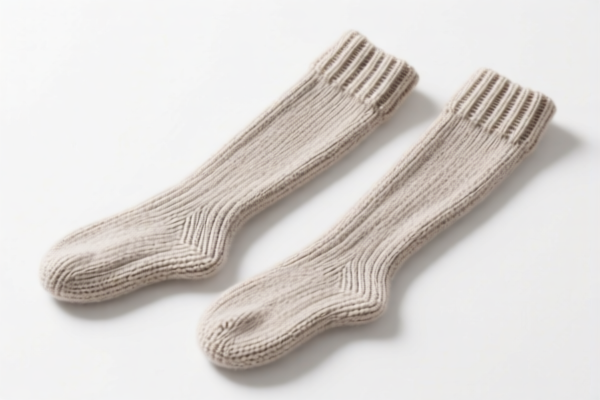
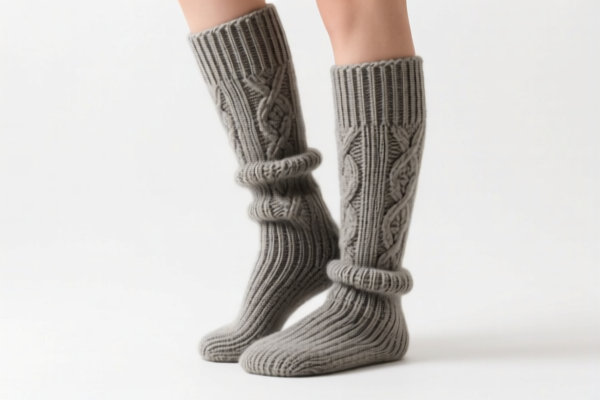
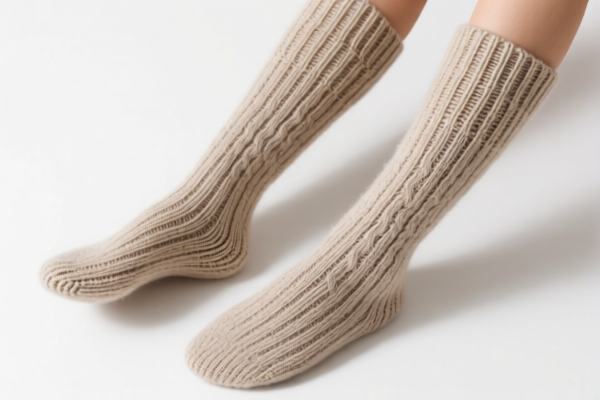
AI分析
🪑 Knitted Chair Leg Anti-Slip Cover (Leg Protectors)
🌐 HS Code Reference & Customs Clearance Guide | 2026 Latest Tariff Analysis | Professional Entry Strategy
📌 I. Product Definition & Classification: What Exactly Are These?
Knitted chair leg covers, often referred to as "leg socks," "leg protectors," or "anti-slip booties," are textile accessories designed to fit over the legs of furniture (chairs, tables, stools). Their primary functions are: 1. Protection: Preventing scratches on hardwood/tile floors. 2. Stability: Reducing sliding noise and movement. 3. Aesthetics: Matching interior decor.
In international trade, these items are classified based on two key factors: * Manufacturing Method: "Knitted" or "Crocheted" vs. "Made Up" (sewn from woven fabric). * Function: Are they "Stockings" (foot/leg covering for humans) or "Clothing Accessories" (for furniture)?
⚠️ Critical Distinction:
- If classified as Stockings/Hosiery (Chapter 61), they are viewed as covering a body part (even if metaphorically, the leg).
- If classified as Clothing Accessories (Chapter 62 or 61.17), they are viewed as a general textile accessory.
- Note: Customs authorities often scrutinize "Knitted" goods. The distinction between Chapter 61 (Knitted/Crocheted) and Chapter 62 (Non-Knitted) is paramount for tariff calculation.
📦 II. HS Code Classification Details (2026 Latest Tariff Authority Comparison)
The following HS Codes are derived from the provided data, focusing on US import regulations for Chinese-origin goods.
| HS Code | Product Description | Classification Logic | Total Tax Rate |
|---|---|---|---|
6115.95.60.00 |
Knitted Leggings/Leg Covers (Hosiery Category) | Classified under Chapter 61 (Knitted). Treated as "Other knitting garments" or hosiery accessories. "Knitted" form matches hosiery structure. | 27.5% |
6115.95.90.00 |
Other Knitted Leggings/Covers (Non-Specific Fiber) | Also Chapter 61. Broader category for knitted leg coverings not specified elsewhere. Assumed cotton or synthetic without specific fiber conflict. | 31.0% |
6117.80.95.70 |
Other Made-Up Knitted/Crocheted Accessories | Chapter 61. Classified as a "Made-up Accessory" rather than hosiery. No evidence of being cotton/wool/silk specific. | 32.1% |
6217.10.95.10 |
Other Made-Up Clothing Accessories (Non-Knitted/Woven) | Chapter 62. Note: Data implies "Other made up clothing accessories". If the item is woven or non-knitted, or if customs re-classes knitted items as general accessories. | 32.1% |
6217.10.85.00 |
Other Made-Up Clothing Accessories (Low Tariff Bracket) | Chapter 62. A specific sub-category for general accessories with 0% Additional Tariff (Section 301) but higher Base Duty. Best Rate Option. | 24.6% |
🔍 Key Insight:
- The choice between Chapter 61 (Knitted) and Chapter 62 (Made-Up) is the biggest risk factor.
-6217.10.85.00offers the lowest total duty (24.6%) despite being a "Made-Up Accessory." This suggests a strategic classification where the item is deemed a general accessory rather than hosiery, potentially avoiding higher "Hosiery" surcharges.
💰 III. 2026 Detailed Tariff Rate Breakdown (Including Surcharges)
✅ Applicable Country: United States (US)
✅ Country of Origin: China (CN)
✅ Effective Date: November 10, 2025 onwards (Includes subsequent imports)
🎯 1. 6115.95.60.00 — Knitted Leg Covers (Hosiery Category)
| Item | Content |
|---|---|
| Base Duty | 10.0% (Ad Valorem) |
| Section 301 Tariff | +7.5% (Standard "China Plus" surcharge) |
| Section 122 Tariff | +10.0% (Specific punitive tariff) |
| Total Tax Rate | 27.5% |
| Tax Calculation | CIF Value × 27.5% |
| De Minimis Exemption | ❌ Not Eligible (Deny de_minimis for Section 301/122 goods) |
| Legal Path | IEEPA:9903.01.25 → USITC:6115.95.60.00 → FOOTNOTE:Section 122 |
📌 Explanation:
- Hosiery-like knitted goods attract the base 10%.
- The 7.5% is the standard Section 301 addition for Chapter 61 textiles.
- The 10% is a specific "Section 122" tariff, often applied to specific textile categories or under recent trade enforcement actions.
- Total: 27.5%.
🎯 2. 6115.95.90.00 — Other Knitted Leg Covers (General Knitted)
| Item | Content |
|---|---|
| Base Duty | 13.5% |
| Section 301 Tariff | +7.5% |
| Section 122 Tariff | +10.0% |
| Total Tax Rate | 31.0% |
| Tax Calculation | CIF Value × 31.0% |
| De Minimis Exemption | ❌ Not Eligible |
| Legal Path | IEEPA:9903.01.25 → USITC:6115.95.90.00 → FOOTNOTE:Section 122 |
📌 Note:
- This code is for knitted items that don't fit the specific "60.00" subheading.
- Higher base duty (13.5%) makes it more expensive than6115.95.60.00.
- Still subject to the same 7.5% + 10% surcharges.
🎯 3. 6117.80.95.70 — Other Made-Up Knitted Accessories
| Item | Content |
|---|---|
| Base Duty | 14.6% |
| Section 301 Tariff | +7.5% |
| Section 122 Tariff | +10.0% |
| Total Tax Rate | 32.1% |
| Tax Calculation | CIF Value × 32.1% |
| De Minimis Exemption | ❌ Not Eligible |
| Legal Path | IEEPA:9903.01.25 → USITC:6117.80.95.70 → FOOTNOTE:Section 122 |
📌 Note:
- Classifying as "Other Accessories" under Chapter 61 carries the highest base duty (14.6%).
- Same surcharges apply. This is the most expensive Chapter 61 option.
🎯 4. 6217.10.95.10 — Other Made-Up Clothing Accessories (Non-Knitted/Woven Logic)
| Item | Content |
|---|---|
| Base Duty | 14.6% |
| Section 301 Tariff | +7.5% |
| Section 122 Tariff | +10.0% |
| Total Tax Rate | 32.1% |
| Tax Calculation | CIF Value × 32.1% |
| De Minimis Exemption | ❌ Not Eligible |
| Legal Path | IEEPA:9903.01.25 → USITC:6217.10.95.10 → FOOTNOTE:Section 122 |
📌 Note:
- If customs re-classes your "Knitted" item as "Made-Up" (e.g., arguing it's sewn, not knitted), it falls under Chapter 62.
- However, this specific code still incurs the full 14.6% base + 17.5% surcharges = 32.1%.
🎯 5. 6217.10.85.00 — STRATEGIC LOW-TARIFF OPTION (Other Made-Up Accessories)
| Item | Content |
|---|---|
| Base Duty | 14.6% |
| Section 301 Tariff | 0.0% (Exempt or different bracket) |
| Section 122 Tariff | +10.0% |
| Total Tax Rate | 24.6% |
| Tax Calculation | CIF Value × 24.6% |
| De Minimis Exemption | ❌ Not Eligible (Due to 122 Tariff) |
| Legal Path | IEEPA:9903.01.25 → USITC:6217.10.85.00 → FOOTNOTE:Section 122 |
📌 Strategic Insight:
- This is the LOWEST TARIFF CODE in the dataset.
- Why? While the Base Duty is high (14.6%), the Section 301 tariff is 0%.
- This suggests a specific sub-category within "Made-Up Accessories" that enjoys relief from the 7.5% Section 301 surcharge, but still pays the 10% Section 122 tariff.
- Crucial: This classification relies on successfully arguing the item is "Other Made-Up Clothing Accessory" under this specific subheading, avoiding the higher Section 301 burdens of hosiery codes.
🛠️ IV. Customs Clearance Practical Advice (Avoiding Pitfalls)
✅ 1. Documentation Checklist (Non-Negotiable)
| Document | Required? | Explanation |
|---|---|---|
| ✅ Product Specification Sheet | ✔️ | Must clearly state "Knitted," material (e.g., Polyester, Cotton blend), and function ("Anti-slip cover for chair legs"). |
| ✅ Product Photos | ✔️ | Close-ups showing the knitted texture (loop structure) vs. woven. If woven, it must be classified under Chapter 62. |
| ✅ Commercial Invoice | ✔️ | Description: "Knitted Chair Leg Protectors, Model XYZ, 100% Polyester, Made in China." Avoid vague terms like "Textile Part." |
| ✅ Certificate of Origin (CO) | ✔️ | Mandatory for proving Chinese origin to apply/add surcharges. |
| ✅ Packing List | ✔️ | Detail dimensions and weight per unit. |
⚠️ Warning: If the item is Woven (not knitted), you MUST use Chapter 62 codes (
6217...). Using a Chapter 61 code (6115...) for a woven item is misclassification and leads to penalties.
✅ 2. Declaration Strategy (Key Mnemonic)
🔥 "Knitted is Ch61, Woven is Ch62; Accessory Bracket Saves Money!"
| Scenario | Correct HS Code | Reason |
|---|---|---|
| Knitted, Hosiery-like | 6115.95.60.00 or 6115.95.90.00 |
If deemed "legging/hosiery" for humans/animals. |
| Knitted, General Accessory | 6117.80.95.70 |
If deemed a general textile accessory. |
| Woven (or re-classified as such) | 6217.10.85.00 |
Recommended if eligible. Lower total tax (24.6%) due to 0% Section 301. |
| Woven (Standard Accessory) | 6217.10.95.10 |
Higher tax (32.1%). |
💡 Pro Tip:
- To benefit from6217.10.85.00, ensure the description emphasizes "Furniture Accessory" or "Clothing Accessory" rather than "Hosiery."
- Highlight that the item is "Made-Up" (cut and sewn) to fit Chapter 62, even if the fabric is knitted (though this is a legal gray area; consult a customs broker).
- Do not claim "De Minimis" (Section 321) clearance. These items are subject to Section 301 and 122 tariffs, requiring formal entry.
✅ 3. Special Handling
| Situation | Advice |
|---|---|
| Mixed Materials | If the cover has rubber anti-slip dots, ensure the fabric content >50%. If rubber is dominant, it may be classified under Chapter 39 (Plastics) or 40 (Rubber), changing the HS Code entirely. |
| OEM Custom Designs | Provide design specs to prove it's a "finished accessory" and not a raw material. |
| Section 122 Targeting | The 10% Section 122 tariff applies to most of these codes. There is no exemption for furniture accessories under this specific clause in the provided data. Plan for this 10% cost. |
🌍 V. Global Market Comparison (2026)
| Country/Region | Recommended HS Code | Total Tariff (China Origin) | Notes |
|---|---|---|---|
| 🇺🇸 USA | 6217.10.85.00 (Strategic) |
24.6% | Best rate. 6115... codes are 27.5%-32.1%. |
| 🇨🇳 China | 6217.10.95.00 |
~5-10% | Import duty into China is lower; no Section 301. |
| 🇪🇺 EU | 6217.10.90 |
4-12% | Depends on exact material. No Section 301/122. |
| 🇬🇧 UK | 6217.10.90 |
4-12% | Post-Brexit rules apply. |
| 🇨🇦 Canada | 6217.10.90 |
0-18% | CUSMA may apply if Canadian-made. |
📌 Conclusion:
- The US market is the most complex due to Section 301 (7.5%) and Section 122 (10%) tariffs.
-6217.10.85.00is the optimal HS Code for minimizing duties on Chinese-origin chair leg covers, provided the classification as "Other Made-Up Accessory" is defensible.
📌 VI. Common Errors & Pitfalls (Lessons Learned)
❌ Error 1: Classifying Knitted Leg Covers as "Hosiery" (6115...)
👉 Consequence: Higher tax (27.5%-32.1%) vs. Accessory (24.6%).
👉 Solution: Argue for "General Accessory" classification under Chapter 62 if possible.
❌ Error 2: Claiming "De Minimis" (Section 321) for shipments under $800
👉 Consequence: Goods seized or back-charged 24.6%-32.1% because Section 301/122 goods are excluded from De Minimis.
👉 Solution: Always file formal entry for these textile accessories from China.
❌ Error 3: Misidentifying Knitted vs. Woven
👉 Consequence: If Knitted but declared as Woven (Chapter 62), customs may fine you for misclassification. If Woven but declared as Knitted (Chapter 61), you may pay wrong duty.
👉 Solution: Provide microscopic photos or weave structure diagrams.
❌ Error 4: Ignoring Section 122 Tariff
👉 Consequence: Underestimating costs by 10%.
👉 Solution: Factor the 10% Section 122 tariff into all FOB/CIF calculations.
🎯 VII. Conclusion: Smart Classification, Cost Savings!
🎯 Remember the Golden Rule:
🔹 "Knitted? Check Chapter 61. Woven? Check Chapter 62. Accessory? Try
6217.10.85.00for 24.6%."
🔹 "No De Minimis for China Textiles! Plan for Formal Entry."
🔹 "Section 122 is a 10% Landmine. Always Include It."
📌 Pro Tip:
- If your supplier can produce a Woven version (even if less durable), it might still fall under 6217.10.85.00, potentially securing the lower tax rate if it avoids Section 301.
- Always request an Advance Ruling from US CBP if your shipment volume is high.
- Negotiate FOB Pricing with suppliers who include the 24.6% tax burden in their base price to maintain margin.
📣 Immediate Action:
📞 Hire a licensed US Customs Broker.
📄 Submit product photos + specification sheet.
🚀 Declare as6217.10.85.00if defensible, or6115.95.60.00if clearly hosiery-like.
✨ Professional Clearance Starts with Accurate Classification!
💼 Your Margin Depends on the HS Code!
用户评价
关于 HS 编码归类
协调制度(HS)是由世界海关组织(WCO)制定的国际贸易商品分类标准。全球 200 多个国家采用 HS 系统作为海关关税、贸易统计和进出口监管的基础。
每个 HS 编码遵循以下层级结构:
- 章(2 位)——商品大类(例如:第 84 章:机器和机械设备)
- 品目(4 位)——章内的更具体分类
- 子目(6 位)——国际通用细分,所有 WCO 成员国统一使用
- 本国细分(8-10 位)——各国自行扩展的细分编码,如美国 HTSUS 10 位编码
正确的 HS 编码归类对于顺利通关、准确缴纳关税和遵守贸易法规至关重要。错误归类可能导致海关延误、多缴关税或罚款。
从CN进口到US时,适用的关税税率可能包括:
- 最惠国(MFN)税率——适用于 WTO 成员国的标准关税税率
- 普通税率——适用于无贸易协定国家
- 贸易救济关税——附加关税,如 301 条款(反倾销)、232 条款(国家安全)或反补贴税
本页内容仅供参考。如需正式归类,请咨询当地海关或持牌报关代理。