Knitted Chair Leg Anti Slip Cover
CN → US| HS Code | Tariff Rate | Origin | Destination | Doc |
|---|---|---|---|---|
| 6115956000 | 27.5% | CN | US | Official Doc |
| 6217109510 | 32.1% | CN | US | Official Doc |
| 6115959000 | 31.0% | CN | US | Official Doc |
| 6117809570 | 32.1% | CN | US | Official Doc |
| 6217108500 | 24.6% | CN | US | Official Doc |
Product Images
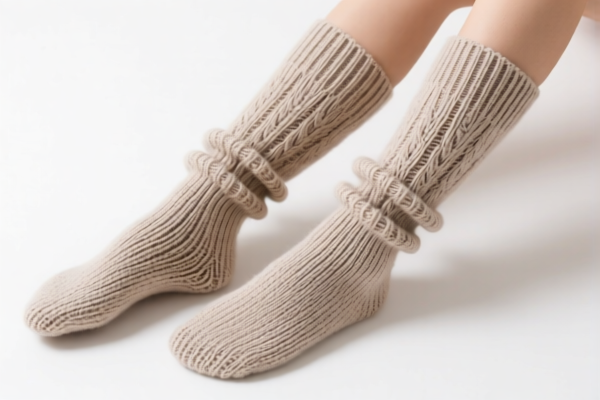
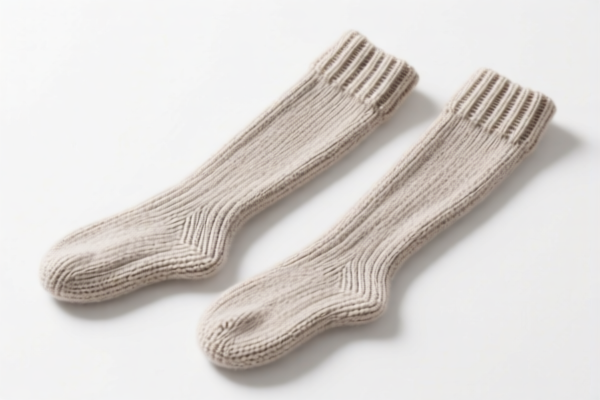
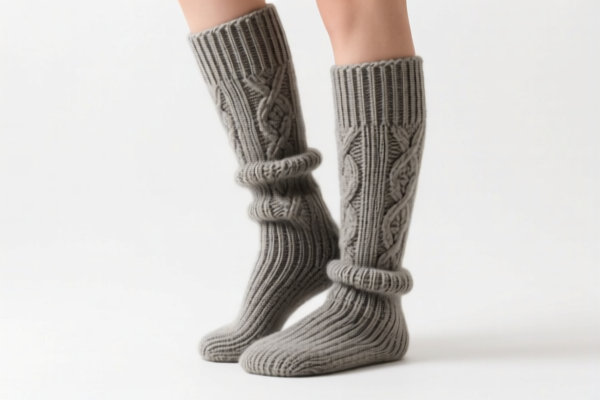
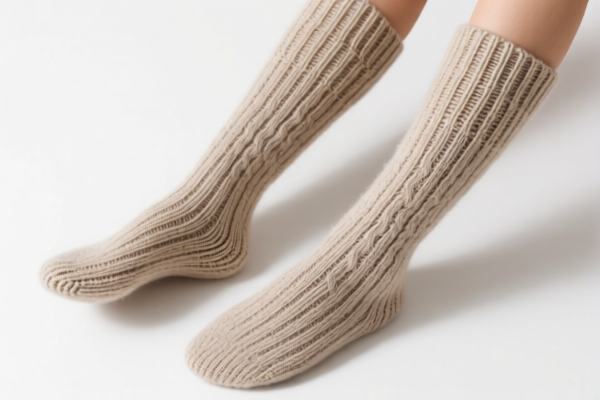
AI Analysis
🪑 Knitted Chair Leg Anti-Slip Cover (Leg Protectors)
🌐 HS Code Reference & Customs Clearance Guide | 2026 Latest Tariff Analysis | Professional Entry Strategy
📌 I. Product Definition & Classification: What Exactly Are These?
Knitted chair leg covers, often referred to as "leg socks," "leg protectors," or "anti-slip booties," are textile accessories designed to fit over the legs of furniture (chairs, tables, stools). Their primary functions are: 1. Protection: Preventing scratches on hardwood/tile floors. 2. Stability: Reducing sliding noise and movement. 3. Aesthetics: Matching interior decor.
In international trade, these items are classified based on two key factors: * Manufacturing Method: "Knitted" or "Crocheted" vs. "Made Up" (sewn from woven fabric). * Function: Are they "Stockings" (foot/leg covering for humans) or "Clothing Accessories" (for furniture)?
⚠️ Critical Distinction:
- If classified as Stockings/Hosiery (Chapter 61), they are viewed as covering a body part (even if metaphorically, the leg).
- If classified as Clothing Accessories (Chapter 62 or 61.17), they are viewed as a general textile accessory.
- Note: Customs authorities often scrutinize "Knitted" goods. The distinction between Chapter 61 (Knitted/Crocheted) and Chapter 62 (Non-Knitted) is paramount for tariff calculation.
📦 II. HS Code Classification Details (2026 Latest Tariff Authority Comparison)
The following HS Codes are derived from the provided data, focusing on US import regulations for Chinese-origin goods.
| HS Code | Product Description | Classification Logic | Total Tax Rate |
|---|---|---|---|
6115.95.60.00 |
Knitted Leggings/Leg Covers (Hosiery Category) | Classified under Chapter 61 (Knitted). Treated as "Other knitting garments" or hosiery accessories. "Knitted" form matches hosiery structure. | 27.5% |
6115.95.90.00 |
Other Knitted Leggings/Covers (Non-Specific Fiber) | Also Chapter 61. Broader category for knitted leg coverings not specified elsewhere. Assumed cotton or synthetic without specific fiber conflict. | 31.0% |
6117.80.95.70 |
Other Made-Up Knitted/Crocheted Accessories | Chapter 61. Classified as a "Made-up Accessory" rather than hosiery. No evidence of being cotton/wool/silk specific. | 32.1% |
6217.10.95.10 |
Other Made-Up Clothing Accessories (Non-Knitted/Woven) | Chapter 62. Note: Data implies "Other made up clothing accessories". If the item is woven or non-knitted, or if customs re-classes knitted items as general accessories. | 32.1% |
6217.10.85.00 |
Other Made-Up Clothing Accessories (Low Tariff Bracket) | Chapter 62. A specific sub-category for general accessories with 0% Additional Tariff (Section 301) but higher Base Duty. Best Rate Option. | 24.6% |
🔍 Key Insight:
- The choice between Chapter 61 (Knitted) and Chapter 62 (Made-Up) is the biggest risk factor.
-6217.10.85.00offers the lowest total duty (24.6%) despite being a "Made-Up Accessory." This suggests a strategic classification where the item is deemed a general accessory rather than hosiery, potentially avoiding higher "Hosiery" surcharges.
💰 III. 2026 Detailed Tariff Rate Breakdown (Including Surcharges)
✅ Applicable Country: United States (US)
✅ Country of Origin: China (CN)
✅ Effective Date: November 10, 2025 onwards (Includes subsequent imports)
🎯 1. 6115.95.60.00 — Knitted Leg Covers (Hosiery Category)
| Item | Content |
|---|---|
| Base Duty | 10.0% (Ad Valorem) |
| Section 301 Tariff | +7.5% (Standard "China Plus" surcharge) |
| Section 122 Tariff | +10.0% (Specific punitive tariff) |
| Total Tax Rate | 27.5% |
| Tax Calculation | CIF Value × 27.5% |
| De Minimis Exemption | ❌ Not Eligible (Deny de_minimis for Section 301/122 goods) |
| Legal Path | IEEPA:9903.01.25 → USITC:6115.95.60.00 → FOOTNOTE:Section 122 |
📌 Explanation:
- Hosiery-like knitted goods attract the base 10%.
- The 7.5% is the standard Section 301 addition for Chapter 61 textiles.
- The 10% is a specific "Section 122" tariff, often applied to specific textile categories or under recent trade enforcement actions.
- Total: 27.5%.
🎯 2. 6115.95.90.00 — Other Knitted Leg Covers (General Knitted)
| Item | Content |
|---|---|
| Base Duty | 13.5% |
| Section 301 Tariff | +7.5% |
| Section 122 Tariff | +10.0% |
| Total Tax Rate | 31.0% |
| Tax Calculation | CIF Value × 31.0% |
| De Minimis Exemption | ❌ Not Eligible |
| Legal Path | IEEPA:9903.01.25 → USITC:6115.95.90.00 → FOOTNOTE:Section 122 |
📌 Note:
- This code is for knitted items that don't fit the specific "60.00" subheading.
- Higher base duty (13.5%) makes it more expensive than6115.95.60.00.
- Still subject to the same 7.5% + 10% surcharges.
🎯 3. 6117.80.95.70 — Other Made-Up Knitted Accessories
| Item | Content |
|---|---|
| Base Duty | 14.6% |
| Section 301 Tariff | +7.5% |
| Section 122 Tariff | +10.0% |
| Total Tax Rate | 32.1% |
| Tax Calculation | CIF Value × 32.1% |
| De Minimis Exemption | ❌ Not Eligible |
| Legal Path | IEEPA:9903.01.25 → USITC:6117.80.95.70 → FOOTNOTE:Section 122 |
📌 Note:
- Classifying as "Other Accessories" under Chapter 61 carries the highest base duty (14.6%).
- Same surcharges apply. This is the most expensive Chapter 61 option.
🎯 4. 6217.10.95.10 — Other Made-Up Clothing Accessories (Non-Knitted/Woven Logic)
| Item | Content |
|---|---|
| Base Duty | 14.6% |
| Section 301 Tariff | +7.5% |
| Section 122 Tariff | +10.0% |
| Total Tax Rate | 32.1% |
| Tax Calculation | CIF Value × 32.1% |
| De Minimis Exemption | ❌ Not Eligible |
| Legal Path | IEEPA:9903.01.25 → USITC:6217.10.95.10 → FOOTNOTE:Section 122 |
📌 Note:
- If customs re-classes your "Knitted" item as "Made-Up" (e.g., arguing it's sewn, not knitted), it falls under Chapter 62.
- However, this specific code still incurs the full 14.6% base + 17.5% surcharges = 32.1%.
🎯 5. 6217.10.85.00 — STRATEGIC LOW-TARIFF OPTION (Other Made-Up Accessories)
| Item | Content |
|---|---|
| Base Duty | 14.6% |
| Section 301 Tariff | 0.0% (Exempt or different bracket) |
| Section 122 Tariff | +10.0% |
| Total Tax Rate | 24.6% |
| Tax Calculation | CIF Value × 24.6% |
| De Minimis Exemption | ❌ Not Eligible (Due to 122 Tariff) |
| Legal Path | IEEPA:9903.01.25 → USITC:6217.10.85.00 → FOOTNOTE:Section 122 |
📌 Strategic Insight:
- This is the LOWEST TARIFF CODE in the dataset.
- Why? While the Base Duty is high (14.6%), the Section 301 tariff is 0%.
- This suggests a specific sub-category within "Made-Up Accessories" that enjoys relief from the 7.5% Section 301 surcharge, but still pays the 10% Section 122 tariff.
- Crucial: This classification relies on successfully arguing the item is "Other Made-Up Clothing Accessory" under this specific subheading, avoiding the higher Section 301 burdens of hosiery codes.
🛠️ IV. Customs Clearance Practical Advice (Avoiding Pitfalls)
✅ 1. Documentation Checklist (Non-Negotiable)
| Document | Required? | Explanation |
|---|---|---|
| ✅ Product Specification Sheet | ✔️ | Must clearly state "Knitted," material (e.g., Polyester, Cotton blend), and function ("Anti-slip cover for chair legs"). |
| ✅ Product Photos | ✔️ | Close-ups showing the knitted texture (loop structure) vs. woven. If woven, it must be classified under Chapter 62. |
| ✅ Commercial Invoice | ✔️ | Description: "Knitted Chair Leg Protectors, Model XYZ, 100% Polyester, Made in China." Avoid vague terms like "Textile Part." |
| ✅ Certificate of Origin (CO) | ✔️ | Mandatory for proving Chinese origin to apply/add surcharges. |
| ✅ Packing List | ✔️ | Detail dimensions and weight per unit. |
⚠️ Warning: If the item is Woven (not knitted), you MUST use Chapter 62 codes (
6217...). Using a Chapter 61 code (6115...) for a woven item is misclassification and leads to penalties.
✅ 2. Declaration Strategy (Key Mnemonic)
🔥 "Knitted is Ch61, Woven is Ch62; Accessory Bracket Saves Money!"
| Scenario | Correct HS Code | Reason |
|---|---|---|
| Knitted, Hosiery-like | 6115.95.60.00 or 6115.95.90.00 |
If deemed "legging/hosiery" for humans/animals. |
| Knitted, General Accessory | 6117.80.95.70 |
If deemed a general textile accessory. |
| Woven (or re-classified as such) | 6217.10.85.00 |
Recommended if eligible. Lower total tax (24.6%) due to 0% Section 301. |
| Woven (Standard Accessory) | 6217.10.95.10 |
Higher tax (32.1%). |
💡 Pro Tip:
- To benefit from6217.10.85.00, ensure the description emphasizes "Furniture Accessory" or "Clothing Accessory" rather than "Hosiery."
- Highlight that the item is "Made-Up" (cut and sewn) to fit Chapter 62, even if the fabric is knitted (though this is a legal gray area; consult a customs broker).
- Do not claim "De Minimis" (Section 321) clearance. These items are subject to Section 301 and 122 tariffs, requiring formal entry.
✅ 3. Special Handling
| Situation | Advice |
|---|---|
| Mixed Materials | If the cover has rubber anti-slip dots, ensure the fabric content >50%. If rubber is dominant, it may be classified under Chapter 39 (Plastics) or 40 (Rubber), changing the HS Code entirely. |
| OEM Custom Designs | Provide design specs to prove it's a "finished accessory" and not a raw material. |
| Section 122 Targeting | The 10% Section 122 tariff applies to most of these codes. There is no exemption for furniture accessories under this specific clause in the provided data. Plan for this 10% cost. |
🌍 V. Global Market Comparison (2026)
| Country/Region | Recommended HS Code | Total Tariff (China Origin) | Notes |
|---|---|---|---|
| 🇺🇸 USA | 6217.10.85.00 (Strategic) |
24.6% | Best rate. 6115... codes are 27.5%-32.1%. |
| 🇨🇳 China | 6217.10.95.00 |
~5-10% | Import duty into China is lower; no Section 301. |
| 🇪🇺 EU | 6217.10.90 |
4-12% | Depends on exact material. No Section 301/122. |
| 🇬🇧 UK | 6217.10.90 |
4-12% | Post-Brexit rules apply. |
| 🇨🇦 Canada | 6217.10.90 |
0-18% | CUSMA may apply if Canadian-made. |
📌 Conclusion:
- The US market is the most complex due to Section 301 (7.5%) and Section 122 (10%) tariffs.
-6217.10.85.00is the optimal HS Code for minimizing duties on Chinese-origin chair leg covers, provided the classification as "Other Made-Up Accessory" is defensible.
📌 VI. Common Errors & Pitfalls (Lessons Learned)
❌ Error 1: Classifying Knitted Leg Covers as "Hosiery" (6115...)
👉 Consequence: Higher tax (27.5%-32.1%) vs. Accessory (24.6%).
👉 Solution: Argue for "General Accessory" classification under Chapter 62 if possible.
❌ Error 2: Claiming "De Minimis" (Section 321) for shipments under $800
👉 Consequence: Goods seized or back-charged 24.6%-32.1% because Section 301/122 goods are excluded from De Minimis.
👉 Solution: Always file formal entry for these textile accessories from China.
❌ Error 3: Misidentifying Knitted vs. Woven
👉 Consequence: If Knitted but declared as Woven (Chapter 62), customs may fine you for misclassification. If Woven but declared as Knitted (Chapter 61), you may pay wrong duty.
👉 Solution: Provide microscopic photos or weave structure diagrams.
❌ Error 4: Ignoring Section 122 Tariff
👉 Consequence: Underestimating costs by 10%.
👉 Solution: Factor the 10% Section 122 tariff into all FOB/CIF calculations.
🎯 VII. Conclusion: Smart Classification, Cost Savings!
🎯 Remember the Golden Rule:
🔹 "Knitted? Check Chapter 61. Woven? Check Chapter 62. Accessory? Try
6217.10.85.00for 24.6%."
🔹 "No De Minimis for China Textiles! Plan for Formal Entry."
🔹 "Section 122 is a 10% Landmine. Always Include It."
📌 Pro Tip:
- If your supplier can produce a Woven version (even if less durable), it might still fall under 6217.10.85.00, potentially securing the lower tax rate if it avoids Section 301.
- Always request an Advance Ruling from US CBP if your shipment volume is high.
- Negotiate FOB Pricing with suppliers who include the 24.6% tax burden in their base price to maintain margin.
📣 Immediate Action:
📞 Hire a licensed US Customs Broker.
📄 Submit product photos + specification sheet.
🚀 Declare as6217.10.85.00if defensible, or6115.95.60.00if clearly hosiery-like.
✨ Professional Clearance Starts with Accurate Classification!
💼 Your Margin Depends on the HS Code!
Customer Reviews
About HS Code Classification
The Harmonized System (HS) is an internationally standardized nomenclature developed by the World Customs Organization (WCO) to classify traded products. Over 200 countries use the HS system as the basis for customs tariffs, trade statistics, and import/export regulations.
Each HS code follows a hierarchical structure:
- Chapter (2 digits) — Broad category of goods (e.g., Chapter 84: Machinery and Mechanical Appliances)
- Heading (4 digits) — More specific grouping within the chapter
- Subheading (6 digits) — Internationally standardized breakdown, used by all WCO member countries
- National subdivisions (8-10 digits) — Country-specific extensions for further classification, such as US HTSUS 10-digit codes
Correct HS code classification is essential for smooth customs clearance, accurate duty payment, and compliance with trade regulations. Misclassification can lead to customs delays, overpayment of duties, or penalties.
When importing from CN to US, the applicable tariff rates may include:
- Most-Favored-Nation (MFN) rate — The standard duty rate applied to WTO members
- General rate — Applied to countries without trade agreements
- Trade remedy duties — Additional tariffs such as Section 301 (anti-dumping), Section 232 (national security), or countervailing duties
The information provided on this page is for reference purposes only. For official classification, please consult with your local customs authority or a licensed customs broker.