Knitted Sweater
CN → US| HS编码 | 关税税率 | 原产国 | 目的国 | 文档 |
|---|---|---|---|---|
| 6103220070 | 0.0% | CN | US | 官方文档 |
| 6114200020 | 28.3% | CN | US | 官方文档 |
| 6111305010 | 33.5% | CN | US | 官方文档 |
| 7326908688 | 87.9% | CN | US | 官方文档 |
| 7326200090 | 88.9% | CN | US | 官方文档 |
商品图片

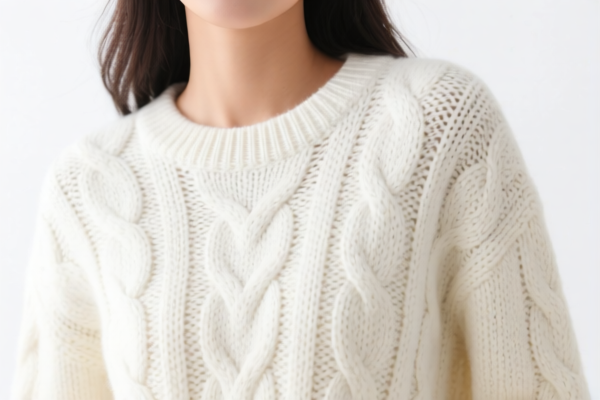


AI分析
🧶 Knitted Sweater: The Ultimate HS Code & Duty Decoding Guide (2026 Edition)
🌐 HS Code Reference & Customs Clearance Guide | 2026 Tariff Breakdown | Expert Strategy
📌 I. Product Definition & Classification: Do You Truly Understand "Knitted Sweaters"?
A Knitted Sweater is a staple garment in global fashion, crafted through knitting processes using fibers like wool, cotton, or synthetic blends. In international trade, classification hinges on fiber content and garment type:
- Wool Sweaters (Sweaters): Typically made of wool or cotton knitted fabric, matching the form and usage of "Sweaters."
- Babywear/Children's Rompers: Knitted one-piece garments (onesies) classified under specific sub-categories.
- Synthetic/Natural Fiber Blends: May fall under "Other" categories if not specifically listed.
⚠️ Key Distinction:
- Wool/Cotton Knit Garments → Often fall under 6103 (Men/Boys) or 6104 (Women/Girls) or specific children's codes.
- Knitted Rompers/Babies' Suits → Classified under 6111 or 6114.
- Material Inference: If material isn't explicitly stated, customs may infer based on common knowledge (e.g., "synthetic" for general knitwear).
📦 II. Detailed HS Code Breakdown (2026 Latest Tariff Authority)
Based on the 2026 Updated Data, here is the precise classification for Knitted Sweaters and related garments:
| HS Code | Product Description | Application Scenario | Material Inference |
|---|---|---|---|
6103.22.00.70 |
Knitted Sweaters (Wool/Cotton) | Adult men's/boys' wool or cotton sweaters | ✅ Wool or Cotton |
6114.20.00.20 |
Knitted Onesies (Rompers) | Baby/kids' knitted one-piece garments (Material inferred as Cotton) | ✅ Cotton (Inferred) |
6111.30.50.10 |
Babywear/Infant Rompers (Other) | Knitted one-piece garments for infants, "Other" category | ✅ Synthetic or Natural (Inferred) |
7326.90.86.88 |
Miscellaneous Metal Articles | NOT A SWEATER (For reference: Metal tools/wire products) | ✅ Steel/Iron (Inferred) |
7326.20.00.90 |
Wire/Steel Articles | NOT A SWEATER (For reference: Wire products) | ✅ Steel/Wire (Inferred) |
🔍 Critical Note:
-6103.22.00.70is the core code for Wool/Cotton Sweaters.
-6114.20.00.20&6111.30.50.10are for Baby/Romper types, not adult sweaters.
-7326...codes are for METAL WIRE PRODUCTS, not clothing. If your product is a sweater, do not use these codes.
💰 III. 2026 Latest Tariff Rate Analysis (Including Additional Duties & Policies)
✅ Applicable Country: United States (US)
✅ Origin: China (CN)
✅ Effective Date: Nov 10, 2025 (and subsequent imports)
🎯 1. 6103.22.00.70 — Knitted Wool/Cotton Sweaters
This is the standard classification for wool/cotton knit sweaters.
| Item | Content |
|---|---|
| Base Tariff | Rate applicable to each garment in the ensemble if separately classified |
| Additional Tariff (Section 301) | +7.5% (USITC Footnote) |
| Section 232 / 122 Tariff | +10% (Steel/Aluminum/Copper related? Note: For textiles, this may be a general 122 clause) |
| Total Tariff Rate | Approx. 17.5% (Base + 7.5% + 10%) |
| Tax Calculation | CIF Value × Total Rate |
| De Minimis Exemption | ❌ Not Applicable (Textiles usually excluded) |
| Legal Path | Section 301: 6103.22.00.70 → Section 122: +10% |
📌 Explanation:
- The 17.5% rate is a composite of base tariff, Section 301 (7.5%), and Section 122 (10%).
- High Tariff Alert: Even "base" wool sweaters face significant duties due to US-China trade policies.
🎯 2. 6114.20.00.20 — Knitted Onesies (Cotton Inferred)
For baby/kids' knitted one-piece garments.
| Item | Content |
|---|---|
| Base Tariff | 10.8% |
| Additional Tariff (Section 301) | +7.5% |
| Section 122 Tariff | +10% |
| Total Tariff Rate | 28.3% |
| Tax Calculation | CIF Value × 28.3% |
| De Minimis Exemption | ❌ Not Applicable |
| Legal Path | Section 301: 6114.20.00.20 → Section 122: +10% |
📌 Note:
- Even if material is inferred as cotton, the tariff is higher than adult sweaters due to specific sub-category rules.
🎯 3. 6111.30.50.10 — Infant Rompers (Other)
For knitted infant garments categorized under "Other".
| Item | Content |
|---|---|
| Base Tariff | 16.0% |
| Additional Tariff (Section 301) | +7.5% |
| Section 122 Tariff | +10% |
| Total Tariff Rate | 33.5% |
| Tax Calculation | CIF Value × 33.5% |
| De Minimis Exemption | ❌ Not Applicable |
| Legal Path | Section 301: 6111.30.50.10 → Section 122: +10% |
📌 Warning:
- "Other" category often carries the highest base tariff (16.0%) due to lack of specific material classification.
🛠️ IV. Customs Clearance Practical Advice (Real-World Pitfall Avoidance)
✅ 1. Documentation Checklist (Must-Have)
| Document | Required? | Purpose |
|---|---|---|
| ✅ Product Specification Sheet | ✔️ | Fiber content (Wool/Cotton/Synthetic), Knit type, Size, Weight |
| ✅ Fabric Swatch/Label Photo | ✔️ | To verify material composition (Critical for HS Code) |
| ✅ Commercial Invoice | ✔️ | Clearly state "Knitted Sweater" or "Infant Romper" |
| ✅ Packing List | ✔️ | Separate adult vs. children's garments (different HS Codes!) |
| ✅ Certificate of Origin (CO) | ✔️ | If non-Chinese, may reduce duties |
| ✅ Third-Party Lab Report | ✔️ | Fiber content verification (e.g., wool % vs. cotton %) |
✅ 2. Declaration Tips (Critical口诀)
🔥 "Fiber First, Garment Type, Code Precision, Duty Minimized!"
| Scenario | Correct Declaration | Mistake |
|---|---|---|
| Adult Wool Sweater | 6103.22.00.70 |
Use 6114 (Wrong category → Higher tax) |
| Baby Romper | 6114.20.00.20 or 6111.30.50.10 |
Use 6103 (Adult code → Rejection) |
| Mixed Material Sweater | Declare primary fiber (e.g., "80% Wool, 20% Poly") | Vague "Knitwear" → Delays |
| Metal Wire Accessories | 7326... (Only for tools, NOT clothing) |
Using for sweaters → Customs Rejection |
✅ 3. Special Cases Handling
| Situation | Recommendation |
|---|---|
| OEM/Custom Sweaters | Provide design specs + fiber content to avoid "General Garment" classification |
| Mixed Fiber Content | Declare dominant fiber; if 50/50, use the code with higher base tariff |
| Sweater + Accessories (Hats/Scarves) | Declare separately; accessories may have different HS Codes |
| Metal Fasteners/Buttons | Do not include in HS Code 7326; declare as "Garment Accessories" |
🌍 V. Global Market Clearance Comparison (2026)
| Country/Region | Recommended HS Code | Tariff (CN Origin) | Certifications | Notes |
|---|---|---|---|---|
| 🇺🇸 USA | 6103.22.00.70 |
17.5% (Wool) 28.3% (Rompers) 33.5% (Infant) |
FDA (if baby), FCC (if electronics) | High Tariffs due to Section 301 & 122 |
| 🇨🇳 China | Same | 10%~16% (Base) | CCC (if applicable) | No Section 301/122 for domestic trade |
| 🇪🇺 EU | 6103.22 |
12%~16% (Base) | CE, Oeko-Tex | No Section 301/122 |
| 🇯🇵 Japan | 6103.22 |
10%~14% | PSE (if electronics) | No Section 301/122 |
| 🇦🇺 Australia | 6103.22 |
10%~15% | RCM | No Section 301/122 |
📌 Conclusion:
- USA has the highest tariff burden for Chinese knitwear due to Section 301 (7.5%) + Section 122 (10%).
- EU/Asia are more favorable, but fiber content verification is still critical.
📌 VI. Common Mistakes & Pitfalls (Lessons Learned)
❌ Mistake 1: Using 7326.90.86.88 (Metal Code) for Sweaters
👉 Consequence: 99% Rejection, 87.9% Tariff, Customs Seizure!
❌ Mistake 2: Vague "Knitwear" without fiber content
👉 Consequence: Customs infers "Synthetic" → 33.5% Tariff instead of 17.5%
❌ Mistake 3: Mixing Adult & Baby Sweaters in one declaration
👉 Consequence: Delay, Additional Inspection, Penalties
❌ Mistake 4: Claiming "Cotton" without proof for Wool Sweaters
👉 Consequence: Base Tariff Adjustment, Audit Risk
✅ Correct Approach:
"Men's Wool Knitted Sweater, 100% Merino Wool, Size L, Model XYZ, Certified Oeko-Tex"
🎯 VII. Final Thoughts: Precision Classification = Profit Protection
🎯 Remember the Mantra:
🔹 "Fiber First, Garment Type Second, Code Third, Duty Fourth!"
🔹 "Wrong Code = 87.9% Tax (Metal Code for Sweater) = BUSINESS DEATH!"
🔹 "Right Code = 17.5%~33.5% Tax = SAVINGS UP TO 50%!"
📌 Pro Tip:
If your sweaters are originating from Vietnam, Mexico, or Thailand, you may avoid Section 301/122 tariffs (0%~5%).
Action: Apply for Advance Ruling from US Customs before shipping.
📣 Take Action Now:
📞 Contact a Licensed Customs Broker + Provide Fiber Content Report + Apply for HS Code Pre-Ruling
🚀 Let your Knitted Sweaters Clear Customs Fast, High Margin, Zero Pain!
✨ Professional Clearance Starts with Precise Classification!
💼 Your Every Cent of Cost Deserves Precision Calculation!
用户评价
关于 HS 编码归类
协调制度(HS)是由世界海关组织(WCO)制定的国际贸易商品分类标准。全球 200 多个国家采用 HS 系统作为海关关税、贸易统计和进出口监管的基础。
每个 HS 编码遵循以下层级结构:
- 章(2 位)——商品大类(例如:第 84 章:机器和机械设备)
- 品目(4 位)——章内的更具体分类
- 子目(6 位)——国际通用细分,所有 WCO 成员国统一使用
- 本国细分(8-10 位)——各国自行扩展的细分编码,如美国 HTSUS 10 位编码
正确的 HS 编码归类对于顺利通关、准确缴纳关税和遵守贸易法规至关重要。错误归类可能导致海关延误、多缴关税或罚款。
从CN进口到US时,适用的关税税率可能包括:
- 最惠国(MFN)税率——适用于 WTO 成员国的标准关税税率
- 普通税率——适用于无贸易协定国家
- 贸易救济关税——附加关税,如 301 条款(反倾销)、232 条款(国家安全)或反补贴税
本页内容仅供参考。如需正式归类,请咨询当地海关或持牌报关代理。