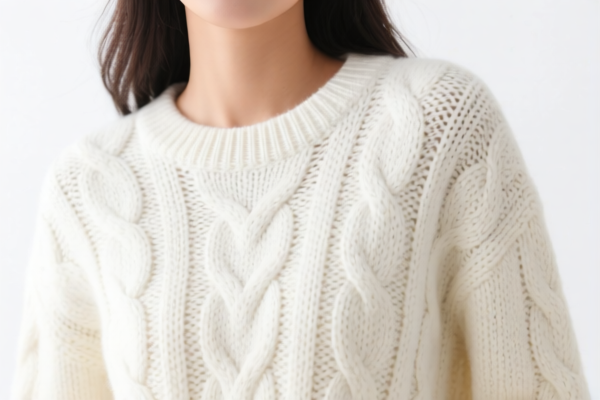
Knitted Sweater
CN → US| HS Code | Tariff Rate | Origin | Destination | Doc |
|---|---|---|---|---|
| 6103220070 | 0.0% | CN | US | Official Doc |
| 6114200020 | 28.3% | CN | US | Official Doc |
| 6111305010 | 33.5% | CN | US | Official Doc |
| 7326908688 | 87.9% | CN | US | Official Doc |
| 7326200090 | 88.9% | CN | US | Official Doc |
Product Images



AI Analysis
🧶 Knitted Sweater: The Ultimate HS Code & Duty Decoding Guide (2026 Edition)
🌐 HS Code Reference & Customs Clearance Guide | 2026 Tariff Breakdown | Expert Strategy
📌 I. Product Definition & Classification: Do You Truly Understand "Knitted Sweaters"?
A Knitted Sweater is a staple garment in global fashion, crafted through knitting processes using fibers like wool, cotton, or synthetic blends. In international trade, classification hinges on fiber content and garment type:
- Wool Sweaters (Sweaters): Typically made of wool or cotton knitted fabric, matching the form and usage of "Sweaters."
- Babywear/Children's Rompers: Knitted one-piece garments (onesies) classified under specific sub-categories.
- Synthetic/Natural Fiber Blends: May fall under "Other" categories if not specifically listed.
⚠️ Key Distinction:
- Wool/Cotton Knit Garments → Often fall under 6103 (Men/Boys) or 6104 (Women/Girls) or specific children's codes.
- Knitted Rompers/Babies' Suits → Classified under 6111 or 6114.
- Material Inference: If material isn't explicitly stated, customs may infer based on common knowledge (e.g., "synthetic" for general knitwear).
📦 II. Detailed HS Code Breakdown (2026 Latest Tariff Authority)
Based on the 2026 Updated Data, here is the precise classification for Knitted Sweaters and related garments:
| HS Code | Product Description | Application Scenario | Material Inference |
|---|---|---|---|
6103.22.00.70 |
Knitted Sweaters (Wool/Cotton) | Adult men's/boys' wool or cotton sweaters | ✅ Wool or Cotton |
6114.20.00.20 |
Knitted Onesies (Rompers) | Baby/kids' knitted one-piece garments (Material inferred as Cotton) | ✅ Cotton (Inferred) |
6111.30.50.10 |
Babywear/Infant Rompers (Other) | Knitted one-piece garments for infants, "Other" category | ✅ Synthetic or Natural (Inferred) |
7326.90.86.88 |
Miscellaneous Metal Articles | NOT A SWEATER (For reference: Metal tools/wire products) | ✅ Steel/Iron (Inferred) |
7326.20.00.90 |
Wire/Steel Articles | NOT A SWEATER (For reference: Wire products) | ✅ Steel/Wire (Inferred) |
🔍 Critical Note:
-6103.22.00.70is the core code for Wool/Cotton Sweaters.
-6114.20.00.20&6111.30.50.10are for Baby/Romper types, not adult sweaters.
-7326...codes are for METAL WIRE PRODUCTS, not clothing. If your product is a sweater, do not use these codes.
💰 III. 2026 Latest Tariff Rate Analysis (Including Additional Duties & Policies)
✅ Applicable Country: United States (US)
✅ Origin: China (CN)
✅ Effective Date: Nov 10, 2025 (and subsequent imports)
🎯 1. 6103.22.00.70 — Knitted Wool/Cotton Sweaters
This is the standard classification for wool/cotton knit sweaters.
| Item | Content |
|---|---|
| Base Tariff | Rate applicable to each garment in the ensemble if separately classified |
| Additional Tariff (Section 301) | +7.5% (USITC Footnote) |
| Section 232 / 122 Tariff | +10% (Steel/Aluminum/Copper related? Note: For textiles, this may be a general 122 clause) |
| Total Tariff Rate | Approx. 17.5% (Base + 7.5% + 10%) |
| Tax Calculation | CIF Value × Total Rate |
| De Minimis Exemption | ❌ Not Applicable (Textiles usually excluded) |
| Legal Path | Section 301: 6103.22.00.70 → Section 122: +10% |
📌 Explanation:
- The 17.5% rate is a composite of base tariff, Section 301 (7.5%), and Section 122 (10%).
- High Tariff Alert: Even "base" wool sweaters face significant duties due to US-China trade policies.
🎯 2. 6114.20.00.20 — Knitted Onesies (Cotton Inferred)
For baby/kids' knitted one-piece garments.
| Item | Content |
|---|---|
| Base Tariff | 10.8% |
| Additional Tariff (Section 301) | +7.5% |
| Section 122 Tariff | +10% |
| Total Tariff Rate | 28.3% |
| Tax Calculation | CIF Value × 28.3% |
| De Minimis Exemption | ❌ Not Applicable |
| Legal Path | Section 301: 6114.20.00.20 → Section 122: +10% |
📌 Note:
- Even if material is inferred as cotton, the tariff is higher than adult sweaters due to specific sub-category rules.
🎯 3. 6111.30.50.10 — Infant Rompers (Other)
For knitted infant garments categorized under "Other".
| Item | Content |
|---|---|
| Base Tariff | 16.0% |
| Additional Tariff (Section 301) | +7.5% |
| Section 122 Tariff | +10% |
| Total Tariff Rate | 33.5% |
| Tax Calculation | CIF Value × 33.5% |
| De Minimis Exemption | ❌ Not Applicable |
| Legal Path | Section 301: 6111.30.50.10 → Section 122: +10% |
📌 Warning:
- "Other" category often carries the highest base tariff (16.0%) due to lack of specific material classification.
🛠️ IV. Customs Clearance Practical Advice (Real-World Pitfall Avoidance)
✅ 1. Documentation Checklist (Must-Have)
| Document | Required? | Purpose |
|---|---|---|
| ✅ Product Specification Sheet | ✔️ | Fiber content (Wool/Cotton/Synthetic), Knit type, Size, Weight |
| ✅ Fabric Swatch/Label Photo | ✔️ | To verify material composition (Critical for HS Code) |
| ✅ Commercial Invoice | ✔️ | Clearly state "Knitted Sweater" or "Infant Romper" |
| ✅ Packing List | ✔️ | Separate adult vs. children's garments (different HS Codes!) |
| ✅ Certificate of Origin (CO) | ✔️ | If non-Chinese, may reduce duties |
| ✅ Third-Party Lab Report | ✔️ | Fiber content verification (e.g., wool % vs. cotton %) |
✅ 2. Declaration Tips (Critical口诀)
🔥 "Fiber First, Garment Type, Code Precision, Duty Minimized!"
| Scenario | Correct Declaration | Mistake |
|---|---|---|
| Adult Wool Sweater | 6103.22.00.70 |
Use 6114 (Wrong category → Higher tax) |
| Baby Romper | 6114.20.00.20 or 6111.30.50.10 |
Use 6103 (Adult code → Rejection) |
| Mixed Material Sweater | Declare primary fiber (e.g., "80% Wool, 20% Poly") | Vague "Knitwear" → Delays |
| Metal Wire Accessories | 7326... (Only for tools, NOT clothing) |
Using for sweaters → Customs Rejection |
✅ 3. Special Cases Handling
| Situation | Recommendation |
|---|---|
| OEM/Custom Sweaters | Provide design specs + fiber content to avoid "General Garment" classification |
| Mixed Fiber Content | Declare dominant fiber; if 50/50, use the code with higher base tariff |
| Sweater + Accessories (Hats/Scarves) | Declare separately; accessories may have different HS Codes |
| Metal Fasteners/Buttons | Do not include in HS Code 7326; declare as "Garment Accessories" |
🌍 V. Global Market Clearance Comparison (2026)
| Country/Region | Recommended HS Code | Tariff (CN Origin) | Certifications | Notes |
|---|---|---|---|---|
| 🇺🇸 USA | 6103.22.00.70 |
17.5% (Wool) 28.3% (Rompers) 33.5% (Infant) |
FDA (if baby), FCC (if electronics) | High Tariffs due to Section 301 & 122 |
| 🇨🇳 China | Same | 10%~16% (Base) | CCC (if applicable) | No Section 301/122 for domestic trade |
| 🇪🇺 EU | 6103.22 |
12%~16% (Base) | CE, Oeko-Tex | No Section 301/122 |
| 🇯🇵 Japan | 6103.22 |
10%~14% | PSE (if electronics) | No Section 301/122 |
| 🇦🇺 Australia | 6103.22 |
10%~15% | RCM | No Section 301/122 |
📌 Conclusion:
- USA has the highest tariff burden for Chinese knitwear due to Section 301 (7.5%) + Section 122 (10%).
- EU/Asia are more favorable, but fiber content verification is still critical.
📌 VI. Common Mistakes & Pitfalls (Lessons Learned)
❌ Mistake 1: Using 7326.90.86.88 (Metal Code) for Sweaters
👉 Consequence: 99% Rejection, 87.9% Tariff, Customs Seizure!
❌ Mistake 2: Vague "Knitwear" without fiber content
👉 Consequence: Customs infers "Synthetic" → 33.5% Tariff instead of 17.5%
❌ Mistake 3: Mixing Adult & Baby Sweaters in one declaration
👉 Consequence: Delay, Additional Inspection, Penalties
❌ Mistake 4: Claiming "Cotton" without proof for Wool Sweaters
👉 Consequence: Base Tariff Adjustment, Audit Risk
✅ Correct Approach:
"Men's Wool Knitted Sweater, 100% Merino Wool, Size L, Model XYZ, Certified Oeko-Tex"
🎯 VII. Final Thoughts: Precision Classification = Profit Protection
🎯 Remember the Mantra:
🔹 "Fiber First, Garment Type Second, Code Third, Duty Fourth!"
🔹 "Wrong Code = 87.9% Tax (Metal Code for Sweater) = BUSINESS DEATH!"
🔹 "Right Code = 17.5%~33.5% Tax = SAVINGS UP TO 50%!"
📌 Pro Tip:
If your sweaters are originating from Vietnam, Mexico, or Thailand, you may avoid Section 301/122 tariffs (0%~5%).
Action: Apply for Advance Ruling from US Customs before shipping.
📣 Take Action Now:
📞 Contact a Licensed Customs Broker + Provide Fiber Content Report + Apply for HS Code Pre-Ruling
🚀 Let your Knitted Sweaters Clear Customs Fast, High Margin, Zero Pain!
✨ Professional Clearance Starts with Precise Classification!
💼 Your Every Cent of Cost Deserves Precision Calculation!
Customer Reviews
About HS Code Classification
The Harmonized System (HS) is an internationally standardized nomenclature developed by the World Customs Organization (WCO) to classify traded products. Over 200 countries use the HS system as the basis for customs tariffs, trade statistics, and import/export regulations.
Each HS code follows a hierarchical structure:
- Chapter (2 digits) — Broad category of goods (e.g., Chapter 84: Machinery and Mechanical Appliances)
- Heading (4 digits) — More specific grouping within the chapter
- Subheading (6 digits) — Internationally standardized breakdown, used by all WCO member countries
- National subdivisions (8-10 digits) — Country-specific extensions for further classification, such as US HTSUS 10-digit codes
Correct HS code classification is essential for smooth customs clearance, accurate duty payment, and compliance with trade regulations. Misclassification can lead to customs delays, overpayment of duties, or penalties.
When importing from CN to US, the applicable tariff rates may include:
- Most-Favored-Nation (MFN) rate — The standard duty rate applied to WTO members
- General rate — Applied to countries without trade agreements
- Trade remedy duties — Additional tariffs such as Section 301 (anti-dumping), Section 232 (national security), or countervailing duties
The information provided on this page is for reference purposes only. For official classification, please consult with your local customs authority or a licensed customs broker.