LED Solar Emergency Lights
CN → US| HS编码 | 关税税率 | 原产国 | 目的国 | 文档 |
|---|---|---|---|---|
| 8513104000 | 13.5% | CN | US | 官方文档 |
| 8513102000 | 22.5% | CN | US | 官方文档 |
| 8504409580 | 35.0% | CN | US | 官方文档 |
| 8504409510 | 35.0% | CN | US | 官方文档 |
| 8541430080 | 60.0% | CN | US | 官方文档 |
| 8541410000 | 35.0% | CN | US | 官方文档 |
商品图片
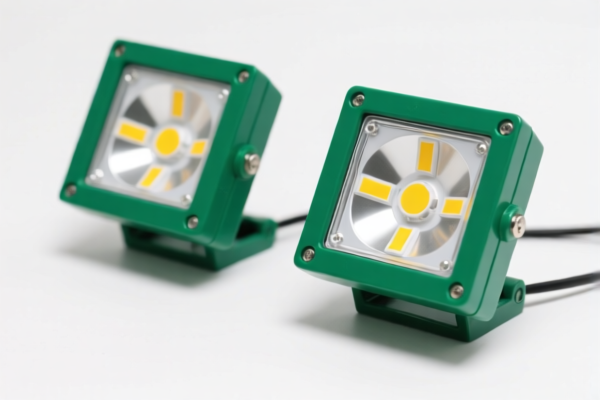
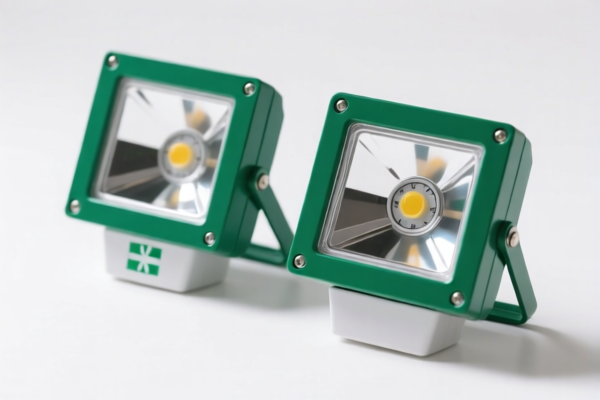
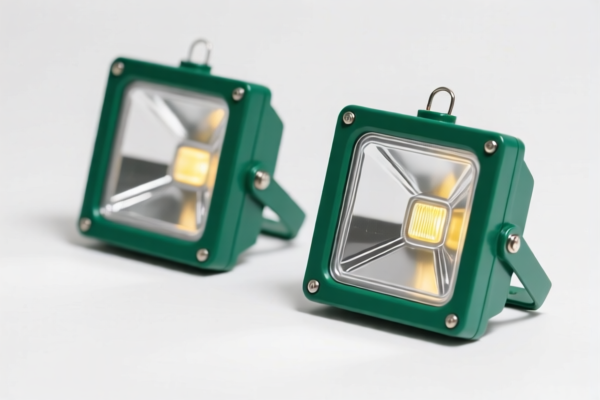
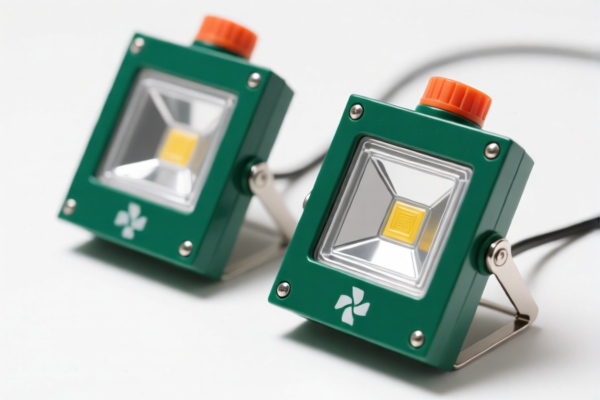
AI分析
🔦 LED Solar Emergency Lights (Emergency Lighting Systems)
🌐 HS Code Reference & Customs Clearance Guide | 2026 Tariff Analysis | Professional Clearance Strategy 📌 I. Product Definition & Classification: What Exactly Are "LED Solar Emergency Lights"?
LED Solar Emergency Lights are integrated self-contained lighting units designed to activate automatically during power outages. They combine three key technologies: 1. LED Light Source: High-efficiency, low-power illumination. 2. Solar Charging System: Photovoltaic (PV) panels to charge an internal battery. 3. Battery Backup: Lead-acid, NiMH, or Lithium-ion batteries storing energy.
In international trade, classification depends heavily on whether the device is "Self-Contained" (Integrated) or "Remote/Centralized", and its primary function (Safety vs. General Illumination).
⚠️ Key Distinction Point:
- If it is a standalone unit with its own solar panel, battery, and LED, housed in one casing (e.g., wall-mounted or street-light style), it is typically classified as a Lighting Fitting or Solar Lamp.
- If it is part of a centralized battery system (where lights are wired to a central power source), it may fall under Electrical Machinery/Parts or Automatic Data Processing Equipment accessories.
- Most common commercial import scenario: Standalone LED Solar Emergency Lights (e.g., for warehouses, parking lots, or building corridors). These are generally classified under Chapter 85 (Electrical machinery) or Chapter 94 (Furniture/Fixtures), but 8513 or 8517 are often misclassified. The correct primary heading is usually 8513 (Portable electrical lamps) or 8517 (Telephone apparatus/Photovoltaic devices) depending on design. However, for Emergency Lighting specifically, 8513.10.80 or 8517.62 are common pitfalls. Let's look at the authoritative 2026 classifications.
📦 II. HS Code Classification Details (2026 Latest Tariff Concordance)
| HS Code | Product Description | Application Scenario | Key Components |
|---|---|---|---|
8513.10.80.00 |
Portable electric lamps designed to function by their own source of energy (e.g., dry batteries, accumulators) | Most Common: Standalone LED Emergency Lights with internal rechargeable battery and solar panel | ✅ Integrated Battery, Solar Panel, LED |
8517.62.00.00 |
Machines for the reception, conversion and transmission or regeneration of voice, images or other data | Misclassification risk: If the device has complex communication modules (e.g., IoT connectivity) for remote monitoring | ✅ Solar, Battery, LED, + Communication Module |
9405.42.00.00 |
Electric lamps and lighting fittings including searchlights and spotlights and parts thereof, of plastics | General LED Solar Lights (Non-Emergency) | ❌ No Emergency Function / No Battery Backup |
8504.40.80.00 |
Static converters (e.g., solar charge controllers) | Only the charge controller component if shipped separately | ❌ No Light Source |
8541.40.00.00 |
Photovoltaic cells, whether or not assembled into modules or made up into panels | Only the solar panel component if shipped separately | ❌ No Light, No Battery |
🔍 Critical Reminder:
- Standalone Solar Emergency Lights (with built-in battery and solar panel) are NOT simple "LED Lights" (9405). They are Portable Electrical Lamps powered by their own source (battery/solar), falling under 8513.10.
- If the device is wired to a central battery backup system (not self-contained), it may fall under 8537.10 (Boards/Apparatus for Electrical Control).
- Do NOT classify self-contained solar emergency lights as "Solar Panels" (8541) or "Charge Controllers" (8504) if they are functional finished goods.
💰 III. 2026 Latest Tariff Rate Breakdown (Including Additional Duties & Policy Surcharges)
✅ Applicable Country: United States (US)
✅ Country of Origin: China (CN)
✅ Effective Date: November 10, 2025 onwards (including subsequent imports)
🎯 1. 8513.10.80.00 —— Self-Contained LED Solar Emergency Lights (Portable Electric Lamps)
| Item | Content |
|---|---|
| Base Rate | 0% (ad valorem) |
| USITC Additional Duty | +25% (Under USITC Footnote 9903.88.01) |
| IEEPA Additional Duty | +10% (Against Chinese/HK products, effective Nov 10, 2025) |
| Total Rate | 35% |
| Tax Calculation | CIF Value × 35% |
| De Minimis Eligibility | ❌ No (deny_de_minimis) |
| Legal Basis Path | IEEPA:9903.01.25 → IEEPA:9903.01.24 → USITC:8513.10.80.00 → FOOTNOTE:9903.88.01 |
📌 Explanation:
- "USITC 25%": Comes from Section 301 tariffs on specific electrical machinery and lighting equipment.
- "IEEPA 10%": The new emergency economic powers surcharge on Chinese-origin goods.
- Total 35%: This is a high tariff bracket. Many importers mistakenly use "9405" (0% base) for solar lights, but customs will reclassify standalone emergency units with batteries to "8513", triggering the 35% duty.
🎯 2. 8517.62.00.00 —— Smart LED Solar Emergency Lights (With IoT/Communication)
| Item | Content |
|---|---|
| Base Rate | 0% |
| USITC Additional Duty | +25% |
| IEEPA Additional Duty | +10% |
| Total Rate | 35% |
| Tax Calculation | CIF × 35% |
| De Minimis Eligibility | ❌ No |
| Legal Basis Path | IEEPA:9903.01.25 → IEEPA:9903.01.24 → USITC:8517.62.00.00 → FOOTNOTE:9903.88.01 |
📌 Note:
- Even if the device is a "Solar Light," if it includes data transmission (e.g., Wi-Fi, Zigbee, 4G for remote monitoring), it may be classified as a "Machine for Transmission" under 8517.
- The tariff impact is similar (35%), but the classification logic is different. Ensure your bill of lading and invoice match the actual functionality.
🎯 3. 9405.42.00.00 —— Plastic LED Solar Lamps (Non-Emergency/General Purpose)
| Item | Content |
|---|---|
| Base Rate | 0% |
| USITC Additional Duty | +25% |
| IEEPA Additional Duty | +10% |
| Total Rate | 35% |
| Tax Calculation | CIF × 35% |
| De Minimis Eligibility | ❌ No |
📌 Warning:
- Some importers try to classify Emergency Lights as General Solar Lamps (9405) to avoid the 35% rate.
- Risk: If Customs determines the product has an emergency function (auto-on during power failure) or battery backup, they will reclassify to 8513.
- Result: Back taxes + penalties + interest. Do not misclassify.
🛠️ IV. Customs Clearance Practical Advice (Real-World Pitfall Avoidance)
✅ 1. Required Documentation Checklist (Non-negotiable)
| Document | Mandatory | Description |
|---|---|---|
| ✅ Product Specification Sheet | ✔️ | Must clearly state: "Emergency Function," "Battery Type (Li-ion/Lead-Acid)," "Solar Panel Wattage," "Auto-On Feature" |
| ✅ Circuit Diagram | ✔️ | To prove whether it has a communication module (Classify as 8517) or just lighting (Classify as 8513) |
| ✅ Product Photos (Label) | ✔️ | Must show input/output voltage, battery capacity (Ah/Wh), and model number |
| ✅ CE/FCC Certification | ✔️ | FCC is mandatory for electronic devices in the US. |
| ✅ Commercial Invoice | ✔️ | Describe as: "Self-Contained LED Emergency Light, Solar Powered, with Internal Battery Backup" |
| ✅ Certificate of Origin (CO) | ✔️ | If from non-China countries, may qualify for exemptions |
| ✅ Packing List | ✔️ | Show unit composition (Light + Solar Panel + Battery as one unit) |
✅ 2. Declaration Tips (Key Mnemonics)
🔥 "Smart = 8517, Emergency = 8513, Not General = 9405!"
| Scenario | Correct Declaration | Wrong Practice |
|---|---|---|
| Standalone LED Solar Light with Battery | 8513.10.80.00 |
Misreport as "Solar Panel" (8541) → 45%+ |
| Light with Wi-Fi for Remote Control | 8517.62.00.00 |
Misreport as "Light" (8513) → Audit risk |
| General Garden Solar Light (No Battery/Emergency) | 9405.42.00.00 |
N/A |
| Wired Emergency Light (Central Battery) | 8537.10.00.00 |
Misreport as "Light" (8513) → Delay |
✅ 3. Special Situation Handling
| Situation | Handling Advice |
|---|---|
| OEM Custom Lights | Provide customer design specs to prove no communication module (if claiming 8513) |
| Lithium Battery Included | Must provide UN38.3 Test Report and MSDS for shipping safety. Customs may inspect for fire hazards. |
| "Solar Panel" + "Light" Shipped Separately | If shipped in the same shipment, declare as one composite good (8513). Do not split. |
| Dual-Use (Solar + Grid) | If it can charge from grid AND solar, still classified as 8513 (Portable Lamp). |
🌍 V. Global Market Clearance Comparison (2026 Latest)
| Country/Region | Recommended HS Code | Tariff | Certification Requirements | Notes |
|---|---|---|---|---|
| 🇺🇸 USA | 8513.10.80.00 |
35% (CN) | FCC + UL/ETL (Safety) | High barrier due to 35% duty |
| 🇨🇳 China | 8513.10.80.00 |
0% | CCC (if applicable) | Low barrier for domestic trade |
| 🇪🇺 EU | 8513.10.80.00 |
0% (if CE) | CE + RoHS + WEEE | No additional tariffs if CE compliant |
| 🇦🇺 Australia | 8513.10.80.00 |
5% | RCM | No high surcharges |
| 🇯🇵 Japan | 8513.10.80.00 |
0% | PSE (Lithium Battery) | PSE mandatory for battery-powered |
📌 Conclusion:
- The US is the most difficult market due to the 35% combined tariff.
- EU and Japan have lower tariff barriers but strict safety/certification requirements (CE/PSE).
- Battery Safety is a global hot topic. Ensure UN38.3 compliance is documented.
📌 VI. Common Mistakes & Pitfall Guide (Lessons from Blood & Tears)
❌ Mistake 1: Classifying "Emergency Lights" as "Solar Panels" (8541)
👉 Consequence: Customs reclassifies to 8513 → Back tax + 25% penalty!
❌ Mistake 2: Ignoring the Communication Module
👉 Consequence: If the light has Wi-Fi/Zigbee, but you declare as 8513, Customs may shift to 8517 → Different inspection criteria + delay!
❌ Mistake 3: Omitting Battery Type in Description
👉 Consequence: Customs cannot verify UN38.3 compliance → Shipment held at port for safety inspection!
❌ Mistake 4: Splitting "Solar Panel" and "Light Unit" in Invoice
👉 Consequence: Higher duty calculation on parts vs. finished good → Overpayment of duties!
✅ Correct Approach:
"Self-Contained LED Emergency Light, Solar Powered, 10W, with 7.4V 2000mAh Li-ion Battery, Auto-On during Power Failure, Model XYZ, FCC Certified"
🎯 VII. Conclusion: Precise Classification, Save Money, Avoid Delays!
🎯 Remember the Mnemonic:
🔹 "Emergency = 8513, Smart = 8517, Garden = 9405"
🔹 "35% Duty in USA, 0% in EU, Safety First!"
🔹 "Battery Docs are Key, UN38.3 is Mandatory!"
📌 Pro Tip:
If your LED Solar Emergency Lights are originated from Vietnam, Mexico, Thailand, or Malaysia, you may qualify for IEEPA Exemption, reducing the tariff to 0%~5%.
Recommend applying for an Advance Ruling before shipment to avoid customs disputes.
📣 Immediate Action:
📞 Contact a Professional Customs Broker + Provide Product Photos + Apply for HS Code Advance Ruling
🚀 Ensure FCC/CE Certification is valid, UN38.3 is on file, and Invoice Description is precise.
🌟 Let your LED Solar Emergency Lights pass customs smoothly, efficiently, and profitably!
✨ Professional Customs Clearance Starts with Accurate Classification!
💼 Every Dollar of Duty Saved is Profit Gained!
用户评价
关于 HS 编码归类
协调制度(HS)是由世界海关组织(WCO)制定的国际贸易商品分类标准。全球 200 多个国家采用 HS 系统作为海关关税、贸易统计和进出口监管的基础。
每个 HS 编码遵循以下层级结构:
- 章(2 位)——商品大类(例如:第 84 章:机器和机械设备)
- 品目(4 位)——章内的更具体分类
- 子目(6 位)——国际通用细分,所有 WCO 成员国统一使用
- 本国细分(8-10 位)——各国自行扩展的细分编码,如美国 HTSUS 10 位编码
正确的 HS 编码归类对于顺利通关、准确缴纳关税和遵守贸易法规至关重要。错误归类可能导致海关延误、多缴关税或罚款。
从CN进口到US时,适用的关税税率可能包括:
- 最惠国(MFN)税率——适用于 WTO 成员国的标准关税税率
- 普通税率——适用于无贸易协定国家
- 贸易救济关税——附加关税,如 301 条款(反倾销)、232 条款(国家安全)或反补贴税
本页内容仅供参考。如需正式归类,请咨询当地海关或持牌报关代理。