LED Solar Emergency Lights
CN → US| HS Code | Tariff Rate | Origin | Destination | Doc |
|---|---|---|---|---|
| 8513104000 | 13.5% | CN | US | Official Doc |
| 8513102000 | 22.5% | CN | US | Official Doc |
| 8504409580 | 35.0% | CN | US | Official Doc |
| 8504409510 | 35.0% | CN | US | Official Doc |
| 8541430080 | 60.0% | CN | US | Official Doc |
| 8541410000 | 35.0% | CN | US | Official Doc |
Product Images
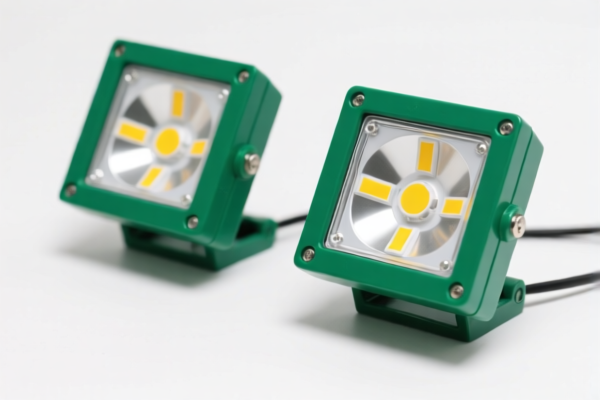
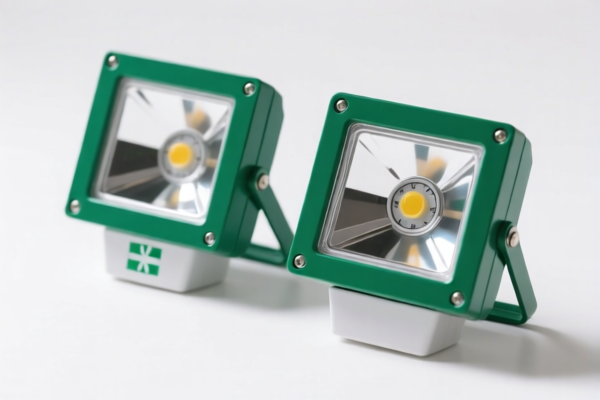
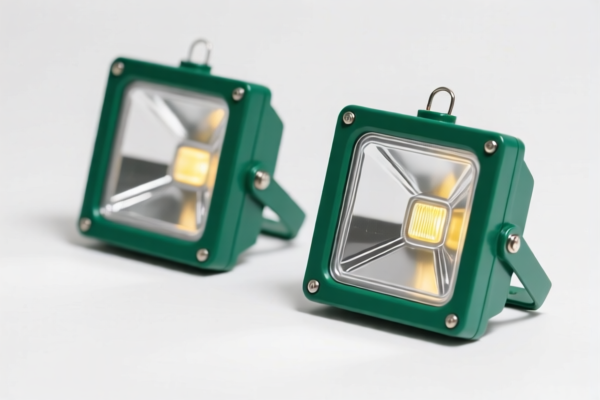
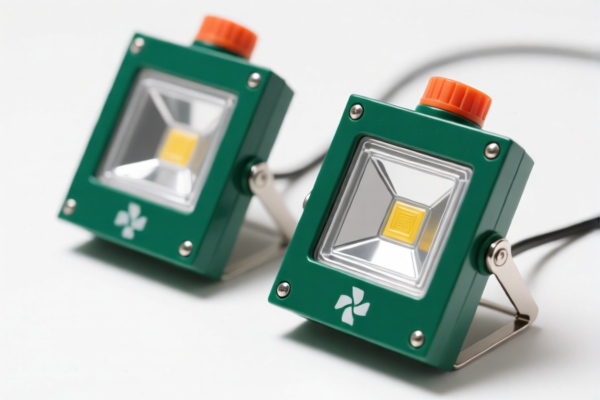
AI Analysis
🔦 LED Solar Emergency Lights (Emergency Lighting Systems)
🌐 HS Code Reference & Customs Clearance Guide | 2026 Tariff Analysis | Professional Clearance Strategy 📌 I. Product Definition & Classification: What Exactly Are "LED Solar Emergency Lights"?
LED Solar Emergency Lights are integrated self-contained lighting units designed to activate automatically during power outages. They combine three key technologies: 1. LED Light Source: High-efficiency, low-power illumination. 2. Solar Charging System: Photovoltaic (PV) panels to charge an internal battery. 3. Battery Backup: Lead-acid, NiMH, or Lithium-ion batteries storing energy.
In international trade, classification depends heavily on whether the device is "Self-Contained" (Integrated) or "Remote/Centralized", and its primary function (Safety vs. General Illumination).
⚠️ Key Distinction Point:
- If it is a standalone unit with its own solar panel, battery, and LED, housed in one casing (e.g., wall-mounted or street-light style), it is typically classified as a Lighting Fitting or Solar Lamp.
- If it is part of a centralized battery system (where lights are wired to a central power source), it may fall under Electrical Machinery/Parts or Automatic Data Processing Equipment accessories.
- Most common commercial import scenario: Standalone LED Solar Emergency Lights (e.g., for warehouses, parking lots, or building corridors). These are generally classified under Chapter 85 (Electrical machinery) or Chapter 94 (Furniture/Fixtures), but 8513 or 8517 are often misclassified. The correct primary heading is usually 8513 (Portable electrical lamps) or 8517 (Telephone apparatus/Photovoltaic devices) depending on design. However, for Emergency Lighting specifically, 8513.10.80 or 8517.62 are common pitfalls. Let's look at the authoritative 2026 classifications.
📦 II. HS Code Classification Details (2026 Latest Tariff Concordance)
| HS Code | Product Description | Application Scenario | Key Components |
|---|---|---|---|
8513.10.80.00 |
Portable electric lamps designed to function by their own source of energy (e.g., dry batteries, accumulators) | Most Common: Standalone LED Emergency Lights with internal rechargeable battery and solar panel | ✅ Integrated Battery, Solar Panel, LED |
8517.62.00.00 |
Machines for the reception, conversion and transmission or regeneration of voice, images or other data | Misclassification risk: If the device has complex communication modules (e.g., IoT connectivity) for remote monitoring | ✅ Solar, Battery, LED, + Communication Module |
9405.42.00.00 |
Electric lamps and lighting fittings including searchlights and spotlights and parts thereof, of plastics | General LED Solar Lights (Non-Emergency) | ❌ No Emergency Function / No Battery Backup |
8504.40.80.00 |
Static converters (e.g., solar charge controllers) | Only the charge controller component if shipped separately | ❌ No Light Source |
8541.40.00.00 |
Photovoltaic cells, whether or not assembled into modules or made up into panels | Only the solar panel component if shipped separately | ❌ No Light, No Battery |
🔍 Critical Reminder:
- Standalone Solar Emergency Lights (with built-in battery and solar panel) are NOT simple "LED Lights" (9405). They are Portable Electrical Lamps powered by their own source (battery/solar), falling under 8513.10.
- If the device is wired to a central battery backup system (not self-contained), it may fall under 8537.10 (Boards/Apparatus for Electrical Control).
- Do NOT classify self-contained solar emergency lights as "Solar Panels" (8541) or "Charge Controllers" (8504) if they are functional finished goods.
💰 III. 2026 Latest Tariff Rate Breakdown (Including Additional Duties & Policy Surcharges)
✅ Applicable Country: United States (US)
✅ Country of Origin: China (CN)
✅ Effective Date: November 10, 2025 onwards (including subsequent imports)
🎯 1. 8513.10.80.00 —— Self-Contained LED Solar Emergency Lights (Portable Electric Lamps)
| Item | Content |
|---|---|
| Base Rate | 0% (ad valorem) |
| USITC Additional Duty | +25% (Under USITC Footnote 9903.88.01) |
| IEEPA Additional Duty | +10% (Against Chinese/HK products, effective Nov 10, 2025) |
| Total Rate | 35% |
| Tax Calculation | CIF Value × 35% |
| De Minimis Eligibility | ❌ No (deny_de_minimis) |
| Legal Basis Path | IEEPA:9903.01.25 → IEEPA:9903.01.24 → USITC:8513.10.80.00 → FOOTNOTE:9903.88.01 |
📌 Explanation:
- "USITC 25%": Comes from Section 301 tariffs on specific electrical machinery and lighting equipment.
- "IEEPA 10%": The new emergency economic powers surcharge on Chinese-origin goods.
- Total 35%: This is a high tariff bracket. Many importers mistakenly use "9405" (0% base) for solar lights, but customs will reclassify standalone emergency units with batteries to "8513", triggering the 35% duty.
🎯 2. 8517.62.00.00 —— Smart LED Solar Emergency Lights (With IoT/Communication)
| Item | Content |
|---|---|
| Base Rate | 0% |
| USITC Additional Duty | +25% |
| IEEPA Additional Duty | +10% |
| Total Rate | 35% |
| Tax Calculation | CIF × 35% |
| De Minimis Eligibility | ❌ No |
| Legal Basis Path | IEEPA:9903.01.25 → IEEPA:9903.01.24 → USITC:8517.62.00.00 → FOOTNOTE:9903.88.01 |
📌 Note:
- Even if the device is a "Solar Light," if it includes data transmission (e.g., Wi-Fi, Zigbee, 4G for remote monitoring), it may be classified as a "Machine for Transmission" under 8517.
- The tariff impact is similar (35%), but the classification logic is different. Ensure your bill of lading and invoice match the actual functionality.
🎯 3. 9405.42.00.00 —— Plastic LED Solar Lamps (Non-Emergency/General Purpose)
| Item | Content |
|---|---|
| Base Rate | 0% |
| USITC Additional Duty | +25% |
| IEEPA Additional Duty | +10% |
| Total Rate | 35% |
| Tax Calculation | CIF × 35% |
| De Minimis Eligibility | ❌ No |
📌 Warning:
- Some importers try to classify Emergency Lights as General Solar Lamps (9405) to avoid the 35% rate.
- Risk: If Customs determines the product has an emergency function (auto-on during power failure) or battery backup, they will reclassify to 8513.
- Result: Back taxes + penalties + interest. Do not misclassify.
🛠️ IV. Customs Clearance Practical Advice (Real-World Pitfall Avoidance)
✅ 1. Required Documentation Checklist (Non-negotiable)
| Document | Mandatory | Description |
|---|---|---|
| ✅ Product Specification Sheet | ✔️ | Must clearly state: "Emergency Function," "Battery Type (Li-ion/Lead-Acid)," "Solar Panel Wattage," "Auto-On Feature" |
| ✅ Circuit Diagram | ✔️ | To prove whether it has a communication module (Classify as 8517) or just lighting (Classify as 8513) |
| ✅ Product Photos (Label) | ✔️ | Must show input/output voltage, battery capacity (Ah/Wh), and model number |
| ✅ CE/FCC Certification | ✔️ | FCC is mandatory for electronic devices in the US. |
| ✅ Commercial Invoice | ✔️ | Describe as: "Self-Contained LED Emergency Light, Solar Powered, with Internal Battery Backup" |
| ✅ Certificate of Origin (CO) | ✔️ | If from non-China countries, may qualify for exemptions |
| ✅ Packing List | ✔️ | Show unit composition (Light + Solar Panel + Battery as one unit) |
✅ 2. Declaration Tips (Key Mnemonics)
🔥 "Smart = 8517, Emergency = 8513, Not General = 9405!"
| Scenario | Correct Declaration | Wrong Practice |
|---|---|---|
| Standalone LED Solar Light with Battery | 8513.10.80.00 |
Misreport as "Solar Panel" (8541) → 45%+ |
| Light with Wi-Fi for Remote Control | 8517.62.00.00 |
Misreport as "Light" (8513) → Audit risk |
| General Garden Solar Light (No Battery/Emergency) | 9405.42.00.00 |
N/A |
| Wired Emergency Light (Central Battery) | 8537.10.00.00 |
Misreport as "Light" (8513) → Delay |
✅ 3. Special Situation Handling
| Situation | Handling Advice |
|---|---|
| OEM Custom Lights | Provide customer design specs to prove no communication module (if claiming 8513) |
| Lithium Battery Included | Must provide UN38.3 Test Report and MSDS for shipping safety. Customs may inspect for fire hazards. |
| "Solar Panel" + "Light" Shipped Separately | If shipped in the same shipment, declare as one composite good (8513). Do not split. |
| Dual-Use (Solar + Grid) | If it can charge from grid AND solar, still classified as 8513 (Portable Lamp). |
🌍 V. Global Market Clearance Comparison (2026 Latest)
| Country/Region | Recommended HS Code | Tariff | Certification Requirements | Notes |
|---|---|---|---|---|
| 🇺🇸 USA | 8513.10.80.00 |
35% (CN) | FCC + UL/ETL (Safety) | High barrier due to 35% duty |
| 🇨🇳 China | 8513.10.80.00 |
0% | CCC (if applicable) | Low barrier for domestic trade |
| 🇪🇺 EU | 8513.10.80.00 |
0% (if CE) | CE + RoHS + WEEE | No additional tariffs if CE compliant |
| 🇦🇺 Australia | 8513.10.80.00 |
5% | RCM | No high surcharges |
| 🇯🇵 Japan | 8513.10.80.00 |
0% | PSE (Lithium Battery) | PSE mandatory for battery-powered |
📌 Conclusion:
- The US is the most difficult market due to the 35% combined tariff.
- EU and Japan have lower tariff barriers but strict safety/certification requirements (CE/PSE).
- Battery Safety is a global hot topic. Ensure UN38.3 compliance is documented.
📌 VI. Common Mistakes & Pitfall Guide (Lessons from Blood & Tears)
❌ Mistake 1: Classifying "Emergency Lights" as "Solar Panels" (8541)
👉 Consequence: Customs reclassifies to 8513 → Back tax + 25% penalty!
❌ Mistake 2: Ignoring the Communication Module
👉 Consequence: If the light has Wi-Fi/Zigbee, but you declare as 8513, Customs may shift to 8517 → Different inspection criteria + delay!
❌ Mistake 3: Omitting Battery Type in Description
👉 Consequence: Customs cannot verify UN38.3 compliance → Shipment held at port for safety inspection!
❌ Mistake 4: Splitting "Solar Panel" and "Light Unit" in Invoice
👉 Consequence: Higher duty calculation on parts vs. finished good → Overpayment of duties!
✅ Correct Approach:
"Self-Contained LED Emergency Light, Solar Powered, 10W, with 7.4V 2000mAh Li-ion Battery, Auto-On during Power Failure, Model XYZ, FCC Certified"
🎯 VII. Conclusion: Precise Classification, Save Money, Avoid Delays!
🎯 Remember the Mnemonic:
🔹 "Emergency = 8513, Smart = 8517, Garden = 9405"
🔹 "35% Duty in USA, 0% in EU, Safety First!"
🔹 "Battery Docs are Key, UN38.3 is Mandatory!"
📌 Pro Tip:
If your LED Solar Emergency Lights are originated from Vietnam, Mexico, Thailand, or Malaysia, you may qualify for IEEPA Exemption, reducing the tariff to 0%~5%.
Recommend applying for an Advance Ruling before shipment to avoid customs disputes.
📣 Immediate Action:
📞 Contact a Professional Customs Broker + Provide Product Photos + Apply for HS Code Advance Ruling
🚀 Ensure FCC/CE Certification is valid, UN38.3 is on file, and Invoice Description is precise.
🌟 Let your LED Solar Emergency Lights pass customs smoothly, efficiently, and profitably!
✨ Professional Customs Clearance Starts with Accurate Classification!
💼 Every Dollar of Duty Saved is Profit Gained!
Customer Reviews
About HS Code Classification
The Harmonized System (HS) is an internationally standardized nomenclature developed by the World Customs Organization (WCO) to classify traded products. Over 200 countries use the HS system as the basis for customs tariffs, trade statistics, and import/export regulations.
Each HS code follows a hierarchical structure:
- Chapter (2 digits) — Broad category of goods (e.g., Chapter 84: Machinery and Mechanical Appliances)
- Heading (4 digits) — More specific grouping within the chapter
- Subheading (6 digits) — Internationally standardized breakdown, used by all WCO member countries
- National subdivisions (8-10 digits) — Country-specific extensions for further classification, such as US HTSUS 10-digit codes
Correct HS code classification is essential for smooth customs clearance, accurate duty payment, and compliance with trade regulations. Misclassification can lead to customs delays, overpayment of duties, or penalties.
When importing from CN to US, the applicable tariff rates may include:
- Most-Favored-Nation (MFN) rate — The standard duty rate applied to WTO members
- General rate — Applied to countries without trade agreements
- Trade remedy duties — Additional tariffs such as Section 301 (anti-dumping), Section 232 (national security), or countervailing duties
The information provided on this page is for reference purposes only. For official classification, please consult with your local customs authority or a licensed customs broker.