Lace Fabric Patch
CN → US| HS编码 | 关税税率 | 原产国 | 目的国 | 文档 |
|---|---|---|---|---|
| 5806321095 | 41.0% | CN | US | 官方文档 |
| 5806393080 | 35.0% | CN | US | 官方文档 |
| 5811000000 | 0.0% | CN | US | 官方文档 |
| 5812000000 | 0.0% | CN | US | 官方文档 |
商品图片
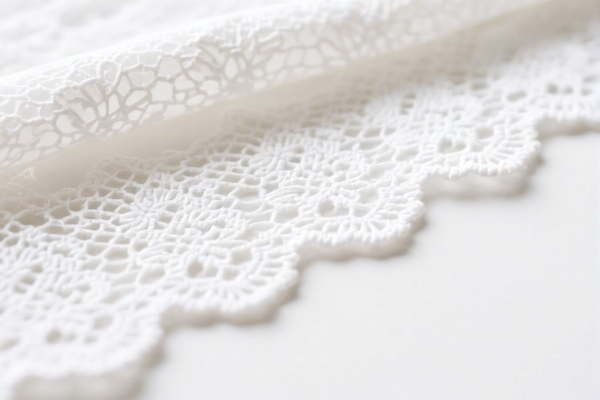
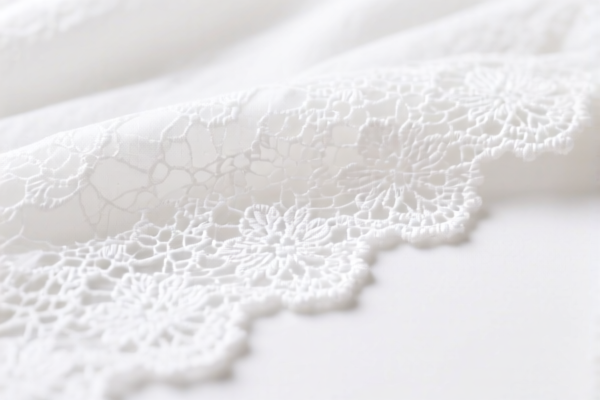
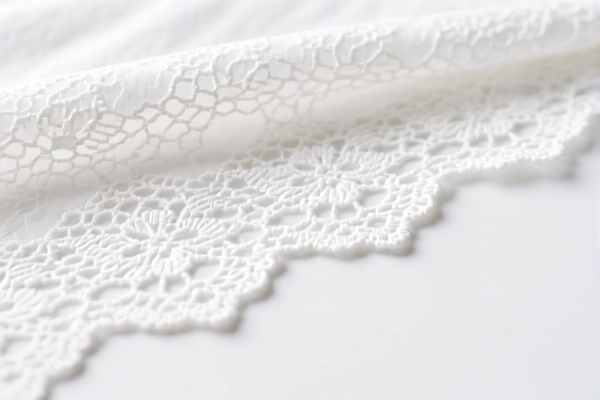
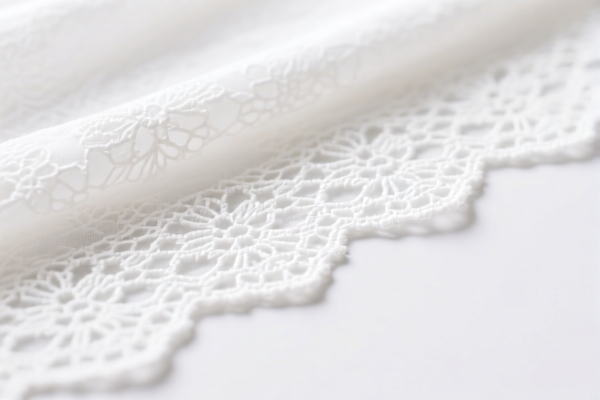
AI分析
🧵 Lace & Ornamental Fabrics (Lace Fabric Patches)
🌐 HS Code Reference & Customs Clearance Guide | 2026 Latest Tariff Analysis | Professional-Level Strategy
📌 I. Product Definition & Classification: Do You Really Understand "Lace Fabric Patches"?
"Lace Fabric Patches" are decorative textile components used for embroidery, apparel embellishment, upholstery, or industrial filtration. In international trade, they are not a single monolithic category but are divided based on construction method, material composition, and specific application.
The key distinction lies in whether the item is a finished ornamental fabric (Heading 5811/5812) or a narrow woven ribbon/fabric (Heading 5806). Misclassification here can lead to severe discrepancies in duty rates, especially given the current geopolitical trade tariffs (e.g., US-China Section 301 duties).
⚠️ Key Distinction Points:
- Ground Lace / Ornamental Fabrics: Broad fabrics made by knitting, crocheting, or weaving specifically for lace-like purposes (e.g., Chantilly lace, Guipure). → HS 5811 / 5812
- Narrow Woven Fabrics (Ribbons/Bands): Specific narrow widths (<30cm usually) assembled by adhesive or woven with warp/weft for trimming or binding. → HS 5806
- Material Matters: Man-made fibers (polyester/nylon) vs. Other textiles (cotton/wool) trigger different sub-headings and tax implications.
📦 II. HS Code Classification Details (2026 Latest Tariff Authority Cross-Reference)
Based on the provided dataset, here are the four critical HS Codes applicable to "Lace Fabric Patches" and their specific use cases.
| HS Code | Product Description | Applicable Scenario | Material Type | Width/Type |
|---|---|---|---|---|
5811.00.00.00 |
Lace and other ornamental or fancy woven fabrics, including lace made by knitting or crocheting, whether or not containing metal threads | Decorative lace patches, bridal veil components, high-end garment trimmings made via knitting/crochet | Mixed / Any | Broad Fabric / Ground Lace |
5812.00.00.00 |
Other woven fabrics, including those made by knitting or crocheting, of a kind used for embroidery, lace, or other ornamental purposes | Embroidery backing fabrics, tulle bases, ornamental woven meshes used as a foundation for lace | Mixed / Any | Ornamental Woven |
5806.32.10.95 |
Narrow woven fabrics... Of man-made fibers... Ribbons... Other | Narrow polyester/nylon lace trims, machine-made ribbon patches, synthetic decorative bands | Man-made Fibers (Poly/Nylon) | Narrow Fabric (<30cm) |
5806.39.30.80 |
Narrow woven fabrics... Of other textile materials... Other | Narrow cotton/woen lace trims, natural fiber ribbon patches, natural fiber ornamental bands | Other Textile Materials (Cotton/Wool/etc.) | Narrow Fabric (<30cm) |
🔍 Critical Warning:
-5811&5812are for "Ground Fabrics" (broader, complex structures). If your patch is a large piece of lace fabric cut into shapes, it likely falls here.
-5806is for "Narrow Woven Fabrics". If your patch is a small, narrow strip or ribbon-like piece, it falls here.
- Misclassification Risk: Declaring a narrow ribbon patch as5811(broad fabric) might seem harmless, but if customs determines it fits5806, you could face penalties for inaccurate declaration, especially regarding the 25% additional tariff on5806.39.
💰 III. 2026 Latest Tariff Rate Breakdown (Including Surcharges & Policy Add-ons)
✅ Applicable Country: United States (US)
✅ Origin: China (CN) (Assumed based on typical high-tariff scenarios; adjust if origin differs)
✅ Effective Time: 2025/2026 Current Status
🎯 1. 5811.00.00.00 & 5812.00.00.00 —— Ornamental/Lace Fabrics (Broad)
| Item | Content |
|---|---|
| Base Tariff | Error / Failed to Retrieve |
| Additional Duties | Error / Failed to Retrieve |
| Total Tax | Error |
| Tax Detail | Failed to retrieve tax information |
📌 Explanation:
- The system indicates a data retrieval failure for these broad ornamental fabrics.
- Strategic Implication: This uncertainty is a HIGH RISK for customs clearance.
- Likely Scenario: Historically, lace and ornamental fabrics often face 0% base duty but may be subject to Section 301 tariffs (25%) if classified under certain sub-headings or if deemed "textiles of China."
- Recommendation: Do NOT rely on this data alone. You MUST obtain a Pre-Ruling or consult a customs broker to verify current Section 301 applicability. Do not assume 0%.
🎯 2. 5806.32.10.95 —— Narrow Woven Fabrics (Man-Made Fibers)
| Item | Content |
|---|---|
| Base Tariff | 0.0% |
| Section 301 Surcharge | 0.0% |
| Total Tax | 0.0% |
| Tax Detail | Base Tariff: 0.0%, Additional Tariff: 0.0% |
| Eligibility for De Minimis | ✅ Yes (Potentially, if under $800) |
📌 Explanation:
- Excellent Rate: This classification offers 0% total duty.
- Why?: Man-made fiber narrow woven fabrics (like polyester ribbons/patches) are often favored with lower or zero base rates in the US HTSUS.
- Strategy: If your patch is narrow and made of synthetic fibers (polyester, nylon), aggressively pursue this classification to save costs.
🎯 3. 5806.39.30.80 —— Narrow Woven Fabrics (Other Textile Materials)
| Item | Content |
|---|---|
| Base Tariff | 0.0% |
| Section 301 Surcharge | 25.0% |
| Total Tax | 25.0% |
| Tax Detail | Base Tariff: 0.0%, Additional Tariff: 25.0% |
| Eligibility for De Minimis | ❌ No (If subject to Section 301, de minimis may be denied for Chinese goods) |
📌 Explanation:
- High Cost: While the base tariff is 0%, the 25% additional tariff makes this expensive for Chinese origin goods.
- Why?: "Other textile materials" (like cotton, wool, or blends not classified as man-made) attract the 301 surcharge.
- Strategy: If your patch is cotton or wool, expect a 25% duty hit. Consider if you can modify the material to man-made fibers (polyester) to switch to5806.32(0% duty) without changing the product's function significantly.
🛠️ IV. Customs Clearance Practical Advice (Battle-Tested Pitfall Guide)
✅ 1. Documentation Checklist (Non-Negotiable)
| Document | Must Provide | Description |
|---|---|---|
| ✅ Product Specifications | ✔️ | Include fiber content (e.g., "100% Polyester"), width, weight, and construction method (knitted vs. woven). |
| ✅ Technical Photos | ✔️ | Close-up of the weave/knit structure to prove it is "narrow" (<30cm) or "ornamental." |
| ✅ Commercial Invoice | ✔️ | Clearly state: "Narrow Woven Fabric Patch, Synthetic, HS 5806.32" vs "Lace Ground Fabric, HS 5811." |
| ✅ Origin Certificate | ✔️ | Crucial for determining if Section 301 applies (China vs. Vietnam/Thailand). |
| ✅ Material Declaration | ✔️ | Explicitly state: "Man-Made Fibers" or "Cotton/Wool." This is the deciding factor between 0% and 25%. |
✅ 2. Classification Strategy (Key Mantras)
🔥 “Narrow & Synthetic = 0%; Narrow & Natural = 25%; Broad Lace = Risky/Unclear.”
| Scenario | Correct Classification | Duty Rate | Why? |
|---|---|---|---|
| Small polyester lace trim | 5806.32.10.95 |
0% | Man-made, narrow woven. Best case scenario. |
| Small cotton lace trim | 5806.39.30.80 |
25% | Natural fiber, narrow woven. High duty. |
| Large piece of guipure lace fabric | 5811.00.00.00 |
Unclear/Risk | Data error in source. Likely 0% base + potential 25% if deemed China-origin textile. Verify First! |
| Embroidery backing tulle | 5812.00.00.00 |
Unclear/Risk | Data error in source. Similar risk profile to 5811. |
✅ 3. Special Circumstances Handling
| Situation | Handling Advice |
|---|---|
| Mixed Material Patches | If the patch is 90% polyester and 10% cotton, it may still be classified as "man-made" under HTSUS rules. Maximize synthetic content to qualify for 0% duty. |
| Adhesive Backing | If the patch has glue on the back, it is still a "narrow woven fabric" (adhesive assembly is explicitly mentioned in HS 5806). Do not misclassify as "adhesive tapes." |
| Origin Shifting | If you manufacture patches in Vietnam or Thailand, you may avoid the 25% Section 301 surcharge on 5806.39. Supply chain relocation is a viable cost-saving strategy. |
| Pre-Ruling Request | For 5811 and 5812, MANDATORY to file a US Customs Pre-Ruling due to the "Error" in tax data. Never guess. |
🌍 V. Global Market Clearance Comparison (2026 Latest)
| Country/Region | Recommended HS Code | Duty Rate | Certification Req. | Notes |
|---|---|---|---|---|
| 🇺🇸 USA | 5806.32.10.95 (Synth) |
0% | N/A | Best for synthetics. 5806.39 = 25%. |
| 🇨🇳 China | 5806.32.10.95 |
0-5% | None | Import duties vary, generally low for textiles. |
| 🇪🇺 EU | 5806.32.10.95 |
0% (GSP) | CE/REACH | Often 0% for many textiles under general rules. |
| 🇬🇧 UK | 5806.32.10.95 |
0-5% | UKCA | Post-Brexit rules align closely with EU. |
| 🇦🇺 Australia | 5806.32.10.95 |
5% | N/A | Low duty, easy clearance. |
📌 Conclusion:
- The US is the most complex market due to Section 301 tariffs and data inconsistencies for broad lace.
- Synthetic Narrow Fabrics (5806.32) are the golden ticket for US clearance (0% duty).
- Natural Fiber Narrow Fabrics (5806.39) are costly in the US (25%).
- Broad Lace (5811/5812) requires professional verification due to data errors.
📌 VI. Common Errors & Pitfall Guide (Lessons Learned)
❌ Error 1: Calling a narrow polyester ribbon "Lace Fabric" to avoid the 25% duty on 5806.39.
👉 Consequence: If it’s narrow, it’s 5806.32 (0%), which is better. But if you mislabel it as 5811, you risk classification error penalties because 5811 data is unreliable. Stick to the correct code: 5806.32.
❌ Error 2: Ignoring the "Man-Made" vs. "Other" distinction.
👉 Consequence: Declaring a cotton patch as "man-made" is fraud. If caught, you face fines + back taxes of 25%. Test your fabric composition.
❌ Error 3: Assuming 5811 and 5812 are safe because they show "Error" in tax data.
👉 Consequence: "Error" does not mean "Exempt." It means Unverified. Customs may assess the highest possible duty or reject the entry. Always file a Pre-Ruling.
✅ Correct Approach:
"100% Polyester Narrow Woven Lace Ribbon, Width 2cm, For Garment Decoration, HS 5806.32.10.95"
🎯 VII. Conclusion: Precision Classification, Cost Savings, Smooth Clearance!
🎯 Remember the Mantra:
🔹 "Narrow + Synthetic = 0% (Gold)!"
🔹 "Narrow + Cotton = 25% (Pain)!"
🔹 "Broad Lace = Check First (Risk)!"
🔹 "HS Code Decides Your Profit Margin!"
📌 Pro Tip:
If you are importing from China and your patches are cotton/wool, consider:
1. Switching to polyester/nylon (man-made) to reduce duty from 25% to 0%.
2. Or, shifting production to Vietnam/Thailand to avoid Section 301 tariffs on natural fibers.
📣 Immediate Action:
📞 Contact a Customs Broker + Submit Fabric Swatches + File Pre-Ruling for 5811/5812
🚀 Optimize your supply chain for 0% duty! Clear customs faster, boost your margins!
✨ Professional Clearance Starts with Precise Classification!
💼 Your Bottom Line Depends on Your HS Code!
用户评价
关于 HS 编码归类
协调制度(HS)是由世界海关组织(WCO)制定的国际贸易商品分类标准。全球 200 多个国家采用 HS 系统作为海关关税、贸易统计和进出口监管的基础。
每个 HS 编码遵循以下层级结构:
- 章(2 位)——商品大类(例如:第 84 章:机器和机械设备)
- 品目(4 位)——章内的更具体分类
- 子目(6 位)——国际通用细分,所有 WCO 成员国统一使用
- 本国细分(8-10 位)——各国自行扩展的细分编码,如美国 HTSUS 10 位编码
正确的 HS 编码归类对于顺利通关、准确缴纳关税和遵守贸易法规至关重要。错误归类可能导致海关延误、多缴关税或罚款。
从CN进口到US时,适用的关税税率可能包括:
- 最惠国(MFN)税率——适用于 WTO 成员国的标准关税税率
- 普通税率——适用于无贸易协定国家
- 贸易救济关税——附加关税,如 301 条款(反倾销)、232 条款(国家安全)或反补贴税
本页内容仅供参考。如需正式归类,请咨询当地海关或持牌报关代理。