Lace Fabric Patch
CN → US| HS Code | Tariff Rate | Origin | Destination | Doc |
|---|---|---|---|---|
| 5806321095 | 41.0% | CN | US | Official Doc |
| 5806393080 | 35.0% | CN | US | Official Doc |
| 5811000000 | 0.0% | CN | US | Official Doc |
| 5812000000 | 0.0% | CN | US | Official Doc |
Product Images
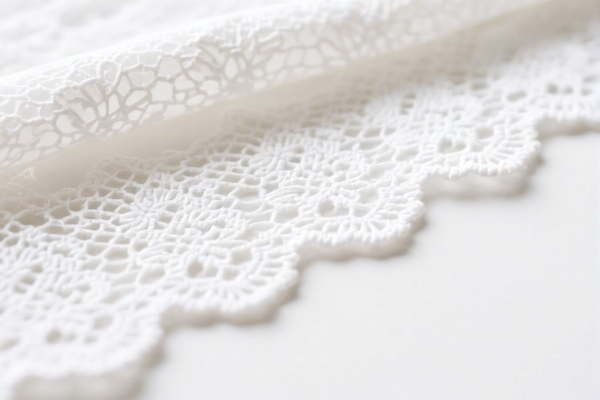

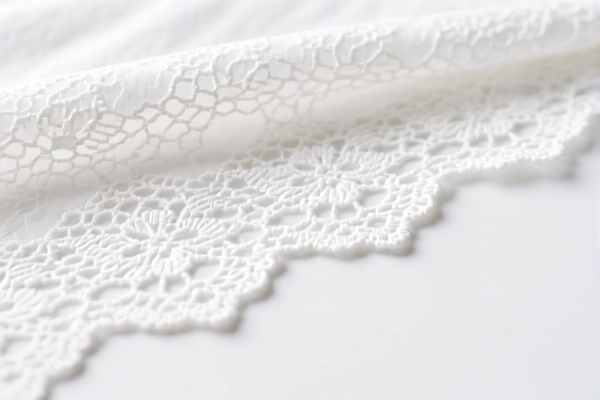
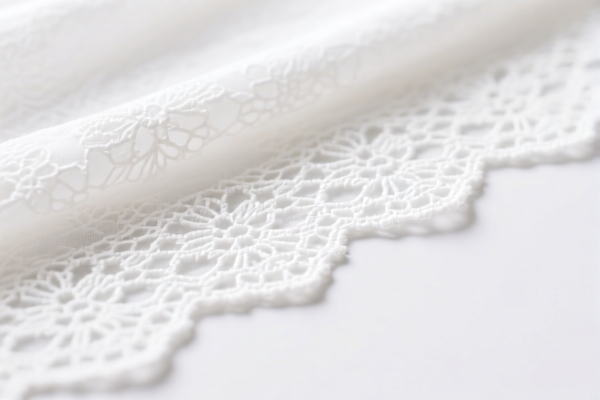
AI Analysis
🧵 Lace & Ornamental Fabrics (Lace Fabric Patches)
🌐 HS Code Reference & Customs Clearance Guide | 2026 Latest Tariff Analysis | Professional-Level Strategy
📌 I. Product Definition & Classification: Do You Really Understand "Lace Fabric Patches"?
"Lace Fabric Patches" are decorative textile components used for embroidery, apparel embellishment, upholstery, or industrial filtration. In international trade, they are not a single monolithic category but are divided based on construction method, material composition, and specific application.
The key distinction lies in whether the item is a finished ornamental fabric (Heading 5811/5812) or a narrow woven ribbon/fabric (Heading 5806). Misclassification here can lead to severe discrepancies in duty rates, especially given the current geopolitical trade tariffs (e.g., US-China Section 301 duties).
⚠️ Key Distinction Points:
- Ground Lace / Ornamental Fabrics: Broad fabrics made by knitting, crocheting, or weaving specifically for lace-like purposes (e.g., Chantilly lace, Guipure). → HS 5811 / 5812
- Narrow Woven Fabrics (Ribbons/Bands): Specific narrow widths (<30cm usually) assembled by adhesive or woven with warp/weft for trimming or binding. → HS 5806
- Material Matters: Man-made fibers (polyester/nylon) vs. Other textiles (cotton/wool) trigger different sub-headings and tax implications.
📦 II. HS Code Classification Details (2026 Latest Tariff Authority Cross-Reference)
Based on the provided dataset, here are the four critical HS Codes applicable to "Lace Fabric Patches" and their specific use cases.
| HS Code | Product Description | Applicable Scenario | Material Type | Width/Type |
|---|---|---|---|---|
5811.00.00.00 |
Lace and other ornamental or fancy woven fabrics, including lace made by knitting or crocheting, whether or not containing metal threads | Decorative lace patches, bridal veil components, high-end garment trimmings made via knitting/crochet | Mixed / Any | Broad Fabric / Ground Lace |
5812.00.00.00 |
Other woven fabrics, including those made by knitting or crocheting, of a kind used for embroidery, lace, or other ornamental purposes | Embroidery backing fabrics, tulle bases, ornamental woven meshes used as a foundation for lace | Mixed / Any | Ornamental Woven |
5806.32.10.95 |
Narrow woven fabrics... Of man-made fibers... Ribbons... Other | Narrow polyester/nylon lace trims, machine-made ribbon patches, synthetic decorative bands | Man-made Fibers (Poly/Nylon) | Narrow Fabric (<30cm) |
5806.39.30.80 |
Narrow woven fabrics... Of other textile materials... Other | Narrow cotton/woen lace trims, natural fiber ribbon patches, natural fiber ornamental bands | Other Textile Materials (Cotton/Wool/etc.) | Narrow Fabric (<30cm) |
🔍 Critical Warning:
-5811&5812are for "Ground Fabrics" (broader, complex structures). If your patch is a large piece of lace fabric cut into shapes, it likely falls here.
-5806is for "Narrow Woven Fabrics". If your patch is a small, narrow strip or ribbon-like piece, it falls here.
- Misclassification Risk: Declaring a narrow ribbon patch as5811(broad fabric) might seem harmless, but if customs determines it fits5806, you could face penalties for inaccurate declaration, especially regarding the 25% additional tariff on5806.39.
💰 III. 2026 Latest Tariff Rate Breakdown (Including Surcharges & Policy Add-ons)
✅ Applicable Country: United States (US)
✅ Origin: China (CN) (Assumed based on typical high-tariff scenarios; adjust if origin differs)
✅ Effective Time: 2025/2026 Current Status
🎯 1. 5811.00.00.00 & 5812.00.00.00 —— Ornamental/Lace Fabrics (Broad)
| Item | Content |
|---|---|
| Base Tariff | Error / Failed to Retrieve |
| Additional Duties | Error / Failed to Retrieve |
| Total Tax | Error |
| Tax Detail | Failed to retrieve tax information |
📌 Explanation:
- The system indicates a data retrieval failure for these broad ornamental fabrics.
- Strategic Implication: This uncertainty is a HIGH RISK for customs clearance.
- Likely Scenario: Historically, lace and ornamental fabrics often face 0% base duty but may be subject to Section 301 tariffs (25%) if classified under certain sub-headings or if deemed "textiles of China."
- Recommendation: Do NOT rely on this data alone. You MUST obtain a Pre-Ruling or consult a customs broker to verify current Section 301 applicability. Do not assume 0%.
🎯 2. 5806.32.10.95 —— Narrow Woven Fabrics (Man-Made Fibers)
| Item | Content |
|---|---|
| Base Tariff | 0.0% |
| Section 301 Surcharge | 0.0% |
| Total Tax | 0.0% |
| Tax Detail | Base Tariff: 0.0%, Additional Tariff: 0.0% |
| Eligibility for De Minimis | ✅ Yes (Potentially, if under $800) |
📌 Explanation:
- Excellent Rate: This classification offers 0% total duty.
- Why?: Man-made fiber narrow woven fabrics (like polyester ribbons/patches) are often favored with lower or zero base rates in the US HTSUS.
- Strategy: If your patch is narrow and made of synthetic fibers (polyester, nylon), aggressively pursue this classification to save costs.
🎯 3. 5806.39.30.80 —— Narrow Woven Fabrics (Other Textile Materials)
| Item | Content |
|---|---|
| Base Tariff | 0.0% |
| Section 301 Surcharge | 25.0% |
| Total Tax | 25.0% |
| Tax Detail | Base Tariff: 0.0%, Additional Tariff: 25.0% |
| Eligibility for De Minimis | ❌ No (If subject to Section 301, de minimis may be denied for Chinese goods) |
📌 Explanation:
- High Cost: While the base tariff is 0%, the 25% additional tariff makes this expensive for Chinese origin goods.
- Why?: "Other textile materials" (like cotton, wool, or blends not classified as man-made) attract the 301 surcharge.
- Strategy: If your patch is cotton or wool, expect a 25% duty hit. Consider if you can modify the material to man-made fibers (polyester) to switch to5806.32(0% duty) without changing the product's function significantly.
🛠️ IV. Customs Clearance Practical Advice (Battle-Tested Pitfall Guide)
✅ 1. Documentation Checklist (Non-Negotiable)
| Document | Must Provide | Description |
|---|---|---|
| ✅ Product Specifications | ✔️ | Include fiber content (e.g., "100% Polyester"), width, weight, and construction method (knitted vs. woven). |
| ✅ Technical Photos | ✔️ | Close-up of the weave/knit structure to prove it is "narrow" (<30cm) or "ornamental." |
| ✅ Commercial Invoice | ✔️ | Clearly state: "Narrow Woven Fabric Patch, Synthetic, HS 5806.32" vs "Lace Ground Fabric, HS 5811." |
| ✅ Origin Certificate | ✔️ | Crucial for determining if Section 301 applies (China vs. Vietnam/Thailand). |
| ✅ Material Declaration | ✔️ | Explicitly state: "Man-Made Fibers" or "Cotton/Wool." This is the deciding factor between 0% and 25%. |
✅ 2. Classification Strategy (Key Mantras)
🔥 “Narrow & Synthetic = 0%; Narrow & Natural = 25%; Broad Lace = Risky/Unclear.”
| Scenario | Correct Classification | Duty Rate | Why? |
|---|---|---|---|
| Small polyester lace trim | 5806.32.10.95 |
0% | Man-made, narrow woven. Best case scenario. |
| Small cotton lace trim | 5806.39.30.80 |
25% | Natural fiber, narrow woven. High duty. |
| Large piece of guipure lace fabric | 5811.00.00.00 |
Unclear/Risk | Data error in source. Likely 0% base + potential 25% if deemed China-origin textile. Verify First! |
| Embroidery backing tulle | 5812.00.00.00 |
Unclear/Risk | Data error in source. Similar risk profile to 5811. |
✅ 3. Special Circumstances Handling
| Situation | Handling Advice |
|---|---|
| Mixed Material Patches | If the patch is 90% polyester and 10% cotton, it may still be classified as "man-made" under HTSUS rules. Maximize synthetic content to qualify for 0% duty. |
| Adhesive Backing | If the patch has glue on the back, it is still a "narrow woven fabric" (adhesive assembly is explicitly mentioned in HS 5806). Do not misclassify as "adhesive tapes." |
| Origin Shifting | If you manufacture patches in Vietnam or Thailand, you may avoid the 25% Section 301 surcharge on 5806.39. Supply chain relocation is a viable cost-saving strategy. |
| Pre-Ruling Request | For 5811 and 5812, MANDATORY to file a US Customs Pre-Ruling due to the "Error" in tax data. Never guess. |
🌍 V. Global Market Clearance Comparison (2026 Latest)
| Country/Region | Recommended HS Code | Duty Rate | Certification Req. | Notes |
|---|---|---|---|---|
| 🇺🇸 USA | 5806.32.10.95 (Synth) |
0% | N/A | Best for synthetics. 5806.39 = 25%. |
| 🇨🇳 China | 5806.32.10.95 |
0-5% | None | Import duties vary, generally low for textiles. |
| 🇪🇺 EU | 5806.32.10.95 |
0% (GSP) | CE/REACH | Often 0% for many textiles under general rules. |
| 🇬🇧 UK | 5806.32.10.95 |
0-5% | UKCA | Post-Brexit rules align closely with EU. |
| 🇦🇺 Australia | 5806.32.10.95 |
5% | N/A | Low duty, easy clearance. |
📌 Conclusion:
- The US is the most complex market due to Section 301 tariffs and data inconsistencies for broad lace.
- Synthetic Narrow Fabrics (5806.32) are the golden ticket for US clearance (0% duty).
- Natural Fiber Narrow Fabrics (5806.39) are costly in the US (25%).
- Broad Lace (5811/5812) requires professional verification due to data errors.
📌 VI. Common Errors & Pitfall Guide (Lessons Learned)
❌ Error 1: Calling a narrow polyester ribbon "Lace Fabric" to avoid the 25% duty on 5806.39.
👉 Consequence: If it’s narrow, it’s 5806.32 (0%), which is better. But if you mislabel it as 5811, you risk classification error penalties because 5811 data is unreliable. Stick to the correct code: 5806.32.
❌ Error 2: Ignoring the "Man-Made" vs. "Other" distinction.
👉 Consequence: Declaring a cotton patch as "man-made" is fraud. If caught, you face fines + back taxes of 25%. Test your fabric composition.
❌ Error 3: Assuming 5811 and 5812 are safe because they show "Error" in tax data.
👉 Consequence: "Error" does not mean "Exempt." It means Unverified. Customs may assess the highest possible duty or reject the entry. Always file a Pre-Ruling.
✅ Correct Approach:
"100% Polyester Narrow Woven Lace Ribbon, Width 2cm, For Garment Decoration, HS 5806.32.10.95"
🎯 VII. Conclusion: Precision Classification, Cost Savings, Smooth Clearance!
🎯 Remember the Mantra:
🔹 "Narrow + Synthetic = 0% (Gold)!"
🔹 "Narrow + Cotton = 25% (Pain)!"
🔹 "Broad Lace = Check First (Risk)!"
🔹 "HS Code Decides Your Profit Margin!"
📌 Pro Tip:
If you are importing from China and your patches are cotton/wool, consider:
1. Switching to polyester/nylon (man-made) to reduce duty from 25% to 0%.
2. Or, shifting production to Vietnam/Thailand to avoid Section 301 tariffs on natural fibers.
📣 Immediate Action:
📞 Contact a Customs Broker + Submit Fabric Swatches + File Pre-Ruling for 5811/5812
🚀 Optimize your supply chain for 0% duty! Clear customs faster, boost your margins!
✨ Professional Clearance Starts with Precise Classification!
💼 Your Bottom Line Depends on Your HS Code!
Customer Reviews
About HS Code Classification
The Harmonized System (HS) is an internationally standardized nomenclature developed by the World Customs Organization (WCO) to classify traded products. Over 200 countries use the HS system as the basis for customs tariffs, trade statistics, and import/export regulations.
Each HS code follows a hierarchical structure:
- Chapter (2 digits) — Broad category of goods (e.g., Chapter 84: Machinery and Mechanical Appliances)
- Heading (4 digits) — More specific grouping within the chapter
- Subheading (6 digits) — Internationally standardized breakdown, used by all WCO member countries
- National subdivisions (8-10 digits) — Country-specific extensions for further classification, such as US HTSUS 10-digit codes
Correct HS code classification is essential for smooth customs clearance, accurate duty payment, and compliance with trade regulations. Misclassification can lead to customs delays, overpayment of duties, or penalties.
When importing from CN to US, the applicable tariff rates may include:
- Most-Favored-Nation (MFN) rate — The standard duty rate applied to WTO members
- General rate — Applied to countries without trade agreements
- Trade remedy duties — Additional tariffs such as Section 301 (anti-dumping), Section 232 (national security), or countervailing duties
The information provided on this page is for reference purposes only. For official classification, please consult with your local customs authority or a licensed customs broker.