Laser Engraving Machine
CN → US| HS编码 | 关税税率 | 原产国 | 目的国 | 文档 |
|---|---|---|---|---|
| 8479899599 | 87.5% | CN | US | 官方文档 |
| 8456111010 | 38.5% | CN | US | 官方文档 |
| 8456111050 | 38.5% | CN | US | 官方文档 |
| 8479896500 | 20.3% | CN | US | 官方文档 |
| 8456111050 | 38.5% | CN | US | 官方文档 |
商品图片
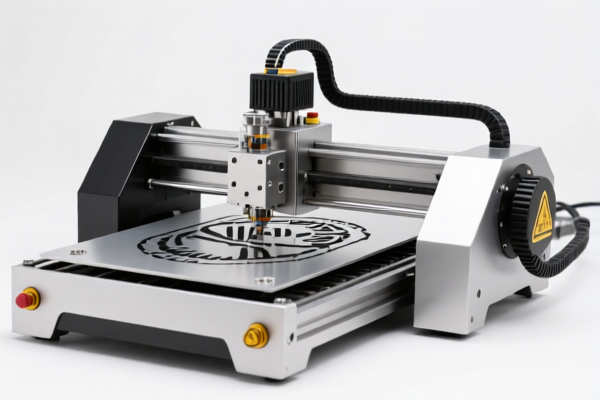
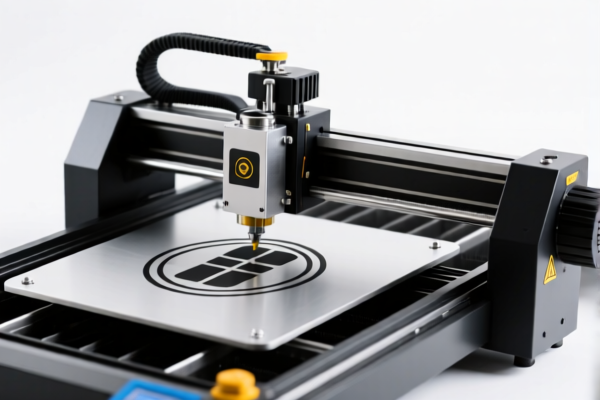
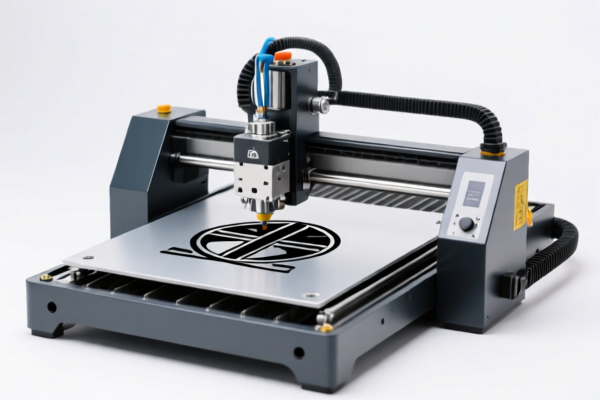
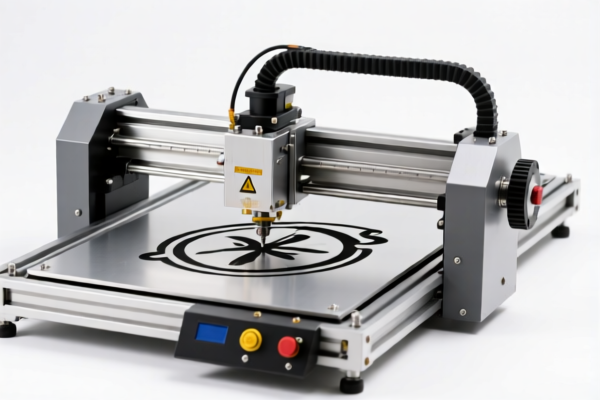
AI分析
⚡ Laser Engraving Machines: HS Code Classification & Customs Clearance Guide (2026 Update)
🌐 HS Code Reference & Customs Clearance Strategy | Latest Tariff Analysis | Professional Export Compliance
📌 I. Product Definition: What Exactly is a Laser Engraving Machine?
A Laser Engraving Machine is a precision industrial device that uses a high-energy laser beam to remove, mark, or engrave material from a workpiece. These machines are critical in industries ranging from jewelry making and electronics to aerospace and signage.
In international trade, these machines are not a single, uniform category. Their classification depends heavily on: 1. The Method of Operation: CNC (Computer Numerical Control) vs. Non-CNC. 2. The Primary Function: Metalworking (Machine Tool) vs. General Industrial Machinery. 3. Specific Restrictions: Compliance with Section 301 (US Trade Act) and Section 232/122 tariffs.
⚠️ Critical Distinction:
- If the machine is primarily for cutting/engraving metals and has CNC controls, it often falls under Chapter 84 (Machine Tools).
- If it is a general-purpose marking machine without specific metal-working machine tool characteristics, it may fall under Chapter 84 or 85 (Other Machinery).
- Misclassification leads to massive tariff differences (from 20.3% to 87.5%).
📦 II. Detailed HS Code Classification Matrix (Latest Tariff Data)
The following classifications are derived from the provided data. Note that multiple HS codes may apply depending on specific machine attributes.
| HS Code | Summary Description | Key Characteristics | Total Tax Rate |
|---|---|---|---|
| 8456.11.10.10 | Laser Engraving Machine | Matches laser operation purpose; Metalworking machine tool subtype; Usually possesses CNC functions. | 38.5% |
| 8456.11.10.50 | Laser Engraving/Cutting Machine | Uses laser to remove material; Complies with laser processing use/material attributes; Not explicitly excluded from CNC categories. | 38.5% |
| 8456.11.10.50 | Laser Cutting Machine | Explicitly belongs to machine tools for material removal via laser; No material/form conflicts per other category rules. | 38.5% |
| 8479.89.65.00 | Laser Engraving Machine | Independent function mechanical appliance; Involves electric motor drive & control system; Fits "Other electrical appliances with self-contained electric motor." | 20.3% |
| 8479.89.95.99 | Laser Engraving Machine | Independent function mechanical equipment; Does not fit specific functional categories; Fits catch-all definition for other machinery. | 87.5% |
🔍 Key Insight:
- Codes 8456.11.10.10 and 8456.11.10.50 are grouped together because they share the same tariff outcome (38.5%) but differ slightly in functional description (CNC Metal Tool vs. General Laser Processing).
- Code 8479.89.65.00 offers the lowest tax rate (20.3%) but requires proving the machine is an "independent electrical appliance" rather than a specialized machine tool.
- Code 8479.89.95.99 carries a punitive rate (87.5%) due to high additional tariffs (including a 50% surcharge for steel/aluminum/copper components). Avoid this classification if possible.
💰 III. 2026 Tariff Structure Breakdown (China Origin → US Market)
✅ Applicable Country: United States (US)
✅ Origin: China (CN)
✅ Effective Period: Current regulations including Section 301 and Section 232/122 amendments.
🎯 1. Classifications under HS 8456.11.10 (The "Machine Tool" Path)
| Component | Rate | Explanation |
|---|---|---|
| Base Tariff | 3.5% | Standard Most Favored Nation (MFN) duty for Chapter 84 machine tools. |
| Section 301 Tariff | 25.0% | Additional tariff on Chinese goods under the Trade Act of 1974. |
| Section 232/122 Tariff | 10% | Additional tariff applied to specific industrial equipment (Section 122). |
| Total Effective Rate | 38.5% | High Risk: Applies if classified as a specialized metalworking machine tool. |
📌 Legal Basis:
HTSUS: 8456.11.10→Section 301 Footnote→Section 232/122 Application
Strategy: Ensure documentation emphasizes CNC control and metalworking specificity to justify this classification, or argue against it to seek lower rates elsewhere.
🎯 2. Classification under HS 8479.89.65.00 (The "General Electrical Appliance" Path)
| Component | Rate | Explanation |
|---|---|---|
| Base Tariff | 2.8% | Standard MFN duty for other electrical machinery. |
| Section 301 Tariff | 7.5% | Reduced Section 301 rate for certain electrical machinery categories. |
| Section 232/122 Tariff | 10% | Additional tariff under Section 122. |
| Total Effective Rate | 20.3% | Optimal Rate: Achievable if the machine is framed as a general-purpose independent appliance. |
📌 Legal Basis:
HTSUS: 8479.89.65.00→Section 301 Exemption/Reduction→Section 122 Application
Strategy: Highlight the electric motor integration and independent control system in technical descriptions. Argue that it does not perform specific "machine tool" functions defined in Chapter 84 Section I Note 5.
🎯 3. Classification under HS 8479.89.95.99 (The "Catch-All" Path - AVOID)
| Component | Rate | Explanation |
|---|---|---|
| Base Tariff | 2.5% | Standard MFN duty. |
| Section 301 Tariff | 25.0% | Standard Section 301 rate. |
| Section 232 Tariff | 10% | Standard Section 232 rate. |
| Section 232 (Materials) | 50.0% | Additional Surcharge for products containing steel, aluminum, or copper components. |
| Total Effective Rate | 87.5% | Catastrophic: Results from the cumulative effect of multiple trade remedies. |
📌 Warning:
If your laser engraving machine contains significant steel, aluminum, or copper components (e.g., frame, internal structure) and is classified as a generic machine, the 50% surcharge triggers automatically. This is the most expensive scenario.
🛠️ IV. Customs Clearance & Operational Advice
✅ 1. Documentation Checklist (Critical for Accurate Classification)
| Document | Requirement | Purpose |
|---|---|---|
| Technical Specification Sheet | Must detail control system (CNC vs. Simple On/Off), motor type, and laser source. | Proves whether it is a "Machine Tool" (Ch 84) or "General Appliance" (Ch 84/85). |
| Operation Manual | Highlight if the machine is programmable for complex paths (CNC) or simple marking. | Supports argument for 8456 (CNC) or 8479 (General). |
| Commercial Invoice | Clearly state "Laser Engraving/Cutting Machine" and include model number. | Prevents ambiguity during customs inspection. |
| Certificate of Origin | Required for Section 301 applicability. | Determines base tariff eligibility. |
| Component List | Breakdown of materials (Steel/Aluminum/Copper content). | Crucial to avoid the 50% surcharge under 8479.89.95.99. |
✅ 2. Strategic Classification Advice (How to Save Money)
🔥 Rule of Thumb:
"CNC Metal Tool = 38.5% | General Electrical Appliance = 20.3% | Generic Catch-All = 87.5%"
Scenario A: You want the LOWEST tax (20.3%)
- Action: Argue for HS 8479.89.65.00.
- Proof Needed: Show that the machine is a self-contained electrical unit with an integrated motor and controller, not strictly a "metalworking machine tool" as defined by Note 5 to Chapter 84. Emphasize versatility (can engrave wood, plastic, acrylic, not just metal).
Scenario B: You are sure it is a Machine Tool (38.5%)
- Action: Accept HS 8456.11.10.10/50.
- Proof Needed: Provide CNC programming details, confirm it is primarily used for metal processing, and list the spindle/laser alignment as a machine tool feature.
- Warning: Do NOT include heavy steel/aluminum frames in a way that triggers the 50% surcharge of the catch-all category.
Scenario C: Avoiding the 87.5% Disaster
- Action: NEVER classify under 8479.89.95.99 if the machine contains significant ferrous/non-ferrous metal structural components.
- Reason: The 50% "Steel/Aluminum/Copper" surcharge is automatic and punitive. If you must use the 8479.89 umbrella, ensure you fall into the 65.00 subcategory (which has lower Section 301 rates) rather than the 95.99 catch-all.
✅ 3. Common Pitfalls & Red Flags
❌ Pitfall 1: Listing the product simply as "Laser Machine" on the invoice.
👉 Consequence: Customs may default to the highest-risk category or demand extensive technical clarification.
✅ Fix: Use precise terms: "CNC Laser Engraving Machine for Metal/Non-Metal" or "Electric Laser Marking Appliance."
❌ Pitfall 2: Ignoring the Section 232/122 tariff implications on materials.
👉 Consequence: If the machine frame is 100% steel, and you misclassify it, you face the 50% surcharge.
✅ Fix: Conduct a material content analysis. If steel content is high, strive for the 8456 classification (where the 50% surcharge does not apply in the same punitive way) or the 8479.89.65.00 (if eligible).
❌ Pitfall 3: Confusing "Laser Cutting" with "Laser Engraving."
👉 Consequence: Both fall under similar HS codes (8456), but enforcement officers may scrutinize "Cutting" more heavily as a machine tool.
✅ Fix: Ensure documentation reflects the primary function. If it does both, emphasize the engraving/marking capability to potentially support the 8479.89.65.00 argument (General Appliance).
🌍 V. Global Market Comparison (Quick Reference)
| Market | Recommended HS Code | Estimated Total Duty | Key Compliance Note |
|---|---|---|---|
| 🇺🇸 USA | 8479.89.65.00 |
20.3% | Best for general purpose. Avoid 8479.89.95.99. |
| 🇺🇸 USA | 8456.11.10 |
38.5% | Best for dedicated CNC metal tools. |
| 🇨🇳 China | 8456.11 or 8479 |
~5-10% | Lower base duties. Focus on local certification (CCC). |
| 🇪🇺 EU | 8456.11 or 8479 |
0-4% | Generally low duties. Focus on CE/ROHS compliance. |
| 🇨🇦 Canada | 8456.11 |
~5-6% | Similar to US structure but lower Section 301 impact. |
📌 Conclusion:
For exports to the USA, the classification choice is critical.
- If your machine is a versatile desktop unit with integrated electronics, fight for 8479.89.65.00 (20.3%).
- If it is a heavy-duty industrial CNC metal cutter, accept 8456.11.10 (38.5%).
- Never allow it to be misclassified as a generic machine with metal parts (87.5%).
📌 VI. Final Checklist for Exporters
- Determine Primary Function: Is it a machine tool (Ch 84 Note 5) or a general appliance?
- Analyze Material Composition: How much steel/aluminum/copper is in the frame?
- Select HS Code:
- Versatile + Low Metal Content → 8479.89.65.00 (20.3%)
- CNC Metal Tool → 8456.11.10 (38.5%)
- Avoid: 8479.89.95.99 (87.5%)
- Prepare Documentation: Technical specs, CNC manuals, and material breakdowns.
- File ACE/ABI: Ensure the HTSUS code matches the commercial invoice exactly.
🎯 Remember:
🔹 "Function Defines Code, Material Defines Surcharge."
🔹 "20% is the goal, 38% is the standard, 87% is the trap."
🔹 "CNC is Metal, Electrical is General, Steel Frame is Risk."
📣 Immediate Action Required:
📞 Consult a licensed customs broker to request a Binding Ruling if your machine falls on the boundary between 8456 and 8479.
📄 Audit your bill of materials to minimize high-tariff metal components if aiming for the 20.3% rate.
🚀 Clear your supply chain, protect your margins, and ship with confidence!
✨ Precision Classification Saves Thousands!
💼 Your Profit Margin Depends on Your HS Code.
用户评价
关于 HS 编码归类
协调制度(HS)是由世界海关组织(WCO)制定的国际贸易商品分类标准。全球 200 多个国家采用 HS 系统作为海关关税、贸易统计和进出口监管的基础。
每个 HS 编码遵循以下层级结构:
- 章(2 位)——商品大类(例如:第 84 章:机器和机械设备)
- 品目(4 位)——章内的更具体分类
- 子目(6 位)——国际通用细分,所有 WCO 成员国统一使用
- 本国细分(8-10 位)——各国自行扩展的细分编码,如美国 HTSUS 10 位编码
正确的 HS 编码归类对于顺利通关、准确缴纳关税和遵守贸易法规至关重要。错误归类可能导致海关延误、多缴关税或罚款。
从CN进口到US时,适用的关税税率可能包括:
- 最惠国(MFN)税率——适用于 WTO 成员国的标准关税税率
- 普通税率——适用于无贸易协定国家
- 贸易救济关税——附加关税,如 301 条款(反倾销)、232 条款(国家安全)或反补贴税
本页内容仅供参考。如需正式归类,请咨询当地海关或持牌报关代理。