Laser Engraving Machine
CN → US| HS Code | Tariff Rate | Origin | Destination | Doc |
|---|---|---|---|---|
| 8479899599 | 87.5% | CN | US | Official Doc |
| 8456111010 | 38.5% | CN | US | Official Doc |
| 8456111050 | 38.5% | CN | US | Official Doc |
| 8479896500 | 20.3% | CN | US | Official Doc |
| 8456111050 | 38.5% | CN | US | Official Doc |
Product Images
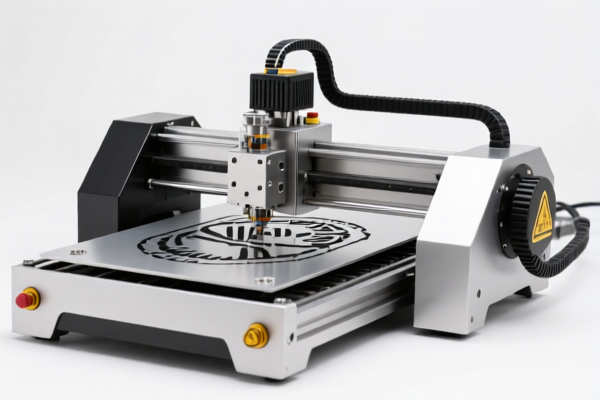
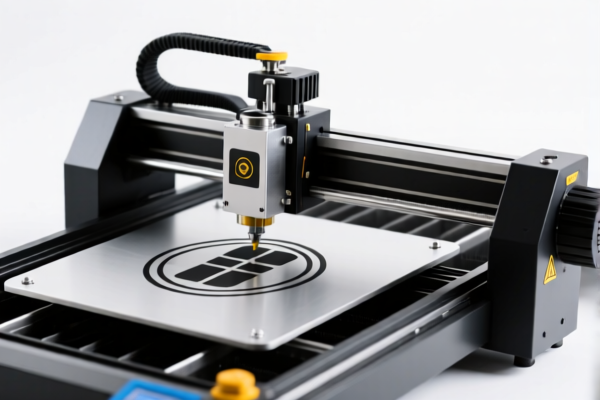
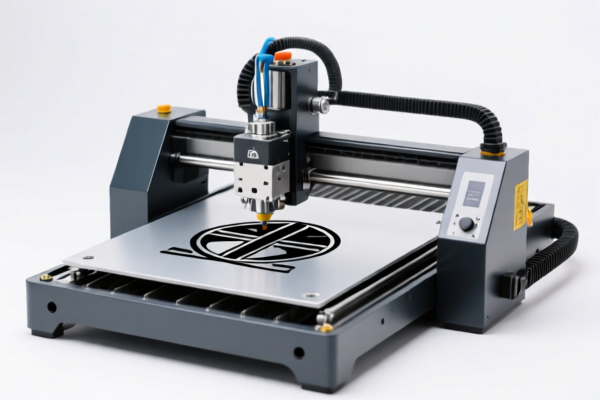
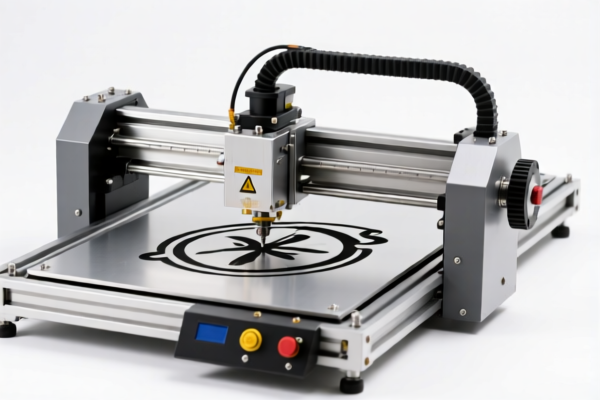
AI Analysis
⚡ Laser Engraving Machines: HS Code Classification & Customs Clearance Guide (2026 Update)
🌐 HS Code Reference & Customs Clearance Strategy | Latest Tariff Analysis | Professional Export Compliance
📌 I. Product Definition: What Exactly is a Laser Engraving Machine?
A Laser Engraving Machine is a precision industrial device that uses a high-energy laser beam to remove, mark, or engrave material from a workpiece. These machines are critical in industries ranging from jewelry making and electronics to aerospace and signage.
In international trade, these machines are not a single, uniform category. Their classification depends heavily on: 1. The Method of Operation: CNC (Computer Numerical Control) vs. Non-CNC. 2. The Primary Function: Metalworking (Machine Tool) vs. General Industrial Machinery. 3. Specific Restrictions: Compliance with Section 301 (US Trade Act) and Section 232/122 tariffs.
⚠️ Critical Distinction:
- If the machine is primarily for cutting/engraving metals and has CNC controls, it often falls under Chapter 84 (Machine Tools).
- If it is a general-purpose marking machine without specific metal-working machine tool characteristics, it may fall under Chapter 84 or 85 (Other Machinery).
- Misclassification leads to massive tariff differences (from 20.3% to 87.5%).
📦 II. Detailed HS Code Classification Matrix (Latest Tariff Data)
The following classifications are derived from the provided data. Note that multiple HS codes may apply depending on specific machine attributes.
| HS Code | Summary Description | Key Characteristics | Total Tax Rate |
|---|---|---|---|
| 8456.11.10.10 | Laser Engraving Machine | Matches laser operation purpose; Metalworking machine tool subtype; Usually possesses CNC functions. | 38.5% |
| 8456.11.10.50 | Laser Engraving/Cutting Machine | Uses laser to remove material; Complies with laser processing use/material attributes; Not explicitly excluded from CNC categories. | 38.5% |
| 8456.11.10.50 | Laser Cutting Machine | Explicitly belongs to machine tools for material removal via laser; No material/form conflicts per other category rules. | 38.5% |
| 8479.89.65.00 | Laser Engraving Machine | Independent function mechanical appliance; Involves electric motor drive & control system; Fits "Other electrical appliances with self-contained electric motor." | 20.3% |
| 8479.89.95.99 | Laser Engraving Machine | Independent function mechanical equipment; Does not fit specific functional categories; Fits catch-all definition for other machinery. | 87.5% |
🔍 Key Insight:
- Codes 8456.11.10.10 and 8456.11.10.50 are grouped together because they share the same tariff outcome (38.5%) but differ slightly in functional description (CNC Metal Tool vs. General Laser Processing).
- Code 8479.89.65.00 offers the lowest tax rate (20.3%) but requires proving the machine is an "independent electrical appliance" rather than a specialized machine tool.
- Code 8479.89.95.99 carries a punitive rate (87.5%) due to high additional tariffs (including a 50% surcharge for steel/aluminum/copper components). Avoid this classification if possible.
💰 III. 2026 Tariff Structure Breakdown (China Origin → US Market)
✅ Applicable Country: United States (US)
✅ Origin: China (CN)
✅ Effective Period: Current regulations including Section 301 and Section 232/122 amendments.
🎯 1. Classifications under HS 8456.11.10 (The "Machine Tool" Path)
| Component | Rate | Explanation |
|---|---|---|
| Base Tariff | 3.5% | Standard Most Favored Nation (MFN) duty for Chapter 84 machine tools. |
| Section 301 Tariff | 25.0% | Additional tariff on Chinese goods under the Trade Act of 1974. |
| Section 232/122 Tariff | 10% | Additional tariff applied to specific industrial equipment (Section 122). |
| Total Effective Rate | 38.5% | High Risk: Applies if classified as a specialized metalworking machine tool. |
📌 Legal Basis:
HTSUS: 8456.11.10→Section 301 Footnote→Section 232/122 Application
Strategy: Ensure documentation emphasizes CNC control and metalworking specificity to justify this classification, or argue against it to seek lower rates elsewhere.
🎯 2. Classification under HS 8479.89.65.00 (The "General Electrical Appliance" Path)
| Component | Rate | Explanation |
|---|---|---|
| Base Tariff | 2.8% | Standard MFN duty for other electrical machinery. |
| Section 301 Tariff | 7.5% | Reduced Section 301 rate for certain electrical machinery categories. |
| Section 232/122 Tariff | 10% | Additional tariff under Section 122. |
| Total Effective Rate | 20.3% | Optimal Rate: Achievable if the machine is framed as a general-purpose independent appliance. |
📌 Legal Basis:
HTSUS: 8479.89.65.00→Section 301 Exemption/Reduction→Section 122 Application
Strategy: Highlight the electric motor integration and independent control system in technical descriptions. Argue that it does not perform specific "machine tool" functions defined in Chapter 84 Section I Note 5.
🎯 3. Classification under HS 8479.89.95.99 (The "Catch-All" Path - AVOID)
| Component | Rate | Explanation |
|---|---|---|
| Base Tariff | 2.5% | Standard MFN duty. |
| Section 301 Tariff | 25.0% | Standard Section 301 rate. |
| Section 232 Tariff | 10% | Standard Section 232 rate. |
| Section 232 (Materials) | 50.0% | Additional Surcharge for products containing steel, aluminum, or copper components. |
| Total Effective Rate | 87.5% | Catastrophic: Results from the cumulative effect of multiple trade remedies. |
📌 Warning:
If your laser engraving machine contains significant steel, aluminum, or copper components (e.g., frame, internal structure) and is classified as a generic machine, the 50% surcharge triggers automatically. This is the most expensive scenario.
🛠️ IV. Customs Clearance & Operational Advice
✅ 1. Documentation Checklist (Critical for Accurate Classification)
| Document | Requirement | Purpose |
|---|---|---|
| Technical Specification Sheet | Must detail control system (CNC vs. Simple On/Off), motor type, and laser source. | Proves whether it is a "Machine Tool" (Ch 84) or "General Appliance" (Ch 84/85). |
| Operation Manual | Highlight if the machine is programmable for complex paths (CNC) or simple marking. | Supports argument for 8456 (CNC) or 8479 (General). |
| Commercial Invoice | Clearly state "Laser Engraving/Cutting Machine" and include model number. | Prevents ambiguity during customs inspection. |
| Certificate of Origin | Required for Section 301 applicability. | Determines base tariff eligibility. |
| Component List | Breakdown of materials (Steel/Aluminum/Copper content). | Crucial to avoid the 50% surcharge under 8479.89.95.99. |
✅ 2. Strategic Classification Advice (How to Save Money)
🔥 Rule of Thumb:
"CNC Metal Tool = 38.5% | General Electrical Appliance = 20.3% | Generic Catch-All = 87.5%"
Scenario A: You want the LOWEST tax (20.3%)
- Action: Argue for HS 8479.89.65.00.
- Proof Needed: Show that the machine is a self-contained electrical unit with an integrated motor and controller, not strictly a "metalworking machine tool" as defined by Note 5 to Chapter 84. Emphasize versatility (can engrave wood, plastic, acrylic, not just metal).
Scenario B: You are sure it is a Machine Tool (38.5%)
- Action: Accept HS 8456.11.10.10/50.
- Proof Needed: Provide CNC programming details, confirm it is primarily used for metal processing, and list the spindle/laser alignment as a machine tool feature.
- Warning: Do NOT include heavy steel/aluminum frames in a way that triggers the 50% surcharge of the catch-all category.
Scenario C: Avoiding the 87.5% Disaster
- Action: NEVER classify under 8479.89.95.99 if the machine contains significant ferrous/non-ferrous metal structural components.
- Reason: The 50% "Steel/Aluminum/Copper" surcharge is automatic and punitive. If you must use the 8479.89 umbrella, ensure you fall into the 65.00 subcategory (which has lower Section 301 rates) rather than the 95.99 catch-all.
✅ 3. Common Pitfalls & Red Flags
❌ Pitfall 1: Listing the product simply as "Laser Machine" on the invoice.
👉 Consequence: Customs may default to the highest-risk category or demand extensive technical clarification.
✅ Fix: Use precise terms: "CNC Laser Engraving Machine for Metal/Non-Metal" or "Electric Laser Marking Appliance."
❌ Pitfall 2: Ignoring the Section 232/122 tariff implications on materials.
👉 Consequence: If the machine frame is 100% steel, and you misclassify it, you face the 50% surcharge.
✅ Fix: Conduct a material content analysis. If steel content is high, strive for the 8456 classification (where the 50% surcharge does not apply in the same punitive way) or the 8479.89.65.00 (if eligible).
❌ Pitfall 3: Confusing "Laser Cutting" with "Laser Engraving."
👉 Consequence: Both fall under similar HS codes (8456), but enforcement officers may scrutinize "Cutting" more heavily as a machine tool.
✅ Fix: Ensure documentation reflects the primary function. If it does both, emphasize the engraving/marking capability to potentially support the 8479.89.65.00 argument (General Appliance).
🌍 V. Global Market Comparison (Quick Reference)
| Market | Recommended HS Code | Estimated Total Duty | Key Compliance Note |
|---|---|---|---|
| 🇺🇸 USA | 8479.89.65.00 |
20.3% | Best for general purpose. Avoid 8479.89.95.99. |
| 🇺🇸 USA | 8456.11.10 |
38.5% | Best for dedicated CNC metal tools. |
| 🇨🇳 China | 8456.11 or 8479 |
~5-10% | Lower base duties. Focus on local certification (CCC). |
| 🇪🇺 EU | 8456.11 or 8479 |
0-4% | Generally low duties. Focus on CE/ROHS compliance. |
| 🇨🇦 Canada | 8456.11 |
~5-6% | Similar to US structure but lower Section 301 impact. |
📌 Conclusion:
For exports to the USA, the classification choice is critical.
- If your machine is a versatile desktop unit with integrated electronics, fight for 8479.89.65.00 (20.3%).
- If it is a heavy-duty industrial CNC metal cutter, accept 8456.11.10 (38.5%).
- Never allow it to be misclassified as a generic machine with metal parts (87.5%).
📌 VI. Final Checklist for Exporters
- Determine Primary Function: Is it a machine tool (Ch 84 Note 5) or a general appliance?
- Analyze Material Composition: How much steel/aluminum/copper is in the frame?
- Select HS Code:
- Versatile + Low Metal Content → 8479.89.65.00 (20.3%)
- CNC Metal Tool → 8456.11.10 (38.5%)
- Avoid: 8479.89.95.99 (87.5%)
- Prepare Documentation: Technical specs, CNC manuals, and material breakdowns.
- File ACE/ABI: Ensure the HTSUS code matches the commercial invoice exactly.
🎯 Remember:
🔹 "Function Defines Code, Material Defines Surcharge."
🔹 "20% is the goal, 38% is the standard, 87% is the trap."
🔹 "CNC is Metal, Electrical is General, Steel Frame is Risk."
📣 Immediate Action Required:
📞 Consult a licensed customs broker to request a Binding Ruling if your machine falls on the boundary between 8456 and 8479.
📄 Audit your bill of materials to minimize high-tariff metal components if aiming for the 20.3% rate.
🚀 Clear your supply chain, protect your margins, and ship with confidence!
✨ Precision Classification Saves Thousands!
💼 Your Profit Margin Depends on Your HS Code.
Customer Reviews
About HS Code Classification
The Harmonized System (HS) is an internationally standardized nomenclature developed by the World Customs Organization (WCO) to classify traded products. Over 200 countries use the HS system as the basis for customs tariffs, trade statistics, and import/export regulations.
Each HS code follows a hierarchical structure:
- Chapter (2 digits) — Broad category of goods (e.g., Chapter 84: Machinery and Mechanical Appliances)
- Heading (4 digits) — More specific grouping within the chapter
- Subheading (6 digits) — Internationally standardized breakdown, used by all WCO member countries
- National subdivisions (8-10 digits) — Country-specific extensions for further classification, such as US HTSUS 10-digit codes
Correct HS code classification is essential for smooth customs clearance, accurate duty payment, and compliance with trade regulations. Misclassification can lead to customs delays, overpayment of duties, or penalties.
When importing from CN to US, the applicable tariff rates may include:
- Most-Favored-Nation (MFN) rate — The standard duty rate applied to WTO members
- General rate — Applied to countries without trade agreements
- Trade remedy duties — Additional tariffs such as Section 301 (anti-dumping), Section 232 (national security), or countervailing duties
The information provided on this page is for reference purposes only. For official classification, please consult with your local customs authority or a licensed customs broker.