Leather Backpack
CN → US商品图片

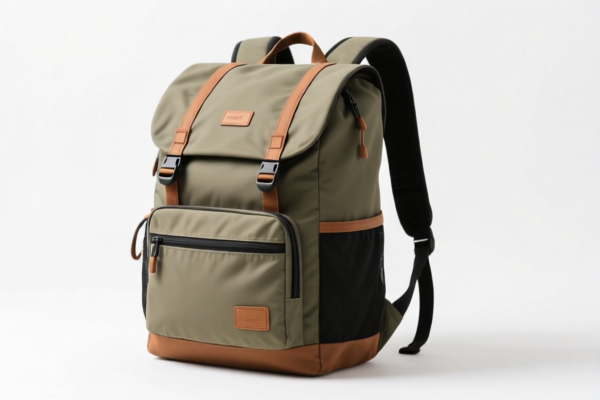

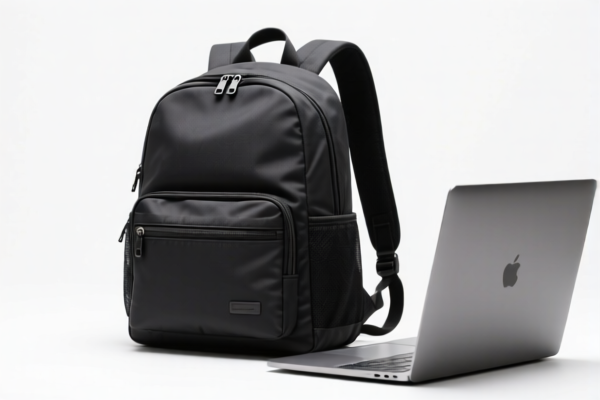
AI分析
Here is the professional Wiki-style guide for Leather Backpacks, optimized for 2026 customs clearance and tax efficiency.
🎒 Leather Backpacks (Handbags & Backpacks of Leather)
🌐 HS Code Reference & Customs Clearance Guide | 2026 Tariff Breakdown | Strategic Entry Protocol
📌 I. Product Definition & Classification: Are You Shipping a "Bag" or a "Suitcase"?
A leather backpack is a versatile accessory used for carrying books, laptops, and travel essentials. In international trade, the classification hinges on two critical factors: Material Composition (100% leather vs. coated/fabric) and Functionality (School vs. Fashion/Travel).
Key Distinction for Classification: * School/Child Backpacks (Leather): Often classified under specific child-accessory headings if strictly designed for students (rare for leather). * Fashion/Travel Backpacks: Classified under general luggage/handbags chapters (usually 4202 or 4205). * Material Rule: If the outer surface is >90% leather (even with fabric lining), it falls under Leather. If it is a mix (e.g., canvas with leather trim), it may fall under Textile/Plastic chapters (4202.32 or 6307).
⚠️ Critical Alert:
- 100% Leather with metal hardware → 4202 or 4205 (Luggage/Fashion).
- Leather-covered (leather veneer over fiberboard/plastic) → 3926 (Plastic goods) or 4421 (Wood), NOT leather.
- School Backpacks (if leather) → Often 4202.92 or 4205.00, but check "School" exemption rules.
📦 II. HS Code Classification Matrix (2026 Official Tariff)
| HS Code | Product Description | Key Characteristics | Applicable Material |
|---|---|---|---|
| 4202.92.30 | Other containers of leather, of a kind commonly carried by hand or over the shoulder | Leather Backpacks (Fashion/Travel), Laptop cases, briefcases | Leather / Composite Leather |
| 4202.92.90 | Other containers of leather, not specified elsewhere | Niche Leather Bags, Unusual shapes, Luxury brands | Leather (All types) |
| 4205.00.00 | Other articles of leather, of a kind commonly carried by hand | Leather Belts, Straps, Small Accessories (If the backpack is considered an accessory) | Leather |
| 4202.32.90 | Other containers of plastic or of textile materials | Leather-look (PU/PVC), Fabric with leather trim (<50% leather) | Textile/Plastic |
| 6307.90.90 | Other made up articles, including dress patterns | Non-standard (e.g., Leather bags not fitting 4202 definition due to unique form) | Any material |
🔍 Classification Logic:
- Primary Rule: If the bag has a defined "backpack" form with straps and is made primarily of leather, 4202.92.30 is the standard.
- Exclusion: If the bag is purely a "School" item with a specific shape for children (under 14 years), some countries may apply specific sub-codes, but generally, leather pushes it to 4202.
- The "Leather" Definition: The outer surface must be genuine leather (hide/skin). If it is "Leatherette" or "Synthetic Leather," it must not be declared as leather to avoid fraud penalties.
💰 III. 2026 Tariff Rate Breakdown (US & Global Highlights)
✅ Destination: 🇺🇸 United States (Main Focus)
✅ Origin: 🇨🇳 China (Common Manufacturing Base)
✅ Effective Date: 2026 (Current Trade Policy Context)
🎯 1. 4202.92.30 — Leather Backpacks (Standard Fashion/Travel)
| Item | Detail |
|---|---|
| Base Tariff (MFN) | 5.6% (ad valorem) |
| Section 301 Tariff (China) | +25% (Section 301 List 1, 2, 3, or 4 dependent on specific item) |
| Section 301 Tariff (Specific) | +25% (Most leather goods fall under List 3A/3B) |
| Total Effective Rate | 30.6% |
| De Minimis Exemption | ❌ No (Valuation < $800 does not exempt Section 301 for these categories) |
| Special Notes | If the bag is made of "Genuine Leather" + "Textile Lining", the leather component dictates the HS Code. |
| Legal Path | HTSUS:4202.92.30 → Section 301:300-0001 (Add 25%) |
🎯 2. 4202.92.90 — Other Leather Containers
| Item | Detail |
|---|---|
| Base Tariff (MFN) | 5.6% |
| Section 301 Tariff | +25% (If originating from China) |
| Total Effective Rate | 30.6% |
| De Minimis Exemption | ❌ No |
| Special Notes | Often used for luxury handbags, but applies to high-end leather backpacks too. |
📌 Interpretation:
- Section 301 is the "killer" tariff for Chinese leather goods. Even if the base tariff is low (5.6%), the 25% addition makes it 30.6%.
- De Minimis ($800): While US Section 321 allows $800 entry duty-free, Section 301 tariffs still apply to goods from China valued over $800. For shipments under $800, they often pass, but for bulk B2B, the 25% is mandatory.
🛠️ IV. Customs Clearance & Practical Strategy (Avoiding the Pitfalls)
✅ 1. Documentation Checklist (Mandatory)
| Document | Requirement | Why It Matters |
|---|---|---|
| Certificate of Origin | Form A or CO | Must explicitly state "Made in [Country]". If "China", 301 applies. |
| Material Declaration | 100% Leather or Composite | CRITICAL: Misdeclaring "Synthetic Leather" as "Genuine Leather" can lead to seizure + fraud charges. |
| Product Photos | Front, Back, Interior, Hardware | Customs needs to see the texture of the leather and the straps. |
| Packing List | Weight, Dimensions, Unit Price | Used for CIF calculation and anti-dumping checks. |
| Brand Authorization | Proof of trademark ownership | Prevents "IPR Seizure" if the brand is registered in the US. |
✅ 2. Smart Declaration Tips (The "Golden Rules")
🔥 "Material is Truth, HS Code is Destiny, Origin is King!"
| Scenario | Correct Approach | Risk if Wrong |
|---|---|---|
| Real Leather vs. PU Leather | Declare exactly: "Genuine Leather" vs. "Polyurethane Leather". | Risk: $50k+ fine + seizure if lying about material. |
| China-Origin Backpacks | Expect 25% 301 tariff. | Risk: Trying to route through Vietnam without "Substantial Transformation" will trigger Anti-Circumvention penalties. |
| Mixed Material (Leather + Fabric) | If Leather >50% (by area) → 4202. If Fabric >50% → 6306 or 4202.32. | Risk: Wrong HS Code leads to 301 or anti-dumping duty evasion flags. |
| "Leather-like" Finish | If it's a coating on fabric, do NOT use 4202. | Risk: High duty evasion suspicion. |
✅ 3. Special Circumstances
| Situation | Strategy |
|---|---|
| OEM/ODM Orders | Provide the "Bill of Materials" (BOM) showing the leather source. |
| Luxury Brand | Ensure the trademark is registered in the US Customs database to avoid "Seizure". |
| School Use | If marketed as "School Backpacks," ensure the description matches US definitions (often still 4202 for leather). |
| Origin Transshipment | Do NOT simply ship through Vietnam if the leather and stitching are done in China. Customs checks "Substantial Transformation" strictly. |
🌍 V. Global Market Comparison (2026)
| Region | Recommended HS Code | Base Tariff | Special Tax | Compliance |
|---|---|---|---|---|
| 🇺🇸 USA | 4202.92.30 |
5.6% | +25% (301) if China | FCC/FTC (No), Brand Reg. |
| 🇪🇺 EU | 4202.92 |
10-12% | No 301 (but may have Carbon Tax) | CE, EPR (Waste), REACH |
| 🇨🇦 Canada | 4202.92 |
5-8% | +25% (if China) | CFS (Consumer Safety) |
| 🇦🇺 Australia | 4202.92 |
5% | No 301 | RCM (Radio Comms if electronic) |
| 🇯🇵 Japan | 4202.92 |
10-14% | No 301 | PSE (if electronic) |
📌 Strategic Insight:
- USA is the most expensive market due to Section 301.
- EU is strict on EPR (Extended Producer Responsibility) for leather waste.
- Australia/Canada are the easiest for market entry if you have a US-based distributor.
📌 VI. Common Mistakes & Avoidance (Real Cases)
❌ Mistake 1: Declaring "Synthetic Leather" as "Genuine Leather" to avoid higher textile tariffs.
👉 Consequence: Fraud Penalties, Seizure, and 3x penalty fines.
❌ Mistake 2: Shipping from China to Mexico/Vietnam, then to US without proper transformation.
👉 Consequence: Anti-Circumvention Duty (back-tariffs + interest).
❌ Mistake 3: Failing to declare Brand Trademark.
👉 Consequence: Seizure by CBP even if tax is paid, because the brand owner filed a request.
❌ Mistake 4: Misclassifying a "Backpack" as a "School Bag" to get a lower rate.
👉 Consequence: US Customs has specific definitions for "School Bags" (often 4202.92 anyway). Misuse leads to audits.
✅ Correct Approach:
"Genuine Leather Backpack, 15L Capacity, Polyester Lining, Made in China, Brand [X], HS Code 4202.92.30."
🎯 VII. Conclusion: Precision Pays Off
🎯 Key Takeaways:
🔹 "Leather is Leather": If it's not real leather, say it's PU/Synthetic.
🔹 China Origin = 25% Add-on: Always budget for the 301 tariff in the US.
🔹 Brand is Key: Register your trademark with US Customs to prevent seizure.
🔹 Substantial Transformation: If you want to avoid 301, you must truly transform the leather in a third country (not just assembly).
📌 Pro Tip:
If your backpacks are under $800 and shipped via Section 321 (De Minimis), you MAY avoid the 25% 301 tariff (currently in a grey area/under review for 2026), but B2B bulk shipments MUST pay. Consult your broker for the latest "De Minimis" updates for 2026.
📣 Take Action:
📞 Verify your HS Code with a Customs Broker.
🚀 Check your Brand Registration status.
💼 Calculate your landed cost with the 25% buffer.
✨ Don't let a leather backpack cost you 30% of its value!
✨ Expert Customs Clearance: Where every gram of leather counts!
💼 Your supply chain deserves a smarter path.
用户评价
关于 HS 编码归类
协调制度(HS)是由世界海关组织(WCO)制定的国际贸易商品分类标准。全球 200 多个国家采用 HS 系统作为海关关税、贸易统计和进出口监管的基础。
每个 HS 编码遵循以下层级结构:
- 章(2 位)——商品大类(例如:第 84 章:机器和机械设备)
- 品目(4 位)——章内的更具体分类
- 子目(6 位)——国际通用细分,所有 WCO 成员国统一使用
- 本国细分(8-10 位)——各国自行扩展的细分编码,如美国 HTSUS 10 位编码
正确的 HS 编码归类对于顺利通关、准确缴纳关税和遵守贸易法规至关重要。错误归类可能导致海关延误、多缴关税或罚款。
从CN进口到US时,适用的关税税率可能包括:
- 最惠国(MFN)税率——适用于 WTO 成员国的标准关税税率
- 普通税率——适用于无贸易协定国家
- 贸易救济关税——附加关税,如 301 条款(反倾销)、232 条款(国家安全)或反补贴税
本页内容仅供参考。如需正式归类,请咨询当地海关或持牌报关代理。