Leather Backpack
CN → USProduct Images

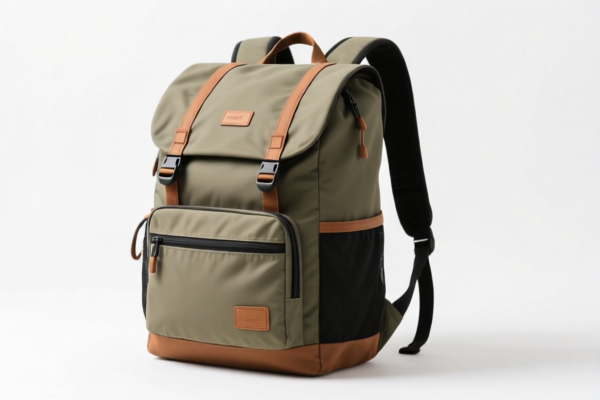

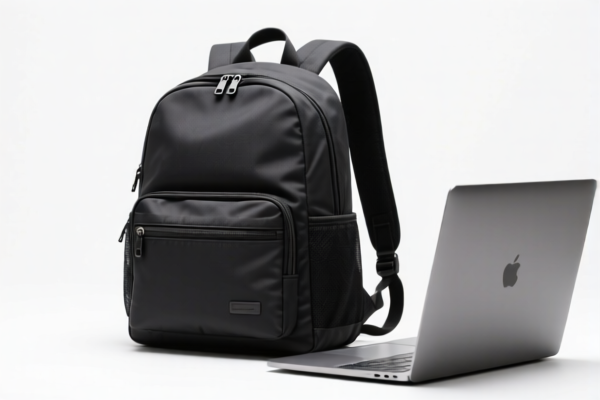
AI Analysis
Here is the professional Wiki-style guide for Leather Backpacks, optimized for 2026 customs clearance and tax efficiency.
🎒 Leather Backpacks (Handbags & Backpacks of Leather)
🌐 HS Code Reference & Customs Clearance Guide | 2026 Tariff Breakdown | Strategic Entry Protocol
📌 I. Product Definition & Classification: Are You Shipping a "Bag" or a "Suitcase"?
A leather backpack is a versatile accessory used for carrying books, laptops, and travel essentials. In international trade, the classification hinges on two critical factors: Material Composition (100% leather vs. coated/fabric) and Functionality (School vs. Fashion/Travel).
Key Distinction for Classification: * School/Child Backpacks (Leather): Often classified under specific child-accessory headings if strictly designed for students (rare for leather). * Fashion/Travel Backpacks: Classified under general luggage/handbags chapters (usually 4202 or 4205). * Material Rule: If the outer surface is >90% leather (even with fabric lining), it falls under Leather. If it is a mix (e.g., canvas with leather trim), it may fall under Textile/Plastic chapters (4202.32 or 6307).
⚠️ Critical Alert:
- 100% Leather with metal hardware → 4202 or 4205 (Luggage/Fashion).
- Leather-covered (leather veneer over fiberboard/plastic) → 3926 (Plastic goods) or 4421 (Wood), NOT leather.
- School Backpacks (if leather) → Often 4202.92 or 4205.00, but check "School" exemption rules.
📦 II. HS Code Classification Matrix (2026 Official Tariff)
| HS Code | Product Description | Key Characteristics | Applicable Material |
|---|---|---|---|
| 4202.92.30 | Other containers of leather, of a kind commonly carried by hand or over the shoulder | Leather Backpacks (Fashion/Travel), Laptop cases, briefcases | Leather / Composite Leather |
| 4202.92.90 | Other containers of leather, not specified elsewhere | Niche Leather Bags, Unusual shapes, Luxury brands | Leather (All types) |
| 4205.00.00 | Other articles of leather, of a kind commonly carried by hand | Leather Belts, Straps, Small Accessories (If the backpack is considered an accessory) | Leather |
| 4202.32.90 | Other containers of plastic or of textile materials | Leather-look (PU/PVC), Fabric with leather trim (<50% leather) | Textile/Plastic |
| 6307.90.90 | Other made up articles, including dress patterns | Non-standard (e.g., Leather bags not fitting 4202 definition due to unique form) | Any material |
🔍 Classification Logic:
- Primary Rule: If the bag has a defined "backpack" form with straps and is made primarily of leather, 4202.92.30 is the standard.
- Exclusion: If the bag is purely a "School" item with a specific shape for children (under 14 years), some countries may apply specific sub-codes, but generally, leather pushes it to 4202.
- The "Leather" Definition: The outer surface must be genuine leather (hide/skin). If it is "Leatherette" or "Synthetic Leather," it must not be declared as leather to avoid fraud penalties.
💰 III. 2026 Tariff Rate Breakdown (US & Global Highlights)
✅ Destination: 🇺🇸 United States (Main Focus)
✅ Origin: 🇨🇳 China (Common Manufacturing Base)
✅ Effective Date: 2026 (Current Trade Policy Context)
🎯 1. 4202.92.30 — Leather Backpacks (Standard Fashion/Travel)
| Item | Detail |
|---|---|
| Base Tariff (MFN) | 5.6% (ad valorem) |
| Section 301 Tariff (China) | +25% (Section 301 List 1, 2, 3, or 4 dependent on specific item) |
| Section 301 Tariff (Specific) | +25% (Most leather goods fall under List 3A/3B) |
| Total Effective Rate | 30.6% |
| De Minimis Exemption | ❌ No (Valuation < $800 does not exempt Section 301 for these categories) |
| Special Notes | If the bag is made of "Genuine Leather" + "Textile Lining", the leather component dictates the HS Code. |
| Legal Path | HTSUS:4202.92.30 → Section 301:300-0001 (Add 25%) |
🎯 2. 4202.92.90 — Other Leather Containers
| Item | Detail |
|---|---|
| Base Tariff (MFN) | 5.6% |
| Section 301 Tariff | +25% (If originating from China) |
| Total Effective Rate | 30.6% |
| De Minimis Exemption | ❌ No |
| Special Notes | Often used for luxury handbags, but applies to high-end leather backpacks too. |
📌 Interpretation:
- Section 301 is the "killer" tariff for Chinese leather goods. Even if the base tariff is low (5.6%), the 25% addition makes it 30.6%.
- De Minimis ($800): While US Section 321 allows $800 entry duty-free, Section 301 tariffs still apply to goods from China valued over $800. For shipments under $800, they often pass, but for bulk B2B, the 25% is mandatory.
🛠️ IV. Customs Clearance & Practical Strategy (Avoiding the Pitfalls)
✅ 1. Documentation Checklist (Mandatory)
| Document | Requirement | Why It Matters |
|---|---|---|
| Certificate of Origin | Form A or CO | Must explicitly state "Made in [Country]". If "China", 301 applies. |
| Material Declaration | 100% Leather or Composite | CRITICAL: Misdeclaring "Synthetic Leather" as "Genuine Leather" can lead to seizure + fraud charges. |
| Product Photos | Front, Back, Interior, Hardware | Customs needs to see the texture of the leather and the straps. |
| Packing List | Weight, Dimensions, Unit Price | Used for CIF calculation and anti-dumping checks. |
| Brand Authorization | Proof of trademark ownership | Prevents "IPR Seizure" if the brand is registered in the US. |
✅ 2. Smart Declaration Tips (The "Golden Rules")
🔥 "Material is Truth, HS Code is Destiny, Origin is King!"
| Scenario | Correct Approach | Risk if Wrong |
|---|---|---|
| Real Leather vs. PU Leather | Declare exactly: "Genuine Leather" vs. "Polyurethane Leather". | Risk: $50k+ fine + seizure if lying about material. |
| China-Origin Backpacks | Expect 25% 301 tariff. | Risk: Trying to route through Vietnam without "Substantial Transformation" will trigger Anti-Circumvention penalties. |
| Mixed Material (Leather + Fabric) | If Leather >50% (by area) → 4202. If Fabric >50% → 6306 or 4202.32. | Risk: Wrong HS Code leads to 301 or anti-dumping duty evasion flags. |
| "Leather-like" Finish | If it's a coating on fabric, do NOT use 4202. | Risk: High duty evasion suspicion. |
✅ 3. Special Circumstances
| Situation | Strategy |
|---|---|
| OEM/ODM Orders | Provide the "Bill of Materials" (BOM) showing the leather source. |
| Luxury Brand | Ensure the trademark is registered in the US Customs database to avoid "Seizure". |
| School Use | If marketed as "School Backpacks," ensure the description matches US definitions (often still 4202 for leather). |
| Origin Transshipment | Do NOT simply ship through Vietnam if the leather and stitching are done in China. Customs checks "Substantial Transformation" strictly. |
🌍 V. Global Market Comparison (2026)
| Region | Recommended HS Code | Base Tariff | Special Tax | Compliance |
|---|---|---|---|---|
| 🇺🇸 USA | 4202.92.30 |
5.6% | +25% (301) if China | FCC/FTC (No), Brand Reg. |
| 🇪🇺 EU | 4202.92 |
10-12% | No 301 (but may have Carbon Tax) | CE, EPR (Waste), REACH |
| 🇨🇦 Canada | 4202.92 |
5-8% | +25% (if China) | CFS (Consumer Safety) |
| 🇦🇺 Australia | 4202.92 |
5% | No 301 | RCM (Radio Comms if electronic) |
| 🇯🇵 Japan | 4202.92 |
10-14% | No 301 | PSE (if electronic) |
📌 Strategic Insight:
- USA is the most expensive market due to Section 301.
- EU is strict on EPR (Extended Producer Responsibility) for leather waste.
- Australia/Canada are the easiest for market entry if you have a US-based distributor.
📌 VI. Common Mistakes & Avoidance (Real Cases)
❌ Mistake 1: Declaring "Synthetic Leather" as "Genuine Leather" to avoid higher textile tariffs.
👉 Consequence: Fraud Penalties, Seizure, and 3x penalty fines.
❌ Mistake 2: Shipping from China to Mexico/Vietnam, then to US without proper transformation.
👉 Consequence: Anti-Circumvention Duty (back-tariffs + interest).
❌ Mistake 3: Failing to declare Brand Trademark.
👉 Consequence: Seizure by CBP even if tax is paid, because the brand owner filed a request.
❌ Mistake 4: Misclassifying a "Backpack" as a "School Bag" to get a lower rate.
👉 Consequence: US Customs has specific definitions for "School Bags" (often 4202.92 anyway). Misuse leads to audits.
✅ Correct Approach:
"Genuine Leather Backpack, 15L Capacity, Polyester Lining, Made in China, Brand [X], HS Code 4202.92.30."
🎯 VII. Conclusion: Precision Pays Off
🎯 Key Takeaways:
🔹 "Leather is Leather": If it's not real leather, say it's PU/Synthetic.
🔹 China Origin = 25% Add-on: Always budget for the 301 tariff in the US.
🔹 Brand is Key: Register your trademark with US Customs to prevent seizure.
🔹 Substantial Transformation: If you want to avoid 301, you must truly transform the leather in a third country (not just assembly).
📌 Pro Tip:
If your backpacks are under $800 and shipped via Section 321 (De Minimis), you MAY avoid the 25% 301 tariff (currently in a grey area/under review for 2026), but B2B bulk shipments MUST pay. Consult your broker for the latest "De Minimis" updates for 2026.
📣 Take Action:
📞 Verify your HS Code with a Customs Broker.
🚀 Check your Brand Registration status.
💼 Calculate your landed cost with the 25% buffer.
✨ Don't let a leather backpack cost you 30% of its value!
✨ Expert Customs Clearance: Where every gram of leather counts!
💼 Your supply chain deserves a smarter path.
Customer Reviews
About HS Code Classification
The Harmonized System (HS) is an internationally standardized nomenclature developed by the World Customs Organization (WCO) to classify traded products. Over 200 countries use the HS system as the basis for customs tariffs, trade statistics, and import/export regulations.
Each HS code follows a hierarchical structure:
- Chapter (2 digits) — Broad category of goods (e.g., Chapter 84: Machinery and Mechanical Appliances)
- Heading (4 digits) — More specific grouping within the chapter
- Subheading (6 digits) — Internationally standardized breakdown, used by all WCO member countries
- National subdivisions (8-10 digits) — Country-specific extensions for further classification, such as US HTSUS 10-digit codes
Correct HS code classification is essential for smooth customs clearance, accurate duty payment, and compliance with trade regulations. Misclassification can lead to customs delays, overpayment of duties, or penalties.
When importing from CN to US, the applicable tariff rates may include:
- Most-Favored-Nation (MFN) rate — The standard duty rate applied to WTO members
- General rate — Applied to countries without trade agreements
- Trade remedy duties — Additional tariffs such as Section 301 (anti-dumping), Section 232 (national security), or countervailing duties
The information provided on this page is for reference purposes only. For official classification, please consult with your local customs authority or a licensed customs broker.