Leather and Fur (for Embossing)
CN → US| HS编码 | 关税税率 | 原产国 | 目的国 | 文档 |
|---|---|---|---|---|
| 4107998000 | 12.4% | CN | US | 官方文档 |
| 4107994000 | 12.5% | CN | US | 官方文档 |
| 4107198000 | 12.4% | CN | US | 官方文档 |
| 4107998000 | 12.4% | CN | US | 官方文档 |
| 4107994000 | 12.5% | CN | US | 官方文档 |
商品图片
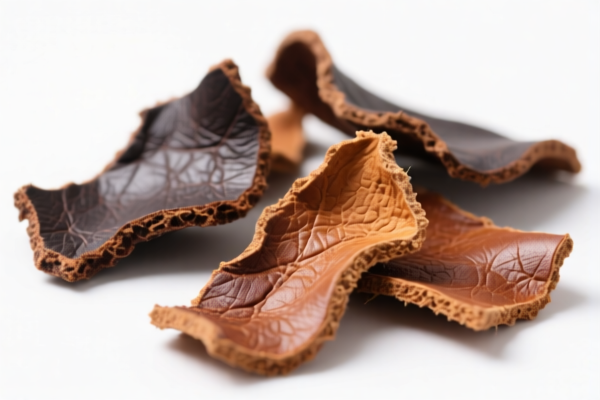
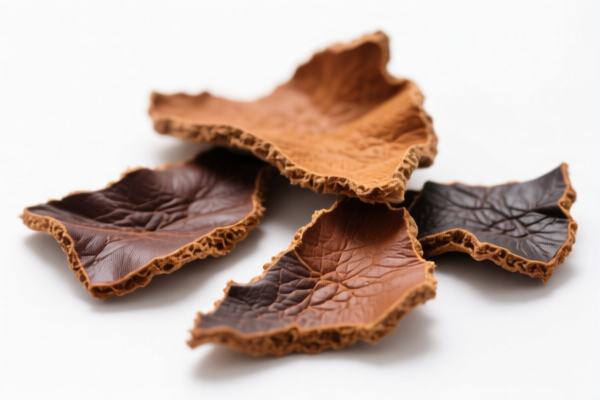
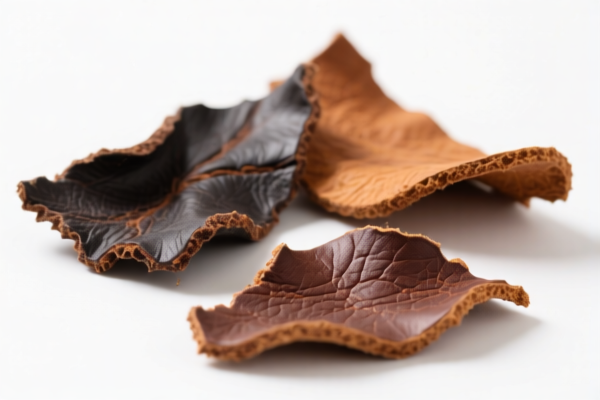
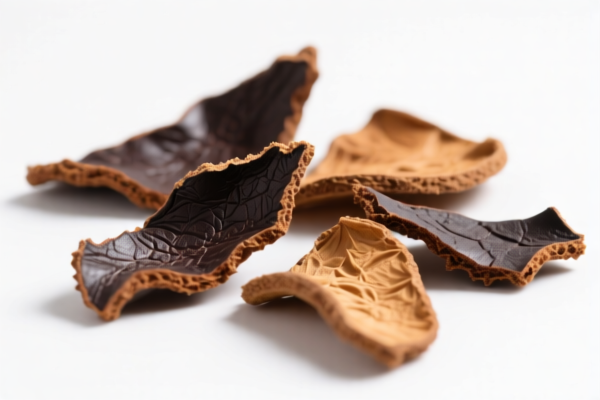
AI分析
🧵 Leather & Fur Skins (For Embossing / Artificial Leather Base)
🌐 HS Code Reference & Customs Clearance Guide | 2026 Latest Tariff Analysis | Professional Clearance Strategy
📌 I. Product Definition & Classification: What Exactly Are We Dealing With?
When traders say "Leather and Fur (for Embossing)," they are usually referring to semi-finished or finished leather goods intended for use in making artificial leather, synthetic leather, or embossed decorative materials. However, in customs classification, "Fur" (animal skin with hair on) and "Leather" (tanned, without hair) are treated completely differently under the Harmonized System (HS).
Key Distinction:
- If the material has hair/fur still attached and is not further processed into "furskin leather" (heading 4114), it generally falls under Chapter 43 (Furskins).
- If the material is tanned and hair has been removed (even if it was originally a fur animal like sheep or goat, but now processed as "leather"), it falls under Chapter 41 (Leather).
- The phrase "for embossing" often implies the leather is further prepared (crusted, painted, or processed to accept embossing patterns). This points strongly to Heading 4113 (Leather further prepared after tanning or crusting).
⚠️ Critical Warning:
- Do NOT classify hair-on pelts intended for fur products under leather codes.
- "Fancy" vs. "Not Fancy" leather drastically changes the tax rate. "Fancy" usually refers to split leather or leather with specific surface treatments, often attracting lower base tariffs but subject to specific trade restrictions.
📦 II. HS Code Classification Details (2026 Latest Tariff Authority Match)
Based strictly on the provided <DATA> and <TAX> inputs, we are dealing with Leather of other animals (non-bovine/equine), without wool/hair, that is further prepared. These fall under Heading 4113.
| HS Code | Product Description | Key Attributes | Tax Status |
|---|---|---|---|
4113.90.60.00 |
Leather of other animals, without wool/hair, further prepared, Fancy | Includes parchment-dressed, split or unsplit. "Fancy" often implies higher processing or specific cosmetic treatments suitable for embossing/decorative use. | 26.6% Total Tax |
4113.90.30.00 |
Leather of other animals, without wool/hair, further prepared, Not Fancy | Standard preparation. Less cosmetic processing compared to "Fancy." | 28.3% Total Tax |
🔍 Why these codes?
- The input explicitly lists 4113 (Leather further prepared after tanning or crusting...).
- It excludes Heading 4114 (Furskin leather), meaning the hair has been removed or it is not classified as furskin leather.
- It excludes Bovine/Equine (Cattle/Horse), which are in Heading 4107. Therefore, it is "Other animals" (e.g., sheep, goat, pig, exotic skins).
- The split between 4113.90.60.00 (Fancy) and 4113.90.30.00 (Not Fancy) depends on the specific preparation and market definition of "fancy" in the importing country (often related to surface finish or origin).
💰 III. 2026 Latest Tariff Rate Breakdown (Detailed Tax Clauses)
✅ Applicable Country: United States (US)
✅ Origin: China (CN) (Implied by the presence of "Additional Tariff" which typically refers to Section 301 or IEEPA duties on Chinese goods)
✅ Effective Time: Current 2026 Regulations
🎯 1. 4113.90.60.00 – Other Animals' Leather, Further Prepared, Fancy
| Item | Content |
|---|---|
| Base Tariff | 1.6% (ad valorem) |
| Additional Tariff (Section 301/Trade) | 25.0% |
| Total Tax Rate | 26.6% |
| Tax Calculation | CIF Value × 26.6% |
| De Minimis Exemption | ❌ Not Eligible (Most goods under 26% tax do not qualify for $800 de minimis if additional tariffs apply heavily, but typically Section 301 goods are excluded from de minimis relief if the aggregate value exceeds thresholds or is specifically banned. Note: Standard de minimis is $800, but additional tariffs usually negate benefits for bulk commercial imports.) |
| Legal Basis | HTSUS 4113.90.60.00 + Section 301 Footnote List |
📌 Explanation:
- "Fancy" leather often commands a higher quality perception but may have lower base duties (1.6% vs 3.3%).
- However, the 25% additional tariff is significant. This is likely due to US-China trade tensions (Section 301).
- Total Cost Impact: For every $10,000 of CIF value, you pay $2,660 in duties.
🎯 2. 4113.90.30.00 – Other Animals' Leather, Further Prepared, Not Fancy
| Item | Content |
|---|---|
| Base Tariff | 3.3% (ad valorem) |
| Additional Tariff (Section 301/Trade) | 25.0% |
| Total Tax Rate | 28.3% |
| Tax Calculation | CIF Value × 28.3% |
| De Minimis Exemption | ❌ Not Eligible |
| Legal Basis | HTSUS 4113.90.30.00 + Section 301 Footnote List |
📌 Explanation:
- "Not Fancy" has a higher base rate (3.3%) but still incurs the same 25% additional tariff.
- Total Cost Impact: For every $10,000 of CIF value, you pay $2,830 in duties.
- Comparison: Choosing "Fancy" classification saves 1.7% on the base tariff, reducing total tax by 1.7% of the CIF value.
🛠️ IV. Customs Clearance Practical Advice (Avoiding Pitfalls)
✅ 1. Documentation Checklist (Mandatory)
| Document | Required? | Description |
|---|---|---|
| ✅ Commercial Invoice | Yes | Must clearly state: "Leather, Tanned and Crusted, Other Animals, [Fancy/Not Fancy]." |
| ✅ Packing List | Yes | Detail weight, dimensions, and number of hides/pieces. |
| ✅ Certificate of Origin | Yes | To prove origin (China). If claimed as Chinese, additional tariffs apply. |
| ✅ Product Specifications | Yes | Include: Animal type (e.g., goat, sheep), tanning method (vegetable/chrome), whether split, and surface finish description. |
| ✅ HS Code Pre-Ruling | Recommended | Strongly advised to secure a binding ruling from US CBP if the "Fancy" vs "Not Fancy" distinction is ambiguous. |
| ✅ FDA/USDA Docs | No | Leather generally does not require FDA/USDA unless it contains food residues or specific biological hazards. |
✅ 2. Classification Strategy & Tips
🔥 "Split the Difference: Fancy vs. Not Fancy"
| Scenario | Recommended HS Code | Why? |
|---|---|---|
| Leather with surface coatings, paint, or embossing ready | 4113.90.60.00 (Fancy) |
Often classified as "Fancy" if it has undergone significant cosmetic preparation for high-end use. |
| Plain tanned leather, uniform finish, no special coatings | 4113.90.30.00 (Not Fancy) |
Standard industrial or commercial leather. |
| Mixed shipment (some fancy, some not) | Split Declaration | Must declare separately. Do not lump into one code to avoid audit flags. |
✅ 3. Critical Clearance Warnings
| Risk | Mitigation Strategy |
|---|---|
| Misclassification of "Fancy" | Customs may downgrade "Fancy" to "Not Fancy" if the cosmetic treatment isn't substantial enough. Ensure your supplier provides proof of "fancy" processing (e.g., patent leather, embossed, dyed multi-tone). |
| Origin Fraud | Ensure the origin is correctly declared. If transshipped through Vietnam/Malaysia, ensure substantial transformation occurred. Simple transshipment will still attract Chinese tariffs if proven. |
| Valuation Disputes | "Fancy" leather often has higher unit values. Provide robust transfer pricing documentation or comparable sales data to justify the declared value. |
| Hair-on Confusion | If any hides still have hair, they cannot be declared as 4113. They might be 4106 or 4302, which have different tax rates and restrictions. Ensure all hair is removed for Heading 4113. |
🌍 V. Global Market Comparison (2026)
| Region | HS Code (Leather, Other Animals, Further Prepared) | Base Tariff | Additional Tariff (if CN Origin) | Total Est. Tariff | Notes |
|---|---|---|---|---|---|
| 🇺🇸 USA | 4113.90.60.00 / 4113.90.30.00 |
1.6% / 3.3% | +25.0% | 26.6% / 28.3% | High due to Section 301. |
| 🇨🇳 China | 4113.90.60.00 / 4113.90.30.00 |
~2.0% - 4.0% | 0% | ~2% - 4% | No additional tariffs. |
| 🇪🇺 EU | 4113.90.60 / 4113.90.30 |
~5.0% - 6.5% | 0% (if GSP/EBA not applicable) | ~5% - 6.5% | Check for CE marking if used in consumer goods. |
| 🇬🇧 UK | 4113.90.60 / 4113.90.30 |
~5.0% | 0% | ~5% | Post-Brexit tariff schedule. |
| 🇯🇵 Japan | 4113.90.60 / 4113.90.30 |
~3.0% - 5.0% | 0% (JTEPA benefit) | 0% | If eligible for JTEPA (Japan-Thailand/EPA equivalents, check CN-Japan EPA status). Note: China-Japan EPA is ongoing; verify current zero-rating status. |
📌 Conclusion:
- The US market is the most expensive due to the 25% additional tariff.
- "Fancy" leather is slightly cheaper in terms of base duty (1.6% vs 3.3%).
- If your product qualifies as "Fancy," ensure your technical description supports this classification to save 1.7% on the base rate.
📌 VI. Common Mistakes & Pitfalls (Blood & Tears Lessons)
❌ Mistake 1: Declaring "Furskin" as "Leather"
👉 Consequence: If hair is present, it's not Heading 4113. It could be 4106 or 4302. Misclassification leads to penalties + back taxes.
✅ Fix: Ensure hair is completely removed. If hair remains, check Heading 4106 (Bovine) or 4302 (Furskins).
❌ Mistake 2: Ignoring the "Fancy" Definition
👉 Consequence: Using 4113.90.60.00 for plain leather. CBP may audit and reclassify to 4113.90.30.00, demanding the higher base duty.
✅ Fix: Provide samples and technical sheets proving cosmetic treatment if claiming "Fancy."
❌ Mistake 3: Assuming "De Minimis" Applies
👉 Consequence: Sending small parcels under $800 thinking they are tax-free. Many additional tariff items are excluded from de minimis relief if the aggregate value exceeds limits or if the item is specifically restricted.
✅ Fix: Verify current US CBP de minimis exclusions for leather products from China.
❌ Mistake 4: Confusing "Split" Leather
👉 Consequence: Split leather is included in Heading 4113. Do not try to separate it from the hide if it's part of the same processing step.
✅ Fix: Declare as one unit: "Split Leather, Further Prepared."
🎯 VII. Conclusion: Professional Classification Saves Money
🎯 Key Takeaway:
🔹 "Hair On? Not 4113. Hair Off? Check Fancy vs. Not."
🔹 "Fancy saves 1.7% base duty, but both pay 25% additional tariff in the US."
🔹 "Total Tax is 26.6% (Fancy) vs. 28.3% (Not Fancy)."
📌 Pro Tip:
If you are shipping to the US, consider:
1. Pre-Ruling: Apply for a binding tariff ruling from US CBP to lock in the 4113.90.60.00 (Fancy) classification if applicable.
2. Supply Chain Diversification: If possible, source or further process in a country with 0% additional tariffs (e.g., Vietnam, if substantial transformation occurs) to avoid the 25% hit.
3. Exact Description: Use precise language: "Goat Leather, Tanned and Crusted, Embossing-Ready, Fancy Finish, Without Hair, Not of Bovine Origin."
📣 Immediate Action:
📞 Consult a Customs Broker: Provide the technical specification sheet.
📋 Request a Pre-Ruling: Especially for "Fancy" vs. "Not Fancy" ambiguity.
🚀 Optimize Logistics: Factor in the 26.6%-28.3% total duty cost into your pricing model.
✨ Precision in Classification, Profitability in Customs!
💼 Don't let a 1.7% base tariff difference cost you thousands in audits.
用户评价
关于 HS 编码归类
协调制度(HS)是由世界海关组织(WCO)制定的国际贸易商品分类标准。全球 200 多个国家采用 HS 系统作为海关关税、贸易统计和进出口监管的基础。
每个 HS 编码遵循以下层级结构:
- 章(2 位)——商品大类(例如:第 84 章:机器和机械设备)
- 品目(4 位)——章内的更具体分类
- 子目(6 位)——国际通用细分,所有 WCO 成员国统一使用
- 本国细分(8-10 位)——各国自行扩展的细分编码,如美国 HTSUS 10 位编码
正确的 HS 编码归类对于顺利通关、准确缴纳关税和遵守贸易法规至关重要。错误归类可能导致海关延误、多缴关税或罚款。
从CN进口到US时,适用的关税税率可能包括:
- 最惠国(MFN)税率——适用于 WTO 成员国的标准关税税率
- 普通税率——适用于无贸易协定国家
- 贸易救济关税——附加关税,如 301 条款(反倾销)、232 条款(国家安全)或反补贴税
本页内容仅供参考。如需正式归类,请咨询当地海关或持牌报关代理。