Leather and Fur (for Embossing)
CN → US| HS Code | Tariff Rate | Origin | Destination | Doc |
|---|---|---|---|---|
| 4107998000 | 12.4% | CN | US | Official Doc |
| 4107994000 | 12.5% | CN | US | Official Doc |
| 4107198000 | 12.4% | CN | US | Official Doc |
| 4107998000 | 12.4% | CN | US | Official Doc |
| 4107994000 | 12.5% | CN | US | Official Doc |
Product Images
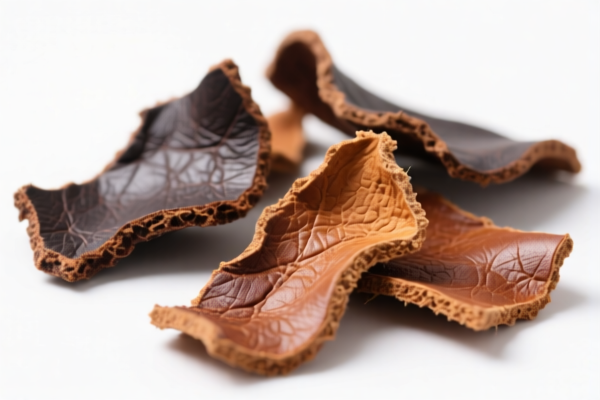
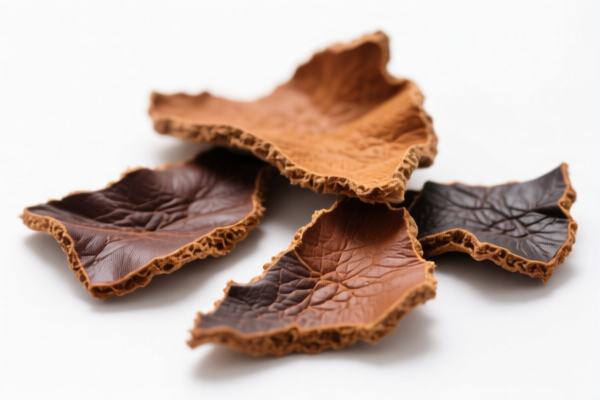
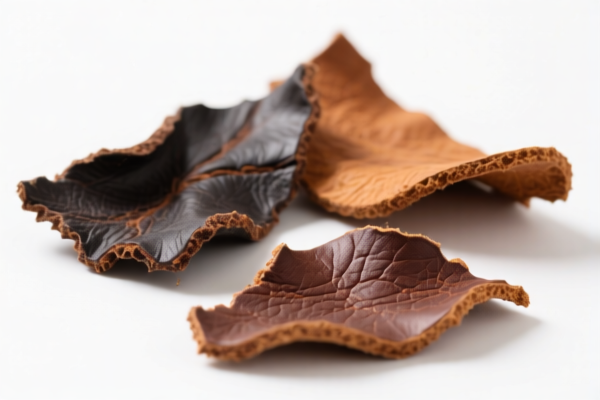
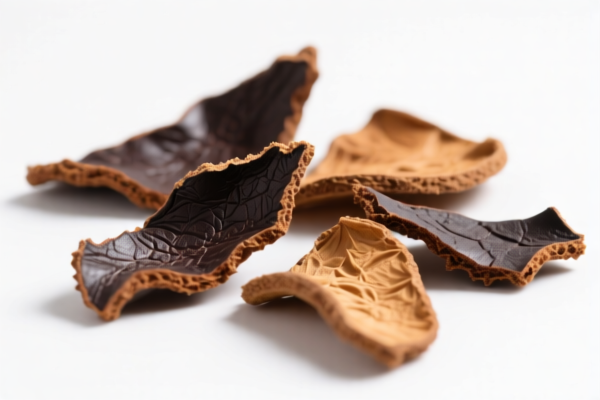
AI Analysis
🧵 Leather & Fur Skins (For Embossing / Artificial Leather Base)
🌐 HS Code Reference & Customs Clearance Guide | 2026 Latest Tariff Analysis | Professional Clearance Strategy
📌 I. Product Definition & Classification: What Exactly Are We Dealing With?
When traders say "Leather and Fur (for Embossing)," they are usually referring to semi-finished or finished leather goods intended for use in making artificial leather, synthetic leather, or embossed decorative materials. However, in customs classification, "Fur" (animal skin with hair on) and "Leather" (tanned, without hair) are treated completely differently under the Harmonized System (HS).
Key Distinction:
- If the material has hair/fur still attached and is not further processed into "furskin leather" (heading 4114), it generally falls under Chapter 43 (Furskins).
- If the material is tanned and hair has been removed (even if it was originally a fur animal like sheep or goat, but now processed as "leather"), it falls under Chapter 41 (Leather).
- The phrase "for embossing" often implies the leather is further prepared (crusted, painted, or processed to accept embossing patterns). This points strongly to Heading 4113 (Leather further prepared after tanning or crusting).
⚠️ Critical Warning:
- Do NOT classify hair-on pelts intended for fur products under leather codes.
- "Fancy" vs. "Not Fancy" leather drastically changes the tax rate. "Fancy" usually refers to split leather or leather with specific surface treatments, often attracting lower base tariffs but subject to specific trade restrictions.
📦 II. HS Code Classification Details (2026 Latest Tariff Authority Match)
Based strictly on the provided <DATA> and <TAX> inputs, we are dealing with Leather of other animals (non-bovine/equine), without wool/hair, that is further prepared. These fall under Heading 4113.
| HS Code | Product Description | Key Attributes | Tax Status |
|---|---|---|---|
4113.90.60.00 |
Leather of other animals, without wool/hair, further prepared, Fancy | Includes parchment-dressed, split or unsplit. "Fancy" often implies higher processing or specific cosmetic treatments suitable for embossing/decorative use. | 26.6% Total Tax |
4113.90.30.00 |
Leather of other animals, without wool/hair, further prepared, Not Fancy | Standard preparation. Less cosmetic processing compared to "Fancy." | 28.3% Total Tax |
🔍 Why these codes?
- The input explicitly lists 4113 (Leather further prepared after tanning or crusting...).
- It excludes Heading 4114 (Furskin leather), meaning the hair has been removed or it is not classified as furskin leather.
- It excludes Bovine/Equine (Cattle/Horse), which are in Heading 4107. Therefore, it is "Other animals" (e.g., sheep, goat, pig, exotic skins).
- The split between 4113.90.60.00 (Fancy) and 4113.90.30.00 (Not Fancy) depends on the specific preparation and market definition of "fancy" in the importing country (often related to surface finish or origin).
💰 III. 2026 Latest Tariff Rate Breakdown (Detailed Tax Clauses)
✅ Applicable Country: United States (US)
✅ Origin: China (CN) (Implied by the presence of "Additional Tariff" which typically refers to Section 301 or IEEPA duties on Chinese goods)
✅ Effective Time: Current 2026 Regulations
🎯 1. 4113.90.60.00 – Other Animals' Leather, Further Prepared, Fancy
| Item | Content |
|---|---|
| Base Tariff | 1.6% (ad valorem) |
| Additional Tariff (Section 301/Trade) | 25.0% |
| Total Tax Rate | 26.6% |
| Tax Calculation | CIF Value × 26.6% |
| De Minimis Exemption | ❌ Not Eligible (Most goods under 26% tax do not qualify for $800 de minimis if additional tariffs apply heavily, but typically Section 301 goods are excluded from de minimis relief if the aggregate value exceeds thresholds or is specifically banned. Note: Standard de minimis is $800, but additional tariffs usually negate benefits for bulk commercial imports.) |
| Legal Basis | HTSUS 4113.90.60.00 + Section 301 Footnote List |
📌 Explanation:
- "Fancy" leather often commands a higher quality perception but may have lower base duties (1.6% vs 3.3%).
- However, the 25% additional tariff is significant. This is likely due to US-China trade tensions (Section 301).
- Total Cost Impact: For every $10,000 of CIF value, you pay $2,660 in duties.
🎯 2. 4113.90.30.00 – Other Animals' Leather, Further Prepared, Not Fancy
| Item | Content |
|---|---|
| Base Tariff | 3.3% (ad valorem) |
| Additional Tariff (Section 301/Trade) | 25.0% |
| Total Tax Rate | 28.3% |
| Tax Calculation | CIF Value × 28.3% |
| De Minimis Exemption | ❌ Not Eligible |
| Legal Basis | HTSUS 4113.90.30.00 + Section 301 Footnote List |
📌 Explanation:
- "Not Fancy" has a higher base rate (3.3%) but still incurs the same 25% additional tariff.
- Total Cost Impact: For every $10,000 of CIF value, you pay $2,830 in duties.
- Comparison: Choosing "Fancy" classification saves 1.7% on the base tariff, reducing total tax by 1.7% of the CIF value.
🛠️ IV. Customs Clearance Practical Advice (Avoiding Pitfalls)
✅ 1. Documentation Checklist (Mandatory)
| Document | Required? | Description |
|---|---|---|
| ✅ Commercial Invoice | Yes | Must clearly state: "Leather, Tanned and Crusted, Other Animals, [Fancy/Not Fancy]." |
| ✅ Packing List | Yes | Detail weight, dimensions, and number of hides/pieces. |
| ✅ Certificate of Origin | Yes | To prove origin (China). If claimed as Chinese, additional tariffs apply. |
| ✅ Product Specifications | Yes | Include: Animal type (e.g., goat, sheep), tanning method (vegetable/chrome), whether split, and surface finish description. |
| ✅ HS Code Pre-Ruling | Recommended | Strongly advised to secure a binding ruling from US CBP if the "Fancy" vs "Not Fancy" distinction is ambiguous. |
| ✅ FDA/USDA Docs | No | Leather generally does not require FDA/USDA unless it contains food residues or specific biological hazards. |
✅ 2. Classification Strategy & Tips
🔥 "Split the Difference: Fancy vs. Not Fancy"
| Scenario | Recommended HS Code | Why? |
|---|---|---|
| Leather with surface coatings, paint, or embossing ready | 4113.90.60.00 (Fancy) |
Often classified as "Fancy" if it has undergone significant cosmetic preparation for high-end use. |
| Plain tanned leather, uniform finish, no special coatings | 4113.90.30.00 (Not Fancy) |
Standard industrial or commercial leather. |
| Mixed shipment (some fancy, some not) | Split Declaration | Must declare separately. Do not lump into one code to avoid audit flags. |
✅ 3. Critical Clearance Warnings
| Risk | Mitigation Strategy |
|---|---|
| Misclassification of "Fancy" | Customs may downgrade "Fancy" to "Not Fancy" if the cosmetic treatment isn't substantial enough. Ensure your supplier provides proof of "fancy" processing (e.g., patent leather, embossed, dyed multi-tone). |
| Origin Fraud | Ensure the origin is correctly declared. If transshipped through Vietnam/Malaysia, ensure substantial transformation occurred. Simple transshipment will still attract Chinese tariffs if proven. |
| Valuation Disputes | "Fancy" leather often has higher unit values. Provide robust transfer pricing documentation or comparable sales data to justify the declared value. |
| Hair-on Confusion | If any hides still have hair, they cannot be declared as 4113. They might be 4106 or 4302, which have different tax rates and restrictions. Ensure all hair is removed for Heading 4113. |
🌍 V. Global Market Comparison (2026)
| Region | HS Code (Leather, Other Animals, Further Prepared) | Base Tariff | Additional Tariff (if CN Origin) | Total Est. Tariff | Notes |
|---|---|---|---|---|---|
| 🇺🇸 USA | 4113.90.60.00 / 4113.90.30.00 |
1.6% / 3.3% | +25.0% | 26.6% / 28.3% | High due to Section 301. |
| 🇨🇳 China | 4113.90.60.00 / 4113.90.30.00 |
~2.0% - 4.0% | 0% | ~2% - 4% | No additional tariffs. |
| 🇪🇺 EU | 4113.90.60 / 4113.90.30 |
~5.0% - 6.5% | 0% (if GSP/EBA not applicable) | ~5% - 6.5% | Check for CE marking if used in consumer goods. |
| 🇬🇧 UK | 4113.90.60 / 4113.90.30 |
~5.0% | 0% | ~5% | Post-Brexit tariff schedule. |
| 🇯🇵 Japan | 4113.90.60 / 4113.90.30 |
~3.0% - 5.0% | 0% (JTEPA benefit) | 0% | If eligible for JTEPA (Japan-Thailand/EPA equivalents, check CN-Japan EPA status). Note: China-Japan EPA is ongoing; verify current zero-rating status. |
📌 Conclusion:
- The US market is the most expensive due to the 25% additional tariff.
- "Fancy" leather is slightly cheaper in terms of base duty (1.6% vs 3.3%).
- If your product qualifies as "Fancy," ensure your technical description supports this classification to save 1.7% on the base rate.
📌 VI. Common Mistakes & Pitfalls (Blood & Tears Lessons)
❌ Mistake 1: Declaring "Furskin" as "Leather"
👉 Consequence: If hair is present, it's not Heading 4113. It could be 4106 or 4302. Misclassification leads to penalties + back taxes.
✅ Fix: Ensure hair is completely removed. If hair remains, check Heading 4106 (Bovine) or 4302 (Furskins).
❌ Mistake 2: Ignoring the "Fancy" Definition
👉 Consequence: Using 4113.90.60.00 for plain leather. CBP may audit and reclassify to 4113.90.30.00, demanding the higher base duty.
✅ Fix: Provide samples and technical sheets proving cosmetic treatment if claiming "Fancy."
❌ Mistake 3: Assuming "De Minimis" Applies
👉 Consequence: Sending small parcels under $800 thinking they are tax-free. Many additional tariff items are excluded from de minimis relief if the aggregate value exceeds limits or if the item is specifically restricted.
✅ Fix: Verify current US CBP de minimis exclusions for leather products from China.
❌ Mistake 4: Confusing "Split" Leather
👉 Consequence: Split leather is included in Heading 4113. Do not try to separate it from the hide if it's part of the same processing step.
✅ Fix: Declare as one unit: "Split Leather, Further Prepared."
🎯 VII. Conclusion: Professional Classification Saves Money
🎯 Key Takeaway:
🔹 "Hair On? Not 4113. Hair Off? Check Fancy vs. Not."
🔹 "Fancy saves 1.7% base duty, but both pay 25% additional tariff in the US."
🔹 "Total Tax is 26.6% (Fancy) vs. 28.3% (Not Fancy)."
📌 Pro Tip:
If you are shipping to the US, consider:
1. Pre-Ruling: Apply for a binding tariff ruling from US CBP to lock in the 4113.90.60.00 (Fancy) classification if applicable.
2. Supply Chain Diversification: If possible, source or further process in a country with 0% additional tariffs (e.g., Vietnam, if substantial transformation occurs) to avoid the 25% hit.
3. Exact Description: Use precise language: "Goat Leather, Tanned and Crusted, Embossing-Ready, Fancy Finish, Without Hair, Not of Bovine Origin."
📣 Immediate Action:
📞 Consult a Customs Broker: Provide the technical specification sheet.
📋 Request a Pre-Ruling: Especially for "Fancy" vs. "Not Fancy" ambiguity.
🚀 Optimize Logistics: Factor in the 26.6%-28.3% total duty cost into your pricing model.
✨ Precision in Classification, Profitability in Customs!
💼 Don't let a 1.7% base tariff difference cost you thousands in audits.
Customer Reviews
About HS Code Classification
The Harmonized System (HS) is an internationally standardized nomenclature developed by the World Customs Organization (WCO) to classify traded products. Over 200 countries use the HS system as the basis for customs tariffs, trade statistics, and import/export regulations.
Each HS code follows a hierarchical structure:
- Chapter (2 digits) — Broad category of goods (e.g., Chapter 84: Machinery and Mechanical Appliances)
- Heading (4 digits) — More specific grouping within the chapter
- Subheading (6 digits) — Internationally standardized breakdown, used by all WCO member countries
- National subdivisions (8-10 digits) — Country-specific extensions for further classification, such as US HTSUS 10-digit codes
Correct HS code classification is essential for smooth customs clearance, accurate duty payment, and compliance with trade regulations. Misclassification can lead to customs delays, overpayment of duties, or penalties.
When importing from CN to US, the applicable tariff rates may include:
- Most-Favored-Nation (MFN) rate — The standard duty rate applied to WTO members
- General rate — Applied to countries without trade agreements
- Trade remedy duties — Additional tariffs such as Section 301 (anti-dumping), Section 232 (national security), or countervailing duties
The information provided on this page is for reference purposes only. For official classification, please consult with your local customs authority or a licensed customs broker.