Left handed baseball glove
CN → US| HS编码 | 关税税率 | 原产国 | 目的国 | 文档 |
|---|---|---|---|---|
| 6116100800 | 20.3% | CN | US | 官方文档 |
| 6216000800 | 18.3% | CN | US | 官方文档 |
| 6116930800 | 20.3% | CN | US | 官方文档 |
| 4203214000 | 35.0% | CN | US | 官方文档 |
| 4203212000 | 38.0% | CN | US | 官方文档 |
| 6216004600 | 20.3% | CN | US | 官方文档 |
商品图片
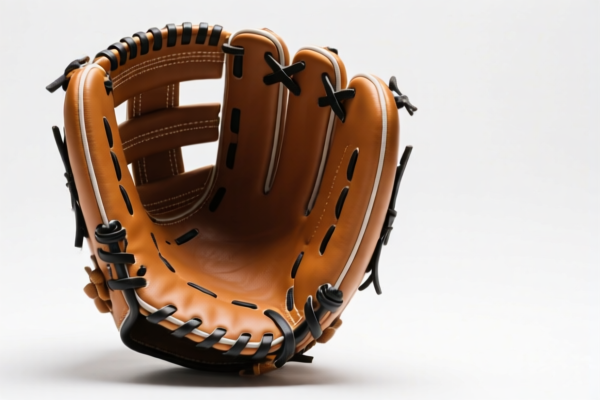
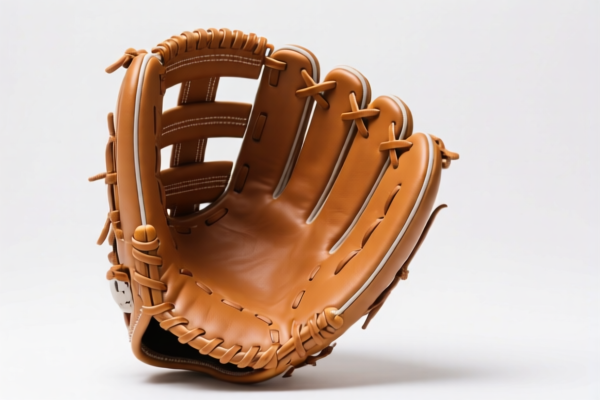
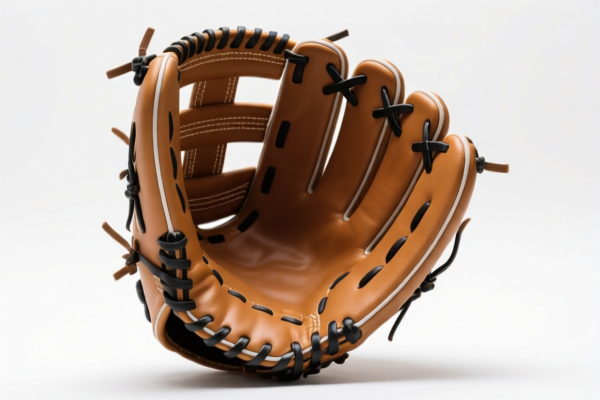
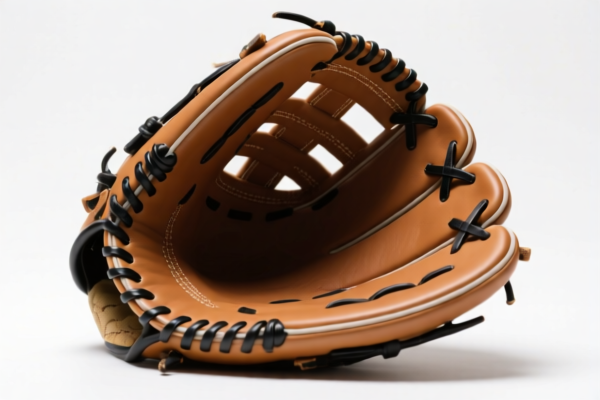
AI分析
🧤 Left-Handed Baseball Glove (LHBG)
🌐 HS Code Reference & Customs Clearance Guide | 2024/2025 Latest Tariff Analysis | Professional Transit Strategy
📌 I. Product Definition & Classification: Do You Really Understand "Left-Handed Baseball Gloves"?
A left-handed baseball glove is a specialized piece of sports equipment worn on the non-throwing hand (the left hand for left-handed players) to catch the ball. In international trade, its classification depends heavily on the material composition and specific design features (e.g., whether it is knitted, leather-based, or coated). Misclassification can lead to significant tariff discrepancies due to the varying base rates and punitive tariffs applied to different material types.
⚠️ Key Distinction:
- Chapter 61 (Knitted/Artificial): Gloves made from synthetic fibers, knitted fabrics, or those with significant rubber/plastic coating → Usually 20.3% total duty. - Chapter 62 (Other Textiles): Non-knitted gloves, potentially with leather/plastic surfaces → Usually 18.3% total duty. - Chapter 42 (Leather/Leather-like): Gloves made primarily of genuine leather or leather substitutes → Highest risk with 35%-38% total duty.
📦 II. HS Code Classification Details (Based on Provided Data)
| HS Code | Product Description | Material/Structure Inference | Total Tax Rate |
|---|---|---|---|
6116.10.08.00 |
Left-hand baseball glove | Knitted/textile base; coated with plastic/rubber for function | 20.3% |
6216.00.08.00 |
Left-hand baseball glove | Non-knitted textile; surface contains leather or plastic/rubber coating | 18.3% |
6116.93.08.00 |
Left-hand baseball glove | Synthetic fiber or leather; sports-specific form | 20.3% |
4203.21.40.00 |
Left-hand baseball glove | Leather or synthetic leather (imitation) | 35.0% |
4203.21.20.00 |
Left-hand baseball glove | Genuine leather or synthetic leather | 38.0% |
6216.00.46.00 |
Left-hand baseball glove | Artificial fiber or leather; matches sports usage | 20.3% |
🔍 Critical Insight:
- The largest tariff swing occurs between Chapter 61/62 (Textiles) and Chapter 42 (Leather).
- Chapter 42 items face a 25% Section 301 tariff, while Chapter 61/62 items face a 7.5% Section 301 tariff. This results in a ~15-20% difference in total landed cost.
💰 III. 2026 Latest Tariff Rate Breakdown (Including Surcharges & Policy Add-ons)
✅ Applicable Country: United States (US)
✅ Country of Origin: China (CN)
✅ Effective Time: Current tariffs apply (Section 301 & 122 Clause)
🎯 1. Textile-Based Gloves (6116.10.08.00, 6116.93.08.00, 6216.00.46.00)
| Item | Content |
|---|---|
| Base Rate | 2.8% (ad valorem) |
| Section 301 Surcharge | +7.5% |
| 122 Clause Surcharge | +10% |
| Total Effective Tax | 20.3% |
| Tax Calculation | CIF Value × 20.3% |
| De Minimis Eligibility | ❌ No (Section 301 goods generally excluded from 800/864 exemptions) |
| Legal Basis Path | HTSUS:6116.10.08.00 → USITC:Footnote 301 → 122 Clause |
📌 Explanation:
- These gloves are classified under textile chapters. The base rate is low (2.8%), but the 7.5% Section 301 tariff (for Chinese origin) and 10% 122 Clause tariff add up.
- Total: 20.3%. This is the most cost-effective classification for synthetic/knitted gloves.
🎯 2. Non-Knitted Textile/Coated Glove (6216.00.08.00)
| Item | Content |
|---|---|
| Base Rate | 0.8% (ad valorem) |
| Section 301 Surcharge | +7.5% |
| 122 Clause Surcharge | +10% |
| Total Effective Tax | 18.3% |
| Tax Calculation | CIF Value × 18.3% |
| De Minimis Eligibility | ❌ No |
| Legal Basis Path | HTSUS:6216.00.08.00 → USITC:Footnote 301 → 122 Clause |
📌 Explanation:
- This is the lowest tax bracket in the provided data.
- Ideal if the glove is not knitted and uses a specific coating or textile structure that fits 6216.00.
🎯 3. Leather/Synthetic Leather Gloves (4203.21.40.00, 4203.21.20.00)
| Item | Content |
|---|---|
| Base Rate | 0.0% (4203.21.40) / 3.0% (4203.21.20) |
| Section 301 Surcharge | +25.0% |
| 122 Clause Surcharge | +10% |
| Total Effective Tax | 35.0% (4203.21.40) / 38.0% (4203.21.20) |
| Tax Calculation | CIF Value × 35/38% |
| De Minimis Eligibility | ❌ No |
| Legal Basis Path | HTSUS:4203.21.20.00 → USITC:Footnote 301 → 122 Clause |
📌 Warning:
- Leather products are heavily targeted by trade policies.
- The 25% Section 301 tariff is significantly higher than the 7.5% for textiles.
- Total: 35%-38%. This makes leather gloves less competitive in the US market unless value-added justifies the cost.
🛠️ IV. Customs Clearance Practical Advice (Pitfall Avoidance Guide)
✅ 1. Preparation Checklist (Essential Documents)
| Document | Required | Notes |
|---|---|---|
| ✅ Product Specification Sheet | ✔️ | Must clearly state material composition (e.g., "100% Polyester Knitted" vs. "Top Grain Leather"). |
| ✅ Material Composition Breakdown | ✔️ | Customs will scrutinize this. If >50% leather, it likely goes to Ch. 42. |
| ✅ Product Photos | ✔️ | Show the inner lining, outer surface, and stitching. Distinguish between knitted vs. non-knitted. |
| ✅ Commercial Invoice | ✔️ | Clearly describe as "Baseball Glove, Left-Handed, [Material]" |
| ✅ Origin Certificate | ✔️ | If not from China, 301 tariffs may not apply. |
✅ 2. Declaration Strategy (Key Tips)
🔥 "Material is King, Structure Defines Code!"
| Scenario | Recommended HS Code | Risk if Misclassified |
|---|---|---|
| Synthetic/Knitted Glove | 6116.10.08.00 or 6116.93.08.00 |
If declared as Leather → Penalty + 15% tax hike |
| Coated Textile Glove | 6216.00.08.00 |
If declared as Knitted → Potential 2% tax hike, less severe |
| Leather Glove | 4203.21.20.00 |
If declared as Textile → Heavy penalty for tax evasion |
| Synthetic Leather | 4203.21.40.00 |
Ensure "Synthetic" is clearly defined; avoid ambiguity |
📌 Note:
- "Left-Handed" does not change the HS Code structure. The code is determined by material and type, not handedness.
- Always declare the primary material (e.g., if the palm is leather and the back is synthetic, it may still fall under Ch. 42 depending on the "essential character" rule).
✅ 3. Special Circumstances
| Situation | Handling Suggestion |
|---|---|
| Mixed Materials | If glove has leather palm and synthetic back, consult a customs broker. It may still be classified as leather if leather is the "essential character." |
| Samples for Evaluation | Even samples are subject to duties. Ensure proper declaration to avoid clearance delays. |
| Brand/IP Rights | Ensure no trademark infringement. Customs may seize counterfeit gloves. |
| Origin Shifting | If assembled in a third country (e.g., Vietnam), check if substantial transformation occurred to avoid Section 301 tariffs. |
🌍 V. Global Market Comparison (2024/2025)
| Country/Region | Recommended HS Code | Estimated Duty (China Origin) | Notes |
|---|---|---|---|
| 🇺🇸 USA | 6116.10.08.00 / 4203.21.20.00 |
20.3% (Textile) / 38.0% (Leather) | High Section 301 + 122 Clause impact |
| 🇨🇳 China | 6116.10.08.00 / 4203.21.20.00 |
~10-15% (Import) | No Section 301/122 |
| 🇪🇺 EU | 6116.10.08.00 / 4203.21.20.00 |
~10-12% | No punitive tariffs like US |
| 🇬🇧 UK | 6116.10.08.00 / 4203.21.20.00 |
~10-12% | Post-Brexit, standard MFN rates |
📌 Conclusion:
- The US market is the most challenging due to Section 301 and 122 Clause tariffs.
- Textile-based gloves are significantly more cost-effective than Leather gloves for the US market.
📌 VI. Common Mistakes & Pitfall Guide
❌ Mistake 1: Classifying a Leather Glove as Textile
👉 Consequence: Customs audit, back taxes, and penalties. The 15-20% difference is too high to ignore.
❌ Mistake 2: Ignoring the 122 Clause
👉 Consequence: Even if you get the base code right, forgetting the 10% 122 Clause leads to underpayment.
❌ Mistake 3: Declaring "Sports Equipment" vaguely
👉 Consequence: Customs may classify under a generic or higher-tariff heading. Be specific: "Baseball Glove, Left-Handed, Leather."
❌ Mistake 4: Assuming "Synthetic Leather" is Textile
👉 Consequence: Chapter 42 covers synthetic leather too. It is not automatically Chapter 61. Check the composition.
✅ Correct Approach:
"Left-Handed Baseball Glove, Made of 100% Synthetic Leather, Knitted Backing, Model XYZ"
🎯 VII. Conclusion: Precision in Classification Saves Money!
🎯 Remember:
🔹 "Textile = 18-20% | Leather = 35-38%"
🔹 "Left-handed doesn't change the code, material does!"
🔹 "122 Clause adds 10% to ALL Chinese goods!"
📌 Pro Tip:
If your supplier can use textile-based materials (knitted or coated) instead of leather, you can save ~15-20% in duties. This is a significant cost advantage for US-bound goods.
📣 Immediate Action:
📞 Consult a licensed customs broker for a Pre-Ruling if your glove has mixed materials.
🚀 Accurate classification is the first step to profitable global trade!
✨ Professional Clearance Starts with Accurate Classification!
💼 Every percentage point in duty affects your bottom line!
用户评价
关于 HS 编码归类
协调制度(HS)是由世界海关组织(WCO)制定的国际贸易商品分类标准。全球 200 多个国家采用 HS 系统作为海关关税、贸易统计和进出口监管的基础。
每个 HS 编码遵循以下层级结构:
- 章(2 位)——商品大类(例如:第 84 章:机器和机械设备)
- 品目(4 位)——章内的更具体分类
- 子目(6 位)——国际通用细分,所有 WCO 成员国统一使用
- 本国细分(8-10 位)——各国自行扩展的细分编码,如美国 HTSUS 10 位编码
正确的 HS 编码归类对于顺利通关、准确缴纳关税和遵守贸易法规至关重要。错误归类可能导致海关延误、多缴关税或罚款。
从CN进口到US时,适用的关税税率可能包括:
- 最惠国(MFN)税率——适用于 WTO 成员国的标准关税税率
- 普通税率——适用于无贸易协定国家
- 贸易救济关税——附加关税,如 301 条款(反倾销)、232 条款(国家安全)或反补贴税
本页内容仅供参考。如需正式归类,请咨询当地海关或持牌报关代理。